How to Lead Your Church through Change
Leading your church through change requires patience, clarity, and trust. Cultural change happens slowly, and healthy leaders prepare their people before implementing new initiatives.




Leading your church through a season of change is a long-term process.
If you want to lead your church through a cultural change, like encouraging your church to become more evangelistic, then you need to prepare yourself for purposeful work over time.
You can’t implement changes too soon if the culture of your church isn’t ready to accept those changes. To help lead your church through changes, here are four ideas to consider.
#1. Cast a Vision
Regularly cast a vision for your church. Help them to see beyond what is to what could be. Connect the work of your church to the work of God.
You don’t have to make a big show of vision casting. But every week, every meeting, and every encounter you have with a member of your church, find a way to let the people you meet know how their work is connected to God’s work.
#2. Express Gratitude
As a church leader, it’s easy to forget that many of the people you work with are volunteers. Go out of your way to express gratitude. Let members, volunteers, and leaders know you appreciate them.
You can send emails, texts, or letters as a way of expressing your appreciation for them and their work throughout the week, too.
#3. Know Your Leaders’ Priorities
Do you know the priorities of your leaders? Are you aware of what’s important to them? Do you understand the why behind their what? Get to know the priorities of your leaders by asking questions and listening attentively.
Once you better understand what’s important to the leaders within your church, then you’ll be in a better position to know what roadblocks you will run into with the changes you would like to make.
#4. Implement short-term experiments
People tend to be less resistant to short-term experiments than permanent changes. If there’s a big change you’d like to make, consider starting with a short commitment, say six months, and invite people to provide feedback along the way.
Implementing a short-term change will place you in a better position to test the readiness of your church for a permanent change.
Resources to Lead Your Church through Change
If you’re looking for more guidance on leading your church through changes, here’s a two-part podcast that I found to be engaging and helpful.
In this podcast series, Patrick Lencioni from The Table Group outlines practical guidelines for leading your church in times of transition.
Podcast Part 1: Change is Easy, Transition is Hard

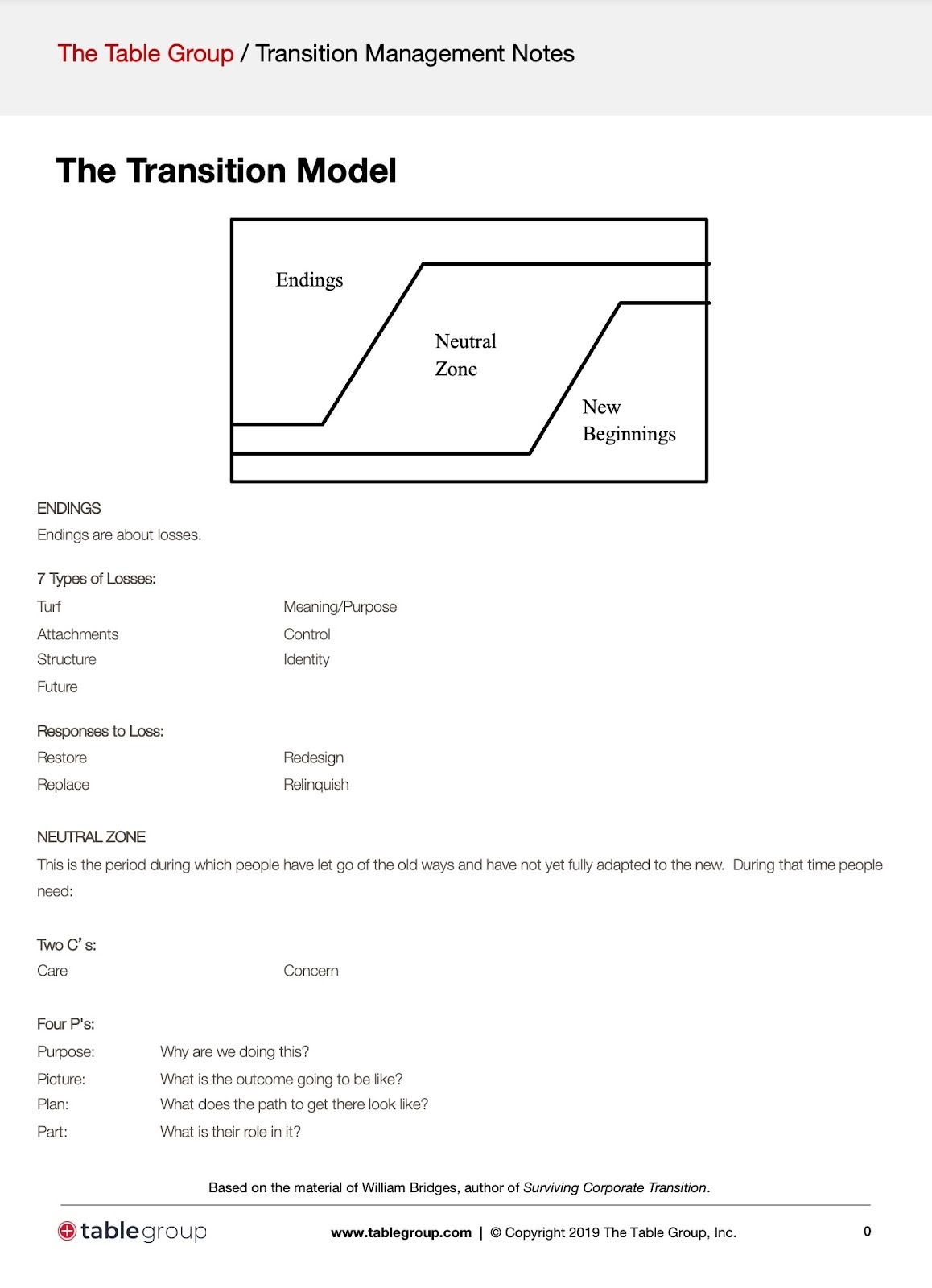
Podcast Part 2: Navigating the Neutral Zone

(Show Notes: Transition Management)
Your turn
How we lead our teams through change is incredibly important, whether a change shows up at our doorstep or we are prayerfully pursuing it. In both cases, a church’s culture shifts slowly. The practices we’ve advised in this article will help you lead through changes with patience, clarity, and care, so that changes stick.
We hope you find these pointers and podcasts to be helpful.
Sign Up for Product Updates

Tithely provides the tools you need to engage with your church online, stay connected, increase generosity, and simplify the lives of your staff.
With tools like text and email messaging, custom church apps and websites, church management software, digital giving, and so much more… it’s no wonder why over 53,000 churches in 50 countries trust Tithely to help run their church.
Leading your church through a season of change is a long-term process.
If you want to lead your church through a cultural change, like encouraging your church to become more evangelistic, then you need to prepare yourself for purposeful work over time.
You can’t implement changes too soon if the culture of your church isn’t ready to accept those changes. To help lead your church through changes, here are four ideas to consider.
#1. Cast a Vision
Regularly cast a vision for your church. Help them to see beyond what is to what could be. Connect the work of your church to the work of God.
You don’t have to make a big show of vision casting. But every week, every meeting, and every encounter you have with a member of your church, find a way to let the people you meet know how their work is connected to God’s work.
#2. Express Gratitude
As a church leader, it’s easy to forget that many of the people you work with are volunteers. Go out of your way to express gratitude. Let members, volunteers, and leaders know you appreciate them.
You can send emails, texts, or letters as a way of expressing your appreciation for them and their work throughout the week, too.
#3. Know Your Leaders’ Priorities
Do you know the priorities of your leaders? Are you aware of what’s important to them? Do you understand the why behind their what? Get to know the priorities of your leaders by asking questions and listening attentively.
Once you better understand what’s important to the leaders within your church, then you’ll be in a better position to know what roadblocks you will run into with the changes you would like to make.
#4. Implement short-term experiments
People tend to be less resistant to short-term experiments than permanent changes. If there’s a big change you’d like to make, consider starting with a short commitment, say six months, and invite people to provide feedback along the way.
Implementing a short-term change will place you in a better position to test the readiness of your church for a permanent change.
Resources to Lead Your Church through Change
If you’re looking for more guidance on leading your church through changes, here’s a two-part podcast that I found to be engaging and helpful.
In this podcast series, Patrick Lencioni from The Table Group outlines practical guidelines for leading your church in times of transition.
Podcast Part 1: Change is Easy, Transition is Hard
Podcast Part 2: Navigating the Neutral Zone
(Show Notes: Transition Management)
Your turn
How we lead our teams through change is incredibly important, whether a change shows up at our doorstep or we are prayerfully pursuing it. In both cases, a church’s culture shifts slowly. The practices we’ve advised in this article will help you lead through changes with patience, clarity, and care, so that changes stick.
We hope you find these pointers and podcasts to be helpful.
podcast transcript
Tithely provides the tools you need to engage with your church online, stay connected, increase generosity, and simplify the lives of your staff.
With tools like text and email messaging, custom church apps and websites, church management software, digital giving, and so much more… it’s no wonder why over 53,000 churches in 50 countries trust Tithely to help run their church.
Leading your church through a season of change is a long-term process.
If you want to lead your church through a cultural change, like encouraging your church to become more evangelistic, then you need to prepare yourself for purposeful work over time.
You can’t implement changes too soon if the culture of your church isn’t ready to accept those changes. To help lead your church through changes, here are four ideas to consider.
#1. Cast a Vision
Regularly cast a vision for your church. Help them to see beyond what is to what could be. Connect the work of your church to the work of God.
You don’t have to make a big show of vision casting. But every week, every meeting, and every encounter you have with a member of your church, find a way to let the people you meet know how their work is connected to God’s work.
#2. Express Gratitude
As a church leader, it’s easy to forget that many of the people you work with are volunteers. Go out of your way to express gratitude. Let members, volunteers, and leaders know you appreciate them.
You can send emails, texts, or letters as a way of expressing your appreciation for them and their work throughout the week, too.
#3. Know Your Leaders’ Priorities
Do you know the priorities of your leaders? Are you aware of what’s important to them? Do you understand the why behind their what? Get to know the priorities of your leaders by asking questions and listening attentively.
Once you better understand what’s important to the leaders within your church, then you’ll be in a better position to know what roadblocks you will run into with the changes you would like to make.
#4. Implement short-term experiments
People tend to be less resistant to short-term experiments than permanent changes. If there’s a big change you’d like to make, consider starting with a short commitment, say six months, and invite people to provide feedback along the way.
Implementing a short-term change will place you in a better position to test the readiness of your church for a permanent change.
Resources to Lead Your Church through Change
If you’re looking for more guidance on leading your church through changes, here’s a two-part podcast that I found to be engaging and helpful.
In this podcast series, Patrick Lencioni from The Table Group outlines practical guidelines for leading your church in times of transition.
Podcast Part 1: Change is Easy, Transition is Hard
Podcast Part 2: Navigating the Neutral Zone
(Show Notes: Transition Management)
Your turn
How we lead our teams through change is incredibly important, whether a change shows up at our doorstep or we are prayerfully pursuing it. In both cases, a church’s culture shifts slowly. The practices we’ve advised in this article will help you lead through changes with patience, clarity, and care, so that changes stick.
We hope you find these pointers and podcasts to be helpful.
VIDEO transcript
Leading your church through a season of change is a long-term process.
If you want to lead your church through a cultural change, like encouraging your church to become more evangelistic, then you need to prepare yourself for purposeful work over time.
You can’t implement changes too soon if the culture of your church isn’t ready to accept those changes. To help lead your church through changes, here are four ideas to consider.
#1. Cast a Vision
Regularly cast a vision for your church. Help them to see beyond what is to what could be. Connect the work of your church to the work of God.
You don’t have to make a big show of vision casting. But every week, every meeting, and every encounter you have with a member of your church, find a way to let the people you meet know how their work is connected to God’s work.
#2. Express Gratitude
As a church leader, it’s easy to forget that many of the people you work with are volunteers. Go out of your way to express gratitude. Let members, volunteers, and leaders know you appreciate them.
You can send emails, texts, or letters as a way of expressing your appreciation for them and their work throughout the week, too.
#3. Know Your Leaders’ Priorities
Do you know the priorities of your leaders? Are you aware of what’s important to them? Do you understand the why behind their what? Get to know the priorities of your leaders by asking questions and listening attentively.
Once you better understand what’s important to the leaders within your church, then you’ll be in a better position to know what roadblocks you will run into with the changes you would like to make.
#4. Implement short-term experiments
People tend to be less resistant to short-term experiments than permanent changes. If there’s a big change you’d like to make, consider starting with a short commitment, say six months, and invite people to provide feedback along the way.
Implementing a short-term change will place you in a better position to test the readiness of your church for a permanent change.
Resources to Lead Your Church through Change
If you’re looking for more guidance on leading your church through changes, here’s a two-part podcast that I found to be engaging and helpful.
In this podcast series, Patrick Lencioni from The Table Group outlines practical guidelines for leading your church in times of transition.
Podcast Part 1: Change is Easy, Transition is Hard
Podcast Part 2: Navigating the Neutral Zone
(Show Notes: Transition Management)
Your turn
How we lead our teams through change is incredibly important, whether a change shows up at our doorstep or we are prayerfully pursuing it. In both cases, a church’s culture shifts slowly. The practices we’ve advised in this article will help you lead through changes with patience, clarity, and care, so that changes stick.
We hope you find these pointers and podcasts to be helpful.
Sign Up for Product Updates
Tithely provides the tools you need to engage with your church online, stay connected, increase generosity, and simplify the lives of your staff.
With tools like text and email messaging, custom church apps and websites, church management software, digital giving, and so much more… it’s no wonder why over 53,000 churches in 50 countries trust Tithely to help run their church.

You Might Also Like
More Resources

From increasing giving, managing your congregation, and engaging your church, our collection of resources will keep you up-to-date on the latest church and ministry trends.
Free Resources.jpg)





.jpg)