7 Mistakes That Keep Visitors from Returning to Your Church
Did you know that most church visitors decide whether to return within their first 7 minutes on campus? Small details can make the difference between a one-time guest and a future member.
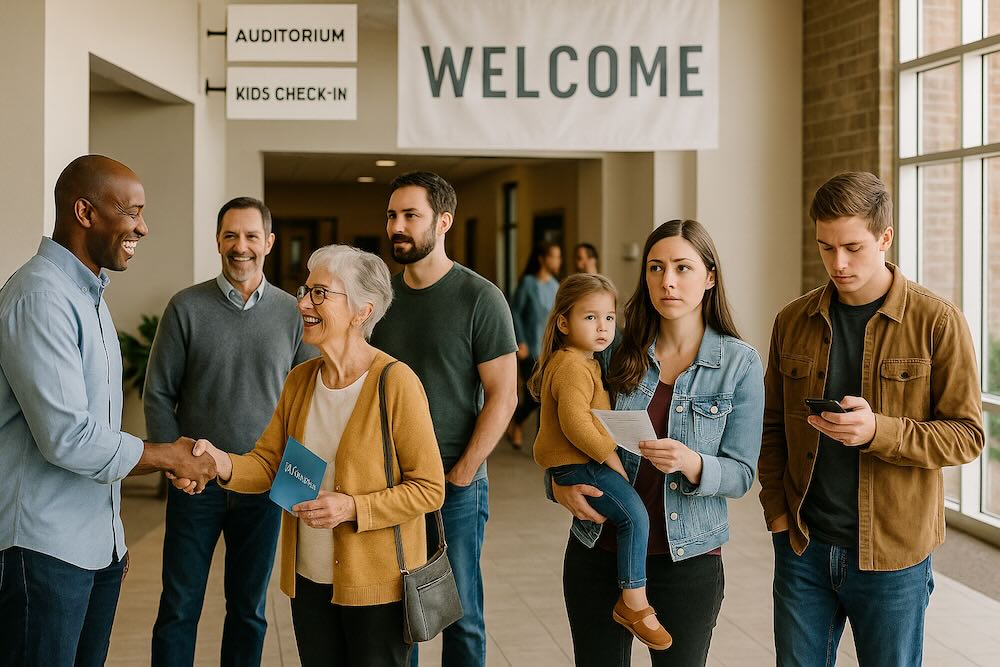



If you’ve ever been a first-time visitor at a new church, you know that the experience can feel… well, intimidating. Even if you’ve gone to church for years, stepping into an unfamiliar building with unfamiliar people is not always easy.
Things that regular attenders hardly notice, like where to park, when to sit or stand, or how the service usually flows, can feel overwhelming when you are the one trying to figure it all out. On top of that, visitors often carry a hundred little questions: Am I in someone’s usual seat? Is there enough parking if I’m running late? Do I clap here or not?
For long-time members, those details barely register. But for someone new, they matter. In fact, they often shape whether a guest decides to come back.
The good news is that these challenges are easy to fix. Here are seven of the most common mistakes churches make, along with some simple ways your church can avoid them!
7 Mistakes That Drive Visitors Away
1. Using Insider Language
Spend enough time in church and you start picking up words and phrases that feel completely normal to you but sound confusing to anyone new. Things like “God laid on my heart,” “intimacy with God,” or “season of life” make sense inside the church bubble, but for visitors, they can feel vague or even a little strange.
And it’s not just “Christianese” that trips people up. Your church may also have its own insider words, like acronyms for ministries, names of rooms, or shorthand in announcements, that make sense to you but sound like code to someone new. Sermons or church bulletins filled with this kind of language can leave people nodding politely while quietly wondering, What on earth are they talking about?
Instead: Use everyday words whenever possible, and when you do introduce faith-specific language or acronyms, make sure to explain them! You don’t need to water anything down. Instead, you are making information accessible to everyone who walks through your church doors!
2. Neglecting Kids and First-Time Families
If there is one guaranteed way to keep a family from returning to your church, it is a poor kids ministry experience. Parents may have loved the worship, connected with the sermon, and enjoyed the community, but if the paper check-in process felt chaotic or lacked clear safety measures, or if their children were bored, anxious, or came out in tears, the family will probably not be back next Sunday.
One mom put it best: “If my kids are excited to come back, I will be back too.” That is the deciding factor. Parents want to know their children are not just being babysat but are safe, cared for, and engaged in ways that fit their age and personality.
Instead: Make kids ministry one of your highest priorities. Invest in safety with a reliable kids check-in system that gives parents peace of mind. Develop a tiered training system for volunteers, and equip them with a curriculum that is engaging and fun. When kids love coming to church, parents will follow their lead.
3. Failing to Provide Clear Next Steps
Even if new visitors enjoy the service, they often leave asking, “Now what?” Without a clear path for connection, they quietly drift away. A great sermon and a warm greeting matter, but if there is no obvious way to go from “first-time guest” to “part of the community,” most people will not stay.
And a connect card tucked into a bulletin is not enough. People need clarity and simplicity.
Instead: Offer one visible, low-pressure next step. It might be a digital connect form, a newcomers’ lunch, or an invitation to a small group. Keep it clear and obvious so people never have to guess how to get connected.
4. Creating “Holy Huddles” Instead of Welcoming Guests
It happens every Sunday. As soon as the service ends, members gravitate toward their friends. Circles form in the lobby and parking lot, everyone laughs and catches up, and visitors are left standing alone, unsure of what to do next.
The issue is not that your church is unfriendly. The problem is that the friendliness is focused inward. And nothing makes someone feel more invisible than being surrounded by people who clearly know each other but have no space for them.
Instead: Encourage your congregation to look for new faces. Train greeters and members to step outside their usual circles and intentionally welcome someone who looks alone. Even a short, warm conversation can be the difference between a visitor who slips away and one who comes back the following week!
5. Treating Hospitality as a One-Day Event
Greeting a new visitor with a smile at the front door is important, but it will not keep someone coming back. What really makes a difference is being invited into relationships beyond Sunday morning. That might mean coffee after church, dinner with a family, or an introduction to a small group. If a new visitor doesn’t feel seen or wanted, they are unlikely to return.
Instead: Build a church culture where hospitality extends beyond the service. Encourage members to invite newcomers to lunch after church or create a tradition where groups of people regularly gather at a local spot. This creates an easy opportunity for visitors to connect without pressure and to start forming friendships that make them want to come back.
6. Ignoring Questions and Doubts
Not everyone who visits is ready to believe everything they hear right away. Some come with doubts, skepticism, or painful church history. If your church culture assumes everyone is already on the same page, seekers may feel like they do not belong.
Think about the college student who is curious but unsure, or the adult who was hurt by a past church. If they don’t find a safe place to ask questions, they’re unlikely to stick around.
Instead: Make space for curiosity. Host discussion nights, Q&A sessions, or programs like Alpha that let people explore faith at their own pace. When people know their questions are welcome, they’re far more likely to keep coming back long enough to find real answers.
7. Overlooking Website & Tech First Impressions
For many people, your website is their first impression of your church – and sometimes their last. If service times are buried three clicks deep, livestream links are broken, or your giving platform feels sketchy, visitors may decide not to come before they even leave their couch.
Even those who attend in person may be frustrated by tech issues. A confusing kids check-in, outdated social media, or poor livestream quality sends a message that guests are not a priority here.
Instead: Optimize your church website by keeping it updated, mobile-friendly, and easy to navigate. Make sure your online giving form, livestream, and kids check-in tools all work smoothly. A small investment in digital tools like church management software can create a seamless experience for visitors and regulars alike.
Quick Recap: Leadership Checklist
Growing a welcoming church doesn’t require a complete overhaul—just focused leadership in a few key areas. Use this checklist to spot common barriers and make quick improvements:
- Ditch the jargon. Speak in clear, everyday language that newcomers understand.
- Prioritize kids ministry. A safe, engaging kids experience brings families back.
- Clarify next steps. Make it obvious and easy for guests to get connected.
- Break the huddles. Train your team and members to welcome new faces intentionally.
- Extend hospitality beyond Sunday. Build relationships through personal invitations and shared time.
- Create space for questions. Show seekers their doubts are welcome.
- Polish your digital front door. Keep your website, livestream, and check-in tech clear and up to date.
Even a few thoughtful adjustments in these areas can make a significant difference in whether guests return and become part of your church family.
Helping Visitors Feel at Home in Your Church
Church is not about perfect people or polished announcements. It is the people of God coming together on a mission to love God and love others. When that mission stays front and center and your church is intentional about welcoming first-time guests, people have a much better chance of feeling at home.
Transform Your Visitor Experience
If you are looking for tools to help along the way, whether it is kids ministry check-in, visitor follow-up, or complete church management software, Tithely is here to help. Learn more about our easy to use church management software today!
Sign Up for Product Updates

Susanna is a theological content writer with a Master of Arts in Intercultural Studies from Fuller Theological Seminary. She is passionate about ministry, running, and exploring new cultures through international travel. In her free time, you’ll find her surfing, obsessing over the Olympics, or enjoying the San Diego sunshine!
If you’ve ever been a first-time visitor at a new church, you know that the experience can feel… well, intimidating. Even if you’ve gone to church for years, stepping into an unfamiliar building with unfamiliar people is not always easy.
Things that regular attenders hardly notice, like where to park, when to sit or stand, or how the service usually flows, can feel overwhelming when you are the one trying to figure it all out. On top of that, visitors often carry a hundred little questions: Am I in someone’s usual seat? Is there enough parking if I’m running late? Do I clap here or not?
For long-time members, those details barely register. But for someone new, they matter. In fact, they often shape whether a guest decides to come back.
The good news is that these challenges are easy to fix. Here are seven of the most common mistakes churches make, along with some simple ways your church can avoid them!
7 Mistakes That Drive Visitors Away
1. Using Insider Language
Spend enough time in church and you start picking up words and phrases that feel completely normal to you but sound confusing to anyone new. Things like “God laid on my heart,” “intimacy with God,” or “season of life” make sense inside the church bubble, but for visitors, they can feel vague or even a little strange.
And it’s not just “Christianese” that trips people up. Your church may also have its own insider words, like acronyms for ministries, names of rooms, or shorthand in announcements, that make sense to you but sound like code to someone new. Sermons or church bulletins filled with this kind of language can leave people nodding politely while quietly wondering, What on earth are they talking about?
Instead: Use everyday words whenever possible, and when you do introduce faith-specific language or acronyms, make sure to explain them! You don’t need to water anything down. Instead, you are making information accessible to everyone who walks through your church doors!
2. Neglecting Kids and First-Time Families
If there is one guaranteed way to keep a family from returning to your church, it is a poor kids ministry experience. Parents may have loved the worship, connected with the sermon, and enjoyed the community, but if the paper check-in process felt chaotic or lacked clear safety measures, or if their children were bored, anxious, or came out in tears, the family will probably not be back next Sunday.
One mom put it best: “If my kids are excited to come back, I will be back too.” That is the deciding factor. Parents want to know their children are not just being babysat but are safe, cared for, and engaged in ways that fit their age and personality.
Instead: Make kids ministry one of your highest priorities. Invest in safety with a reliable kids check-in system that gives parents peace of mind. Develop a tiered training system for volunteers, and equip them with a curriculum that is engaging and fun. When kids love coming to church, parents will follow their lead.
3. Failing to Provide Clear Next Steps
Even if new visitors enjoy the service, they often leave asking, “Now what?” Without a clear path for connection, they quietly drift away. A great sermon and a warm greeting matter, but if there is no obvious way to go from “first-time guest” to “part of the community,” most people will not stay.
And a connect card tucked into a bulletin is not enough. People need clarity and simplicity.
Instead: Offer one visible, low-pressure next step. It might be a digital connect form, a newcomers’ lunch, or an invitation to a small group. Keep it clear and obvious so people never have to guess how to get connected.
4. Creating “Holy Huddles” Instead of Welcoming Guests
It happens every Sunday. As soon as the service ends, members gravitate toward their friends. Circles form in the lobby and parking lot, everyone laughs and catches up, and visitors are left standing alone, unsure of what to do next.
The issue is not that your church is unfriendly. The problem is that the friendliness is focused inward. And nothing makes someone feel more invisible than being surrounded by people who clearly know each other but have no space for them.
Instead: Encourage your congregation to look for new faces. Train greeters and members to step outside their usual circles and intentionally welcome someone who looks alone. Even a short, warm conversation can be the difference between a visitor who slips away and one who comes back the following week!
5. Treating Hospitality as a One-Day Event
Greeting a new visitor with a smile at the front door is important, but it will not keep someone coming back. What really makes a difference is being invited into relationships beyond Sunday morning. That might mean coffee after church, dinner with a family, or an introduction to a small group. If a new visitor doesn’t feel seen or wanted, they are unlikely to return.
Instead: Build a church culture where hospitality extends beyond the service. Encourage members to invite newcomers to lunch after church or create a tradition where groups of people regularly gather at a local spot. This creates an easy opportunity for visitors to connect without pressure and to start forming friendships that make them want to come back.
6. Ignoring Questions and Doubts
Not everyone who visits is ready to believe everything they hear right away. Some come with doubts, skepticism, or painful church history. If your church culture assumes everyone is already on the same page, seekers may feel like they do not belong.
Think about the college student who is curious but unsure, or the adult who was hurt by a past church. If they don’t find a safe place to ask questions, they’re unlikely to stick around.
Instead: Make space for curiosity. Host discussion nights, Q&A sessions, or programs like Alpha that let people explore faith at their own pace. When people know their questions are welcome, they’re far more likely to keep coming back long enough to find real answers.
7. Overlooking Website & Tech First Impressions
For many people, your website is their first impression of your church – and sometimes their last. If service times are buried three clicks deep, livestream links are broken, or your giving platform feels sketchy, visitors may decide not to come before they even leave their couch.
Even those who attend in person may be frustrated by tech issues. A confusing kids check-in, outdated social media, or poor livestream quality sends a message that guests are not a priority here.
Instead: Optimize your church website by keeping it updated, mobile-friendly, and easy to navigate. Make sure your online giving form, livestream, and kids check-in tools all work smoothly. A small investment in digital tools like church management software can create a seamless experience for visitors and regulars alike.
Quick Recap: Leadership Checklist
Growing a welcoming church doesn’t require a complete overhaul—just focused leadership in a few key areas. Use this checklist to spot common barriers and make quick improvements:
- Ditch the jargon. Speak in clear, everyday language that newcomers understand.
- Prioritize kids ministry. A safe, engaging kids experience brings families back.
- Clarify next steps. Make it obvious and easy for guests to get connected.
- Break the huddles. Train your team and members to welcome new faces intentionally.
- Extend hospitality beyond Sunday. Build relationships through personal invitations and shared time.
- Create space for questions. Show seekers their doubts are welcome.
- Polish your digital front door. Keep your website, livestream, and check-in tech clear and up to date.
Even a few thoughtful adjustments in these areas can make a significant difference in whether guests return and become part of your church family.
Helping Visitors Feel at Home in Your Church
Church is not about perfect people or polished announcements. It is the people of God coming together on a mission to love God and love others. When that mission stays front and center and your church is intentional about welcoming first-time guests, people have a much better chance of feeling at home.
Transform Your Visitor Experience
If you are looking for tools to help along the way, whether it is kids ministry check-in, visitor follow-up, or complete church management software, Tithely is here to help. Learn more about our easy to use church management software today!
podcast transcript
Susanna is a theological content writer with a Master of Arts in Intercultural Studies from Fuller Theological Seminary. She is passionate about ministry, running, and exploring new cultures through international travel. In her free time, you’ll find her surfing, obsessing over the Olympics, or enjoying the San Diego sunshine!
If you’ve ever been a first-time visitor at a new church, you know that the experience can feel… well, intimidating. Even if you’ve gone to church for years, stepping into an unfamiliar building with unfamiliar people is not always easy.
Things that regular attenders hardly notice, like where to park, when to sit or stand, or how the service usually flows, can feel overwhelming when you are the one trying to figure it all out. On top of that, visitors often carry a hundred little questions: Am I in someone’s usual seat? Is there enough parking if I’m running late? Do I clap here or not?
For long-time members, those details barely register. But for someone new, they matter. In fact, they often shape whether a guest decides to come back.
The good news is that these challenges are easy to fix. Here are seven of the most common mistakes churches make, along with some simple ways your church can avoid them!
7 Mistakes That Drive Visitors Away
1. Using Insider Language
Spend enough time in church and you start picking up words and phrases that feel completely normal to you but sound confusing to anyone new. Things like “God laid on my heart,” “intimacy with God,” or “season of life” make sense inside the church bubble, but for visitors, they can feel vague or even a little strange.
And it’s not just “Christianese” that trips people up. Your church may also have its own insider words, like acronyms for ministries, names of rooms, or shorthand in announcements, that make sense to you but sound like code to someone new. Sermons or church bulletins filled with this kind of language can leave people nodding politely while quietly wondering, What on earth are they talking about?
Instead: Use everyday words whenever possible, and when you do introduce faith-specific language or acronyms, make sure to explain them! You don’t need to water anything down. Instead, you are making information accessible to everyone who walks through your church doors!
2. Neglecting Kids and First-Time Families
If there is one guaranteed way to keep a family from returning to your church, it is a poor kids ministry experience. Parents may have loved the worship, connected with the sermon, and enjoyed the community, but if the paper check-in process felt chaotic or lacked clear safety measures, or if their children were bored, anxious, or came out in tears, the family will probably not be back next Sunday.
One mom put it best: “If my kids are excited to come back, I will be back too.” That is the deciding factor. Parents want to know their children are not just being babysat but are safe, cared for, and engaged in ways that fit their age and personality.
Instead: Make kids ministry one of your highest priorities. Invest in safety with a reliable kids check-in system that gives parents peace of mind. Develop a tiered training system for volunteers, and equip them with a curriculum that is engaging and fun. When kids love coming to church, parents will follow their lead.
3. Failing to Provide Clear Next Steps
Even if new visitors enjoy the service, they often leave asking, “Now what?” Without a clear path for connection, they quietly drift away. A great sermon and a warm greeting matter, but if there is no obvious way to go from “first-time guest” to “part of the community,” most people will not stay.
And a connect card tucked into a bulletin is not enough. People need clarity and simplicity.
Instead: Offer one visible, low-pressure next step. It might be a digital connect form, a newcomers’ lunch, or an invitation to a small group. Keep it clear and obvious so people never have to guess how to get connected.
4. Creating “Holy Huddles” Instead of Welcoming Guests
It happens every Sunday. As soon as the service ends, members gravitate toward their friends. Circles form in the lobby and parking lot, everyone laughs and catches up, and visitors are left standing alone, unsure of what to do next.
The issue is not that your church is unfriendly. The problem is that the friendliness is focused inward. And nothing makes someone feel more invisible than being surrounded by people who clearly know each other but have no space for them.
Instead: Encourage your congregation to look for new faces. Train greeters and members to step outside their usual circles and intentionally welcome someone who looks alone. Even a short, warm conversation can be the difference between a visitor who slips away and one who comes back the following week!
5. Treating Hospitality as a One-Day Event
Greeting a new visitor with a smile at the front door is important, but it will not keep someone coming back. What really makes a difference is being invited into relationships beyond Sunday morning. That might mean coffee after church, dinner with a family, or an introduction to a small group. If a new visitor doesn’t feel seen or wanted, they are unlikely to return.
Instead: Build a church culture where hospitality extends beyond the service. Encourage members to invite newcomers to lunch after church or create a tradition where groups of people regularly gather at a local spot. This creates an easy opportunity for visitors to connect without pressure and to start forming friendships that make them want to come back.
6. Ignoring Questions and Doubts
Not everyone who visits is ready to believe everything they hear right away. Some come with doubts, skepticism, or painful church history. If your church culture assumes everyone is already on the same page, seekers may feel like they do not belong.
Think about the college student who is curious but unsure, or the adult who was hurt by a past church. If they don’t find a safe place to ask questions, they’re unlikely to stick around.
Instead: Make space for curiosity. Host discussion nights, Q&A sessions, or programs like Alpha that let people explore faith at their own pace. When people know their questions are welcome, they’re far more likely to keep coming back long enough to find real answers.
7. Overlooking Website & Tech First Impressions
For many people, your website is their first impression of your church – and sometimes their last. If service times are buried three clicks deep, livestream links are broken, or your giving platform feels sketchy, visitors may decide not to come before they even leave their couch.
Even those who attend in person may be frustrated by tech issues. A confusing kids check-in, outdated social media, or poor livestream quality sends a message that guests are not a priority here.
Instead: Optimize your church website by keeping it updated, mobile-friendly, and easy to navigate. Make sure your online giving form, livestream, and kids check-in tools all work smoothly. A small investment in digital tools like church management software can create a seamless experience for visitors and regulars alike.
Quick Recap: Leadership Checklist
Growing a welcoming church doesn’t require a complete overhaul—just focused leadership in a few key areas. Use this checklist to spot common barriers and make quick improvements:
- Ditch the jargon. Speak in clear, everyday language that newcomers understand.
- Prioritize kids ministry. A safe, engaging kids experience brings families back.
- Clarify next steps. Make it obvious and easy for guests to get connected.
- Break the huddles. Train your team and members to welcome new faces intentionally.
- Extend hospitality beyond Sunday. Build relationships through personal invitations and shared time.
- Create space for questions. Show seekers their doubts are welcome.
- Polish your digital front door. Keep your website, livestream, and check-in tech clear and up to date.
Even a few thoughtful adjustments in these areas can make a significant difference in whether guests return and become part of your church family.
Helping Visitors Feel at Home in Your Church
Church is not about perfect people or polished announcements. It is the people of God coming together on a mission to love God and love others. When that mission stays front and center and your church is intentional about welcoming first-time guests, people have a much better chance of feeling at home.
Transform Your Visitor Experience
If you are looking for tools to help along the way, whether it is kids ministry check-in, visitor follow-up, or complete church management software, Tithely is here to help. Learn more about our easy to use church management software today!
VIDEO transcript
If you’ve ever been a first-time visitor at a new church, you know that the experience can feel… well, intimidating. Even if you’ve gone to church for years, stepping into an unfamiliar building with unfamiliar people is not always easy.
Things that regular attenders hardly notice, like where to park, when to sit or stand, or how the service usually flows, can feel overwhelming when you are the one trying to figure it all out. On top of that, visitors often carry a hundred little questions: Am I in someone’s usual seat? Is there enough parking if I’m running late? Do I clap here or not?
For long-time members, those details barely register. But for someone new, they matter. In fact, they often shape whether a guest decides to come back.
The good news is that these challenges are easy to fix. Here are seven of the most common mistakes churches make, along with some simple ways your church can avoid them!
7 Mistakes That Drive Visitors Away
1. Using Insider Language
Spend enough time in church and you start picking up words and phrases that feel completely normal to you but sound confusing to anyone new. Things like “God laid on my heart,” “intimacy with God,” or “season of life” make sense inside the church bubble, but for visitors, they can feel vague or even a little strange.
And it’s not just “Christianese” that trips people up. Your church may also have its own insider words, like acronyms for ministries, names of rooms, or shorthand in announcements, that make sense to you but sound like code to someone new. Sermons or church bulletins filled with this kind of language can leave people nodding politely while quietly wondering, What on earth are they talking about?
Instead: Use everyday words whenever possible, and when you do introduce faith-specific language or acronyms, make sure to explain them! You don’t need to water anything down. Instead, you are making information accessible to everyone who walks through your church doors!
2. Neglecting Kids and First-Time Families
If there is one guaranteed way to keep a family from returning to your church, it is a poor kids ministry experience. Parents may have loved the worship, connected with the sermon, and enjoyed the community, but if the paper check-in process felt chaotic or lacked clear safety measures, or if their children were bored, anxious, or came out in tears, the family will probably not be back next Sunday.
One mom put it best: “If my kids are excited to come back, I will be back too.” That is the deciding factor. Parents want to know their children are not just being babysat but are safe, cared for, and engaged in ways that fit their age and personality.
Instead: Make kids ministry one of your highest priorities. Invest in safety with a reliable kids check-in system that gives parents peace of mind. Develop a tiered training system for volunteers, and equip them with a curriculum that is engaging and fun. When kids love coming to church, parents will follow their lead.
3. Failing to Provide Clear Next Steps
Even if new visitors enjoy the service, they often leave asking, “Now what?” Without a clear path for connection, they quietly drift away. A great sermon and a warm greeting matter, but if there is no obvious way to go from “first-time guest” to “part of the community,” most people will not stay.
And a connect card tucked into a bulletin is not enough. People need clarity and simplicity.
Instead: Offer one visible, low-pressure next step. It might be a digital connect form, a newcomers’ lunch, or an invitation to a small group. Keep it clear and obvious so people never have to guess how to get connected.
4. Creating “Holy Huddles” Instead of Welcoming Guests
It happens every Sunday. As soon as the service ends, members gravitate toward their friends. Circles form in the lobby and parking lot, everyone laughs and catches up, and visitors are left standing alone, unsure of what to do next.
The issue is not that your church is unfriendly. The problem is that the friendliness is focused inward. And nothing makes someone feel more invisible than being surrounded by people who clearly know each other but have no space for them.
Instead: Encourage your congregation to look for new faces. Train greeters and members to step outside their usual circles and intentionally welcome someone who looks alone. Even a short, warm conversation can be the difference between a visitor who slips away and one who comes back the following week!
5. Treating Hospitality as a One-Day Event
Greeting a new visitor with a smile at the front door is important, but it will not keep someone coming back. What really makes a difference is being invited into relationships beyond Sunday morning. That might mean coffee after church, dinner with a family, or an introduction to a small group. If a new visitor doesn’t feel seen or wanted, they are unlikely to return.
Instead: Build a church culture where hospitality extends beyond the service. Encourage members to invite newcomers to lunch after church or create a tradition where groups of people regularly gather at a local spot. This creates an easy opportunity for visitors to connect without pressure and to start forming friendships that make them want to come back.
6. Ignoring Questions and Doubts
Not everyone who visits is ready to believe everything they hear right away. Some come with doubts, skepticism, or painful church history. If your church culture assumes everyone is already on the same page, seekers may feel like they do not belong.
Think about the college student who is curious but unsure, or the adult who was hurt by a past church. If they don’t find a safe place to ask questions, they’re unlikely to stick around.
Instead: Make space for curiosity. Host discussion nights, Q&A sessions, or programs like Alpha that let people explore faith at their own pace. When people know their questions are welcome, they’re far more likely to keep coming back long enough to find real answers.
7. Overlooking Website & Tech First Impressions
For many people, your website is their first impression of your church – and sometimes their last. If service times are buried three clicks deep, livestream links are broken, or your giving platform feels sketchy, visitors may decide not to come before they even leave their couch.
Even those who attend in person may be frustrated by tech issues. A confusing kids check-in, outdated social media, or poor livestream quality sends a message that guests are not a priority here.
Instead: Optimize your church website by keeping it updated, mobile-friendly, and easy to navigate. Make sure your online giving form, livestream, and kids check-in tools all work smoothly. A small investment in digital tools like church management software can create a seamless experience for visitors and regulars alike.
Quick Recap: Leadership Checklist
Growing a welcoming church doesn’t require a complete overhaul—just focused leadership in a few key areas. Use this checklist to spot common barriers and make quick improvements:
- Ditch the jargon. Speak in clear, everyday language that newcomers understand.
- Prioritize kids ministry. A safe, engaging kids experience brings families back.
- Clarify next steps. Make it obvious and easy for guests to get connected.
- Break the huddles. Train your team and members to welcome new faces intentionally.
- Extend hospitality beyond Sunday. Build relationships through personal invitations and shared time.
- Create space for questions. Show seekers their doubts are welcome.
- Polish your digital front door. Keep your website, livestream, and check-in tech clear and up to date.
Even a few thoughtful adjustments in these areas can make a significant difference in whether guests return and become part of your church family.
Helping Visitors Feel at Home in Your Church
Church is not about perfect people or polished announcements. It is the people of God coming together on a mission to love God and love others. When that mission stays front and center and your church is intentional about welcoming first-time guests, people have a much better chance of feeling at home.
Transform Your Visitor Experience
If you are looking for tools to help along the way, whether it is kids ministry check-in, visitor follow-up, or complete church management software, Tithely is here to help. Learn more about our easy to use church management software today!
Sign Up for Product Updates
Susanna is a theological content writer with a Master of Arts in Intercultural Studies from Fuller Theological Seminary. She is passionate about ministry, running, and exploring new cultures through international travel. In her free time, you’ll find her surfing, obsessing over the Olympics, or enjoying the San Diego sunshine!

You Might Also Like
More Resources

From increasing giving, managing your congregation, and engaging your church, our collection of resources will keep you up-to-date on the latest church and ministry trends.
Free Resources