How Churches Can Combat Loneliness in the Digital Age: Faith-Based Solutions for a Disconnected World
Loneliness is rising in an increasingly "connected" world, but the Church holds the key to deep, lasting community.




Social media and smartphones were supposed to bring us together. Make us feel connected. Bridge the gap.
It hasn’t worked. At all.
We have hundreds, if not thousands, of “friends”. We receive and send loads of text messages and emails.
Yet millions of people are still lonely. Very lonely.
A 2024 Harvard study found that 21% of adults report profound loneliness, with younger adults being among the loneliest of all.
And here’s what’s interesting. The study found that being physically alone is not the same as loneliness. A person can be surrounded by people and still feel profoundly lonely. The researchers used the term “existential loneliness” to describe the feelings people experience.
The reality is that people are craving connection but don’t know how to build it. They have friends but still feel alone.
Loneliness isn’t just an emotional issue. It’s a deeply spiritual problem as well. God designed us for community. To know and be known by people and feel their warmth and affection. For real, strong friendships that go beyond surface knowledge.
When we’re disconnected, it affects everything. Our mental health. Our physical health. Our faith, and our sense of purpose.
The good news is that the church is uniquely equipped to respond. In this post, we’ll explore the loneliness epidemic, the biblical foundation for belonging, and practical ways your church can help people reconnect with each other and with God.
Why Loneliness Is Rising in the Digital Age (And What the Church Can Do About It)
People have always experienced loneliness. But the causes have changed.
What’s Causing So Many People to Feel Lonely?
The Harvard report mentioned earlier identifies several key factors driving loneliness:
- Technology: 73% of people say that digital life contributes to their feelings of loneliness.
- Busyness and exhaustion: 62% cite overwork and lack of time for relationships.
- Insufficient time with family: 66% say that not having enough time with their family contributes to their loneliness.
- Cultural individualism: 58% say that a “me-first” mindset weakens community life.
- No religious or spiritual life: 50% say that their disconnection from spiritual life leads to their loneliness.
God and Loneliness
The Bible offers profound insights into what truly causes loneliness.
God’s Design for Relationship
From the very beginning, God made it clear that people aren’t made to exist by themselves. In Genesis 2, God said, “It is not good for man to be alone.”
We were created to be in a relationship with God and other people. Adam needed Eve. When we aren’t connected to others in meaningful ways, we’re incomplete.
Jesus Desired Friendship
One of the first things Jesus did after beginning His public ministry was to choose His 12 disciples. These men were close to Jesus. They spent hours with Him. They ate with Him. Jesus didn’t do ministry 24/7. While not recorded in Scripture, there must have been many times Jesus and His disciples just hung out together.
If Jesus needed close friends, we certainly do as well. It’s stamped into our DNA. It’s part of what it means to be human.
The Church as the Body of Christ
Paul describes the church as “one body with many members” (1 Corinthians 12). He paints a picture of belonging that counters the individualism of modern life. Each person matters. Each gift is essential. When one part suffers, the whole body suffers.
The dozens of “one another” commands in Scripture, like love one another, bear one another’s burdens, and encourage one another, can’t be fulfilled alone. These commands can only be obeyed in the context of a community of believers.
The Church’s Response to Loneliness
The church, your church, is uniquely positioned to help those who are lonely and connect them to God.
The Hope of the Gospel
The ultimate cure for “existential loneliness” is the gospel. Those who don’t know Christ are separated from God. They will never experience complete relational joy apart from Him.
The church has the opportunity to offer the free salvation and reconciliation to God found in the gospel. The rift between God and a person can be healed. They can experience the presence of God that will never leave them or forsake them.
The first step in helping someone feel less lonely is pointing them to the God who accepts them freely through Christ.
A Relational Foundation
The church doesn’t exist to hold Sunday meetings, as crucial as they are. The church is a family. Being part of the church family allows people to build meaningful relationships, care for one another, bear each other’s burdens, and encourage one another.
Our personal relationship with God is essential, but it’s not enough to experience the fullness of life God intended. We experience God in unique ways through other people.
There’s no such thing as a solo Christian. We need to be meaningfully connected to other Christians, and the church makes that possible. It’s one of the primary reasons God created the church.
Easy On-Ramps
Churches already have built-in on-ramps that make it easier for lonely people to get connected. Weekly gatherings, small groups, pastoral care, church events, and volunteer opportunities are all ways a person can become part of the church community.
The church’s responsibility is to ensure that the necessary people and structures are in place to facilitate the right connections.
Faith-Based Strategies to Help Lonely People Reconnect
There are some practical, concrete ways you can help your church serve those struggling with loneliness.
Cultivate Deep, Intentional Community
The Sunday gathering is essential, but it’s not the best place to form deep friendships. Kids have to be picked up, people want to get to lunch, and it’s definitely not the best time to talk about your deep struggle with loneliness. There needs to be other opportunities for people to get to know one another.
- Small groups: Make small groups an integral part of your church. Encourage appropriate authenticity and transparency in these groups. Also, suggest that group members live life together—dinners, fun outings, etc.
- Practice everyday hospitality: Encourage members to open their homes for meals, game nights, prayer gatherings, barbecues, and other social gatherings. Hospitality doesn’t require perfection, just presence. Remind your congregation that the dinner table is often more potent than the pulpit in fostering a sense of belonging.
Use Digital Tools Wisely as Bridges, Not Replacements
As we’ve noted, technology can’t be a substitute for genuine relationships. However, it can be used to draw people together in person.
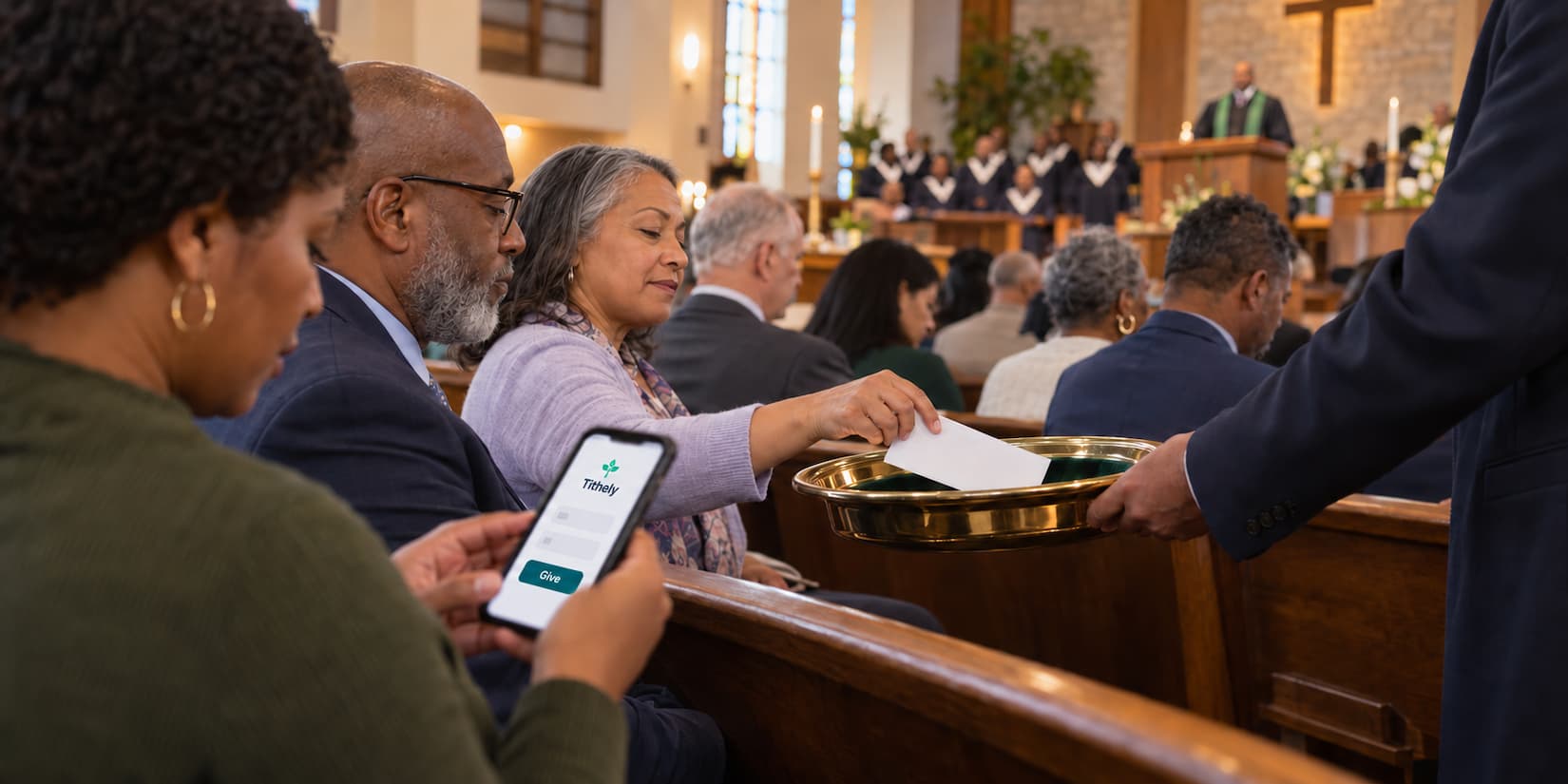
- Use digital communication intentionally: You can utilize tools like Tithely Messaging or Tithely Groups to help move members toward a sense of community. Send event reminders or email sequences that help new people take steps toward becoming more involved. Encourage members to join digital groups where they can share prayer requests—anything that helps foster more in-person connections.
- Offer hybrid options: For members who can’t attend in person due to illness, travel, or distance, consider offering livestreams or online small groups. But don’t let those become substitutes for authentic connection. Encourage in-person attendance when possible and ensure that those who are homebound also receive care.
Lower Barriers to Connection
We’ve touched on this before, but it’s worth exploring more. Wherever possible, make the barriers to connection as low as possible (within reason). Obviously, you have to use wisdom in how people get connected.
Don’t allow individuals close to vulnerable populations (such as children and seniors) without conducting thorough background checks. But in other areas, make it easy to get involved.
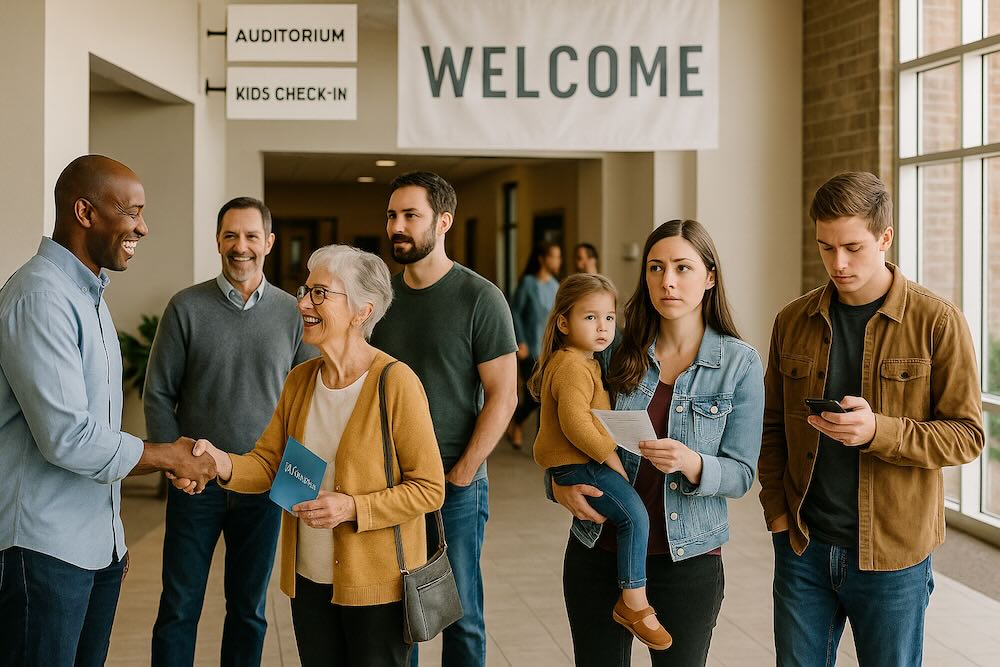
- Create warm welcome pathways: A friendly greeting team is excellent, but true belonging requires follow-up. Create “connect teams” who check in with newcomers during the week and invite them into small groups or service opportunities.
- Community events and service projects: Serving together is one of the fastest ways to build authentic connections. Host events like neighborhood cleanups, free community meals, or volunteer days that mix relational fun with shared purpose.
- Create “third spaces” in your church: If it’s in the budget, allocate funds to create areas within your church where people can be together. Perhaps you could add seating areas in the lobby. Maybe you designate a room for people to pray together. It doesn’t have to be complicated.
5 Quick Wins to Fight Loneliness in Your Church This Week
- Personally greet 3 new people
- Invite someone to lunch after service
- Host a spontaneous game night
- Text a small group member just to check in
- Pray for someone, and tell them you did
The Cure for Loneliness
Loneliness is a result of living in a fallen world. God doesn’t want people to be alone. When Jesus returns, loneliness will be finally and fully abolished. We will be in the presence of God and fellow saints for eternity.
Until then, the church can play a big part in helping the lonely. It can help people make the first steps toward having a relationship with God. It can also provide pathways and places for the church family to gather and fellowship.
“Help the lonely” will not appear on many pastoral vision boards. But the widespread existential loneliness people experience presents a massive opportunity for the church. Consider making it a key part of your church’s mission.
Sign Up for Product Updates

Stephen Altrogge lives in Tallahassee, Florida. He is a dad to three wonderful girls and has written for publications like The Gospel Coalition, Church Leaders, Crosswalk, and many more. When he’s not writing, you’ll find him reading or watching The Lord Of the Rings for the 10th time.
Social media and smartphones were supposed to bring us together. Make us feel connected. Bridge the gap.
It hasn’t worked. At all.
We have hundreds, if not thousands, of “friends”. We receive and send loads of text messages and emails.
Yet millions of people are still lonely. Very lonely.
A 2024 Harvard study found that 21% of adults report profound loneliness, with younger adults being among the loneliest of all.
And here’s what’s interesting. The study found that being physically alone is not the same as loneliness. A person can be surrounded by people and still feel profoundly lonely. The researchers used the term “existential loneliness” to describe the feelings people experience.
The reality is that people are craving connection but don’t know how to build it. They have friends but still feel alone.
Loneliness isn’t just an emotional issue. It’s a deeply spiritual problem as well. God designed us for community. To know and be known by people and feel their warmth and affection. For real, strong friendships that go beyond surface knowledge.
When we’re disconnected, it affects everything. Our mental health. Our physical health. Our faith, and our sense of purpose.
The good news is that the church is uniquely equipped to respond. In this post, we’ll explore the loneliness epidemic, the biblical foundation for belonging, and practical ways your church can help people reconnect with each other and with God.
Why Loneliness Is Rising in the Digital Age (And What the Church Can Do About It)
People have always experienced loneliness. But the causes have changed.
What’s Causing So Many People to Feel Lonely?
The Harvard report mentioned earlier identifies several key factors driving loneliness:
- Technology: 73% of people say that digital life contributes to their feelings of loneliness.
- Busyness and exhaustion: 62% cite overwork and lack of time for relationships.
- Insufficient time with family: 66% say that not having enough time with their family contributes to their loneliness.
- Cultural individualism: 58% say that a “me-first” mindset weakens community life.
- No religious or spiritual life: 50% say that their disconnection from spiritual life leads to their loneliness.
God and Loneliness
The Bible offers profound insights into what truly causes loneliness.
God’s Design for Relationship
From the very beginning, God made it clear that people aren’t made to exist by themselves. In Genesis 2, God said, “It is not good for man to be alone.”
We were created to be in a relationship with God and other people. Adam needed Eve. When we aren’t connected to others in meaningful ways, we’re incomplete.
Jesus Desired Friendship
One of the first things Jesus did after beginning His public ministry was to choose His 12 disciples. These men were close to Jesus. They spent hours with Him. They ate with Him. Jesus didn’t do ministry 24/7. While not recorded in Scripture, there must have been many times Jesus and His disciples just hung out together.
If Jesus needed close friends, we certainly do as well. It’s stamped into our DNA. It’s part of what it means to be human.
The Church as the Body of Christ
Paul describes the church as “one body with many members” (1 Corinthians 12). He paints a picture of belonging that counters the individualism of modern life. Each person matters. Each gift is essential. When one part suffers, the whole body suffers.
The dozens of “one another” commands in Scripture, like love one another, bear one another’s burdens, and encourage one another, can’t be fulfilled alone. These commands can only be obeyed in the context of a community of believers.
The Church’s Response to Loneliness
The church, your church, is uniquely positioned to help those who are lonely and connect them to God.
The Hope of the Gospel
The ultimate cure for “existential loneliness” is the gospel. Those who don’t know Christ are separated from God. They will never experience complete relational joy apart from Him.
The church has the opportunity to offer the free salvation and reconciliation to God found in the gospel. The rift between God and a person can be healed. They can experience the presence of God that will never leave them or forsake them.
The first step in helping someone feel less lonely is pointing them to the God who accepts them freely through Christ.
A Relational Foundation
The church doesn’t exist to hold Sunday meetings, as crucial as they are. The church is a family. Being part of the church family allows people to build meaningful relationships, care for one another, bear each other’s burdens, and encourage one another.
Our personal relationship with God is essential, but it’s not enough to experience the fullness of life God intended. We experience God in unique ways through other people.
There’s no such thing as a solo Christian. We need to be meaningfully connected to other Christians, and the church makes that possible. It’s one of the primary reasons God created the church.
Easy On-Ramps
Churches already have built-in on-ramps that make it easier for lonely people to get connected. Weekly gatherings, small groups, pastoral care, church events, and volunteer opportunities are all ways a person can become part of the church community.
The church’s responsibility is to ensure that the necessary people and structures are in place to facilitate the right connections.
Faith-Based Strategies to Help Lonely People Reconnect
There are some practical, concrete ways you can help your church serve those struggling with loneliness.
Cultivate Deep, Intentional Community
The Sunday gathering is essential, but it’s not the best place to form deep friendships. Kids have to be picked up, people want to get to lunch, and it’s definitely not the best time to talk about your deep struggle with loneliness. There needs to be other opportunities for people to get to know one another.
- Small groups: Make small groups an integral part of your church. Encourage appropriate authenticity and transparency in these groups. Also, suggest that group members live life together—dinners, fun outings, etc.
- Practice everyday hospitality: Encourage members to open their homes for meals, game nights, prayer gatherings, barbecues, and other social gatherings. Hospitality doesn’t require perfection, just presence. Remind your congregation that the dinner table is often more potent than the pulpit in fostering a sense of belonging.
Use Digital Tools Wisely as Bridges, Not Replacements
As we’ve noted, technology can’t be a substitute for genuine relationships. However, it can be used to draw people together in person.
- Use digital communication intentionally: You can utilize tools like Tithely Messaging or Tithely Groups to help move members toward a sense of community. Send event reminders or email sequences that help new people take steps toward becoming more involved. Encourage members to join digital groups where they can share prayer requests—anything that helps foster more in-person connections.
- Offer hybrid options: For members who can’t attend in person due to illness, travel, or distance, consider offering livestreams or online small groups. But don’t let those become substitutes for authentic connection. Encourage in-person attendance when possible and ensure that those who are homebound also receive care.
Lower Barriers to Connection
We’ve touched on this before, but it’s worth exploring more. Wherever possible, make the barriers to connection as low as possible (within reason). Obviously, you have to use wisdom in how people get connected.
Don’t allow individuals close to vulnerable populations (such as children and seniors) without conducting thorough background checks. But in other areas, make it easy to get involved.
- Create warm welcome pathways: A friendly greeting team is excellent, but true belonging requires follow-up. Create “connect teams” who check in with newcomers during the week and invite them into small groups or service opportunities.
- Community events and service projects: Serving together is one of the fastest ways to build authentic connections. Host events like neighborhood cleanups, free community meals, or volunteer days that mix relational fun with shared purpose.
- Create “third spaces” in your church: If it’s in the budget, allocate funds to create areas within your church where people can be together. Perhaps you could add seating areas in the lobby. Maybe you designate a room for people to pray together. It doesn’t have to be complicated.
5 Quick Wins to Fight Loneliness in Your Church This Week
- Personally greet 3 new people
- Invite someone to lunch after service
- Host a spontaneous game night
- Text a small group member just to check in
- Pray for someone, and tell them you did
The Cure for Loneliness
Loneliness is a result of living in a fallen world. God doesn’t want people to be alone. When Jesus returns, loneliness will be finally and fully abolished. We will be in the presence of God and fellow saints for eternity.
Until then, the church can play a big part in helping the lonely. It can help people make the first steps toward having a relationship with God. It can also provide pathways and places for the church family to gather and fellowship.
“Help the lonely” will not appear on many pastoral vision boards. But the widespread existential loneliness people experience presents a massive opportunity for the church. Consider making it a key part of your church’s mission.
podcast transcript
Stephen Altrogge lives in Tallahassee, Florida. He is a dad to three wonderful girls and has written for publications like The Gospel Coalition, Church Leaders, Crosswalk, and many more. When he’s not writing, you’ll find him reading or watching The Lord Of the Rings for the 10th time.
Social media and smartphones were supposed to bring us together. Make us feel connected. Bridge the gap.
It hasn’t worked. At all.
We have hundreds, if not thousands, of “friends”. We receive and send loads of text messages and emails.
Yet millions of people are still lonely. Very lonely.
A 2024 Harvard study found that 21% of adults report profound loneliness, with younger adults being among the loneliest of all.
And here’s what’s interesting. The study found that being physically alone is not the same as loneliness. A person can be surrounded by people and still feel profoundly lonely. The researchers used the term “existential loneliness” to describe the feelings people experience.
The reality is that people are craving connection but don’t know how to build it. They have friends but still feel alone.
Loneliness isn’t just an emotional issue. It’s a deeply spiritual problem as well. God designed us for community. To know and be known by people and feel their warmth and affection. For real, strong friendships that go beyond surface knowledge.
When we’re disconnected, it affects everything. Our mental health. Our physical health. Our faith, and our sense of purpose.
The good news is that the church is uniquely equipped to respond. In this post, we’ll explore the loneliness epidemic, the biblical foundation for belonging, and practical ways your church can help people reconnect with each other and with God.
Why Loneliness Is Rising in the Digital Age (And What the Church Can Do About It)
People have always experienced loneliness. But the causes have changed.
What’s Causing So Many People to Feel Lonely?
The Harvard report mentioned earlier identifies several key factors driving loneliness:
- Technology: 73% of people say that digital life contributes to their feelings of loneliness.
- Busyness and exhaustion: 62% cite overwork and lack of time for relationships.
- Insufficient time with family: 66% say that not having enough time with their family contributes to their loneliness.
- Cultural individualism: 58% say that a “me-first” mindset weakens community life.
- No religious or spiritual life: 50% say that their disconnection from spiritual life leads to their loneliness.
God and Loneliness
The Bible offers profound insights into what truly causes loneliness.
God’s Design for Relationship
From the very beginning, God made it clear that people aren’t made to exist by themselves. In Genesis 2, God said, “It is not good for man to be alone.”
We were created to be in a relationship with God and other people. Adam needed Eve. When we aren’t connected to others in meaningful ways, we’re incomplete.
Jesus Desired Friendship
One of the first things Jesus did after beginning His public ministry was to choose His 12 disciples. These men were close to Jesus. They spent hours with Him. They ate with Him. Jesus didn’t do ministry 24/7. While not recorded in Scripture, there must have been many times Jesus and His disciples just hung out together.
If Jesus needed close friends, we certainly do as well. It’s stamped into our DNA. It’s part of what it means to be human.
The Church as the Body of Christ
Paul describes the church as “one body with many members” (1 Corinthians 12). He paints a picture of belonging that counters the individualism of modern life. Each person matters. Each gift is essential. When one part suffers, the whole body suffers.
The dozens of “one another” commands in Scripture, like love one another, bear one another’s burdens, and encourage one another, can’t be fulfilled alone. These commands can only be obeyed in the context of a community of believers.
The Church’s Response to Loneliness
The church, your church, is uniquely positioned to help those who are lonely and connect them to God.
The Hope of the Gospel
The ultimate cure for “existential loneliness” is the gospel. Those who don’t know Christ are separated from God. They will never experience complete relational joy apart from Him.
The church has the opportunity to offer the free salvation and reconciliation to God found in the gospel. The rift between God and a person can be healed. They can experience the presence of God that will never leave them or forsake them.
The first step in helping someone feel less lonely is pointing them to the God who accepts them freely through Christ.
A Relational Foundation
The church doesn’t exist to hold Sunday meetings, as crucial as they are. The church is a family. Being part of the church family allows people to build meaningful relationships, care for one another, bear each other’s burdens, and encourage one another.
Our personal relationship with God is essential, but it’s not enough to experience the fullness of life God intended. We experience God in unique ways through other people.
There’s no such thing as a solo Christian. We need to be meaningfully connected to other Christians, and the church makes that possible. It’s one of the primary reasons God created the church.
Easy On-Ramps
Churches already have built-in on-ramps that make it easier for lonely people to get connected. Weekly gatherings, small groups, pastoral care, church events, and volunteer opportunities are all ways a person can become part of the church community.
The church’s responsibility is to ensure that the necessary people and structures are in place to facilitate the right connections.
Faith-Based Strategies to Help Lonely People Reconnect
There are some practical, concrete ways you can help your church serve those struggling with loneliness.
Cultivate Deep, Intentional Community
The Sunday gathering is essential, but it’s not the best place to form deep friendships. Kids have to be picked up, people want to get to lunch, and it’s definitely not the best time to talk about your deep struggle with loneliness. There needs to be other opportunities for people to get to know one another.
- Small groups: Make small groups an integral part of your church. Encourage appropriate authenticity and transparency in these groups. Also, suggest that group members live life together—dinners, fun outings, etc.
- Practice everyday hospitality: Encourage members to open their homes for meals, game nights, prayer gatherings, barbecues, and other social gatherings. Hospitality doesn’t require perfection, just presence. Remind your congregation that the dinner table is often more potent than the pulpit in fostering a sense of belonging.
Use Digital Tools Wisely as Bridges, Not Replacements
As we’ve noted, technology can’t be a substitute for genuine relationships. However, it can be used to draw people together in person.
- Use digital communication intentionally: You can utilize tools like Tithely Messaging or Tithely Groups to help move members toward a sense of community. Send event reminders or email sequences that help new people take steps toward becoming more involved. Encourage members to join digital groups where they can share prayer requests—anything that helps foster more in-person connections.
- Offer hybrid options: For members who can’t attend in person due to illness, travel, or distance, consider offering livestreams or online small groups. But don’t let those become substitutes for authentic connection. Encourage in-person attendance when possible and ensure that those who are homebound also receive care.
Lower Barriers to Connection
We’ve touched on this before, but it’s worth exploring more. Wherever possible, make the barriers to connection as low as possible (within reason). Obviously, you have to use wisdom in how people get connected.
Don’t allow individuals close to vulnerable populations (such as children and seniors) without conducting thorough background checks. But in other areas, make it easy to get involved.
- Create warm welcome pathways: A friendly greeting team is excellent, but true belonging requires follow-up. Create “connect teams” who check in with newcomers during the week and invite them into small groups or service opportunities.
- Community events and service projects: Serving together is one of the fastest ways to build authentic connections. Host events like neighborhood cleanups, free community meals, or volunteer days that mix relational fun with shared purpose.
- Create “third spaces” in your church: If it’s in the budget, allocate funds to create areas within your church where people can be together. Perhaps you could add seating areas in the lobby. Maybe you designate a room for people to pray together. It doesn’t have to be complicated.
5 Quick Wins to Fight Loneliness in Your Church This Week
- Personally greet 3 new people
- Invite someone to lunch after service
- Host a spontaneous game night
- Text a small group member just to check in
- Pray for someone, and tell them you did
The Cure for Loneliness
Loneliness is a result of living in a fallen world. God doesn’t want people to be alone. When Jesus returns, loneliness will be finally and fully abolished. We will be in the presence of God and fellow saints for eternity.
Until then, the church can play a big part in helping the lonely. It can help people make the first steps toward having a relationship with God. It can also provide pathways and places for the church family to gather and fellowship.
“Help the lonely” will not appear on many pastoral vision boards. But the widespread existential loneliness people experience presents a massive opportunity for the church. Consider making it a key part of your church’s mission.
VIDEO transcript
Social media and smartphones were supposed to bring us together. Make us feel connected. Bridge the gap.
It hasn’t worked. At all.
We have hundreds, if not thousands, of “friends”. We receive and send loads of text messages and emails.
Yet millions of people are still lonely. Very lonely.
A 2024 Harvard study found that 21% of adults report profound loneliness, with younger adults being among the loneliest of all.
And here’s what’s interesting. The study found that being physically alone is not the same as loneliness. A person can be surrounded by people and still feel profoundly lonely. The researchers used the term “existential loneliness” to describe the feelings people experience.
The reality is that people are craving connection but don’t know how to build it. They have friends but still feel alone.
Loneliness isn’t just an emotional issue. It’s a deeply spiritual problem as well. God designed us for community. To know and be known by people and feel their warmth and affection. For real, strong friendships that go beyond surface knowledge.
When we’re disconnected, it affects everything. Our mental health. Our physical health. Our faith, and our sense of purpose.
The good news is that the church is uniquely equipped to respond. In this post, we’ll explore the loneliness epidemic, the biblical foundation for belonging, and practical ways your church can help people reconnect with each other and with God.
Why Loneliness Is Rising in the Digital Age (And What the Church Can Do About It)
People have always experienced loneliness. But the causes have changed.
What’s Causing So Many People to Feel Lonely?
The Harvard report mentioned earlier identifies several key factors driving loneliness:
- Technology: 73% of people say that digital life contributes to their feelings of loneliness.
- Busyness and exhaustion: 62% cite overwork and lack of time for relationships.
- Insufficient time with family: 66% say that not having enough time with their family contributes to their loneliness.
- Cultural individualism: 58% say that a “me-first” mindset weakens community life.
- No religious or spiritual life: 50% say that their disconnection from spiritual life leads to their loneliness.
God and Loneliness
The Bible offers profound insights into what truly causes loneliness.
God’s Design for Relationship
From the very beginning, God made it clear that people aren’t made to exist by themselves. In Genesis 2, God said, “It is not good for man to be alone.”
We were created to be in a relationship with God and other people. Adam needed Eve. When we aren’t connected to others in meaningful ways, we’re incomplete.
Jesus Desired Friendship
One of the first things Jesus did after beginning His public ministry was to choose His 12 disciples. These men were close to Jesus. They spent hours with Him. They ate with Him. Jesus didn’t do ministry 24/7. While not recorded in Scripture, there must have been many times Jesus and His disciples just hung out together.
If Jesus needed close friends, we certainly do as well. It’s stamped into our DNA. It’s part of what it means to be human.
The Church as the Body of Christ
Paul describes the church as “one body with many members” (1 Corinthians 12). He paints a picture of belonging that counters the individualism of modern life. Each person matters. Each gift is essential. When one part suffers, the whole body suffers.
The dozens of “one another” commands in Scripture, like love one another, bear one another’s burdens, and encourage one another, can’t be fulfilled alone. These commands can only be obeyed in the context of a community of believers.
The Church’s Response to Loneliness
The church, your church, is uniquely positioned to help those who are lonely and connect them to God.
The Hope of the Gospel
The ultimate cure for “existential loneliness” is the gospel. Those who don’t know Christ are separated from God. They will never experience complete relational joy apart from Him.
The church has the opportunity to offer the free salvation and reconciliation to God found in the gospel. The rift between God and a person can be healed. They can experience the presence of God that will never leave them or forsake them.
The first step in helping someone feel less lonely is pointing them to the God who accepts them freely through Christ.
A Relational Foundation
The church doesn’t exist to hold Sunday meetings, as crucial as they are. The church is a family. Being part of the church family allows people to build meaningful relationships, care for one another, bear each other’s burdens, and encourage one another.
Our personal relationship with God is essential, but it’s not enough to experience the fullness of life God intended. We experience God in unique ways through other people.
There’s no such thing as a solo Christian. We need to be meaningfully connected to other Christians, and the church makes that possible. It’s one of the primary reasons God created the church.
Easy On-Ramps
Churches already have built-in on-ramps that make it easier for lonely people to get connected. Weekly gatherings, small groups, pastoral care, church events, and volunteer opportunities are all ways a person can become part of the church community.
The church’s responsibility is to ensure that the necessary people and structures are in place to facilitate the right connections.
Faith-Based Strategies to Help Lonely People Reconnect
There are some practical, concrete ways you can help your church serve those struggling with loneliness.
Cultivate Deep, Intentional Community
The Sunday gathering is essential, but it’s not the best place to form deep friendships. Kids have to be picked up, people want to get to lunch, and it’s definitely not the best time to talk about your deep struggle with loneliness. There needs to be other opportunities for people to get to know one another.
- Small groups: Make small groups an integral part of your church. Encourage appropriate authenticity and transparency in these groups. Also, suggest that group members live life together—dinners, fun outings, etc.
- Practice everyday hospitality: Encourage members to open their homes for meals, game nights, prayer gatherings, barbecues, and other social gatherings. Hospitality doesn’t require perfection, just presence. Remind your congregation that the dinner table is often more potent than the pulpit in fostering a sense of belonging.
Use Digital Tools Wisely as Bridges, Not Replacements
As we’ve noted, technology can’t be a substitute for genuine relationships. However, it can be used to draw people together in person.
- Use digital communication intentionally: You can utilize tools like Tithely Messaging or Tithely Groups to help move members toward a sense of community. Send event reminders or email sequences that help new people take steps toward becoming more involved. Encourage members to join digital groups where they can share prayer requests—anything that helps foster more in-person connections.
- Offer hybrid options: For members who can’t attend in person due to illness, travel, or distance, consider offering livestreams or online small groups. But don’t let those become substitutes for authentic connection. Encourage in-person attendance when possible and ensure that those who are homebound also receive care.
Lower Barriers to Connection
We’ve touched on this before, but it’s worth exploring more. Wherever possible, make the barriers to connection as low as possible (within reason). Obviously, you have to use wisdom in how people get connected.
Don’t allow individuals close to vulnerable populations (such as children and seniors) without conducting thorough background checks. But in other areas, make it easy to get involved.
- Create warm welcome pathways: A friendly greeting team is excellent, but true belonging requires follow-up. Create “connect teams” who check in with newcomers during the week and invite them into small groups or service opportunities.
- Community events and service projects: Serving together is one of the fastest ways to build authentic connections. Host events like neighborhood cleanups, free community meals, or volunteer days that mix relational fun with shared purpose.
- Create “third spaces” in your church: If it’s in the budget, allocate funds to create areas within your church where people can be together. Perhaps you could add seating areas in the lobby. Maybe you designate a room for people to pray together. It doesn’t have to be complicated.
5 Quick Wins to Fight Loneliness in Your Church This Week
- Personally greet 3 new people
- Invite someone to lunch after service
- Host a spontaneous game night
- Text a small group member just to check in
- Pray for someone, and tell them you did
The Cure for Loneliness
Loneliness is a result of living in a fallen world. God doesn’t want people to be alone. When Jesus returns, loneliness will be finally and fully abolished. We will be in the presence of God and fellow saints for eternity.
Until then, the church can play a big part in helping the lonely. It can help people make the first steps toward having a relationship with God. It can also provide pathways and places for the church family to gather and fellowship.
“Help the lonely” will not appear on many pastoral vision boards. But the widespread existential loneliness people experience presents a massive opportunity for the church. Consider making it a key part of your church’s mission.
Sign Up for Product Updates
Stephen Altrogge lives in Tallahassee, Florida. He is a dad to three wonderful girls and has written for publications like The Gospel Coalition, Church Leaders, Crosswalk, and many more. When he’s not writing, you’ll find him reading or watching The Lord Of the Rings for the 10th time.

You Might Also Like
More Resources

From increasing giving, managing your congregation, and engaging your church, our collection of resources will keep you up-to-date on the latest church and ministry trends.
Free Resources


.jpg)