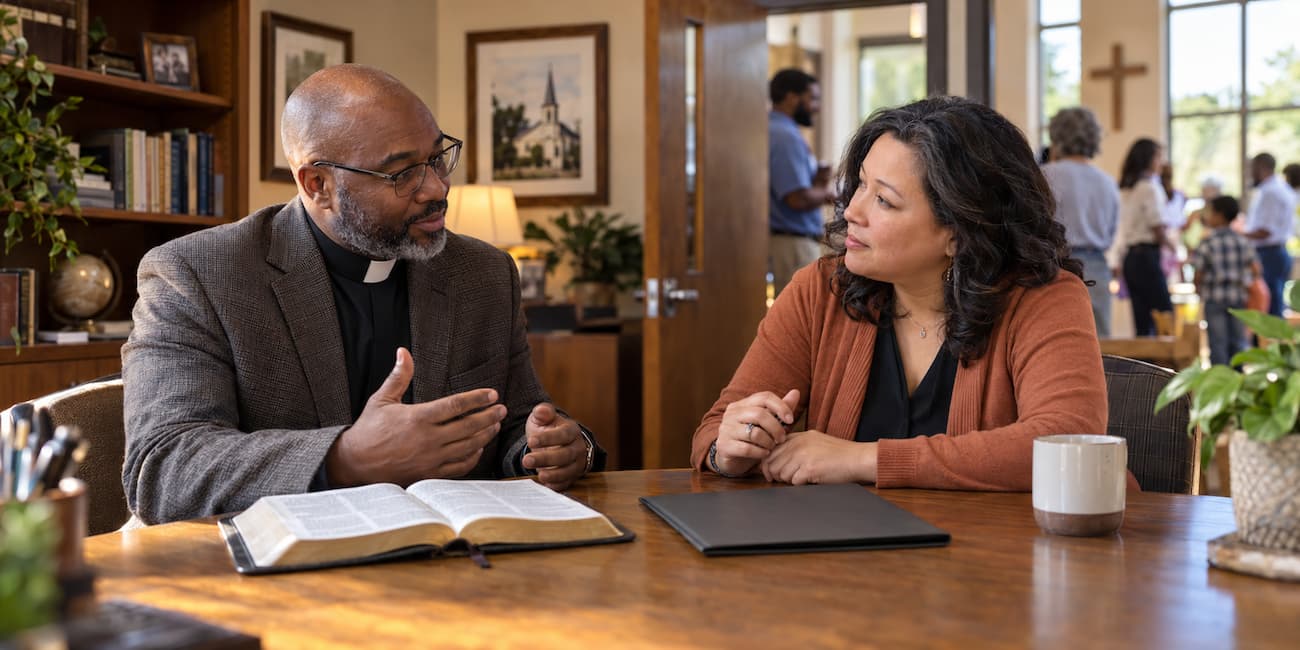
10 Ground Rules for Thriving Church Small Groups
Want to build a thriving small groups ministry that fuels discipleship, fosters authentic community, and aligns with your church’s mission? Start here—with purpose, strategy, and a proven path.




Small groups create an intimate space for believers to connect, grow, and support one another in their faith journey. To launch a successful small group, you need to define its purpose, align your leaders around the strategy, and protect the ministry with clear ground rules and expectations.
Here are 10 rules of small groups that every pastor, church leader, and small group leader should keep in mind to create thriving small groups that fuel discipleship, foster authentic community, and align with your church’s mission.
Define the Destination (What a Disciple Looks Like)
Too many churches start a small-groups ministry because it’s “the thing to do,” but it may not be the thing to do right now. Once you know what you want in a disciple, you can back up and decide what will get you there.
At Saddleback Church, the goal is to form disciples who live out both the Great Commission and the Great Commandment. That looks like:
- Belonging to Christ and His church
- Growing deeper in faith
- Serving using their spiritual gifts
- Sharing the gospel
- Surrendering every aspect of life to God
We use a Spiritual Health Assessment (see Chapter 10 of Small Groups With Purpose) to evaluate progress.
Ask yourself: What’s your version of spiritual health? Define it, then reverse engineer a pathway to get there.
Our answer came from Acts 5:42-47, and it involved a combination of weekend services and small groups (Acts 5:42).
Understand Your Church’s DNA
Talk to the key opinion leaders and the people who built your church to understand the culture before launching small groups. Explore the history of the church and the passion that has shaped it into what it is today.
To lead change, first you need to listen and learn. Ask key stakeholders and long-time members:
- What’s our church’s history?
- What does our lead pastor value most?
- What’s our current discipleship strategy?
Before you ask any of these questions, ask yourself: Do I have the relational capital to ask these questions? If you do, great! If you don’t, take the time to get to know the people who can answer these questions. Relationships take time.
Create a Welcoming Environment
One of the most important rules of small groups is creating an atmosphere where everyone feels welcome. Small groups should be a safe space where people can share openly without feeling judged or excluded.
Small group leaders can help set the tone by bringing a warm and inviting energy so new members are greeted with kindness and returning members feel like they belong.
Establish Clear Expectations and Confidentiality
As a small group leader, it’s important to establish clear expectations from the beginning. How often will you meet? What kind of commitment are you asking from small group participants?
Establishing guidelines for participation, like respecting others’ opinions and maintaining confidentiality, can help members feel safe and committed to the process. Being upfront about the group’s structure, meeting times, and goals will help you establish a clear foundation.
Keep the Group Size Manageable (8–12 members)
While it’s tempting to welcome everyone into your small group, it’s important to maintain a manageable group size so genuine relationships can develop. A group that’s too large may cause people to feel overlooked, but a smaller group makes it easier for everyone to connect and participate.
While the perfect number can vary from one church to the next, a good rule of thumb is to keep your small group between 8 and 12 members.
Encourage Participation and Adapt to the Group’s Needs
Active participation is the heartbeat of any small group. Small group leaders need to create an engaging environment where everyone feels encouraged to participate.
Here are a few ways to foster participation in your new small group:
- Rotate discussion leaders.
- Give quieter members a chance to speak.
- Break the group into smaller pairs for a more personal conversation.
People are more likely to grow when they get to engage in meaningful discussions, so make it a priority to involve every member in a way that works best for their comfort level.
Focus on Prayer, Scripture, and Spiritual Growth
Small groups provide a unique opportunity to dive deeper into God’s Word with people you trust. Consider opening your small group with a prayer, followed by a strong connection to Scripture and spiritual growth.
Whether your small groups focus on a particular Bible study, work through a book, or address a specific topic, be sure to guide members back to the Word.
It’s easy for discussions to wander, so make it a rule to stay rooted in Scripture and encourage your small group members to stick with the topic at hand.
Build Accountability
One of the most powerful aspects of small groups is the space to make trusting connections. Encourage group members to check in on one another regularly. Accountability can take many forms in a small group.
Use the following practices to build accountability into your small group:
- Connect with prayer partners.
- Create accountability for personal spiritual goals.
- Have regular check-ins on how members are doing.
Healthy accountability helps everyone stay committed to their faith, growth, and connection with one another between meetings.
Appoint a Passionate Point Leader
Who in your church has the heart to shepherd people toward spiritual health?
Look for someone with:
- Integrity & humility (Psalm 78:72, 1 Corinthians 2:4-5)
- A servant leader's mindset (1 Peter 5:2-4)
- A willingness to say “yes” to God (John 10:10)
If you have the person, the Small Group Network has the training! To effectively launch a small group ministry, you also need a team. Start praying for people who want to see the same thing you do and who have different gift sets than you.
Then, ask them to join you. Lead with vision and invite them personally.
Guard Your Heart and the Sabbath
One of the greatest concepts I learned about in seminary is the Messiah Complex, where you take on the role of the Messiah and attempt to bear everyone’s burdens. There’s only one problem: you can’t do it. You will burn out.
Watch for signs of the Messiah Complex:
- No Sabbath, quiet time, or rest
- Always “on” and reactive
- Neglecting your own spiritual disciplines
“God blesses obedience, not overwork. A rested leader is a more effective one. Prioritize your soul, or the work for God will destroy the work of God in you.”
Just as God can take your tithe farther than your best 100 percent, He can make six days go farther than your best seven days. It’s all about obedience. If you don’t prepare your heart now, the work for God will destroy the work of God in your life.
For Pastors: Systems that keep small groups healthy
Here are a few additional strategic pointers for church leaders to ensure your small group launch is successful. On the systems side, once you know who belongs where, creating the group from tags you’ve already built takes minutes instead of an afternoon of spreadsheet work.
- Craft a clear strategy: At Saddleback Church, we’ve found the best way to start a small groups ministry is through a campaign strategy. Along with strategy, you need a culture to drive the strategy. Our campaigns are successful because throughout the year our people hear from the pulpit the importance of small groups—through testimonies, sermons, commercials, and personal stories.
- Time your launch strategically: To answer this question, look at both the calendar and your church culture. There are usually three times to start small groups: fall, January, and post-Easter. We use the summer to get ready, September to recruit, and October to launch. Do what culturally fits for your church.
- Build infrastructure before you scale: Just like a city needs roadways to develop as a town turns into a city, your small group ministry needs its roadways. Groups won’t thrive without clear lanes of support. Track attendance, engage with group members, and distribute Bible study materials with software for managing small groups.
- Design a leadership pathway: Leaders also need a roadmap. Just like Jesus moved disciples from “come and see” to “come and die,” your group hosts should grow in stages. Whatever system you design, know where you want to take your leaders.
Here’s a simplified example:
Small Group Meeting Template
A well-structured meeting keeps discussions meaningful and engaging. Consider following this simple format:
- Welcome & Icebreaker (10 min): Start with a fun question or personal check-in.
- Prayer (5 min): Open with a group prayer to set the tone.
- Bible Discussion (30 min): Focus on a passage, book, or theme relevant to the group’s needs.
- Sharing & Accountability (15 min): Allow members to share insights, struggles, and victories.
- Closing Prayer (5 min): End with prayer requests and encouragement.
Common Small Group Challenges & Solutions
Leading a small group comes with unique challenges, but proactive solutions can help keep your group thriving.
- Dwindling attendance: One common struggle is low attendance—people get busy, and consistency fades. To counter this problem, set a clear meeting schedule and send friendly reminders.
- Poor participation: Lack of participation is another issue, often due to shyness or uncertainty. Encourage engagement by using open-ended questions and breaking into smaller discussion pairs.
- Conflict: Group conflicts can also arise, especially when opinions differ. Address conflicts with biblical wisdom, reminding members of Ephesians 4:2-3, which encourages humility, patience, and unity in Christ.
Take the Next Step in Your Small Groups Journey
Launching a small groups ministry isn’t just about logistics; it’s about spiritual transformation. As you take these next steps, remember that success comes from staying aligned with God’s vision, building intentional systems, and surrounding yourself with the right people. You don’t have to do it alone.
Whether you're just starting or retooling your existing ministry, tools like Tithely Groups can help you organize, communicate, and disciple more effectively. With the right strategy and the right support, your small groups can become the heartbeat of your church’s spiritual growth.
Sign Up for Product Updates

Tithely provides the tools you need to engage with your church online, stay connected, increase generosity, and simplify the lives of your staff.
With tools like text and email messaging, custom church apps and websites, church management software, digital giving, and so much more… it’s no wonder why over 53,000 churches in 50 countries trust Tithely to help run their church.
Small groups create an intimate space for believers to connect, grow, and support one another in their faith journey. To launch a successful small group, you need to define its purpose, align your leaders around the strategy, and protect the ministry with clear ground rules and expectations.
Here are 10 rules of small groups that every pastor, church leader, and small group leader should keep in mind to create thriving small groups that fuel discipleship, foster authentic community, and align with your church’s mission.
Define the Destination (What a Disciple Looks Like)
Too many churches start a small-groups ministry because it’s “the thing to do,” but it may not be the thing to do right now. Once you know what you want in a disciple, you can back up and decide what will get you there.
At Saddleback Church, the goal is to form disciples who live out both the Great Commission and the Great Commandment. That looks like:
- Belonging to Christ and His church
- Growing deeper in faith
- Serving using their spiritual gifts
- Sharing the gospel
- Surrendering every aspect of life to God
We use a Spiritual Health Assessment (see Chapter 10 of Small Groups With Purpose) to evaluate progress.
Ask yourself: What’s your version of spiritual health? Define it, then reverse engineer a pathway to get there.
Our answer came from Acts 5:42-47, and it involved a combination of weekend services and small groups (Acts 5:42).
Understand Your Church’s DNA
Talk to the key opinion leaders and the people who built your church to understand the culture before launching small groups. Explore the history of the church and the passion that has shaped it into what it is today.
To lead change, first you need to listen and learn. Ask key stakeholders and long-time members:
- What’s our church’s history?
- What does our lead pastor value most?
- What’s our current discipleship strategy?
Before you ask any of these questions, ask yourself: Do I have the relational capital to ask these questions? If you do, great! If you don’t, take the time to get to know the people who can answer these questions. Relationships take time.
Create a Welcoming Environment
One of the most important rules of small groups is creating an atmosphere where everyone feels welcome. Small groups should be a safe space where people can share openly without feeling judged or excluded.
Small group leaders can help set the tone by bringing a warm and inviting energy so new members are greeted with kindness and returning members feel like they belong.
Establish Clear Expectations and Confidentiality
As a small group leader, it’s important to establish clear expectations from the beginning. How often will you meet? What kind of commitment are you asking from small group participants?
Establishing guidelines for participation, like respecting others’ opinions and maintaining confidentiality, can help members feel safe and committed to the process. Being upfront about the group’s structure, meeting times, and goals will help you establish a clear foundation.
Keep the Group Size Manageable (8–12 members)
While it’s tempting to welcome everyone into your small group, it’s important to maintain a manageable group size so genuine relationships can develop. A group that’s too large may cause people to feel overlooked, but a smaller group makes it easier for everyone to connect and participate.
While the perfect number can vary from one church to the next, a good rule of thumb is to keep your small group between 8 and 12 members.
Encourage Participation and Adapt to the Group’s Needs
Active participation is the heartbeat of any small group. Small group leaders need to create an engaging environment where everyone feels encouraged to participate.
Here are a few ways to foster participation in your new small group:
- Rotate discussion leaders.
- Give quieter members a chance to speak.
- Break the group into smaller pairs for a more personal conversation.
People are more likely to grow when they get to engage in meaningful discussions, so make it a priority to involve every member in a way that works best for their comfort level.
Focus on Prayer, Scripture, and Spiritual Growth
Small groups provide a unique opportunity to dive deeper into God’s Word with people you trust. Consider opening your small group with a prayer, followed by a strong connection to Scripture and spiritual growth.
Whether your small groups focus on a particular Bible study, work through a book, or address a specific topic, be sure to guide members back to the Word.
It’s easy for discussions to wander, so make it a rule to stay rooted in Scripture and encourage your small group members to stick with the topic at hand.
Build Accountability
One of the most powerful aspects of small groups is the space to make trusting connections. Encourage group members to check in on one another regularly. Accountability can take many forms in a small group.
Use the following practices to build accountability into your small group:
- Connect with prayer partners.
- Create accountability for personal spiritual goals.
- Have regular check-ins on how members are doing.
Healthy accountability helps everyone stay committed to their faith, growth, and connection with one another between meetings.
Appoint a Passionate Point Leader
Who in your church has the heart to shepherd people toward spiritual health?
Look for someone with:
- Integrity & humility (Psalm 78:72, 1 Corinthians 2:4-5)
- A servant leader's mindset (1 Peter 5:2-4)
- A willingness to say “yes” to God (John 10:10)
If you have the person, the Small Group Network has the training! To effectively launch a small group ministry, you also need a team. Start praying for people who want to see the same thing you do and who have different gift sets than you.
Then, ask them to join you. Lead with vision and invite them personally.
Guard Your Heart and the Sabbath
One of the greatest concepts I learned about in seminary is the Messiah Complex, where you take on the role of the Messiah and attempt to bear everyone’s burdens. There’s only one problem: you can’t do it. You will burn out.
Watch for signs of the Messiah Complex:
- No Sabbath, quiet time, or rest
- Always “on” and reactive
- Neglecting your own spiritual disciplines
“God blesses obedience, not overwork. A rested leader is a more effective one. Prioritize your soul, or the work for God will destroy the work of God in you.”
Just as God can take your tithe farther than your best 100 percent, He can make six days go farther than your best seven days. It’s all about obedience. If you don’t prepare your heart now, the work for God will destroy the work of God in your life.
For Pastors: Systems that keep small groups healthy
Here are a few additional strategic pointers for church leaders to ensure your small group launch is successful. On the systems side, once you know who belongs where, creating the group from tags you’ve already built takes minutes instead of an afternoon of spreadsheet work.
- Craft a clear strategy: At Saddleback Church, we’ve found the best way to start a small groups ministry is through a campaign strategy. Along with strategy, you need a culture to drive the strategy. Our campaigns are successful because throughout the year our people hear from the pulpit the importance of small groups—through testimonies, sermons, commercials, and personal stories.
- Time your launch strategically: To answer this question, look at both the calendar and your church culture. There are usually three times to start small groups: fall, January, and post-Easter. We use the summer to get ready, September to recruit, and October to launch. Do what culturally fits for your church.
- Build infrastructure before you scale: Just like a city needs roadways to develop as a town turns into a city, your small group ministry needs its roadways. Groups won’t thrive without clear lanes of support. Track attendance, engage with group members, and distribute Bible study materials with software for managing small groups.
- Design a leadership pathway: Leaders also need a roadmap. Just like Jesus moved disciples from “come and see” to “come and die,” your group hosts should grow in stages. Whatever system you design, know where you want to take your leaders.
Here’s a simplified example:
Small Group Meeting Template
A well-structured meeting keeps discussions meaningful and engaging. Consider following this simple format:
- Welcome & Icebreaker (10 min): Start with a fun question or personal check-in.
- Prayer (5 min): Open with a group prayer to set the tone.
- Bible Discussion (30 min): Focus on a passage, book, or theme relevant to the group’s needs.
- Sharing & Accountability (15 min): Allow members to share insights, struggles, and victories.
- Closing Prayer (5 min): End with prayer requests and encouragement.
Common Small Group Challenges & Solutions
Leading a small group comes with unique challenges, but proactive solutions can help keep your group thriving.
- Dwindling attendance: One common struggle is low attendance—people get busy, and consistency fades. To counter this problem, set a clear meeting schedule and send friendly reminders.
- Poor participation: Lack of participation is another issue, often due to shyness or uncertainty. Encourage engagement by using open-ended questions and breaking into smaller discussion pairs.
- Conflict: Group conflicts can also arise, especially when opinions differ. Address conflicts with biblical wisdom, reminding members of Ephesians 4:2-3, which encourages humility, patience, and unity in Christ.
Take the Next Step in Your Small Groups Journey
Launching a small groups ministry isn’t just about logistics; it’s about spiritual transformation. As you take these next steps, remember that success comes from staying aligned with God’s vision, building intentional systems, and surrounding yourself with the right people. You don’t have to do it alone.
Whether you're just starting or retooling your existing ministry, tools like Tithely Groups can help you organize, communicate, and disciple more effectively. With the right strategy and the right support, your small groups can become the heartbeat of your church’s spiritual growth.
podcast transcript
Tithely provides the tools you need to engage with your church online, stay connected, increase generosity, and simplify the lives of your staff.
With tools like text and email messaging, custom church apps and websites, church management software, digital giving, and so much more… it’s no wonder why over 53,000 churches in 50 countries trust Tithely to help run their church.
Small groups create an intimate space for believers to connect, grow, and support one another in their faith journey. To launch a successful small group, you need to define its purpose, align your leaders around the strategy, and protect the ministry with clear ground rules and expectations.
Here are 10 rules of small groups that every pastor, church leader, and small group leader should keep in mind to create thriving small groups that fuel discipleship, foster authentic community, and align with your church’s mission.
Define the Destination (What a Disciple Looks Like)
Too many churches start a small-groups ministry because it’s “the thing to do,” but it may not be the thing to do right now. Once you know what you want in a disciple, you can back up and decide what will get you there.
At Saddleback Church, the goal is to form disciples who live out both the Great Commission and the Great Commandment. That looks like:
- Belonging to Christ and His church
- Growing deeper in faith
- Serving using their spiritual gifts
- Sharing the gospel
- Surrendering every aspect of life to God
We use a Spiritual Health Assessment (see Chapter 10 of Small Groups With Purpose) to evaluate progress.
Ask yourself: What’s your version of spiritual health? Define it, then reverse engineer a pathway to get there.
Our answer came from Acts 5:42-47, and it involved a combination of weekend services and small groups (Acts 5:42).
Understand Your Church’s DNA
Talk to the key opinion leaders and the people who built your church to understand the culture before launching small groups. Explore the history of the church and the passion that has shaped it into what it is today.
To lead change, first you need to listen and learn. Ask key stakeholders and long-time members:
- What’s our church’s history?
- What does our lead pastor value most?
- What’s our current discipleship strategy?
Before you ask any of these questions, ask yourself: Do I have the relational capital to ask these questions? If you do, great! If you don’t, take the time to get to know the people who can answer these questions. Relationships take time.
Create a Welcoming Environment
One of the most important rules of small groups is creating an atmosphere where everyone feels welcome. Small groups should be a safe space where people can share openly without feeling judged or excluded.
Small group leaders can help set the tone by bringing a warm and inviting energy so new members are greeted with kindness and returning members feel like they belong.
Establish Clear Expectations and Confidentiality
As a small group leader, it’s important to establish clear expectations from the beginning. How often will you meet? What kind of commitment are you asking from small group participants?
Establishing guidelines for participation, like respecting others’ opinions and maintaining confidentiality, can help members feel safe and committed to the process. Being upfront about the group’s structure, meeting times, and goals will help you establish a clear foundation.
Keep the Group Size Manageable (8–12 members)
While it’s tempting to welcome everyone into your small group, it’s important to maintain a manageable group size so genuine relationships can develop. A group that’s too large may cause people to feel overlooked, but a smaller group makes it easier for everyone to connect and participate.
While the perfect number can vary from one church to the next, a good rule of thumb is to keep your small group between 8 and 12 members.
Encourage Participation and Adapt to the Group’s Needs
Active participation is the heartbeat of any small group. Small group leaders need to create an engaging environment where everyone feels encouraged to participate.
Here are a few ways to foster participation in your new small group:
- Rotate discussion leaders.
- Give quieter members a chance to speak.
- Break the group into smaller pairs for a more personal conversation.
People are more likely to grow when they get to engage in meaningful discussions, so make it a priority to involve every member in a way that works best for their comfort level.
Focus on Prayer, Scripture, and Spiritual Growth
Small groups provide a unique opportunity to dive deeper into God’s Word with people you trust. Consider opening your small group with a prayer, followed by a strong connection to Scripture and spiritual growth.
Whether your small groups focus on a particular Bible study, work through a book, or address a specific topic, be sure to guide members back to the Word.
It’s easy for discussions to wander, so make it a rule to stay rooted in Scripture and encourage your small group members to stick with the topic at hand.
Build Accountability
One of the most powerful aspects of small groups is the space to make trusting connections. Encourage group members to check in on one another regularly. Accountability can take many forms in a small group.
Use the following practices to build accountability into your small group:
- Connect with prayer partners.
- Create accountability for personal spiritual goals.
- Have regular check-ins on how members are doing.
Healthy accountability helps everyone stay committed to their faith, growth, and connection with one another between meetings.
Appoint a Passionate Point Leader
Who in your church has the heart to shepherd people toward spiritual health?
Look for someone with:
- Integrity & humility (Psalm 78:72, 1 Corinthians 2:4-5)
- A servant leader's mindset (1 Peter 5:2-4)
- A willingness to say “yes” to God (John 10:10)
If you have the person, the Small Group Network has the training! To effectively launch a small group ministry, you also need a team. Start praying for people who want to see the same thing you do and who have different gift sets than you.
Then, ask them to join you. Lead with vision and invite them personally.
Guard Your Heart and the Sabbath
One of the greatest concepts I learned about in seminary is the Messiah Complex, where you take on the role of the Messiah and attempt to bear everyone’s burdens. There’s only one problem: you can’t do it. You will burn out.
Watch for signs of the Messiah Complex:
- No Sabbath, quiet time, or rest
- Always “on” and reactive
- Neglecting your own spiritual disciplines
“God blesses obedience, not overwork. A rested leader is a more effective one. Prioritize your soul, or the work for God will destroy the work of God in you.”
Just as God can take your tithe farther than your best 100 percent, He can make six days go farther than your best seven days. It’s all about obedience. If you don’t prepare your heart now, the work for God will destroy the work of God in your life.
For Pastors: Systems that keep small groups healthy
Here are a few additional strategic pointers for church leaders to ensure your small group launch is successful. On the systems side, once you know who belongs where, creating the group from tags you’ve already built takes minutes instead of an afternoon of spreadsheet work.
- Craft a clear strategy: At Saddleback Church, we’ve found the best way to start a small groups ministry is through a campaign strategy. Along with strategy, you need a culture to drive the strategy. Our campaigns are successful because throughout the year our people hear from the pulpit the importance of small groups—through testimonies, sermons, commercials, and personal stories.
- Time your launch strategically: To answer this question, look at both the calendar and your church culture. There are usually three times to start small groups: fall, January, and post-Easter. We use the summer to get ready, September to recruit, and October to launch. Do what culturally fits for your church.
- Build infrastructure before you scale: Just like a city needs roadways to develop as a town turns into a city, your small group ministry needs its roadways. Groups won’t thrive without clear lanes of support. Track attendance, engage with group members, and distribute Bible study materials with software for managing small groups.
- Design a leadership pathway: Leaders also need a roadmap. Just like Jesus moved disciples from “come and see” to “come and die,” your group hosts should grow in stages. Whatever system you design, know where you want to take your leaders.
Here’s a simplified example:
Small Group Meeting Template
A well-structured meeting keeps discussions meaningful and engaging. Consider following this simple format:
- Welcome & Icebreaker (10 min): Start with a fun question or personal check-in.
- Prayer (5 min): Open with a group prayer to set the tone.
- Bible Discussion (30 min): Focus on a passage, book, or theme relevant to the group’s needs.
- Sharing & Accountability (15 min): Allow members to share insights, struggles, and victories.
- Closing Prayer (5 min): End with prayer requests and encouragement.
Common Small Group Challenges & Solutions
Leading a small group comes with unique challenges, but proactive solutions can help keep your group thriving.
- Dwindling attendance: One common struggle is low attendance—people get busy, and consistency fades. To counter this problem, set a clear meeting schedule and send friendly reminders.
- Poor participation: Lack of participation is another issue, often due to shyness or uncertainty. Encourage engagement by using open-ended questions and breaking into smaller discussion pairs.
- Conflict: Group conflicts can also arise, especially when opinions differ. Address conflicts with biblical wisdom, reminding members of Ephesians 4:2-3, which encourages humility, patience, and unity in Christ.
Take the Next Step in Your Small Groups Journey
Launching a small groups ministry isn’t just about logistics; it’s about spiritual transformation. As you take these next steps, remember that success comes from staying aligned with God’s vision, building intentional systems, and surrounding yourself with the right people. You don’t have to do it alone.
Whether you're just starting or retooling your existing ministry, tools like Tithely Groups can help you organize, communicate, and disciple more effectively. With the right strategy and the right support, your small groups can become the heartbeat of your church’s spiritual growth.
VIDEO transcript
Small groups create an intimate space for believers to connect, grow, and support one another in their faith journey. To launch a successful small group, you need to define its purpose, align your leaders around the strategy, and protect the ministry with clear ground rules and expectations.
Here are 10 rules of small groups that every pastor, church leader, and small group leader should keep in mind to create thriving small groups that fuel discipleship, foster authentic community, and align with your church’s mission.
Define the Destination (What a Disciple Looks Like)
Too many churches start a small-groups ministry because it’s “the thing to do,” but it may not be the thing to do right now. Once you know what you want in a disciple, you can back up and decide what will get you there.
At Saddleback Church, the goal is to form disciples who live out both the Great Commission and the Great Commandment. That looks like:
- Belonging to Christ and His church
- Growing deeper in faith
- Serving using their spiritual gifts
- Sharing the gospel
- Surrendering every aspect of life to God
We use a Spiritual Health Assessment (see Chapter 10 of Small Groups With Purpose) to evaluate progress.
Ask yourself: What’s your version of spiritual health? Define it, then reverse engineer a pathway to get there.
Our answer came from Acts 5:42-47, and it involved a combination of weekend services and small groups (Acts 5:42).
Understand Your Church’s DNA
Talk to the key opinion leaders and the people who built your church to understand the culture before launching small groups. Explore the history of the church and the passion that has shaped it into what it is today.
To lead change, first you need to listen and learn. Ask key stakeholders and long-time members:
- What’s our church’s history?
- What does our lead pastor value most?
- What’s our current discipleship strategy?
Before you ask any of these questions, ask yourself: Do I have the relational capital to ask these questions? If you do, great! If you don’t, take the time to get to know the people who can answer these questions. Relationships take time.
Create a Welcoming Environment
One of the most important rules of small groups is creating an atmosphere where everyone feels welcome. Small groups should be a safe space where people can share openly without feeling judged or excluded.
Small group leaders can help set the tone by bringing a warm and inviting energy so new members are greeted with kindness and returning members feel like they belong.
Establish Clear Expectations and Confidentiality
As a small group leader, it’s important to establish clear expectations from the beginning. How often will you meet? What kind of commitment are you asking from small group participants?
Establishing guidelines for participation, like respecting others’ opinions and maintaining confidentiality, can help members feel safe and committed to the process. Being upfront about the group’s structure, meeting times, and goals will help you establish a clear foundation.
Keep the Group Size Manageable (8–12 members)
While it’s tempting to welcome everyone into your small group, it’s important to maintain a manageable group size so genuine relationships can develop. A group that’s too large may cause people to feel overlooked, but a smaller group makes it easier for everyone to connect and participate.
While the perfect number can vary from one church to the next, a good rule of thumb is to keep your small group between 8 and 12 members.
Encourage Participation and Adapt to the Group’s Needs
Active participation is the heartbeat of any small group. Small group leaders need to create an engaging environment where everyone feels encouraged to participate.
Here are a few ways to foster participation in your new small group:
- Rotate discussion leaders.
- Give quieter members a chance to speak.
- Break the group into smaller pairs for a more personal conversation.
People are more likely to grow when they get to engage in meaningful discussions, so make it a priority to involve every member in a way that works best for their comfort level.
Focus on Prayer, Scripture, and Spiritual Growth
Small groups provide a unique opportunity to dive deeper into God’s Word with people you trust. Consider opening your small group with a prayer, followed by a strong connection to Scripture and spiritual growth.
Whether your small groups focus on a particular Bible study, work through a book, or address a specific topic, be sure to guide members back to the Word.
It’s easy for discussions to wander, so make it a rule to stay rooted in Scripture and encourage your small group members to stick with the topic at hand.
Build Accountability
One of the most powerful aspects of small groups is the space to make trusting connections. Encourage group members to check in on one another regularly. Accountability can take many forms in a small group.
Use the following practices to build accountability into your small group:
- Connect with prayer partners.
- Create accountability for personal spiritual goals.
- Have regular check-ins on how members are doing.
Healthy accountability helps everyone stay committed to their faith, growth, and connection with one another between meetings.
Appoint a Passionate Point Leader
Who in your church has the heart to shepherd people toward spiritual health?
Look for someone with:
- Integrity & humility (Psalm 78:72, 1 Corinthians 2:4-5)
- A servant leader's mindset (1 Peter 5:2-4)
- A willingness to say “yes” to God (John 10:10)
If you have the person, the Small Group Network has the training! To effectively launch a small group ministry, you also need a team. Start praying for people who want to see the same thing you do and who have different gift sets than you.
Then, ask them to join you. Lead with vision and invite them personally.
Guard Your Heart and the Sabbath
One of the greatest concepts I learned about in seminary is the Messiah Complex, where you take on the role of the Messiah and attempt to bear everyone’s burdens. There’s only one problem: you can’t do it. You will burn out.
Watch for signs of the Messiah Complex:
- No Sabbath, quiet time, or rest
- Always “on” and reactive
- Neglecting your own spiritual disciplines
“God blesses obedience, not overwork. A rested leader is a more effective one. Prioritize your soul, or the work for God will destroy the work of God in you.”
Just as God can take your tithe farther than your best 100 percent, He can make six days go farther than your best seven days. It’s all about obedience. If you don’t prepare your heart now, the work for God will destroy the work of God in your life.
For Pastors: Systems that keep small groups healthy
Here are a few additional strategic pointers for church leaders to ensure your small group launch is successful. On the systems side, once you know who belongs where, creating the group from tags you’ve already built takes minutes instead of an afternoon of spreadsheet work.
- Craft a clear strategy: At Saddleback Church, we’ve found the best way to start a small groups ministry is through a campaign strategy. Along with strategy, you need a culture to drive the strategy. Our campaigns are successful because throughout the year our people hear from the pulpit the importance of small groups—through testimonies, sermons, commercials, and personal stories.
- Time your launch strategically: To answer this question, look at both the calendar and your church culture. There are usually three times to start small groups: fall, January, and post-Easter. We use the summer to get ready, September to recruit, and October to launch. Do what culturally fits for your church.
- Build infrastructure before you scale: Just like a city needs roadways to develop as a town turns into a city, your small group ministry needs its roadways. Groups won’t thrive without clear lanes of support. Track attendance, engage with group members, and distribute Bible study materials with software for managing small groups.
- Design a leadership pathway: Leaders also need a roadmap. Just like Jesus moved disciples from “come and see” to “come and die,” your group hosts should grow in stages. Whatever system you design, know where you want to take your leaders.
Here’s a simplified example:
Small Group Meeting Template
A well-structured meeting keeps discussions meaningful and engaging. Consider following this simple format:
- Welcome & Icebreaker (10 min): Start with a fun question or personal check-in.
- Prayer (5 min): Open with a group prayer to set the tone.
- Bible Discussion (30 min): Focus on a passage, book, or theme relevant to the group’s needs.
- Sharing & Accountability (15 min): Allow members to share insights, struggles, and victories.
- Closing Prayer (5 min): End with prayer requests and encouragement.
Common Small Group Challenges & Solutions
Leading a small group comes with unique challenges, but proactive solutions can help keep your group thriving.
- Dwindling attendance: One common struggle is low attendance—people get busy, and consistency fades. To counter this problem, set a clear meeting schedule and send friendly reminders.
- Poor participation: Lack of participation is another issue, often due to shyness or uncertainty. Encourage engagement by using open-ended questions and breaking into smaller discussion pairs.
- Conflict: Group conflicts can also arise, especially when opinions differ. Address conflicts with biblical wisdom, reminding members of Ephesians 4:2-3, which encourages humility, patience, and unity in Christ.
Take the Next Step in Your Small Groups Journey
Launching a small groups ministry isn’t just about logistics; it’s about spiritual transformation. As you take these next steps, remember that success comes from staying aligned with God’s vision, building intentional systems, and surrounding yourself with the right people. You don’t have to do it alone.
Whether you're just starting or retooling your existing ministry, tools like Tithely Groups can help you organize, communicate, and disciple more effectively. With the right strategy and the right support, your small groups can become the heartbeat of your church’s spiritual growth.
Sign Up for Product Updates
Tithely provides the tools you need to engage with your church online, stay connected, increase generosity, and simplify the lives of your staff.
With tools like text and email messaging, custom church apps and websites, church management software, digital giving, and so much more… it’s no wonder why over 53,000 churches in 50 countries trust Tithely to help run their church.

You Might Also Like
More Resources

From increasing giving, managing your congregation, and engaging your church, our collection of resources will keep you up-to-date on the latest church and ministry trends.
Free Resources









.jpeg)