How to Keep Students in Church
Want to help students feel connected beyond Sunday? Digital tools that make it easy to serve, connect, and belong can make a bigger difference than you think.




A few years ago, my boss asked me a terribly uncomfortable question. He said:
“What percentage of our graduated students are plugged into a church?”
I had no answer for him. I literally didn’t know. He then gave me the marching orders that would revolutionize the way I approached student ministry:
“That’s not good enough! You need to figure it out!”
He was and still is right. It’s no secret that many American teenagers graduate from our student ministries and churches, only to slip out of the Church. Some come back after they are married and have kids, but others never return. This reality haunts me, and I’m guessing it bothers you as well.
Do we just shrug as we watch our students walk away? No way! In fact, I believe this trend is reversible.
I’ve come to believe that a few shifts in the way we interact with students in our churches can dramatically alter this trend. Here they are.
3 Ways to Keep Students Involved in Your Church
Mentors
I serve at a church with a great student ministry. The teachers are compelling. The worship is amazing. We have great spaces with an inviting atmosphere, and our student ministry staff is incredibly fun. They put together engaging programs. All that is great, but none of these are what keep students involved in our ministry.
The stickiness of our ministry comes down to adult mentors. Most teenagers are missing something crucial to their well-being and development—adults in their lives who care about them and are investing in them. This gift is increasingly rare in our culture.
Because of this, your church can offer something that a student will rarely find anywhere else: adults who care about students and have committed themselves to mentoring a handful of them.
Nothing keeps students involved in church more than adults who care about them. My advice would be to build your church’s student ministry around small groups and adult mentors. We’ve found that students who are connected to a caring adult mentor are much more likely to stay engaged with the church after graduating from high school.
Serving
We’ve also found that the more a student is engaged in the overall life of the church, rather than just the student ministry, the more likely they are to stay engaged after graduation.
For this reason, one of our primary focuses for our teenagers is serving within our church, particularly in our children’s ministry. I think this is powerful for a couple of reasons.
First, students who are serving discover that they are gifted and have a role in the church right now—not when they are grown up, but right now.
Secondly, students who serve in our church at large, rather than our student ministry, spend more time around adults and feel like they are part of the church rather than just the student ministry. Thirdly, teenagers can be a catalyst of energy and passion.
The older adults get, the more set in their ways they become. Teenagers and young adults bring energy and passion. I think God designed teenagers and young adults to help keep the church on mission.
Students who graduate from high school and have been serving in the church as a whole are much more likely to stay engaged after leaving the student ministry.
Adult Services
In my experience, and according to the research I’ve read, students who attend student worship services but not adult worship services are far more likely to drop out of church. Why?
The main reason is that they have been identifying with the student ministry rather than the church. They feel like they belong with their fellow students and student pastor, but like a foreigner in the adult services, and so they bail.
We should do whatever needs to be done so our high school students engage with the adult worship services. This might mean changing a few elements in the worship services or inviting high school students to serve in the adult services, even on stage.
If you have a worship service for students that runs at the same time as your adult service, you might need to get rid of that student service. Otherwise, they’ll never have an opportunity to engage with the adult service.
Why Students Don’t Walk Away from Church (What’s Working)
Here are four reasons I’ve witnessed that students aren’t walking away from church.
1. They Feel Invited
We all know the feeling when your presence is tolerated but not truly appreciated. This is what it feels like to be a teenager in many churches.
How would a teenager feel invited? It has a lot to do with warmth and relational engagement. These concepts are clearly described in the book Growing Young. Side note: This book is fantastic.
Here are a few essential questions to ask:
- Who is going out of their way to talk to teenagers in the atrium or lobby of your church before and after church services?
- How do you talk about teenagers in your church?
- Would a teenager ever see another teenager on stage on the worship team, giving announcements, praying, or reading scripture?
- Can a teenager be involved now, or do they have to wait until they “grow up?”
2. They Are Invested In
We have a significant problem in our culture. It’s called systemic abandonment, and it’s described in detail in Chap Clark’s book Hurt 2.0. Side note: This book is also fantastic.
Here’s what systemic abandonment is:
Our society, in many ways, has moved away from nurturing and investing in children and teenagers to leaving them on their own to figure out life.
A clear example is sports. Sports used to be about fun, character building, and teamwork. Now, instead of using sports as a vehicle to invest in kids, our society uses kids to win. The result is a group of teenagers who feel abandoned and, in some cases, used by adults.
They feel left to their own devices to navigate the difficult and awkward transition from childhood to adulthood. Teenagers in our culture are often hungry for meaningful relationships with adults. It might not be obvious on the surface, but trust me on this.
The most magnetic strategy we can employ in student ministry is connecting students with caring, Jesus-following adults who will consistently show up for them, invest in them, and mentor them in life and faith.
One of the biggest reasons students aren’t walking away from church is the caring adults—small group leaders, mentors, and others who show up week after week to invest in them. This is one area where our society simply cannot compete with the church.
3. They Didn't Leave Earlier
In my experience, students who are invited, invested in, and engaged with the church as high school students usually do not walk away from church. If we’re going to lose them, we typically lose them before high school.
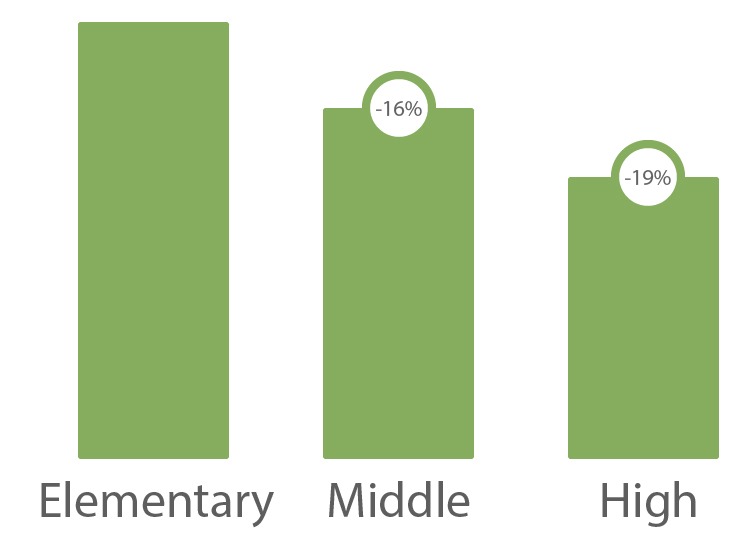
In other words, the ones who walk away from church and from faith are students we lost in the transition from kids ministry to middle school or middle school to high school. If they’re fully engaged in high school, we usually have them as adults.
In some cases, we’ve focused too much on the transition from high school to college/adulthood and not enough on some of the other transition points, which can be just as, if not more, impactful.
The best way to improve these transitions is to begin by studying attendance statistics.
- At what points do you lose the most kids?
- Is it during 5th grade because the children’s ministry feels too “kiddy?”
- Is it during the move from 5th to 6th?
- Is the transition between 8th and 9th?
Study the numbers, decide what’s most critical, and create a strategy to improve retention. Most likely, this strategy will need to focus on parents more than the students themselves because parents are still driving them.
Wrap Up
The way I see it, we don’t have to lose this battle. If our students are invited, invested in, engaged, and still involved in high school, then there is a great chance that they will stay in church and continue following Jesus long after they graduate from our student ministries.
Sign Up for Product Updates

Tithely provides the tools you need to engage with your church online, stay connected, increase generosity, and simplify the lives of your staff.
With tools like text and email messaging, custom church apps and websites, church management software, digital giving, and so much more… it’s no wonder why over 53,000 churches in 50 countries trust Tithely to help run their church.
A few years ago, my boss asked me a terribly uncomfortable question. He said:
“What percentage of our graduated students are plugged into a church?”
I had no answer for him. I literally didn’t know. He then gave me the marching orders that would revolutionize the way I approached student ministry:
“That’s not good enough! You need to figure it out!”
He was and still is right. It’s no secret that many American teenagers graduate from our student ministries and churches, only to slip out of the Church. Some come back after they are married and have kids, but others never return. This reality haunts me, and I’m guessing it bothers you as well.
Do we just shrug as we watch our students walk away? No way! In fact, I believe this trend is reversible.
I’ve come to believe that a few shifts in the way we interact with students in our churches can dramatically alter this trend. Here they are.
3 Ways to Keep Students Involved in Your Church
Mentors
I serve at a church with a great student ministry. The teachers are compelling. The worship is amazing. We have great spaces with an inviting atmosphere, and our student ministry staff is incredibly fun. They put together engaging programs. All that is great, but none of these are what keep students involved in our ministry.
The stickiness of our ministry comes down to adult mentors. Most teenagers are missing something crucial to their well-being and development—adults in their lives who care about them and are investing in them. This gift is increasingly rare in our culture.
Because of this, your church can offer something that a student will rarely find anywhere else: adults who care about students and have committed themselves to mentoring a handful of them.
Nothing keeps students involved in church more than adults who care about them. My advice would be to build your church’s student ministry around small groups and adult mentors. We’ve found that students who are connected to a caring adult mentor are much more likely to stay engaged with the church after graduating from high school.
Serving
We’ve also found that the more a student is engaged in the overall life of the church, rather than just the student ministry, the more likely they are to stay engaged after graduation.
For this reason, one of our primary focuses for our teenagers is serving within our church, particularly in our children’s ministry. I think this is powerful for a couple of reasons.
First, students who are serving discover that they are gifted and have a role in the church right now—not when they are grown up, but right now.
Secondly, students who serve in our church at large, rather than our student ministry, spend more time around adults and feel like they are part of the church rather than just the student ministry. Thirdly, teenagers can be a catalyst of energy and passion.
The older adults get, the more set in their ways they become. Teenagers and young adults bring energy and passion. I think God designed teenagers and young adults to help keep the church on mission.
Students who graduate from high school and have been serving in the church as a whole are much more likely to stay engaged after leaving the student ministry.
Adult Services
In my experience, and according to the research I’ve read, students who attend student worship services but not adult worship services are far more likely to drop out of church. Why?
The main reason is that they have been identifying with the student ministry rather than the church. They feel like they belong with their fellow students and student pastor, but like a foreigner in the adult services, and so they bail.
We should do whatever needs to be done so our high school students engage with the adult worship services. This might mean changing a few elements in the worship services or inviting high school students to serve in the adult services, even on stage.
If you have a worship service for students that runs at the same time as your adult service, you might need to get rid of that student service. Otherwise, they’ll never have an opportunity to engage with the adult service.
Why Students Don’t Walk Away from Church (What’s Working)
Here are four reasons I’ve witnessed that students aren’t walking away from church.
1. They Feel Invited
We all know the feeling when your presence is tolerated but not truly appreciated. This is what it feels like to be a teenager in many churches.
How would a teenager feel invited? It has a lot to do with warmth and relational engagement. These concepts are clearly described in the book Growing Young. Side note: This book is fantastic.
Here are a few essential questions to ask:
- Who is going out of their way to talk to teenagers in the atrium or lobby of your church before and after church services?
- How do you talk about teenagers in your church?
- Would a teenager ever see another teenager on stage on the worship team, giving announcements, praying, or reading scripture?
- Can a teenager be involved now, or do they have to wait until they “grow up?”
2. They Are Invested In
We have a significant problem in our culture. It’s called systemic abandonment, and it’s described in detail in Chap Clark’s book Hurt 2.0. Side note: This book is also fantastic.
Here’s what systemic abandonment is:
Our society, in many ways, has moved away from nurturing and investing in children and teenagers to leaving them on their own to figure out life.
A clear example is sports. Sports used to be about fun, character building, and teamwork. Now, instead of using sports as a vehicle to invest in kids, our society uses kids to win. The result is a group of teenagers who feel abandoned and, in some cases, used by adults.
They feel left to their own devices to navigate the difficult and awkward transition from childhood to adulthood. Teenagers in our culture are often hungry for meaningful relationships with adults. It might not be obvious on the surface, but trust me on this.
The most magnetic strategy we can employ in student ministry is connecting students with caring, Jesus-following adults who will consistently show up for them, invest in them, and mentor them in life and faith.
One of the biggest reasons students aren’t walking away from church is the caring adults—small group leaders, mentors, and others who show up week after week to invest in them. This is one area where our society simply cannot compete with the church.
3. They Didn't Leave Earlier
In my experience, students who are invited, invested in, and engaged with the church as high school students usually do not walk away from church. If we’re going to lose them, we typically lose them before high school.
In other words, the ones who walk away from church and from faith are students we lost in the transition from kids ministry to middle school or middle school to high school. If they’re fully engaged in high school, we usually have them as adults.
In some cases, we’ve focused too much on the transition from high school to college/adulthood and not enough on some of the other transition points, which can be just as, if not more, impactful.
The best way to improve these transitions is to begin by studying attendance statistics.
- At what points do you lose the most kids?
- Is it during 5th grade because the children’s ministry feels too “kiddy?”
- Is it during the move from 5th to 6th?
- Is the transition between 8th and 9th?
Study the numbers, decide what’s most critical, and create a strategy to improve retention. Most likely, this strategy will need to focus on parents more than the students themselves because parents are still driving them.
Wrap Up
The way I see it, we don’t have to lose this battle. If our students are invited, invested in, engaged, and still involved in high school, then there is a great chance that they will stay in church and continue following Jesus long after they graduate from our student ministries.
podcast transcript
Tithely provides the tools you need to engage with your church online, stay connected, increase generosity, and simplify the lives of your staff.
With tools like text and email messaging, custom church apps and websites, church management software, digital giving, and so much more… it’s no wonder why over 53,000 churches in 50 countries trust Tithely to help run their church.
A few years ago, my boss asked me a terribly uncomfortable question. He said:
“What percentage of our graduated students are plugged into a church?”
I had no answer for him. I literally didn’t know. He then gave me the marching orders that would revolutionize the way I approached student ministry:
“That’s not good enough! You need to figure it out!”
He was and still is right. It’s no secret that many American teenagers graduate from our student ministries and churches, only to slip out of the Church. Some come back after they are married and have kids, but others never return. This reality haunts me, and I’m guessing it bothers you as well.
Do we just shrug as we watch our students walk away? No way! In fact, I believe this trend is reversible.
I’ve come to believe that a few shifts in the way we interact with students in our churches can dramatically alter this trend. Here they are.
3 Ways to Keep Students Involved in Your Church
Mentors
I serve at a church with a great student ministry. The teachers are compelling. The worship is amazing. We have great spaces with an inviting atmosphere, and our student ministry staff is incredibly fun. They put together engaging programs. All that is great, but none of these are what keep students involved in our ministry.
The stickiness of our ministry comes down to adult mentors. Most teenagers are missing something crucial to their well-being and development—adults in their lives who care about them and are investing in them. This gift is increasingly rare in our culture.
Because of this, your church can offer something that a student will rarely find anywhere else: adults who care about students and have committed themselves to mentoring a handful of them.
Nothing keeps students involved in church more than adults who care about them. My advice would be to build your church’s student ministry around small groups and adult mentors. We’ve found that students who are connected to a caring adult mentor are much more likely to stay engaged with the church after graduating from high school.
Serving
We’ve also found that the more a student is engaged in the overall life of the church, rather than just the student ministry, the more likely they are to stay engaged after graduation.
For this reason, one of our primary focuses for our teenagers is serving within our church, particularly in our children’s ministry. I think this is powerful for a couple of reasons.
First, students who are serving discover that they are gifted and have a role in the church right now—not when they are grown up, but right now.
Secondly, students who serve in our church at large, rather than our student ministry, spend more time around adults and feel like they are part of the church rather than just the student ministry. Thirdly, teenagers can be a catalyst of energy and passion.
The older adults get, the more set in their ways they become. Teenagers and young adults bring energy and passion. I think God designed teenagers and young adults to help keep the church on mission.
Students who graduate from high school and have been serving in the church as a whole are much more likely to stay engaged after leaving the student ministry.
Adult Services
In my experience, and according to the research I’ve read, students who attend student worship services but not adult worship services are far more likely to drop out of church. Why?
The main reason is that they have been identifying with the student ministry rather than the church. They feel like they belong with their fellow students and student pastor, but like a foreigner in the adult services, and so they bail.
We should do whatever needs to be done so our high school students engage with the adult worship services. This might mean changing a few elements in the worship services or inviting high school students to serve in the adult services, even on stage.
If you have a worship service for students that runs at the same time as your adult service, you might need to get rid of that student service. Otherwise, they’ll never have an opportunity to engage with the adult service.
Why Students Don’t Walk Away from Church (What’s Working)
Here are four reasons I’ve witnessed that students aren’t walking away from church.
1. They Feel Invited
We all know the feeling when your presence is tolerated but not truly appreciated. This is what it feels like to be a teenager in many churches.
How would a teenager feel invited? It has a lot to do with warmth and relational engagement. These concepts are clearly described in the book Growing Young. Side note: This book is fantastic.
Here are a few essential questions to ask:
- Who is going out of their way to talk to teenagers in the atrium or lobby of your church before and after church services?
- How do you talk about teenagers in your church?
- Would a teenager ever see another teenager on stage on the worship team, giving announcements, praying, or reading scripture?
- Can a teenager be involved now, or do they have to wait until they “grow up?”
2. They Are Invested In
We have a significant problem in our culture. It’s called systemic abandonment, and it’s described in detail in Chap Clark’s book Hurt 2.0. Side note: This book is also fantastic.
Here’s what systemic abandonment is:
Our society, in many ways, has moved away from nurturing and investing in children and teenagers to leaving them on their own to figure out life.
A clear example is sports. Sports used to be about fun, character building, and teamwork. Now, instead of using sports as a vehicle to invest in kids, our society uses kids to win. The result is a group of teenagers who feel abandoned and, in some cases, used by adults.
They feel left to their own devices to navigate the difficult and awkward transition from childhood to adulthood. Teenagers in our culture are often hungry for meaningful relationships with adults. It might not be obvious on the surface, but trust me on this.
The most magnetic strategy we can employ in student ministry is connecting students with caring, Jesus-following adults who will consistently show up for them, invest in them, and mentor them in life and faith.
One of the biggest reasons students aren’t walking away from church is the caring adults—small group leaders, mentors, and others who show up week after week to invest in them. This is one area where our society simply cannot compete with the church.
3. They Didn't Leave Earlier
In my experience, students who are invited, invested in, and engaged with the church as high school students usually do not walk away from church. If we’re going to lose them, we typically lose them before high school.
In other words, the ones who walk away from church and from faith are students we lost in the transition from kids ministry to middle school or middle school to high school. If they’re fully engaged in high school, we usually have them as adults.
In some cases, we’ve focused too much on the transition from high school to college/adulthood and not enough on some of the other transition points, which can be just as, if not more, impactful.
The best way to improve these transitions is to begin by studying attendance statistics.
- At what points do you lose the most kids?
- Is it during 5th grade because the children’s ministry feels too “kiddy?”
- Is it during the move from 5th to 6th?
- Is the transition between 8th and 9th?
Study the numbers, decide what’s most critical, and create a strategy to improve retention. Most likely, this strategy will need to focus on parents more than the students themselves because parents are still driving them.
Wrap Up
The way I see it, we don’t have to lose this battle. If our students are invited, invested in, engaged, and still involved in high school, then there is a great chance that they will stay in church and continue following Jesus long after they graduate from our student ministries.
VIDEO transcript
A few years ago, my boss asked me a terribly uncomfortable question. He said:
“What percentage of our graduated students are plugged into a church?”
I had no answer for him. I literally didn’t know. He then gave me the marching orders that would revolutionize the way I approached student ministry:
“That’s not good enough! You need to figure it out!”
He was and still is right. It’s no secret that many American teenagers graduate from our student ministries and churches, only to slip out of the Church. Some come back after they are married and have kids, but others never return. This reality haunts me, and I’m guessing it bothers you as well.
Do we just shrug as we watch our students walk away? No way! In fact, I believe this trend is reversible.
I’ve come to believe that a few shifts in the way we interact with students in our churches can dramatically alter this trend. Here they are.
3 Ways to Keep Students Involved in Your Church
Mentors
I serve at a church with a great student ministry. The teachers are compelling. The worship is amazing. We have great spaces with an inviting atmosphere, and our student ministry staff is incredibly fun. They put together engaging programs. All that is great, but none of these are what keep students involved in our ministry.
The stickiness of our ministry comes down to adult mentors. Most teenagers are missing something crucial to their well-being and development—adults in their lives who care about them and are investing in them. This gift is increasingly rare in our culture.
Because of this, your church can offer something that a student will rarely find anywhere else: adults who care about students and have committed themselves to mentoring a handful of them.
Nothing keeps students involved in church more than adults who care about them. My advice would be to build your church’s student ministry around small groups and adult mentors. We’ve found that students who are connected to a caring adult mentor are much more likely to stay engaged with the church after graduating from high school.
Serving
We’ve also found that the more a student is engaged in the overall life of the church, rather than just the student ministry, the more likely they are to stay engaged after graduation.
For this reason, one of our primary focuses for our teenagers is serving within our church, particularly in our children’s ministry. I think this is powerful for a couple of reasons.
First, students who are serving discover that they are gifted and have a role in the church right now—not when they are grown up, but right now.
Secondly, students who serve in our church at large, rather than our student ministry, spend more time around adults and feel like they are part of the church rather than just the student ministry. Thirdly, teenagers can be a catalyst of energy and passion.
The older adults get, the more set in their ways they become. Teenagers and young adults bring energy and passion. I think God designed teenagers and young adults to help keep the church on mission.
Students who graduate from high school and have been serving in the church as a whole are much more likely to stay engaged after leaving the student ministry.
Adult Services
In my experience, and according to the research I’ve read, students who attend student worship services but not adult worship services are far more likely to drop out of church. Why?
The main reason is that they have been identifying with the student ministry rather than the church. They feel like they belong with their fellow students and student pastor, but like a foreigner in the adult services, and so they bail.
We should do whatever needs to be done so our high school students engage with the adult worship services. This might mean changing a few elements in the worship services or inviting high school students to serve in the adult services, even on stage.
If you have a worship service for students that runs at the same time as your adult service, you might need to get rid of that student service. Otherwise, they’ll never have an opportunity to engage with the adult service.
Why Students Don’t Walk Away from Church (What’s Working)
Here are four reasons I’ve witnessed that students aren’t walking away from church.
1. They Feel Invited
We all know the feeling when your presence is tolerated but not truly appreciated. This is what it feels like to be a teenager in many churches.
How would a teenager feel invited? It has a lot to do with warmth and relational engagement. These concepts are clearly described in the book Growing Young. Side note: This book is fantastic.
Here are a few essential questions to ask:
- Who is going out of their way to talk to teenagers in the atrium or lobby of your church before and after church services?
- How do you talk about teenagers in your church?
- Would a teenager ever see another teenager on stage on the worship team, giving announcements, praying, or reading scripture?
- Can a teenager be involved now, or do they have to wait until they “grow up?”
2. They Are Invested In
We have a significant problem in our culture. It’s called systemic abandonment, and it’s described in detail in Chap Clark’s book Hurt 2.0. Side note: This book is also fantastic.
Here’s what systemic abandonment is:
Our society, in many ways, has moved away from nurturing and investing in children and teenagers to leaving them on their own to figure out life.
A clear example is sports. Sports used to be about fun, character building, and teamwork. Now, instead of using sports as a vehicle to invest in kids, our society uses kids to win. The result is a group of teenagers who feel abandoned and, in some cases, used by adults.
They feel left to their own devices to navigate the difficult and awkward transition from childhood to adulthood. Teenagers in our culture are often hungry for meaningful relationships with adults. It might not be obvious on the surface, but trust me on this.
The most magnetic strategy we can employ in student ministry is connecting students with caring, Jesus-following adults who will consistently show up for them, invest in them, and mentor them in life and faith.
One of the biggest reasons students aren’t walking away from church is the caring adults—small group leaders, mentors, and others who show up week after week to invest in them. This is one area where our society simply cannot compete with the church.
3. They Didn't Leave Earlier
In my experience, students who are invited, invested in, and engaged with the church as high school students usually do not walk away from church. If we’re going to lose them, we typically lose them before high school.
In other words, the ones who walk away from church and from faith are students we lost in the transition from kids ministry to middle school or middle school to high school. If they’re fully engaged in high school, we usually have them as adults.
In some cases, we’ve focused too much on the transition from high school to college/adulthood and not enough on some of the other transition points, which can be just as, if not more, impactful.
The best way to improve these transitions is to begin by studying attendance statistics.
- At what points do you lose the most kids?
- Is it during 5th grade because the children’s ministry feels too “kiddy?”
- Is it during the move from 5th to 6th?
- Is the transition between 8th and 9th?
Study the numbers, decide what’s most critical, and create a strategy to improve retention. Most likely, this strategy will need to focus on parents more than the students themselves because parents are still driving them.
Wrap Up
The way I see it, we don’t have to lose this battle. If our students are invited, invested in, engaged, and still involved in high school, then there is a great chance that they will stay in church and continue following Jesus long after they graduate from our student ministries.
Sign Up for Product Updates
Tithely provides the tools you need to engage with your church online, stay connected, increase generosity, and simplify the lives of your staff.
With tools like text and email messaging, custom church apps and websites, church management software, digital giving, and so much more… it’s no wonder why over 53,000 churches in 50 countries trust Tithely to help run their church.

You Might Also Like
More Resources

From increasing giving, managing your congregation, and engaging your church, our collection of resources will keep you up-to-date on the latest church and ministry trends.
Free Resources.jpg)
.jpg)