Small Digital Changes That Make a Big Difference for Churches
Most churches don’t need a massive tech overhaul to improve their digital presence. In fact, some of the biggest wins come from small, intentional changes that make it easier for people to engage, give, and take their next step. If you’ve been putting off “going digital” because it feels overwhelming, this is where to start.




Why Digital Improvements Feel Overwhelming for Many Churches
When churches talk about “going digital,” it often feels overwhelming.
New platforms. New systems. New staff. New budgets.
For many leaders, digital improvement sounds like a massive project. Like something that requires a full website rebuild or hiring a communications director. Because it feels so big, it often gets pushed down the priority list.
But here’s the good news: some of the most meaningful digital improvements don’t come from major overhauls.
They come from small, intentional changes that remove friction and make it easier for people to engage.
When people have positive, clear interactions with you, they’re much more likely to keep coming back.
Let’s look at a few small digital changes that can make a surprisingly big difference for your church.
Make Your Church Website Clear for First-Time Visitors
Most people don’t show up to church before checking out the website. Your website isn’t just a resource for members, it’s your digital front door.
When someone lands on your homepage, they should immediately be able to answer three questions:
- Who are you?
- Where do you meet?
- What should I expect?
Many church websites are unintentionally built for insiders. They’re filled with ministry names, internal language, and announcements that make sense to long-time attenders but confuse guests.
The result is a site that technically has the information people need, but not in a way that’s easy to find.
A small but powerful change is simply reorganizing your homepage around the guest experience. Service times and location should be front and center. A clear “Plan Your Visit” or “I’m New” button should be easy to spot. A short “What to Expect” section can go a long way in reducing anxiety for first-time visitors.
Another common issue is church jargon. Terms like “Next Gen,” “Life Groups,” or “Equip Night” may be meaningful internally, but they don’t help a newcomer understand what’s actually being offered.
Renaming menu items in plain language or adding short explanations removes unnecessary guesswork and builds confidence.
Offer Multiple Online Giving Options
Generosity grows when giving is simple.
If the only way to give is by cash or check on Sunday morning, you’re limiting participation. People live, bank, and pay bills online. And increasingly, they give digitally.
It’s not wrong to continue to pass a collection basket on Sunday morning. But offering multiple ways to give removes barriers and meets people where they already are.
Some people prefer to give online. Others prefer to give through a mobile app. Some respond best to text-to-give. Many want to set up recurring giving so they don’t have to think about it each week.
One of the biggest missed opportunities is website placement. You may technically have online giving, but it’s buried three clicks deep on the website. A small change like adding a “Give” button to your main menu or placing a giving button on your homepage can dramatically increase giving.
Simplify the Next Step Experience for Guests
One of the most frustrating experiences for church leaders is seeing someone show interest… and then disappear.
They fill out a card. They raise a hand. They mention wanting to get involved. And then nothing happens.
Often, the issue isn’t a lack of desire. It’s a lack of clarity.
If someone wants to join a group, serve, get baptized, or request prayer, what should they do? If the answer is “email the church,” that’s friction. People are busy. If the process isn’t clear and simple, it’s easy for good intentions to fade.
Small changes can make a huge difference here. A single “Next Steps” page that clearly lists ways to get involved, with simple buttons and short forms, removes confusion. Clear labels like “Join a Group,” “Serve,” or “Request Prayer” help people take action without overthinking.
Even basic automation can dramatically improve the experience. When someone fills out a form, they should receive a confirmation, a thank-you, and clear expectations about what will happen next. This builds trust while reducing the burden on your staff.
Communicate With Intention, Not Volume
Many churches are communicating more than ever, yet people still feel out of the loop. The problem isn’t how often communication happens, but how clear it is.
Long emails filled with announcements, vague subject lines, and inconsistent schedules make it hard for people to know what actually matters. A small shift toward intentional communication can change that.
Instead of packing everything into a single message, focus on one main call to action. Be clear about what you’re asking people to do and why it matters. Use subject lines that actually say something. Establish a predictable rhythm so people know when to expect updates.
Segmentation is another small change with a big impact. Not every message is for everyone. Parents don’t need youth updates. Guest Services Volunteers don’t need details about the kids' ministry. When you send relevant information to the right people, engagement goes up, and noise goes down.
Improve Your Church’s Digital First Impression
Your building may be welcoming, your people warm, and your worship may be amazing. But online, people don’t know that yet.
Your digital presence is your first handshake.
One of the simplest and most overlooked improvements is your Google Business Profile. Keeping service times, holiday schedules, photos, and contact information up to date directly affects search results and first impressions. It’s free, and it’s incredibly powerful.
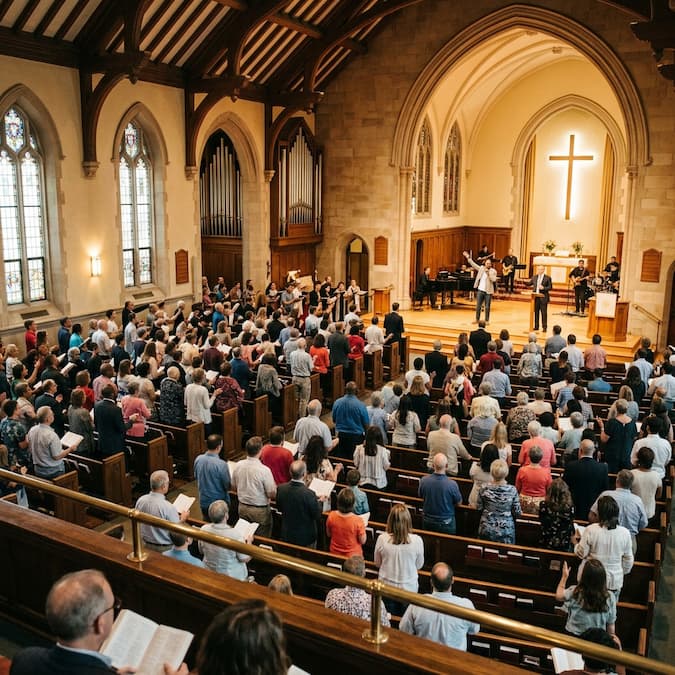
Photos matter too. Stock images and empty sanctuary shots don’t build trust. Real photos of the people who attend your church do. When people see smiling volunteers, kids ministry in action, and authentic moments of worship, they can picture themselves there.
When people know what to expect, they’re far more likely to show up.
Read: How churches can use their Google My Business profile to reach people in their community with a few simple updates.
Connect Your Church Systems Together
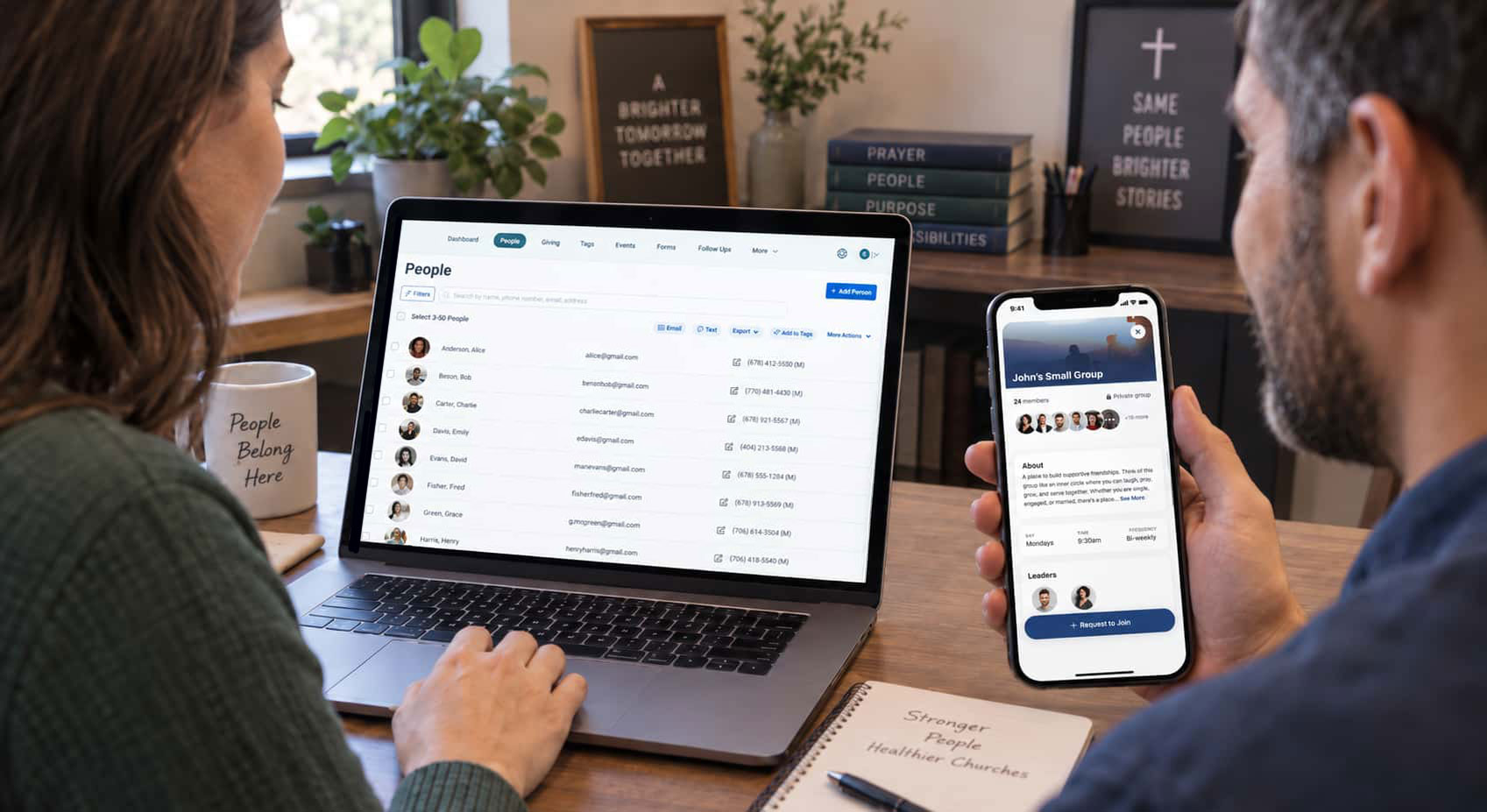
Disconnected systems create unnecessary work. When your giving platform, people database, forms, and communication tools don’t connect, information falls through the cracks.
Staff end up entering the same data multiple times. Follow-up gets delayed or dropped. Information gets lost. And frustration grows.
If you can even get some of your systems to talk to each other, it can save you hours every week and dramatically improve follow-up.
For example, when giving flows into your church management software, forms trigger follow-up messages, and event registrations connect to your contact database, ministry becomes much smoother
Less admin work means more time for people.
Use Digital to Support In-Person Ministry
Digital tools aren’t meant to replace relationships. They’re meant to remove barriers so relationships can happen more easily.
Allowing people to register for events ahead of time, pre-check kids, or sign up for groups online reduces stress on Sunday mornings. That alone can improve the experience for families and staff.
Digital follow-up matters too. Sending sermon notes, recapping announcements, or highlighting next steps during the week helps reinforce what happened on Sunday and keeps momentum going.
Ministry shouldn’t end when people leave the building.
Focus on Progress, Not Perfection
This is where many churches get stuck. They wait for the perfect website or the perfect system.
And because perfection never comes, nothing changes.
You don’t need a massive overhaul, a big budget, or a huge tech team.
Pick one small website improvement, giving enhancement, or communication tweak. Implement it and see what happens. Adjust as necessary. Then do the next thing.
Making digital changes can be pretty simple if you want it to be.
Small Digital Improvements Can Lead to Big Kingdom Impact
When your website is clear, people show up. When giving is easy, generosity grows.
When the next steps are obvious, engagement increases. And when communication is intentional, confusion drops.
Small digital changes improve everyone’s experience. And better experiences help people connect more deeply with your church and with God.
So just get started. One step at a time.
If your next step is to try a new church management system, try Tithely free for 30-days.
Sign Up for Product Updates

Stephen Altrogge lives in Tallahassee, Florida. He is a dad to three wonderful girls and has written for publications like The Gospel Coalition, Church Leaders, Crosswalk, and many more. When he’s not writing, you’ll find him reading or watching The Lord Of the Rings for the 10th time.
Why Digital Improvements Feel Overwhelming for Many Churches
When churches talk about “going digital,” it often feels overwhelming.
New platforms. New systems. New staff. New budgets.
For many leaders, digital improvement sounds like a massive project. Like something that requires a full website rebuild or hiring a communications director. Because it feels so big, it often gets pushed down the priority list.
But here’s the good news: some of the most meaningful digital improvements don’t come from major overhauls.
They come from small, intentional changes that remove friction and make it easier for people to engage.
When people have positive, clear interactions with you, they’re much more likely to keep coming back.
Let’s look at a few small digital changes that can make a surprisingly big difference for your church.
Make Your Church Website Clear for First-Time Visitors
Most people don’t show up to church before checking out the website. Your website isn’t just a resource for members, it’s your digital front door.
When someone lands on your homepage, they should immediately be able to answer three questions:
- Who are you?
- Where do you meet?
- What should I expect?
Many church websites are unintentionally built for insiders. They’re filled with ministry names, internal language, and announcements that make sense to long-time attenders but confuse guests.
The result is a site that technically has the information people need, but not in a way that’s easy to find.
A small but powerful change is simply reorganizing your homepage around the guest experience. Service times and location should be front and center. A clear “Plan Your Visit” or “I’m New” button should be easy to spot. A short “What to Expect” section can go a long way in reducing anxiety for first-time visitors.
Another common issue is church jargon. Terms like “Next Gen,” “Life Groups,” or “Equip Night” may be meaningful internally, but they don’t help a newcomer understand what’s actually being offered.
Renaming menu items in plain language or adding short explanations removes unnecessary guesswork and builds confidence.
Offer Multiple Online Giving Options
Generosity grows when giving is simple.
If the only way to give is by cash or check on Sunday morning, you’re limiting participation. People live, bank, and pay bills online. And increasingly, they give digitally.
It’s not wrong to continue to pass a collection basket on Sunday morning. But offering multiple ways to give removes barriers and meets people where they already are.
Some people prefer to give online. Others prefer to give through a mobile app. Some respond best to text-to-give. Many want to set up recurring giving so they don’t have to think about it each week.
One of the biggest missed opportunities is website placement. You may technically have online giving, but it’s buried three clicks deep on the website. A small change like adding a “Give” button to your main menu or placing a giving button on your homepage can dramatically increase giving.
Simplify the Next Step Experience for Guests
One of the most frustrating experiences for church leaders is seeing someone show interest… and then disappear.
They fill out a card. They raise a hand. They mention wanting to get involved. And then nothing happens.
Often, the issue isn’t a lack of desire. It’s a lack of clarity.
If someone wants to join a group, serve, get baptized, or request prayer, what should they do? If the answer is “email the church,” that’s friction. People are busy. If the process isn’t clear and simple, it’s easy for good intentions to fade.
Small changes can make a huge difference here. A single “Next Steps” page that clearly lists ways to get involved, with simple buttons and short forms, removes confusion. Clear labels like “Join a Group,” “Serve,” or “Request Prayer” help people take action without overthinking.
Even basic automation can dramatically improve the experience. When someone fills out a form, they should receive a confirmation, a thank-you, and clear expectations about what will happen next. This builds trust while reducing the burden on your staff.
Communicate With Intention, Not Volume
Many churches are communicating more than ever, yet people still feel out of the loop. The problem isn’t how often communication happens, but how clear it is.
Long emails filled with announcements, vague subject lines, and inconsistent schedules make it hard for people to know what actually matters. A small shift toward intentional communication can change that.
Instead of packing everything into a single message, focus on one main call to action. Be clear about what you’re asking people to do and why it matters. Use subject lines that actually say something. Establish a predictable rhythm so people know when to expect updates.
Segmentation is another small change with a big impact. Not every message is for everyone. Parents don’t need youth updates. Guest Services Volunteers don’t need details about the kids' ministry. When you send relevant information to the right people, engagement goes up, and noise goes down.
Improve Your Church’s Digital First Impression
Your building may be welcoming, your people warm, and your worship may be amazing. But online, people don’t know that yet.
Your digital presence is your first handshake.
One of the simplest and most overlooked improvements is your Google Business Profile. Keeping service times, holiday schedules, photos, and contact information up to date directly affects search results and first impressions. It’s free, and it’s incredibly powerful.
Photos matter too. Stock images and empty sanctuary shots don’t build trust. Real photos of the people who attend your church do. When people see smiling volunteers, kids ministry in action, and authentic moments of worship, they can picture themselves there.
When people know what to expect, they’re far more likely to show up.
Read: How churches can use their Google My Business profile to reach people in their community with a few simple updates.
Connect Your Church Systems Together
Disconnected systems create unnecessary work. When your giving platform, people database, forms, and communication tools don’t connect, information falls through the cracks.
Staff end up entering the same data multiple times. Follow-up gets delayed or dropped. Information gets lost. And frustration grows.
If you can even get some of your systems to talk to each other, it can save you hours every week and dramatically improve follow-up.
For example, when giving flows into your church management software, forms trigger follow-up messages, and event registrations connect to your contact database, ministry becomes much smoother
Less admin work means more time for people.
Use Digital to Support In-Person Ministry
Digital tools aren’t meant to replace relationships. They’re meant to remove barriers so relationships can happen more easily.
Allowing people to register for events ahead of time, pre-check kids, or sign up for groups online reduces stress on Sunday mornings. That alone can improve the experience for families and staff.
Digital follow-up matters too. Sending sermon notes, recapping announcements, or highlighting next steps during the week helps reinforce what happened on Sunday and keeps momentum going.
Ministry shouldn’t end when people leave the building.
Focus on Progress, Not Perfection
This is where many churches get stuck. They wait for the perfect website or the perfect system.
And because perfection never comes, nothing changes.
You don’t need a massive overhaul, a big budget, or a huge tech team.
Pick one small website improvement, giving enhancement, or communication tweak. Implement it and see what happens. Adjust as necessary. Then do the next thing.
Making digital changes can be pretty simple if you want it to be.
Small Digital Improvements Can Lead to Big Kingdom Impact
When your website is clear, people show up. When giving is easy, generosity grows.
When the next steps are obvious, engagement increases. And when communication is intentional, confusion drops.
Small digital changes improve everyone’s experience. And better experiences help people connect more deeply with your church and with God.
So just get started. One step at a time.
If your next step is to try a new church management system, try Tithely free for 30-days.
podcast transcript
Stephen Altrogge lives in Tallahassee, Florida. He is a dad to three wonderful girls and has written for publications like The Gospel Coalition, Church Leaders, Crosswalk, and many more. When he’s not writing, you’ll find him reading or watching The Lord Of the Rings for the 10th time.
Why Digital Improvements Feel Overwhelming for Many Churches
When churches talk about “going digital,” it often feels overwhelming.
New platforms. New systems. New staff. New budgets.
For many leaders, digital improvement sounds like a massive project. Like something that requires a full website rebuild or hiring a communications director. Because it feels so big, it often gets pushed down the priority list.
But here’s the good news: some of the most meaningful digital improvements don’t come from major overhauls.
They come from small, intentional changes that remove friction and make it easier for people to engage.
When people have positive, clear interactions with you, they’re much more likely to keep coming back.
Let’s look at a few small digital changes that can make a surprisingly big difference for your church.
Make Your Church Website Clear for First-Time Visitors
Most people don’t show up to church before checking out the website. Your website isn’t just a resource for members, it’s your digital front door.
When someone lands on your homepage, they should immediately be able to answer three questions:
- Who are you?
- Where do you meet?
- What should I expect?
Many church websites are unintentionally built for insiders. They’re filled with ministry names, internal language, and announcements that make sense to long-time attenders but confuse guests.
The result is a site that technically has the information people need, but not in a way that’s easy to find.
A small but powerful change is simply reorganizing your homepage around the guest experience. Service times and location should be front and center. A clear “Plan Your Visit” or “I’m New” button should be easy to spot. A short “What to Expect” section can go a long way in reducing anxiety for first-time visitors.
Another common issue is church jargon. Terms like “Next Gen,” “Life Groups,” or “Equip Night” may be meaningful internally, but they don’t help a newcomer understand what’s actually being offered.
Renaming menu items in plain language or adding short explanations removes unnecessary guesswork and builds confidence.
Offer Multiple Online Giving Options
Generosity grows when giving is simple.
If the only way to give is by cash or check on Sunday morning, you’re limiting participation. People live, bank, and pay bills online. And increasingly, they give digitally.
It’s not wrong to continue to pass a collection basket on Sunday morning. But offering multiple ways to give removes barriers and meets people where they already are.
Some people prefer to give online. Others prefer to give through a mobile app. Some respond best to text-to-give. Many want to set up recurring giving so they don’t have to think about it each week.
One of the biggest missed opportunities is website placement. You may technically have online giving, but it’s buried three clicks deep on the website. A small change like adding a “Give” button to your main menu or placing a giving button on your homepage can dramatically increase giving.
Simplify the Next Step Experience for Guests
One of the most frustrating experiences for church leaders is seeing someone show interest… and then disappear.
They fill out a card. They raise a hand. They mention wanting to get involved. And then nothing happens.
Often, the issue isn’t a lack of desire. It’s a lack of clarity.
If someone wants to join a group, serve, get baptized, or request prayer, what should they do? If the answer is “email the church,” that’s friction. People are busy. If the process isn’t clear and simple, it’s easy for good intentions to fade.
Small changes can make a huge difference here. A single “Next Steps” page that clearly lists ways to get involved, with simple buttons and short forms, removes confusion. Clear labels like “Join a Group,” “Serve,” or “Request Prayer” help people take action without overthinking.
Even basic automation can dramatically improve the experience. When someone fills out a form, they should receive a confirmation, a thank-you, and clear expectations about what will happen next. This builds trust while reducing the burden on your staff.
Communicate With Intention, Not Volume
Many churches are communicating more than ever, yet people still feel out of the loop. The problem isn’t how often communication happens, but how clear it is.
Long emails filled with announcements, vague subject lines, and inconsistent schedules make it hard for people to know what actually matters. A small shift toward intentional communication can change that.
Instead of packing everything into a single message, focus on one main call to action. Be clear about what you’re asking people to do and why it matters. Use subject lines that actually say something. Establish a predictable rhythm so people know when to expect updates.
Segmentation is another small change with a big impact. Not every message is for everyone. Parents don’t need youth updates. Guest Services Volunteers don’t need details about the kids' ministry. When you send relevant information to the right people, engagement goes up, and noise goes down.
Improve Your Church’s Digital First Impression
Your building may be welcoming, your people warm, and your worship may be amazing. But online, people don’t know that yet.
Your digital presence is your first handshake.
One of the simplest and most overlooked improvements is your Google Business Profile. Keeping service times, holiday schedules, photos, and contact information up to date directly affects search results and first impressions. It’s free, and it’s incredibly powerful.
Photos matter too. Stock images and empty sanctuary shots don’t build trust. Real photos of the people who attend your church do. When people see smiling volunteers, kids ministry in action, and authentic moments of worship, they can picture themselves there.
When people know what to expect, they’re far more likely to show up.
Read: How churches can use their Google My Business profile to reach people in their community with a few simple updates.
Connect Your Church Systems Together
Disconnected systems create unnecessary work. When your giving platform, people database, forms, and communication tools don’t connect, information falls through the cracks.
Staff end up entering the same data multiple times. Follow-up gets delayed or dropped. Information gets lost. And frustration grows.
If you can even get some of your systems to talk to each other, it can save you hours every week and dramatically improve follow-up.
For example, when giving flows into your church management software, forms trigger follow-up messages, and event registrations connect to your contact database, ministry becomes much smoother
Less admin work means more time for people.
Use Digital to Support In-Person Ministry
Digital tools aren’t meant to replace relationships. They’re meant to remove barriers so relationships can happen more easily.
Allowing people to register for events ahead of time, pre-check kids, or sign up for groups online reduces stress on Sunday mornings. That alone can improve the experience for families and staff.
Digital follow-up matters too. Sending sermon notes, recapping announcements, or highlighting next steps during the week helps reinforce what happened on Sunday and keeps momentum going.
Ministry shouldn’t end when people leave the building.
Focus on Progress, Not Perfection
This is where many churches get stuck. They wait for the perfect website or the perfect system.
And because perfection never comes, nothing changes.
You don’t need a massive overhaul, a big budget, or a huge tech team.
Pick one small website improvement, giving enhancement, or communication tweak. Implement it and see what happens. Adjust as necessary. Then do the next thing.
Making digital changes can be pretty simple if you want it to be.
Small Digital Improvements Can Lead to Big Kingdom Impact
When your website is clear, people show up. When giving is easy, generosity grows.
When the next steps are obvious, engagement increases. And when communication is intentional, confusion drops.
Small digital changes improve everyone’s experience. And better experiences help people connect more deeply with your church and with God.
So just get started. One step at a time.
If your next step is to try a new church management system, try Tithely free for 30-days.
VIDEO transcript
Why Digital Improvements Feel Overwhelming for Many Churches
When churches talk about “going digital,” it often feels overwhelming.
New platforms. New systems. New staff. New budgets.
For many leaders, digital improvement sounds like a massive project. Like something that requires a full website rebuild or hiring a communications director. Because it feels so big, it often gets pushed down the priority list.
But here’s the good news: some of the most meaningful digital improvements don’t come from major overhauls.
They come from small, intentional changes that remove friction and make it easier for people to engage.
When people have positive, clear interactions with you, they’re much more likely to keep coming back.
Let’s look at a few small digital changes that can make a surprisingly big difference for your church.
Make Your Church Website Clear for First-Time Visitors
Most people don’t show up to church before checking out the website. Your website isn’t just a resource for members, it’s your digital front door.
When someone lands on your homepage, they should immediately be able to answer three questions:
- Who are you?
- Where do you meet?
- What should I expect?
Many church websites are unintentionally built for insiders. They’re filled with ministry names, internal language, and announcements that make sense to long-time attenders but confuse guests.
The result is a site that technically has the information people need, but not in a way that’s easy to find.
A small but powerful change is simply reorganizing your homepage around the guest experience. Service times and location should be front and center. A clear “Plan Your Visit” or “I’m New” button should be easy to spot. A short “What to Expect” section can go a long way in reducing anxiety for first-time visitors.
Another common issue is church jargon. Terms like “Next Gen,” “Life Groups,” or “Equip Night” may be meaningful internally, but they don’t help a newcomer understand what’s actually being offered.
Renaming menu items in plain language or adding short explanations removes unnecessary guesswork and builds confidence.
Offer Multiple Online Giving Options
Generosity grows when giving is simple.
If the only way to give is by cash or check on Sunday morning, you’re limiting participation. People live, bank, and pay bills online. And increasingly, they give digitally.
It’s not wrong to continue to pass a collection basket on Sunday morning. But offering multiple ways to give removes barriers and meets people where they already are.
Some people prefer to give online. Others prefer to give through a mobile app. Some respond best to text-to-give. Many want to set up recurring giving so they don’t have to think about it each week.
One of the biggest missed opportunities is website placement. You may technically have online giving, but it’s buried three clicks deep on the website. A small change like adding a “Give” button to your main menu or placing a giving button on your homepage can dramatically increase giving.
Simplify the Next Step Experience for Guests
One of the most frustrating experiences for church leaders is seeing someone show interest… and then disappear.
They fill out a card. They raise a hand. They mention wanting to get involved. And then nothing happens.
Often, the issue isn’t a lack of desire. It’s a lack of clarity.
If someone wants to join a group, serve, get baptized, or request prayer, what should they do? If the answer is “email the church,” that’s friction. People are busy. If the process isn’t clear and simple, it’s easy for good intentions to fade.
Small changes can make a huge difference here. A single “Next Steps” page that clearly lists ways to get involved, with simple buttons and short forms, removes confusion. Clear labels like “Join a Group,” “Serve,” or “Request Prayer” help people take action without overthinking.
Even basic automation can dramatically improve the experience. When someone fills out a form, they should receive a confirmation, a thank-you, and clear expectations about what will happen next. This builds trust while reducing the burden on your staff.
Communicate With Intention, Not Volume
Many churches are communicating more than ever, yet people still feel out of the loop. The problem isn’t how often communication happens, but how clear it is.
Long emails filled with announcements, vague subject lines, and inconsistent schedules make it hard for people to know what actually matters. A small shift toward intentional communication can change that.
Instead of packing everything into a single message, focus on one main call to action. Be clear about what you’re asking people to do and why it matters. Use subject lines that actually say something. Establish a predictable rhythm so people know when to expect updates.
Segmentation is another small change with a big impact. Not every message is for everyone. Parents don’t need youth updates. Guest Services Volunteers don’t need details about the kids' ministry. When you send relevant information to the right people, engagement goes up, and noise goes down.
Improve Your Church’s Digital First Impression
Your building may be welcoming, your people warm, and your worship may be amazing. But online, people don’t know that yet.
Your digital presence is your first handshake.
One of the simplest and most overlooked improvements is your Google Business Profile. Keeping service times, holiday schedules, photos, and contact information up to date directly affects search results and first impressions. It’s free, and it’s incredibly powerful.
Photos matter too. Stock images and empty sanctuary shots don’t build trust. Real photos of the people who attend your church do. When people see smiling volunteers, kids ministry in action, and authentic moments of worship, they can picture themselves there.
When people know what to expect, they’re far more likely to show up.
Read: How churches can use their Google My Business profile to reach people in their community with a few simple updates.
Connect Your Church Systems Together
Disconnected systems create unnecessary work. When your giving platform, people database, forms, and communication tools don’t connect, information falls through the cracks.
Staff end up entering the same data multiple times. Follow-up gets delayed or dropped. Information gets lost. And frustration grows.
If you can even get some of your systems to talk to each other, it can save you hours every week and dramatically improve follow-up.
For example, when giving flows into your church management software, forms trigger follow-up messages, and event registrations connect to your contact database, ministry becomes much smoother
Less admin work means more time for people.
Use Digital to Support In-Person Ministry
Digital tools aren’t meant to replace relationships. They’re meant to remove barriers so relationships can happen more easily.
Allowing people to register for events ahead of time, pre-check kids, or sign up for groups online reduces stress on Sunday mornings. That alone can improve the experience for families and staff.
Digital follow-up matters too. Sending sermon notes, recapping announcements, or highlighting next steps during the week helps reinforce what happened on Sunday and keeps momentum going.
Ministry shouldn’t end when people leave the building.
Focus on Progress, Not Perfection
This is where many churches get stuck. They wait for the perfect website or the perfect system.
And because perfection never comes, nothing changes.
You don’t need a massive overhaul, a big budget, or a huge tech team.
Pick one small website improvement, giving enhancement, or communication tweak. Implement it and see what happens. Adjust as necessary. Then do the next thing.
Making digital changes can be pretty simple if you want it to be.
Small Digital Improvements Can Lead to Big Kingdom Impact
When your website is clear, people show up. When giving is easy, generosity grows.
When the next steps are obvious, engagement increases. And when communication is intentional, confusion drops.
Small digital changes improve everyone’s experience. And better experiences help people connect more deeply with your church and with God.
So just get started. One step at a time.
If your next step is to try a new church management system, try Tithely free for 30-days.
Sign Up for Product Updates
Stephen Altrogge lives in Tallahassee, Florida. He is a dad to three wonderful girls and has written for publications like The Gospel Coalition, Church Leaders, Crosswalk, and many more. When he’s not writing, you’ll find him reading or watching The Lord Of the Rings for the 10th time.

You Might Also Like
More Resources

From increasing giving, managing your congregation, and engaging your church, our collection of resources will keep you up-to-date on the latest church and ministry trends.
Free Resources.jpg)

.jpg)