18 Best Old Hymns Every Church Should Know (With History and Videos)
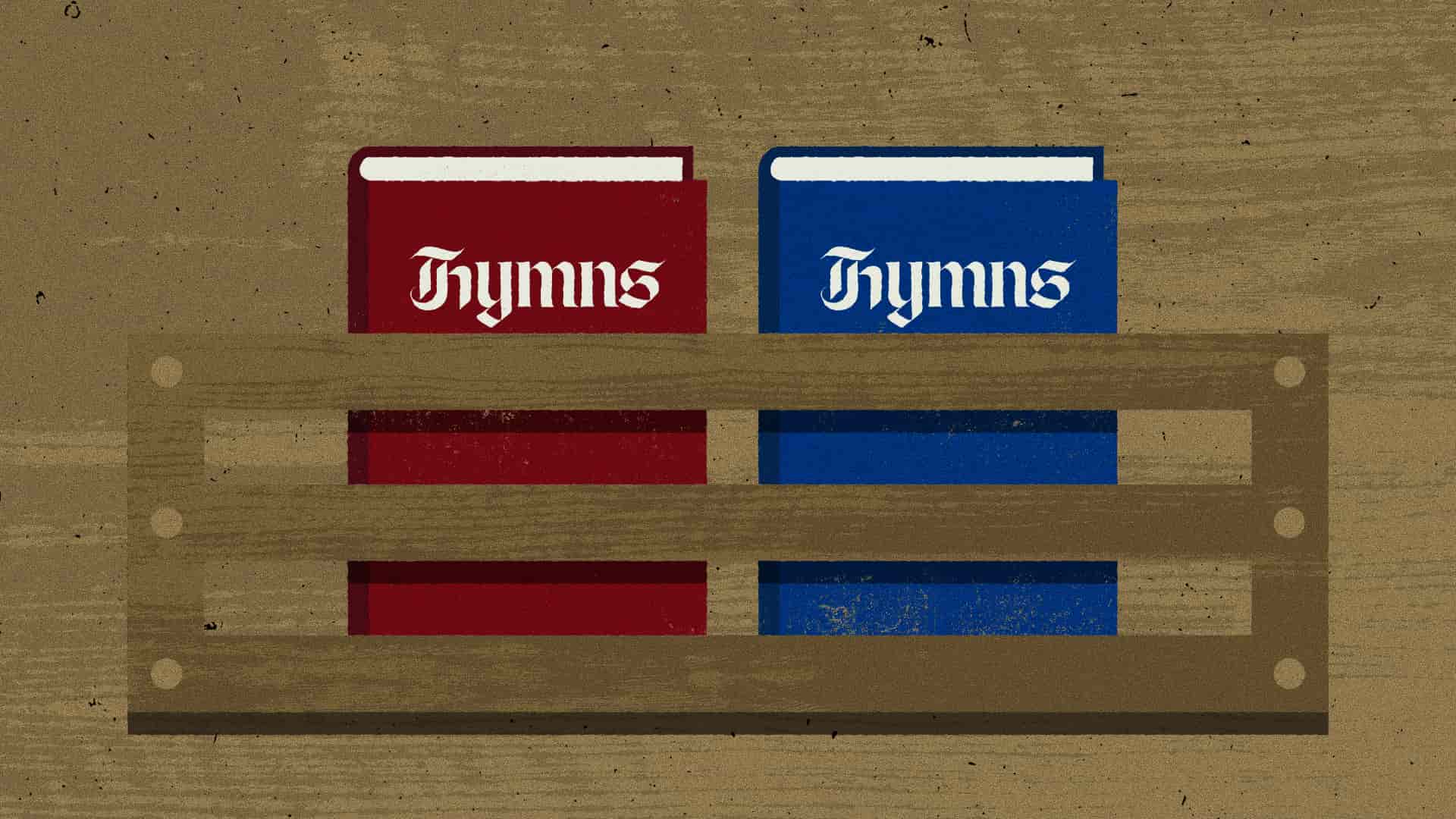
Church hymns are sacred songs with poetic verses and regular meter, written for congregational worship in a Christian church. They praise God, teach doctrine, and mark moments in the service — from opening worship to communion to benediction. Traditional hymns like "Amazing Grace" have been sung for centuries across denominations.



[Updated 4/20/2026]
Old hymns have carried many Christians through difficult valleys and taken them to spiritual mountaintop experiences.
Christian hymns have a way of connecting the church to its forebears in the faith—to the ancient tradition and saints on whose shoulders we stand.
Certain hymns have become the go-to resource for encouragement for millions of believers across the span of time. These hymn songs remind us of God’s faithfulness to Christians of the past so that we can rely on God’s grace in the present.
What are Church Hymns?
Church hymns are songs that are typically sung in worship within a Christian church context. They are a form of musical and lyrical expression that aims to praise, worship, adore, and honor God. Hymns are often characterized by their poetic verses and regular meter, which make them easy to sing in a group setting.
Traditionally, hymns are used in various parts of church services, including the opening worship, during communion, as a response to sermons, and as closing songs. They can also be used to meditate on the goodness of God, and recollect His blessings and promises. They cover a wide range of themes such as the glory of God, the life and teachings of Jesus Christ, the Holy Spirit, the experiences of Christian faith (like grace, redemption, and salvation), and the anticipation of heaven.
Hymns inspire reflection, meditation, and spiritual contemplation and offer a vehicle for worshipers to offer their voices as an offering to God.
Importance of Church Hymns
Church hymns are important because they provide a form of worship and praise, teach doctrine, unite the congregation, express the faith community's historical continuity, and mark special occasions in the Christian calendar. They also serve as an outlet for emotional expression and personal reflection, offering comfort and encouragement to believers during worship services.
Churches can achieve several powerful aims with hymns: including enhancing the spiritual atmosphere with the melodies and lyrics of hymns, communicating biblical truths and theological concepts through hymn lyrics, and promoting unity and fellowship among worshipers as they join in hymn singing.
The Power of Church Hymns
Top Reasons to Sing Hymns in the Church
Hymns Teach Us
Hymns teach us by translating Christian doctrine into song, making scripture memorable, and imparting moral teachings. They use melody to simplify and communicate complex theological ideas and ethical instructions.
Hymns Provide Our Worship a Sense of Beauty and Majesty
Hymns provide our worship a sense of beauty and majesty, enhancing the aesthetic aspect of worship and reflecting God's majesty. They are a testament to the artistic heritage of the church, contributing to a worshipful experience that is both beautiful and sublime.
Hymns Contribute to the Depth of Christian Experience
Hymns contribute to the depth of christian experience by resonating with our emotions and fostering spiritual growth. They act as a universal language that enriches the collective faith journey, allowing us to share deeply in our spiritual lives with others across different cultures.
Hymns Help Us Lift Our Hearts to God
Hymns help us lift our hearts to God in an encounter that elevates our spirit. Singing hymns is an act of devotion, a form of prayer, and a means for meditation that brings our joys, sorrows, and hopes before the divine, helping us to connect with God on a personal level.
Top Church Hymns You Should Know
Here are 18 of the most popular old hymns your church can use to inspire a new season of worship that stands on the momentum of God’s work in history in order to reach a new generation with an ancient message.
1. Amazing Grace // John Newton, England (1779)
Newton was an English slave-ship captain whose conversion began during a violent North Atlantic storm in 1748, off the coast of Donegal, when he cried out to God as his ship nearly sank. He later became an Anglican curate at Olney and wrote these verses for a New Year's Day sermon in 1773; they appeared in the Olney Hymns in 1779. The now-iconic tune "New Britain" is an American folk melody first paired with Newton's words in William Walker's Southern Harmony (1835)... Newton never heard it sung that way.
Amazing Grace, how sweet the sound /
That saved a wretch like me /
I once was lost, but now am found /
Was blind but now I see /
2. How Great Thou Art // Carl Gustav Boberg, Sweden (1885)
Boberg, a Swedish lay preacher and editor, wrote "O Store Gud" after being caught in a sudden thunderstorm followed by a rainbow and church bells near Mönsterås. The text traveled from Swedish to German to Russian before British missionary Stuart K. Hine encountered it in Ukraine in the 1920s; Hine produced the English version we sing, completing verse four in 1948 and finalizing the translation in 1949. The melody is an old Swedish folk tune Boberg's words were fitted to.
O Lord, my God, when I in awesome wonder /
Consider all the worlds Thy Hands have made /
I see the stars, I hear the rolling thunder /
Thy power throughout the universe displayed /
3. It is Well // Horacio Spafford, written in the Atlantic Ocean (1873)
A Chicago lawyer ruined by the Great Fire of 1871, Spafford sent his wife and four daughters ahead to Europe; the SS Ville du Havre was struck and sank on November 22, 1873, and all four girls drowned. Crossing the Atlantic to meet his widowed wife, the captain pointed out the spot where the ship had gone down, and Spafford wrote the lyrics there. Philip Bliss composed the tune "Ville du Havre" in 1876 in memory of the ship.
When peace like a river, attendeth my way, /
When sorrows like sea billows roll /
Whatever my lot, thou hast taught me to say /
It is well, it is well, with my soul /
4. By Thou My Vision. // Dallán Forgaill, Ireland (6th Century)
The original Old Irish prayer-poem Rop tú mo baile is traditionally ascribed to Dallán Forgaill, a blind monk and chief poet of Ireland, though linguistic evidence suggests the surviving text is closer to the 10th–11th century than the 6th. It was translated into English prose by Mary Byrne in 1905 and versified by Eleanor Hull in 1912. The tune "Slane" is a traditional Irish folk melody named for the hill where St. Patrick is said to have lit a Paschal fire in defiance of the pagan High King. It was first set to Hull's text in the Irish Church Hymnal (1919).
Be thou my vision, O Lord of my heart, /
Naught be all else to me, save that Thou art /
Thou my best Thought, by day or by night /
Waking or sleeping, Thy presence my light /
5. All Creatures of Our God and King // St. Francis of Assisi, Italy (1225)
Francis composed his "Canticle of the Sun" in Umbrian Italian during a period of illness, blindness, and intense suffering near the end of his life at San Damiano. Anglican priest William H. Draper paraphrased it into English for a children's Whitsuntide festival in Leeds, with the text published in 1919. The tune "Lasst uns erfreuen" comes from a 1623 Jesuit hymnbook in Cologne; Ralph Vaughan Williams had restored it to the English-speaking church as music editor of The English Hymnal (1906), and Draper's text was first joined to it in the Public School Hymn Book (1919).
All creatures of our God and King /
Life up your voice and with us sing /
O praise Him, Alleluia /
Thou burning sun with golden beam /
Thou silver moon with softer gleam /
6. Doxology // Thomas Ken, England (1674)
Ken was an Anglican chaplain (later Bishop of Bath and Wells) whose conscience repeatedly got him into trouble with kings; he refused to house Charles II's mistress Nell Gwynne, resisted James II's Declaration of Indulgence, and declined the oath of allegiance to William III. While a fellow at Winchester College, he wrote three hymns (morning, evening, and midnight) for the scholars; each ended with this four-line doxology. The tune "Old 100th" was composed by Louis Bourgeois in the 1551 Genevan Psalter for Psalm 134, predating Ken's words by over a century.
Praise God from whom all blessings flow /
Praise Him all creatures here below /
Praise Him above ye heavenly hosts /
Praise Father, Son, and Holy Ghost /
7. Blessed Assurance // Fanny Crosby, New York City, USA (1873)
Crosby, blinded in infancy by a mustard-plaster treatment applied by a country doctor, wrote more than 8,000 hymn texts. This one was born backwards: her close friend Phoebe Palmer Knapp, a wealthy composer, played a new melody on the piano and asked Fanny, "What does this tune say?" Crosby listened, knelt briefly, and replied, "Blessed assurance, Jesus is mine!" then dictated the verses on the spot.
Blessed assurance, Jesus is mine /
O what a foretaste of glory divine /
Heir of salvation, purchase of God /
Born of His Spirit, washed in His blood /
8. When I Survey the Wondrous Cross // Isaac Watts, England (1707)
Watts, often called the "father of English hymnody," wrote this for a communion service and published it in Hymns and Spiritual Songs. At the time, English congregations sang only metrical psalms, and Watts was a radical for writing original Christian poetry in the first person. The familiar tune "Hamburg" was adapted by Lowell Mason in 1824 from a Gregorian chant; Watts himself would have heard it sung to other melodies.
When I survey the wondrous cross /
On which the Prince of glory died /
My richest gain I count but loss /
And pour contempt on all my pride /
9. Jesus Paid It All // Elvina Hall, Maryland, USA (1865)
Hall was a member of Monument Street Methodist Church in Baltimore. Distracted during a sermon, she jotted the verses on the flyleaf of a hymnal in the choir loft. Her pastor later discovered that the church organist, John T. Grape, had just composed a tune called "All to Christ I Owe." The two matched perfectly, and text and tune were published together.
I hear the savior say /
Thy strength indeed is small /
Child of weakness, watch and pray /
Find in me thine all in all /
10. A Mighty Fortress Is Our God // Martin Luther, Germany (1529)
Luther paraphrased Psalm 46 during the Reformation's most turbulent years, writing both the text and the rugged, syncopated tune "Ein feste Burg." He was a skilled lutenist and played it to steady himself and his friends through persecution and plague. It became the marching anthem of the Reformation; Bach later harmonized it in his Cantata 80.
A mighty fortress is our God, /
A bulwark never failing: /
Our helper He, amid the flood /
Of mortal ills prevailing. /
11. How Firm a Foundation // John Rippon, England (1787)
First printed in John Rippon's A Selection of Hymns with the author listed only as "K—" most likely Robert Keene, Rippon's precentor at Carter Lane Baptist Church in London. The text is a tapestry of promises drawn directly from Scripture. The most common American tune is an anonymous early-American melody that first appeared in Joseph Funk's Genuine Church Music (1832) under the name "Protection," and has since come to be known as "Foundation."
How firm a foundation, ye saints of the Lord /
Is laid for your faith in His excellent Word /
What more can He say than to you He hath said /
To you who for refuge to Jesus have fled /
12. Crown Him With Many Crowns // Matthew Bridges, England (1852)
Bridges, an Anglican who converted to Roman Catholicism in the wake of the Oxford Movement, wrote the original six stanzas in his Hymns of the Heart. Anglican priest Godfrey Thring, uncomfortable with Bridges's Catholic sensibilities, wrote six alternative stanzas around 1874; modern hymnals blend them. The tune "Diademata" was composed by George Job Elvey, organist at St. George's Chapel, Windsor, in 1868.
Crown Him with many crowns, /
The lamb upon the throne: /
Hark! How the heav'nly anthem drowns /
All Music but its own! /
13. What a Friend We Have in Jesus // Joseph M. Scriven, Ireland (Lyrics, 1855) and Charles Converse, USA (Tune, 1868)
Scriven, an Irish immigrant in Ontario, wrote the poem in a letter to comfort his mother in Dublin; he never intended it for publication. His own life was marked by tragedy. His first fiancée drowned the night before their wedding in 1843, and his second died of pneumonia in 1860, and he lived in poverty serving the poor. Charles C. Converse, an American attorney and amateur composer, wrote the tune "Converse" in 1868.
What a friend we have in Jesus /
All our sins and griefs to bear /
And what a privilege to carry /
Everything to God in prayer /
14. "Holy, Holy, Holy" - Reginald Heber
Heber wrote it while serving as vicar of Hodnet in Shropshire, intended for Trinity Sunday and keyed to Revelation 4:8. He was appointed Anglican bishop of Calcutta and died suddenly of a cerebral hemorrhage in India on April 3, 1826, at age 42; the hymn first appeared in the third edition of A Selection of Psalms and Hymns the same year. The now-inseparable tune "Nicaea" was composed by John Bacchus Dykes in 1861, named for the council that affirmed the Trinity.
Holy, holy, holy! Lord God almighty! /
Early in the morning our song shall rise to thee. /
Holy, holy, holy! Merciful and mighty! /
God in three persons, blessed trinity! /
15. "The Old Rugged Cross" - George Bennard
Bennard was a Methodist evangelist who, after a painful season of ridicule during a revival in Albion, Michigan, in the fall of 1912, began meditating on the meaning of the cross. The first verse came to him in Albion; he completed the remaining verses that winter in Sturgeon Bay, Wisconsin. He introduced the finished hymn at a revival in Pokagon, Michigan, on June 7, 1913, and it became one of the best-selling religious songs of the 20th century. Bennard wrote both words and music.
On a hill far away stood an old rugged cross /
The emblem of suff'ring and shame /
And I love that old cross where the dearest and best /
For a world of lost sinners was slain /
16. "Great Is Thy Faithfulness" - Thomas Chisholm
Chisholm was a Methodist minister from Franklin, Kentucky. The text, based on Lamentations 3:22–23, was a distillation of the daily mercies he had experienced through an often difficult life. He mailed it to his friend William M. Runyan — a Methodist minister, Hope Publishing Company editor, and gospel-song composer associated with the Moody Bible Institute — who composed the tune "Faithfulness." The hymn's wider rise came from the 1950s onward, when a Moody professor made it a favorite and George Beverly Shea began performing it at Billy Graham crusades, carrying it worldwide.
Great is Thy faithfulness, O God my Father /
There is no shadow of turning with Thee /
Thou changest not, Thy compassions, they fail not /
As Thou hast been Thou forever wilt be /
17. "Rock of Ages, Cleft for Me" - Augustus Toplady
Toplady, a fiery Calvinist Anglican, first printed the hymn at the end of an article in The Gospel Magazine pushing back against the Wesleys' Arminian theology. The much-loved story that he sheltered from a thunderstorm in a limestone cleft at Burrington Combe and wrote the hymn there is legend, not fact — Toplady had left the area by 1764, more than a decade before composing the hymn, and the Burrington Combe tradition didn't surface until the 1850s. The American tune "Toplady" was composed by Thomas Hastings in 1830; in Britain the hymn is more often sung to "Redhead 76."
Rock of Ages, cleft for me /
Let me hide myself in Thee /
Let the water and the blood, From Thy wounded side which flowed, Be of sin the double cure /
Save from wrath and make me pure /
18. "All Hail the Power of Jesus' Name" - Edward Perronet
Perronet was the son of Vincent Perronet, Anglican vicar of Shoreham (the family had earlier French Huguenot roots on his grandfather's side). He worked alongside John Wesley before breaking with him over the right to administer the sacraments. The hymn first appeared anonymously in the Gospel Magazine in November 1779, with the full version following in April 1780. Three tunes compete for it: "Miles Lane" (William Shrubsole, 1779, favored in Britain), "Coronation" (Oliver Holden, 1793, the oldest American hymn tune still in common use), and "Diadem" (James Ellor, 1838, written by a 19-year-old hat-maker in Lancashire).
All hail the power of Jesus' name! Let angels prostrate fall /
Bring forth the royal diadem, and crown Him Lord of all /
Bring forth the royal diadem, and crown Him Lord of all /
Old Baptist Hymns
Old Baptist hymns stand as timeless anthems of faith within the Christian tradition. These songs, often emerging from the fires of revival and reformation, carry the rich theology and passionate worship of the Baptist denomination. Hymns like "Amazing Grace" by John Newton and "How Firm a Foundation" are quintessential examples that have been sung in Baptist churches for generations.
These hymns not only provide a historical connection to the past saints but also offer contemporary believers a deep well of spiritual truth to draw from in their worship services. The simplicity of their melodies and the depth of their lyrics make them enduring choices for personal devotion and congregational singing.
Baptist Devotional Songs
Baptist devotional songs are characterized by their heartfelt expression of love and commitment to God. These songs serve as a vehicle for personal prayer and reflection, often used during quiet times of meditation or corporate times of worship. They encourage believers to a closer walk with Jesus, reflecting the Baptist emphasis on personal conversion and piety. Songs such as "In the Garden" and "The Old Rugged Cross" reflect the intimate relationship that believers seek with Christ.
These devotional songs often recount the experiences of faith—conversion, struggle, and ultimate triumph through the grace of God. They remain a vital part of Baptist devotion, aiding believers in their spiritual journey and daily walk with God.
Key Takeaways
Old Christian hymns are perfect for any church to add to their worship set.
These church songs are chock-full of biblical richness, and they can go a long way in helping you to teach your church about the Bible, and stir their heart's devotion to Christ.
Pro tip for worship leaders: Try Tithely's Church Service and Worship Planning Software to help you plan better for services and communicate with your worship team!
Free online giving + low cost Church Management Software
Tithely simplifies church tech so you have more time for what matters most, ministry.
Run your church worship from one place
Sign Up for Product Updates

Tithely provides the tools you need to engage with your church online, stay connected, increase generosity, and simplify the lives of your staff.
With tools like text and email messaging, custom church apps and websites, church management software, digital giving, and so much more… it’s no wonder why over 53,000 churches in 50 countries trust Tithely to help run their church.
[Updated 4/20/2026]
Old hymns have carried many Christians through difficult valleys and taken them to spiritual mountaintop experiences.
Christian hymns have a way of connecting the church to its forebears in the faith—to the ancient tradition and saints on whose shoulders we stand.
Certain hymns have become the go-to resource for encouragement for millions of believers across the span of time. These hymn songs remind us of God’s faithfulness to Christians of the past so that we can rely on God’s grace in the present.
What are Church Hymns?
Church hymns are songs that are typically sung in worship within a Christian church context. They are a form of musical and lyrical expression that aims to praise, worship, adore, and honor God. Hymns are often characterized by their poetic verses and regular meter, which make them easy to sing in a group setting.
Traditionally, hymns are used in various parts of church services, including the opening worship, during communion, as a response to sermons, and as closing songs. They can also be used to meditate on the goodness of God, and recollect His blessings and promises. They cover a wide range of themes such as the glory of God, the life and teachings of Jesus Christ, the Holy Spirit, the experiences of Christian faith (like grace, redemption, and salvation), and the anticipation of heaven.
Hymns inspire reflection, meditation, and spiritual contemplation and offer a vehicle for worshipers to offer their voices as an offering to God.
Importance of Church Hymns
Church hymns are important because they provide a form of worship and praise, teach doctrine, unite the congregation, express the faith community's historical continuity, and mark special occasions in the Christian calendar. They also serve as an outlet for emotional expression and personal reflection, offering comfort and encouragement to believers during worship services.
Churches can achieve several powerful aims with hymns: including enhancing the spiritual atmosphere with the melodies and lyrics of hymns, communicating biblical truths and theological concepts through hymn lyrics, and promoting unity and fellowship among worshipers as they join in hymn singing.
The Power of Church Hymns
Top Reasons to Sing Hymns in the Church
Hymns Teach Us
Hymns teach us by translating Christian doctrine into song, making scripture memorable, and imparting moral teachings. They use melody to simplify and communicate complex theological ideas and ethical instructions.
Hymns Provide Our Worship a Sense of Beauty and Majesty
Hymns provide our worship a sense of beauty and majesty, enhancing the aesthetic aspect of worship and reflecting God's majesty. They are a testament to the artistic heritage of the church, contributing to a worshipful experience that is both beautiful and sublime.
Hymns Contribute to the Depth of Christian Experience
Hymns contribute to the depth of christian experience by resonating with our emotions and fostering spiritual growth. They act as a universal language that enriches the collective faith journey, allowing us to share deeply in our spiritual lives with others across different cultures.
Hymns Help Us Lift Our Hearts to God
Hymns help us lift our hearts to God in an encounter that elevates our spirit. Singing hymns is an act of devotion, a form of prayer, and a means for meditation that brings our joys, sorrows, and hopes before the divine, helping us to connect with God on a personal level.
Top Church Hymns You Should Know
Here are 18 of the most popular old hymns your church can use to inspire a new season of worship that stands on the momentum of God’s work in history in order to reach a new generation with an ancient message.
1. Amazing Grace // John Newton, England (1779)
Newton was an English slave-ship captain whose conversion began during a violent North Atlantic storm in 1748, off the coast of Donegal, when he cried out to God as his ship nearly sank. He later became an Anglican curate at Olney and wrote these verses for a New Year's Day sermon in 1773; they appeared in the Olney Hymns in 1779. The now-iconic tune "New Britain" is an American folk melody first paired with Newton's words in William Walker's Southern Harmony (1835)... Newton never heard it sung that way.
Amazing Grace, how sweet the sound /
That saved a wretch like me /
I once was lost, but now am found /
Was blind but now I see /
2. How Great Thou Art // Carl Gustav Boberg, Sweden (1885)
Boberg, a Swedish lay preacher and editor, wrote "O Store Gud" after being caught in a sudden thunderstorm followed by a rainbow and church bells near Mönsterås. The text traveled from Swedish to German to Russian before British missionary Stuart K. Hine encountered it in Ukraine in the 1920s; Hine produced the English version we sing, completing verse four in 1948 and finalizing the translation in 1949. The melody is an old Swedish folk tune Boberg's words were fitted to.
O Lord, my God, when I in awesome wonder /
Consider all the worlds Thy Hands have made /
I see the stars, I hear the rolling thunder /
Thy power throughout the universe displayed /
3. It is Well // Horacio Spafford, written in the Atlantic Ocean (1873)
A Chicago lawyer ruined by the Great Fire of 1871, Spafford sent his wife and four daughters ahead to Europe; the SS Ville du Havre was struck and sank on November 22, 1873, and all four girls drowned. Crossing the Atlantic to meet his widowed wife, the captain pointed out the spot where the ship had gone down, and Spafford wrote the lyrics there. Philip Bliss composed the tune "Ville du Havre" in 1876 in memory of the ship.
When peace like a river, attendeth my way, /
When sorrows like sea billows roll /
Whatever my lot, thou hast taught me to say /
It is well, it is well, with my soul /
4. By Thou My Vision. // Dallán Forgaill, Ireland (6th Century)
The original Old Irish prayer-poem Rop tú mo baile is traditionally ascribed to Dallán Forgaill, a blind monk and chief poet of Ireland, though linguistic evidence suggests the surviving text is closer to the 10th–11th century than the 6th. It was translated into English prose by Mary Byrne in 1905 and versified by Eleanor Hull in 1912. The tune "Slane" is a traditional Irish folk melody named for the hill where St. Patrick is said to have lit a Paschal fire in defiance of the pagan High King. It was first set to Hull's text in the Irish Church Hymnal (1919).
Be thou my vision, O Lord of my heart, /
Naught be all else to me, save that Thou art /
Thou my best Thought, by day or by night /
Waking or sleeping, Thy presence my light /
5. All Creatures of Our God and King // St. Francis of Assisi, Italy (1225)
Francis composed his "Canticle of the Sun" in Umbrian Italian during a period of illness, blindness, and intense suffering near the end of his life at San Damiano. Anglican priest William H. Draper paraphrased it into English for a children's Whitsuntide festival in Leeds, with the text published in 1919. The tune "Lasst uns erfreuen" comes from a 1623 Jesuit hymnbook in Cologne; Ralph Vaughan Williams had restored it to the English-speaking church as music editor of The English Hymnal (1906), and Draper's text was first joined to it in the Public School Hymn Book (1919).
All creatures of our God and King /
Life up your voice and with us sing /
O praise Him, Alleluia /
Thou burning sun with golden beam /
Thou silver moon with softer gleam /
6. Doxology // Thomas Ken, England (1674)
Ken was an Anglican chaplain (later Bishop of Bath and Wells) whose conscience repeatedly got him into trouble with kings; he refused to house Charles II's mistress Nell Gwynne, resisted James II's Declaration of Indulgence, and declined the oath of allegiance to William III. While a fellow at Winchester College, he wrote three hymns (morning, evening, and midnight) for the scholars; each ended with this four-line doxology. The tune "Old 100th" was composed by Louis Bourgeois in the 1551 Genevan Psalter for Psalm 134, predating Ken's words by over a century.
Praise God from whom all blessings flow /
Praise Him all creatures here below /
Praise Him above ye heavenly hosts /
Praise Father, Son, and Holy Ghost /
7. Blessed Assurance // Fanny Crosby, New York City, USA (1873)
Crosby, blinded in infancy by a mustard-plaster treatment applied by a country doctor, wrote more than 8,000 hymn texts. This one was born backwards: her close friend Phoebe Palmer Knapp, a wealthy composer, played a new melody on the piano and asked Fanny, "What does this tune say?" Crosby listened, knelt briefly, and replied, "Blessed assurance, Jesus is mine!" then dictated the verses on the spot.
Blessed assurance, Jesus is mine /
O what a foretaste of glory divine /
Heir of salvation, purchase of God /
Born of His Spirit, washed in His blood /
8. When I Survey the Wondrous Cross // Isaac Watts, England (1707)
Watts, often called the "father of English hymnody," wrote this for a communion service and published it in Hymns and Spiritual Songs. At the time, English congregations sang only metrical psalms, and Watts was a radical for writing original Christian poetry in the first person. The familiar tune "Hamburg" was adapted by Lowell Mason in 1824 from a Gregorian chant; Watts himself would have heard it sung to other melodies.
When I survey the wondrous cross /
On which the Prince of glory died /
My richest gain I count but loss /
And pour contempt on all my pride /
9. Jesus Paid It All // Elvina Hall, Maryland, USA (1865)
Hall was a member of Monument Street Methodist Church in Baltimore. Distracted during a sermon, she jotted the verses on the flyleaf of a hymnal in the choir loft. Her pastor later discovered that the church organist, John T. Grape, had just composed a tune called "All to Christ I Owe." The two matched perfectly, and text and tune were published together.
I hear the savior say /
Thy strength indeed is small /
Child of weakness, watch and pray /
Find in me thine all in all /
10. A Mighty Fortress Is Our God // Martin Luther, Germany (1529)
Luther paraphrased Psalm 46 during the Reformation's most turbulent years, writing both the text and the rugged, syncopated tune "Ein feste Burg." He was a skilled lutenist and played it to steady himself and his friends through persecution and plague. It became the marching anthem of the Reformation; Bach later harmonized it in his Cantata 80.
A mighty fortress is our God, /
A bulwark never failing: /
Our helper He, amid the flood /
Of mortal ills prevailing. /
11. How Firm a Foundation // John Rippon, England (1787)
First printed in John Rippon's A Selection of Hymns with the author listed only as "K—" most likely Robert Keene, Rippon's precentor at Carter Lane Baptist Church in London. The text is a tapestry of promises drawn directly from Scripture. The most common American tune is an anonymous early-American melody that first appeared in Joseph Funk's Genuine Church Music (1832) under the name "Protection," and has since come to be known as "Foundation."
How firm a foundation, ye saints of the Lord /
Is laid for your faith in His excellent Word /
What more can He say than to you He hath said /
To you who for refuge to Jesus have fled /
12. Crown Him With Many Crowns // Matthew Bridges, England (1852)
Bridges, an Anglican who converted to Roman Catholicism in the wake of the Oxford Movement, wrote the original six stanzas in his Hymns of the Heart. Anglican priest Godfrey Thring, uncomfortable with Bridges's Catholic sensibilities, wrote six alternative stanzas around 1874; modern hymnals blend them. The tune "Diademata" was composed by George Job Elvey, organist at St. George's Chapel, Windsor, in 1868.
Crown Him with many crowns, /
The lamb upon the throne: /
Hark! How the heav'nly anthem drowns /
All Music but its own! /
13. What a Friend We Have in Jesus // Joseph M. Scriven, Ireland (Lyrics, 1855) and Charles Converse, USA (Tune, 1868)
Scriven, an Irish immigrant in Ontario, wrote the poem in a letter to comfort his mother in Dublin; he never intended it for publication. His own life was marked by tragedy. His first fiancée drowned the night before their wedding in 1843, and his second died of pneumonia in 1860, and he lived in poverty serving the poor. Charles C. Converse, an American attorney and amateur composer, wrote the tune "Converse" in 1868.
What a friend we have in Jesus /
All our sins and griefs to bear /
And what a privilege to carry /
Everything to God in prayer /
14. "Holy, Holy, Holy" - Reginald Heber
Heber wrote it while serving as vicar of Hodnet in Shropshire, intended for Trinity Sunday and keyed to Revelation 4:8. He was appointed Anglican bishop of Calcutta and died suddenly of a cerebral hemorrhage in India on April 3, 1826, at age 42; the hymn first appeared in the third edition of A Selection of Psalms and Hymns the same year. The now-inseparable tune "Nicaea" was composed by John Bacchus Dykes in 1861, named for the council that affirmed the Trinity.
Holy, holy, holy! Lord God almighty! /
Early in the morning our song shall rise to thee. /
Holy, holy, holy! Merciful and mighty! /
God in three persons, blessed trinity! /
15. "The Old Rugged Cross" - George Bennard
Bennard was a Methodist evangelist who, after a painful season of ridicule during a revival in Albion, Michigan, in the fall of 1912, began meditating on the meaning of the cross. The first verse came to him in Albion; he completed the remaining verses that winter in Sturgeon Bay, Wisconsin. He introduced the finished hymn at a revival in Pokagon, Michigan, on June 7, 1913, and it became one of the best-selling religious songs of the 20th century. Bennard wrote both words and music.
On a hill far away stood an old rugged cross /
The emblem of suff'ring and shame /
And I love that old cross where the dearest and best /
For a world of lost sinners was slain /
16. "Great Is Thy Faithfulness" - Thomas Chisholm
Chisholm was a Methodist minister from Franklin, Kentucky. The text, based on Lamentations 3:22–23, was a distillation of the daily mercies he had experienced through an often difficult life. He mailed it to his friend William M. Runyan — a Methodist minister, Hope Publishing Company editor, and gospel-song composer associated with the Moody Bible Institute — who composed the tune "Faithfulness." The hymn's wider rise came from the 1950s onward, when a Moody professor made it a favorite and George Beverly Shea began performing it at Billy Graham crusades, carrying it worldwide.
Great is Thy faithfulness, O God my Father /
There is no shadow of turning with Thee /
Thou changest not, Thy compassions, they fail not /
As Thou hast been Thou forever wilt be /
17. "Rock of Ages, Cleft for Me" - Augustus Toplady
Toplady, a fiery Calvinist Anglican, first printed the hymn at the end of an article in The Gospel Magazine pushing back against the Wesleys' Arminian theology. The much-loved story that he sheltered from a thunderstorm in a limestone cleft at Burrington Combe and wrote the hymn there is legend, not fact — Toplady had left the area by 1764, more than a decade before composing the hymn, and the Burrington Combe tradition didn't surface until the 1850s. The American tune "Toplady" was composed by Thomas Hastings in 1830; in Britain the hymn is more often sung to "Redhead 76."
Rock of Ages, cleft for me /
Let me hide myself in Thee /
Let the water and the blood, From Thy wounded side which flowed, Be of sin the double cure /
Save from wrath and make me pure /
18. "All Hail the Power of Jesus' Name" - Edward Perronet
Perronet was the son of Vincent Perronet, Anglican vicar of Shoreham (the family had earlier French Huguenot roots on his grandfather's side). He worked alongside John Wesley before breaking with him over the right to administer the sacraments. The hymn first appeared anonymously in the Gospel Magazine in November 1779, with the full version following in April 1780. Three tunes compete for it: "Miles Lane" (William Shrubsole, 1779, favored in Britain), "Coronation" (Oliver Holden, 1793, the oldest American hymn tune still in common use), and "Diadem" (James Ellor, 1838, written by a 19-year-old hat-maker in Lancashire).
All hail the power of Jesus' name! Let angels prostrate fall /
Bring forth the royal diadem, and crown Him Lord of all /
Bring forth the royal diadem, and crown Him Lord of all /
Old Baptist Hymns
Old Baptist hymns stand as timeless anthems of faith within the Christian tradition. These songs, often emerging from the fires of revival and reformation, carry the rich theology and passionate worship of the Baptist denomination. Hymns like "Amazing Grace" by John Newton and "How Firm a Foundation" are quintessential examples that have been sung in Baptist churches for generations.
These hymns not only provide a historical connection to the past saints but also offer contemporary believers a deep well of spiritual truth to draw from in their worship services. The simplicity of their melodies and the depth of their lyrics make them enduring choices for personal devotion and congregational singing.
Baptist Devotional Songs
Baptist devotional songs are characterized by their heartfelt expression of love and commitment to God. These songs serve as a vehicle for personal prayer and reflection, often used during quiet times of meditation or corporate times of worship. They encourage believers to a closer walk with Jesus, reflecting the Baptist emphasis on personal conversion and piety. Songs such as "In the Garden" and "The Old Rugged Cross" reflect the intimate relationship that believers seek with Christ.
These devotional songs often recount the experiences of faith—conversion, struggle, and ultimate triumph through the grace of God. They remain a vital part of Baptist devotion, aiding believers in their spiritual journey and daily walk with God.
Key Takeaways
Old Christian hymns are perfect for any church to add to their worship set.
These church songs are chock-full of biblical richness, and they can go a long way in helping you to teach your church about the Bible, and stir their heart's devotion to Christ.
Pro tip for worship leaders: Try Tithely's Church Service and Worship Planning Software to help you plan better for services and communicate with your worship team!
Free online giving + low cost Church Management Software
Tithely simplifies church tech so you have more time for what matters most, ministry.
Run your church worship from one place
podcast transcript
Tithely provides the tools you need to engage with your church online, stay connected, increase generosity, and simplify the lives of your staff.
With tools like text and email messaging, custom church apps and websites, church management software, digital giving, and so much more… it’s no wonder why over 53,000 churches in 50 countries trust Tithely to help run their church.
[Updated 4/20/2026]
Old hymns have carried many Christians through difficult valleys and taken them to spiritual mountaintop experiences.
Christian hymns have a way of connecting the church to its forebears in the faith—to the ancient tradition and saints on whose shoulders we stand.
Certain hymns have become the go-to resource for encouragement for millions of believers across the span of time. These hymn songs remind us of God’s faithfulness to Christians of the past so that we can rely on God’s grace in the present.
What are Church Hymns?
Church hymns are songs that are typically sung in worship within a Christian church context. They are a form of musical and lyrical expression that aims to praise, worship, adore, and honor God. Hymns are often characterized by their poetic verses and regular meter, which make them easy to sing in a group setting.
Traditionally, hymns are used in various parts of church services, including the opening worship, during communion, as a response to sermons, and as closing songs. They can also be used to meditate on the goodness of God, and recollect His blessings and promises. They cover a wide range of themes such as the glory of God, the life and teachings of Jesus Christ, the Holy Spirit, the experiences of Christian faith (like grace, redemption, and salvation), and the anticipation of heaven.
Hymns inspire reflection, meditation, and spiritual contemplation and offer a vehicle for worshipers to offer their voices as an offering to God.
Importance of Church Hymns
Church hymns are important because they provide a form of worship and praise, teach doctrine, unite the congregation, express the faith community's historical continuity, and mark special occasions in the Christian calendar. They also serve as an outlet for emotional expression and personal reflection, offering comfort and encouragement to believers during worship services.
Churches can achieve several powerful aims with hymns: including enhancing the spiritual atmosphere with the melodies and lyrics of hymns, communicating biblical truths and theological concepts through hymn lyrics, and promoting unity and fellowship among worshipers as they join in hymn singing.
The Power of Church Hymns
Top Reasons to Sing Hymns in the Church
Hymns Teach Us
Hymns teach us by translating Christian doctrine into song, making scripture memorable, and imparting moral teachings. They use melody to simplify and communicate complex theological ideas and ethical instructions.
Hymns Provide Our Worship a Sense of Beauty and Majesty
Hymns provide our worship a sense of beauty and majesty, enhancing the aesthetic aspect of worship and reflecting God's majesty. They are a testament to the artistic heritage of the church, contributing to a worshipful experience that is both beautiful and sublime.
Hymns Contribute to the Depth of Christian Experience
Hymns contribute to the depth of christian experience by resonating with our emotions and fostering spiritual growth. They act as a universal language that enriches the collective faith journey, allowing us to share deeply in our spiritual lives with others across different cultures.
Hymns Help Us Lift Our Hearts to God
Hymns help us lift our hearts to God in an encounter that elevates our spirit. Singing hymns is an act of devotion, a form of prayer, and a means for meditation that brings our joys, sorrows, and hopes before the divine, helping us to connect with God on a personal level.
Top Church Hymns You Should Know
Here are 18 of the most popular old hymns your church can use to inspire a new season of worship that stands on the momentum of God’s work in history in order to reach a new generation with an ancient message.
1. Amazing Grace // John Newton, England (1779)
Newton was an English slave-ship captain whose conversion began during a violent North Atlantic storm in 1748, off the coast of Donegal, when he cried out to God as his ship nearly sank. He later became an Anglican curate at Olney and wrote these verses for a New Year's Day sermon in 1773; they appeared in the Olney Hymns in 1779. The now-iconic tune "New Britain" is an American folk melody first paired with Newton's words in William Walker's Southern Harmony (1835)... Newton never heard it sung that way.
Amazing Grace, how sweet the sound /
That saved a wretch like me /
I once was lost, but now am found /
Was blind but now I see /
2. How Great Thou Art // Carl Gustav Boberg, Sweden (1885)
Boberg, a Swedish lay preacher and editor, wrote "O Store Gud" after being caught in a sudden thunderstorm followed by a rainbow and church bells near Mönsterås. The text traveled from Swedish to German to Russian before British missionary Stuart K. Hine encountered it in Ukraine in the 1920s; Hine produced the English version we sing, completing verse four in 1948 and finalizing the translation in 1949. The melody is an old Swedish folk tune Boberg's words were fitted to.
O Lord, my God, when I in awesome wonder /
Consider all the worlds Thy Hands have made /
I see the stars, I hear the rolling thunder /
Thy power throughout the universe displayed /
3. It is Well // Horacio Spafford, written in the Atlantic Ocean (1873)
A Chicago lawyer ruined by the Great Fire of 1871, Spafford sent his wife and four daughters ahead to Europe; the SS Ville du Havre was struck and sank on November 22, 1873, and all four girls drowned. Crossing the Atlantic to meet his widowed wife, the captain pointed out the spot where the ship had gone down, and Spafford wrote the lyrics there. Philip Bliss composed the tune "Ville du Havre" in 1876 in memory of the ship.
When peace like a river, attendeth my way, /
When sorrows like sea billows roll /
Whatever my lot, thou hast taught me to say /
It is well, it is well, with my soul /
4. By Thou My Vision. // Dallán Forgaill, Ireland (6th Century)
The original Old Irish prayer-poem Rop tú mo baile is traditionally ascribed to Dallán Forgaill, a blind monk and chief poet of Ireland, though linguistic evidence suggests the surviving text is closer to the 10th–11th century than the 6th. It was translated into English prose by Mary Byrne in 1905 and versified by Eleanor Hull in 1912. The tune "Slane" is a traditional Irish folk melody named for the hill where St. Patrick is said to have lit a Paschal fire in defiance of the pagan High King. It was first set to Hull's text in the Irish Church Hymnal (1919).
Be thou my vision, O Lord of my heart, /
Naught be all else to me, save that Thou art /
Thou my best Thought, by day or by night /
Waking or sleeping, Thy presence my light /
5. All Creatures of Our God and King // St. Francis of Assisi, Italy (1225)
Francis composed his "Canticle of the Sun" in Umbrian Italian during a period of illness, blindness, and intense suffering near the end of his life at San Damiano. Anglican priest William H. Draper paraphrased it into English for a children's Whitsuntide festival in Leeds, with the text published in 1919. The tune "Lasst uns erfreuen" comes from a 1623 Jesuit hymnbook in Cologne; Ralph Vaughan Williams had restored it to the English-speaking church as music editor of The English Hymnal (1906), and Draper's text was first joined to it in the Public School Hymn Book (1919).
All creatures of our God and King /
Life up your voice and with us sing /
O praise Him, Alleluia /
Thou burning sun with golden beam /
Thou silver moon with softer gleam /
6. Doxology // Thomas Ken, England (1674)
Ken was an Anglican chaplain (later Bishop of Bath and Wells) whose conscience repeatedly got him into trouble with kings; he refused to house Charles II's mistress Nell Gwynne, resisted James II's Declaration of Indulgence, and declined the oath of allegiance to William III. While a fellow at Winchester College, he wrote three hymns (morning, evening, and midnight) for the scholars; each ended with this four-line doxology. The tune "Old 100th" was composed by Louis Bourgeois in the 1551 Genevan Psalter for Psalm 134, predating Ken's words by over a century.
Praise God from whom all blessings flow /
Praise Him all creatures here below /
Praise Him above ye heavenly hosts /
Praise Father, Son, and Holy Ghost /
7. Blessed Assurance // Fanny Crosby, New York City, USA (1873)
Crosby, blinded in infancy by a mustard-plaster treatment applied by a country doctor, wrote more than 8,000 hymn texts. This one was born backwards: her close friend Phoebe Palmer Knapp, a wealthy composer, played a new melody on the piano and asked Fanny, "What does this tune say?" Crosby listened, knelt briefly, and replied, "Blessed assurance, Jesus is mine!" then dictated the verses on the spot.
Blessed assurance, Jesus is mine /
O what a foretaste of glory divine /
Heir of salvation, purchase of God /
Born of His Spirit, washed in His blood /
8. When I Survey the Wondrous Cross // Isaac Watts, England (1707)
Watts, often called the "father of English hymnody," wrote this for a communion service and published it in Hymns and Spiritual Songs. At the time, English congregations sang only metrical psalms, and Watts was a radical for writing original Christian poetry in the first person. The familiar tune "Hamburg" was adapted by Lowell Mason in 1824 from a Gregorian chant; Watts himself would have heard it sung to other melodies.
When I survey the wondrous cross /
On which the Prince of glory died /
My richest gain I count but loss /
And pour contempt on all my pride /
9. Jesus Paid It All // Elvina Hall, Maryland, USA (1865)
Hall was a member of Monument Street Methodist Church in Baltimore. Distracted during a sermon, she jotted the verses on the flyleaf of a hymnal in the choir loft. Her pastor later discovered that the church organist, John T. Grape, had just composed a tune called "All to Christ I Owe." The two matched perfectly, and text and tune were published together.
I hear the savior say /
Thy strength indeed is small /
Child of weakness, watch and pray /
Find in me thine all in all /
10. A Mighty Fortress Is Our God // Martin Luther, Germany (1529)
Luther paraphrased Psalm 46 during the Reformation's most turbulent years, writing both the text and the rugged, syncopated tune "Ein feste Burg." He was a skilled lutenist and played it to steady himself and his friends through persecution and plague. It became the marching anthem of the Reformation; Bach later harmonized it in his Cantata 80.
A mighty fortress is our God, /
A bulwark never failing: /
Our helper He, amid the flood /
Of mortal ills prevailing. /
11. How Firm a Foundation // John Rippon, England (1787)
First printed in John Rippon's A Selection of Hymns with the author listed only as "K—" most likely Robert Keene, Rippon's precentor at Carter Lane Baptist Church in London. The text is a tapestry of promises drawn directly from Scripture. The most common American tune is an anonymous early-American melody that first appeared in Joseph Funk's Genuine Church Music (1832) under the name "Protection," and has since come to be known as "Foundation."
How firm a foundation, ye saints of the Lord /
Is laid for your faith in His excellent Word /
What more can He say than to you He hath said /
To you who for refuge to Jesus have fled /
12. Crown Him With Many Crowns // Matthew Bridges, England (1852)
Bridges, an Anglican who converted to Roman Catholicism in the wake of the Oxford Movement, wrote the original six stanzas in his Hymns of the Heart. Anglican priest Godfrey Thring, uncomfortable with Bridges's Catholic sensibilities, wrote six alternative stanzas around 1874; modern hymnals blend them. The tune "Diademata" was composed by George Job Elvey, organist at St. George's Chapel, Windsor, in 1868.
Crown Him with many crowns, /
The lamb upon the throne: /
Hark! How the heav'nly anthem drowns /
All Music but its own! /
13. What a Friend We Have in Jesus // Joseph M. Scriven, Ireland (Lyrics, 1855) and Charles Converse, USA (Tune, 1868)
Scriven, an Irish immigrant in Ontario, wrote the poem in a letter to comfort his mother in Dublin; he never intended it for publication. His own life was marked by tragedy. His first fiancée drowned the night before their wedding in 1843, and his second died of pneumonia in 1860, and he lived in poverty serving the poor. Charles C. Converse, an American attorney and amateur composer, wrote the tune "Converse" in 1868.
What a friend we have in Jesus /
All our sins and griefs to bear /
And what a privilege to carry /
Everything to God in prayer /
14. "Holy, Holy, Holy" - Reginald Heber
Heber wrote it while serving as vicar of Hodnet in Shropshire, intended for Trinity Sunday and keyed to Revelation 4:8. He was appointed Anglican bishop of Calcutta and died suddenly of a cerebral hemorrhage in India on April 3, 1826, at age 42; the hymn first appeared in the third edition of A Selection of Psalms and Hymns the same year. The now-inseparable tune "Nicaea" was composed by John Bacchus Dykes in 1861, named for the council that affirmed the Trinity.
Holy, holy, holy! Lord God almighty! /
Early in the morning our song shall rise to thee. /
Holy, holy, holy! Merciful and mighty! /
God in three persons, blessed trinity! /
15. "The Old Rugged Cross" - George Bennard
Bennard was a Methodist evangelist who, after a painful season of ridicule during a revival in Albion, Michigan, in the fall of 1912, began meditating on the meaning of the cross. The first verse came to him in Albion; he completed the remaining verses that winter in Sturgeon Bay, Wisconsin. He introduced the finished hymn at a revival in Pokagon, Michigan, on June 7, 1913, and it became one of the best-selling religious songs of the 20th century. Bennard wrote both words and music.
On a hill far away stood an old rugged cross /
The emblem of suff'ring and shame /
And I love that old cross where the dearest and best /
For a world of lost sinners was slain /
16. "Great Is Thy Faithfulness" - Thomas Chisholm
Chisholm was a Methodist minister from Franklin, Kentucky. The text, based on Lamentations 3:22–23, was a distillation of the daily mercies he had experienced through an often difficult life. He mailed it to his friend William M. Runyan — a Methodist minister, Hope Publishing Company editor, and gospel-song composer associated with the Moody Bible Institute — who composed the tune "Faithfulness." The hymn's wider rise came from the 1950s onward, when a Moody professor made it a favorite and George Beverly Shea began performing it at Billy Graham crusades, carrying it worldwide.
Great is Thy faithfulness, O God my Father /
There is no shadow of turning with Thee /
Thou changest not, Thy compassions, they fail not /
As Thou hast been Thou forever wilt be /
17. "Rock of Ages, Cleft for Me" - Augustus Toplady
Toplady, a fiery Calvinist Anglican, first printed the hymn at the end of an article in The Gospel Magazine pushing back against the Wesleys' Arminian theology. The much-loved story that he sheltered from a thunderstorm in a limestone cleft at Burrington Combe and wrote the hymn there is legend, not fact — Toplady had left the area by 1764, more than a decade before composing the hymn, and the Burrington Combe tradition didn't surface until the 1850s. The American tune "Toplady" was composed by Thomas Hastings in 1830; in Britain the hymn is more often sung to "Redhead 76."
Rock of Ages, cleft for me /
Let me hide myself in Thee /
Let the water and the blood, From Thy wounded side which flowed, Be of sin the double cure /
Save from wrath and make me pure /
18. "All Hail the Power of Jesus' Name" - Edward Perronet
Perronet was the son of Vincent Perronet, Anglican vicar of Shoreham (the family had earlier French Huguenot roots on his grandfather's side). He worked alongside John Wesley before breaking with him over the right to administer the sacraments. The hymn first appeared anonymously in the Gospel Magazine in November 1779, with the full version following in April 1780. Three tunes compete for it: "Miles Lane" (William Shrubsole, 1779, favored in Britain), "Coronation" (Oliver Holden, 1793, the oldest American hymn tune still in common use), and "Diadem" (James Ellor, 1838, written by a 19-year-old hat-maker in Lancashire).
All hail the power of Jesus' name! Let angels prostrate fall /
Bring forth the royal diadem, and crown Him Lord of all /
Bring forth the royal diadem, and crown Him Lord of all /
Old Baptist Hymns
Old Baptist hymns stand as timeless anthems of faith within the Christian tradition. These songs, often emerging from the fires of revival and reformation, carry the rich theology and passionate worship of the Baptist denomination. Hymns like "Amazing Grace" by John Newton and "How Firm a Foundation" are quintessential examples that have been sung in Baptist churches for generations.
These hymns not only provide a historical connection to the past saints but also offer contemporary believers a deep well of spiritual truth to draw from in their worship services. The simplicity of their melodies and the depth of their lyrics make them enduring choices for personal devotion and congregational singing.
Baptist Devotional Songs
Baptist devotional songs are characterized by their heartfelt expression of love and commitment to God. These songs serve as a vehicle for personal prayer and reflection, often used during quiet times of meditation or corporate times of worship. They encourage believers to a closer walk with Jesus, reflecting the Baptist emphasis on personal conversion and piety. Songs such as "In the Garden" and "The Old Rugged Cross" reflect the intimate relationship that believers seek with Christ.
These devotional songs often recount the experiences of faith—conversion, struggle, and ultimate triumph through the grace of God. They remain a vital part of Baptist devotion, aiding believers in their spiritual journey and daily walk with God.
Key Takeaways
Old Christian hymns are perfect for any church to add to their worship set.
These church songs are chock-full of biblical richness, and they can go a long way in helping you to teach your church about the Bible, and stir their heart's devotion to Christ.
Pro tip for worship leaders: Try Tithely's Church Service and Worship Planning Software to help you plan better for services and communicate with your worship team!
Free online giving + low cost Church Management Software
Tithely simplifies church tech so you have more time for what matters most, ministry.
Run your church worship from one place
VIDEO transcript
[Updated 4/20/2026]
Old hymns have carried many Christians through difficult valleys and taken them to spiritual mountaintop experiences.
Christian hymns have a way of connecting the church to its forebears in the faith—to the ancient tradition and saints on whose shoulders we stand.
Certain hymns have become the go-to resource for encouragement for millions of believers across the span of time. These hymn songs remind us of God’s faithfulness to Christians of the past so that we can rely on God’s grace in the present.
What are Church Hymns?
Church hymns are songs that are typically sung in worship within a Christian church context. They are a form of musical and lyrical expression that aims to praise, worship, adore, and honor God. Hymns are often characterized by their poetic verses and regular meter, which make them easy to sing in a group setting.
Traditionally, hymns are used in various parts of church services, including the opening worship, during communion, as a response to sermons, and as closing songs. They can also be used to meditate on the goodness of God, and recollect His blessings and promises. They cover a wide range of themes such as the glory of God, the life and teachings of Jesus Christ, the Holy Spirit, the experiences of Christian faith (like grace, redemption, and salvation), and the anticipation of heaven.
Hymns inspire reflection, meditation, and spiritual contemplation and offer a vehicle for worshipers to offer their voices as an offering to God.
Importance of Church Hymns
Church hymns are important because they provide a form of worship and praise, teach doctrine, unite the congregation, express the faith community's historical continuity, and mark special occasions in the Christian calendar. They also serve as an outlet for emotional expression and personal reflection, offering comfort and encouragement to believers during worship services.
Churches can achieve several powerful aims with hymns: including enhancing the spiritual atmosphere with the melodies and lyrics of hymns, communicating biblical truths and theological concepts through hymn lyrics, and promoting unity and fellowship among worshipers as they join in hymn singing.
The Power of Church Hymns
Top Reasons to Sing Hymns in the Church
Hymns Teach Us
Hymns teach us by translating Christian doctrine into song, making scripture memorable, and imparting moral teachings. They use melody to simplify and communicate complex theological ideas and ethical instructions.
Hymns Provide Our Worship a Sense of Beauty and Majesty
Hymns provide our worship a sense of beauty and majesty, enhancing the aesthetic aspect of worship and reflecting God's majesty. They are a testament to the artistic heritage of the church, contributing to a worshipful experience that is both beautiful and sublime.
Hymns Contribute to the Depth of Christian Experience
Hymns contribute to the depth of christian experience by resonating with our emotions and fostering spiritual growth. They act as a universal language that enriches the collective faith journey, allowing us to share deeply in our spiritual lives with others across different cultures.
Hymns Help Us Lift Our Hearts to God
Hymns help us lift our hearts to God in an encounter that elevates our spirit. Singing hymns is an act of devotion, a form of prayer, and a means for meditation that brings our joys, sorrows, and hopes before the divine, helping us to connect with God on a personal level.
Top Church Hymns You Should Know
Here are 18 of the most popular old hymns your church can use to inspire a new season of worship that stands on the momentum of God’s work in history in order to reach a new generation with an ancient message.
1. Amazing Grace // John Newton, England (1779)
Newton was an English slave-ship captain whose conversion began during a violent North Atlantic storm in 1748, off the coast of Donegal, when he cried out to God as his ship nearly sank. He later became an Anglican curate at Olney and wrote these verses for a New Year's Day sermon in 1773; they appeared in the Olney Hymns in 1779. The now-iconic tune "New Britain" is an American folk melody first paired with Newton's words in William Walker's Southern Harmony (1835)... Newton never heard it sung that way.
Amazing Grace, how sweet the sound /
That saved a wretch like me /
I once was lost, but now am found /
Was blind but now I see /
2. How Great Thou Art // Carl Gustav Boberg, Sweden (1885)
Boberg, a Swedish lay preacher and editor, wrote "O Store Gud" after being caught in a sudden thunderstorm followed by a rainbow and church bells near Mönsterås. The text traveled from Swedish to German to Russian before British missionary Stuart K. Hine encountered it in Ukraine in the 1920s; Hine produced the English version we sing, completing verse four in 1948 and finalizing the translation in 1949. The melody is an old Swedish folk tune Boberg's words were fitted to.
O Lord, my God, when I in awesome wonder /
Consider all the worlds Thy Hands have made /
I see the stars, I hear the rolling thunder /
Thy power throughout the universe displayed /
3. It is Well // Horacio Spafford, written in the Atlantic Ocean (1873)
A Chicago lawyer ruined by the Great Fire of 1871, Spafford sent his wife and four daughters ahead to Europe; the SS Ville du Havre was struck and sank on November 22, 1873, and all four girls drowned. Crossing the Atlantic to meet his widowed wife, the captain pointed out the spot where the ship had gone down, and Spafford wrote the lyrics there. Philip Bliss composed the tune "Ville du Havre" in 1876 in memory of the ship.
When peace like a river, attendeth my way, /
When sorrows like sea billows roll /
Whatever my lot, thou hast taught me to say /
It is well, it is well, with my soul /
4. By Thou My Vision. // Dallán Forgaill, Ireland (6th Century)
The original Old Irish prayer-poem Rop tú mo baile is traditionally ascribed to Dallán Forgaill, a blind monk and chief poet of Ireland, though linguistic evidence suggests the surviving text is closer to the 10th–11th century than the 6th. It was translated into English prose by Mary Byrne in 1905 and versified by Eleanor Hull in 1912. The tune "Slane" is a traditional Irish folk melody named for the hill where St. Patrick is said to have lit a Paschal fire in defiance of the pagan High King. It was first set to Hull's text in the Irish Church Hymnal (1919).
Be thou my vision, O Lord of my heart, /
Naught be all else to me, save that Thou art /
Thou my best Thought, by day or by night /
Waking or sleeping, Thy presence my light /
5. All Creatures of Our God and King // St. Francis of Assisi, Italy (1225)
Francis composed his "Canticle of the Sun" in Umbrian Italian during a period of illness, blindness, and intense suffering near the end of his life at San Damiano. Anglican priest William H. Draper paraphrased it into English for a children's Whitsuntide festival in Leeds, with the text published in 1919. The tune "Lasst uns erfreuen" comes from a 1623 Jesuit hymnbook in Cologne; Ralph Vaughan Williams had restored it to the English-speaking church as music editor of The English Hymnal (1906), and Draper's text was first joined to it in the Public School Hymn Book (1919).
All creatures of our God and King /
Life up your voice and with us sing /
O praise Him, Alleluia /
Thou burning sun with golden beam /
Thou silver moon with softer gleam /
6. Doxology // Thomas Ken, England (1674)
Ken was an Anglican chaplain (later Bishop of Bath and Wells) whose conscience repeatedly got him into trouble with kings; he refused to house Charles II's mistress Nell Gwynne, resisted James II's Declaration of Indulgence, and declined the oath of allegiance to William III. While a fellow at Winchester College, he wrote three hymns (morning, evening, and midnight) for the scholars; each ended with this four-line doxology. The tune "Old 100th" was composed by Louis Bourgeois in the 1551 Genevan Psalter for Psalm 134, predating Ken's words by over a century.
Praise God from whom all blessings flow /
Praise Him all creatures here below /
Praise Him above ye heavenly hosts /
Praise Father, Son, and Holy Ghost /
7. Blessed Assurance // Fanny Crosby, New York City, USA (1873)
Crosby, blinded in infancy by a mustard-plaster treatment applied by a country doctor, wrote more than 8,000 hymn texts. This one was born backwards: her close friend Phoebe Palmer Knapp, a wealthy composer, played a new melody on the piano and asked Fanny, "What does this tune say?" Crosby listened, knelt briefly, and replied, "Blessed assurance, Jesus is mine!" then dictated the verses on the spot.
Blessed assurance, Jesus is mine /
O what a foretaste of glory divine /
Heir of salvation, purchase of God /
Born of His Spirit, washed in His blood /
8. When I Survey the Wondrous Cross // Isaac Watts, England (1707)
Watts, often called the "father of English hymnody," wrote this for a communion service and published it in Hymns and Spiritual Songs. At the time, English congregations sang only metrical psalms, and Watts was a radical for writing original Christian poetry in the first person. The familiar tune "Hamburg" was adapted by Lowell Mason in 1824 from a Gregorian chant; Watts himself would have heard it sung to other melodies.
When I survey the wondrous cross /
On which the Prince of glory died /
My richest gain I count but loss /
And pour contempt on all my pride /
9. Jesus Paid It All // Elvina Hall, Maryland, USA (1865)
Hall was a member of Monument Street Methodist Church in Baltimore. Distracted during a sermon, she jotted the verses on the flyleaf of a hymnal in the choir loft. Her pastor later discovered that the church organist, John T. Grape, had just composed a tune called "All to Christ I Owe." The two matched perfectly, and text and tune were published together.
I hear the savior say /
Thy strength indeed is small /
Child of weakness, watch and pray /
Find in me thine all in all /
10. A Mighty Fortress Is Our God // Martin Luther, Germany (1529)
Luther paraphrased Psalm 46 during the Reformation's most turbulent years, writing both the text and the rugged, syncopated tune "Ein feste Burg." He was a skilled lutenist and played it to steady himself and his friends through persecution and plague. It became the marching anthem of the Reformation; Bach later harmonized it in his Cantata 80.
A mighty fortress is our God, /
A bulwark never failing: /
Our helper He, amid the flood /
Of mortal ills prevailing. /
11. How Firm a Foundation // John Rippon, England (1787)
First printed in John Rippon's A Selection of Hymns with the author listed only as "K—" most likely Robert Keene, Rippon's precentor at Carter Lane Baptist Church in London. The text is a tapestry of promises drawn directly from Scripture. The most common American tune is an anonymous early-American melody that first appeared in Joseph Funk's Genuine Church Music (1832) under the name "Protection," and has since come to be known as "Foundation."
How firm a foundation, ye saints of the Lord /
Is laid for your faith in His excellent Word /
What more can He say than to you He hath said /
To you who for refuge to Jesus have fled /
12. Crown Him With Many Crowns // Matthew Bridges, England (1852)
Bridges, an Anglican who converted to Roman Catholicism in the wake of the Oxford Movement, wrote the original six stanzas in his Hymns of the Heart. Anglican priest Godfrey Thring, uncomfortable with Bridges's Catholic sensibilities, wrote six alternative stanzas around 1874; modern hymnals blend them. The tune "Diademata" was composed by George Job Elvey, organist at St. George's Chapel, Windsor, in 1868.
Crown Him with many crowns, /
The lamb upon the throne: /
Hark! How the heav'nly anthem drowns /
All Music but its own! /
13. What a Friend We Have in Jesus // Joseph M. Scriven, Ireland (Lyrics, 1855) and Charles Converse, USA (Tune, 1868)
Scriven, an Irish immigrant in Ontario, wrote the poem in a letter to comfort his mother in Dublin; he never intended it for publication. His own life was marked by tragedy. His first fiancée drowned the night before their wedding in 1843, and his second died of pneumonia in 1860, and he lived in poverty serving the poor. Charles C. Converse, an American attorney and amateur composer, wrote the tune "Converse" in 1868.
What a friend we have in Jesus /
All our sins and griefs to bear /
And what a privilege to carry /
Everything to God in prayer /
14. "Holy, Holy, Holy" - Reginald Heber
Heber wrote it while serving as vicar of Hodnet in Shropshire, intended for Trinity Sunday and keyed to Revelation 4:8. He was appointed Anglican bishop of Calcutta and died suddenly of a cerebral hemorrhage in India on April 3, 1826, at age 42; the hymn first appeared in the third edition of A Selection of Psalms and Hymns the same year. The now-inseparable tune "Nicaea" was composed by John Bacchus Dykes in 1861, named for the council that affirmed the Trinity.
Holy, holy, holy! Lord God almighty! /
Early in the morning our song shall rise to thee. /
Holy, holy, holy! Merciful and mighty! /
God in three persons, blessed trinity! /
15. "The Old Rugged Cross" - George Bennard
Bennard was a Methodist evangelist who, after a painful season of ridicule during a revival in Albion, Michigan, in the fall of 1912, began meditating on the meaning of the cross. The first verse came to him in Albion; he completed the remaining verses that winter in Sturgeon Bay, Wisconsin. He introduced the finished hymn at a revival in Pokagon, Michigan, on June 7, 1913, and it became one of the best-selling religious songs of the 20th century. Bennard wrote both words and music.
On a hill far away stood an old rugged cross /
The emblem of suff'ring and shame /
And I love that old cross where the dearest and best /
For a world of lost sinners was slain /
16. "Great Is Thy Faithfulness" - Thomas Chisholm
Chisholm was a Methodist minister from Franklin, Kentucky. The text, based on Lamentations 3:22–23, was a distillation of the daily mercies he had experienced through an often difficult life. He mailed it to his friend William M. Runyan — a Methodist minister, Hope Publishing Company editor, and gospel-song composer associated with the Moody Bible Institute — who composed the tune "Faithfulness." The hymn's wider rise came from the 1950s onward, when a Moody professor made it a favorite and George Beverly Shea began performing it at Billy Graham crusades, carrying it worldwide.
Great is Thy faithfulness, O God my Father /
There is no shadow of turning with Thee /
Thou changest not, Thy compassions, they fail not /
As Thou hast been Thou forever wilt be /
17. "Rock of Ages, Cleft for Me" - Augustus Toplady
Toplady, a fiery Calvinist Anglican, first printed the hymn at the end of an article in The Gospel Magazine pushing back against the Wesleys' Arminian theology. The much-loved story that he sheltered from a thunderstorm in a limestone cleft at Burrington Combe and wrote the hymn there is legend, not fact — Toplady had left the area by 1764, more than a decade before composing the hymn, and the Burrington Combe tradition didn't surface until the 1850s. The American tune "Toplady" was composed by Thomas Hastings in 1830; in Britain the hymn is more often sung to "Redhead 76."
Rock of Ages, cleft for me /
Let me hide myself in Thee /
Let the water and the blood, From Thy wounded side which flowed, Be of sin the double cure /
Save from wrath and make me pure /
18. "All Hail the Power of Jesus' Name" - Edward Perronet
Perronet was the son of Vincent Perronet, Anglican vicar of Shoreham (the family had earlier French Huguenot roots on his grandfather's side). He worked alongside John Wesley before breaking with him over the right to administer the sacraments. The hymn first appeared anonymously in the Gospel Magazine in November 1779, with the full version following in April 1780. Three tunes compete for it: "Miles Lane" (William Shrubsole, 1779, favored in Britain), "Coronation" (Oliver Holden, 1793, the oldest American hymn tune still in common use), and "Diadem" (James Ellor, 1838, written by a 19-year-old hat-maker in Lancashire).
All hail the power of Jesus' name! Let angels prostrate fall /
Bring forth the royal diadem, and crown Him Lord of all /
Bring forth the royal diadem, and crown Him Lord of all /
Old Baptist Hymns
Old Baptist hymns stand as timeless anthems of faith within the Christian tradition. These songs, often emerging from the fires of revival and reformation, carry the rich theology and passionate worship of the Baptist denomination. Hymns like "Amazing Grace" by John Newton and "How Firm a Foundation" are quintessential examples that have been sung in Baptist churches for generations.
These hymns not only provide a historical connection to the past saints but also offer contemporary believers a deep well of spiritual truth to draw from in their worship services. The simplicity of their melodies and the depth of their lyrics make them enduring choices for personal devotion and congregational singing.
Baptist Devotional Songs
Baptist devotional songs are characterized by their heartfelt expression of love and commitment to God. These songs serve as a vehicle for personal prayer and reflection, often used during quiet times of meditation or corporate times of worship. They encourage believers to a closer walk with Jesus, reflecting the Baptist emphasis on personal conversion and piety. Songs such as "In the Garden" and "The Old Rugged Cross" reflect the intimate relationship that believers seek with Christ.
These devotional songs often recount the experiences of faith—conversion, struggle, and ultimate triumph through the grace of God. They remain a vital part of Baptist devotion, aiding believers in their spiritual journey and daily walk with God.
Key Takeaways
Old Christian hymns are perfect for any church to add to their worship set.
These church songs are chock-full of biblical richness, and they can go a long way in helping you to teach your church about the Bible, and stir their heart's devotion to Christ.
Pro tip for worship leaders: Try Tithely's Church Service and Worship Planning Software to help you plan better for services and communicate with your worship team!
Free online giving + low cost Church Management Software
Tithely simplifies church tech so you have more time for what matters most, ministry.
Run your church worship from one place
Sign Up for Product Updates
Tithely provides the tools you need to engage with your church online, stay connected, increase generosity, and simplify the lives of your staff.
With tools like text and email messaging, custom church apps and websites, church management software, digital giving, and so much more… it’s no wonder why over 53,000 churches in 50 countries trust Tithely to help run their church.

You Might Also Like
More Resources

From increasing giving, managing your congregation, and engaging your church, our collection of resources will keep you up-to-date on the latest church and ministry trends.
Free Resources

.jpg)

.jpg)
.jpg)


.jpg)