"We Miss Follow-Ups With First-Time Guests"
Churches rarely lose guests because of bad sermons. They lose them because no one followed up. Here’s how to fix that with a simple, sustainable system.
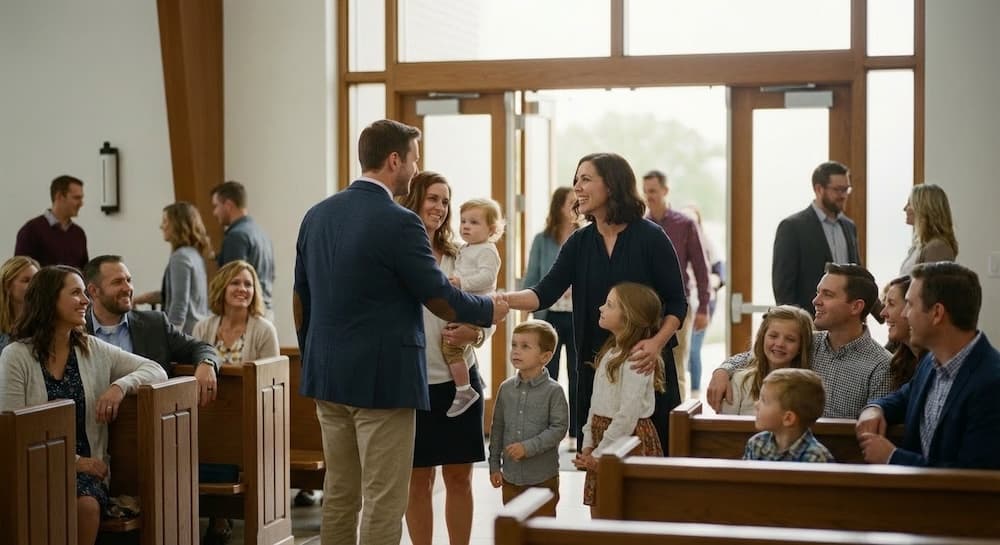



There’s a quiet ache many pastors carry.
A family visited three weeks ago.
You remember their faces.
You meant to call.
But the paper connection card? Missing.
The volunteer who collected it? Out sick the next week.
The reminder to follow up? Never written down.
And just like that, a potential relationship fades.
Churches don’t lose guests because of bad preaching. They lose them because no one followed up.
Not intentionally.
Just administratively.
And administration, when unmanaged, becomes a burden.
Where Follow-Up Breaks Down
Before you start researching church software, pause and name the real friction points.
Is it one of these?
- Paper connection cards get misplaced or sit in a stack.
- Visitor info lives in someone’s email inbox.
- No automated workflows to trigger next steps.
- No reminder system for pastoral follow-up calls.
- Inconsistent communication—some guests get three emails, others get none.
- Volunteers unsure who owns the process.
None of this is about laziness.
It’s about capacity.
You’re stewarding people. Preaching. Counseling. Casting vision. Leading staff. Managing budgets.
And somewhere in all that, guest follow-up becomes reactive instead of intentional.
Without a system, even the most shepherd-hearted pastor struggles to care consistently.
What Healthy Follow-Up Actually Requires
Effective guest follow-up isn’t complicated.
But it must be consistent.
At minimum, your church needs:
- A centralized place for visitor data
- Automated first-touch communication (email or text)
- Task reminders for pastoral calls or visits
- Clear ownership—who does what, and when
This is where church management software can serve the mission.
Not as a flashy add-on.
But as a tool of stewardship.
A platform like Tithely Church Management centralizes guest information, triggers automated workflows, and assigns follow-up tasks so no one slips through the cracks. It turns connection from a memory-based system into a ministry rhythm.
Technology cannot shepherd people.
But it can remove the administrative friction that prevents shepherding from happening.
Evaluating “Mission-Fit,” Not Just Features
When researching church software, don’t start with feature lists.
Start with your mission.
Ask:
- Does this system help us care for people more intentionally?
- Will it reduce duplicated work?
- Can volunteers use it without extensive training?
- Does it simplify, or add complexity?
The right software should feel like relief.
Not another project.
It should lighten the burden of administration so you can focus on preaching, prayer, and presence.
And be cautious of systems that look impressive but require a full-time tech expert to manage. In smaller churches especially, ease of use is not a luxury—it’s essential.
The Importance of Transparent Pricing
One of the most stressful parts of church software research is uncertainty around cost.
You shouldn’t need three sales calls just to understand pricing.
Look for transparency.
Look for clarity.
A platform’s cost should be easy to access and easy to understand, like Tithely’s straightforward pricing structure.
Clear pricing communicates respect. It allows you to steward your budget wisely and make decisions without pressure.
Remember, software is not an expense for the sake of technology.
It’s an investment in people not slipping through the cracks.
Moving From Good Intentions to Reliable Systems
Most churches have good intentions.
They want to call every guest.
They want to send handwritten notes.
They want to invite new families to lunch.
But good intentions without systems lead to inconsistency.
And inconsistency quietly erodes community.
The goal of church software isn’t efficiency for its own sake.
It’s faithfulness.
Faithfulness to steward the names God entrusts to your congregation.
Faithfulness to notice.
Faithfulness to follow up.
If you’re overwhelmed researching options, take a breath.
Name the real pain.
Look for mission-fit.
Prioritize ease and transparency.
Then choose the tool that gives you back your time.
Because when administration no longer drains you, you’re free to do what you were called to do.
Shepherd people.
Ready to Strengthen Your Guest Follow-Up?
If missed follow-ups are weighing on you, explore how a centralized system can help you build consistent, compassionate processes.
Start by reviewing Tithely Church Management and see how it supports intentional guest care. Then compare plans at the pricing page above.
Less paperwork.
Fewer dropped connections.
More meaningful ministry.
Sign Up for Product Updates

Chris Dunagan is a marketing strategist focused on church tech and digital engagement. He helps churches grow through SEO, email campaigns, and tools like Tithely and Breeze ChMS, with an emphasis on online giving, content strategy, and digital outreach.
There’s a quiet ache many pastors carry.
A family visited three weeks ago.
You remember their faces.
You meant to call.
But the paper connection card? Missing.
The volunteer who collected it? Out sick the next week.
The reminder to follow up? Never written down.
And just like that, a potential relationship fades.
Churches don’t lose guests because of bad preaching. They lose them because no one followed up.
Not intentionally.
Just administratively.
And administration, when unmanaged, becomes a burden.
Where Follow-Up Breaks Down
Before you start researching church software, pause and name the real friction points.
Is it one of these?
- Paper connection cards get misplaced or sit in a stack.
- Visitor info lives in someone’s email inbox.
- No automated workflows to trigger next steps.
- No reminder system for pastoral follow-up calls.
- Inconsistent communication—some guests get three emails, others get none.
- Volunteers unsure who owns the process.
None of this is about laziness.
It’s about capacity.
You’re stewarding people. Preaching. Counseling. Casting vision. Leading staff. Managing budgets.
And somewhere in all that, guest follow-up becomes reactive instead of intentional.
Without a system, even the most shepherd-hearted pastor struggles to care consistently.
What Healthy Follow-Up Actually Requires
Effective guest follow-up isn’t complicated.
But it must be consistent.
At minimum, your church needs:
- A centralized place for visitor data
- Automated first-touch communication (email or text)
- Task reminders for pastoral calls or visits
- Clear ownership—who does what, and when
This is where church management software can serve the mission.
Not as a flashy add-on.
But as a tool of stewardship.
A platform like Tithely Church Management centralizes guest information, triggers automated workflows, and assigns follow-up tasks so no one slips through the cracks. It turns connection from a memory-based system into a ministry rhythm.
Technology cannot shepherd people.
But it can remove the administrative friction that prevents shepherding from happening.
Evaluating “Mission-Fit,” Not Just Features
When researching church software, don’t start with feature lists.
Start with your mission.
Ask:
- Does this system help us care for people more intentionally?
- Will it reduce duplicated work?
- Can volunteers use it without extensive training?
- Does it simplify, or add complexity?
The right software should feel like relief.
Not another project.
It should lighten the burden of administration so you can focus on preaching, prayer, and presence.
And be cautious of systems that look impressive but require a full-time tech expert to manage. In smaller churches especially, ease of use is not a luxury—it’s essential.
The Importance of Transparent Pricing
One of the most stressful parts of church software research is uncertainty around cost.
You shouldn’t need three sales calls just to understand pricing.
Look for transparency.
Look for clarity.
A platform’s cost should be easy to access and easy to understand, like Tithely’s straightforward pricing structure.
Clear pricing communicates respect. It allows you to steward your budget wisely and make decisions without pressure.
Remember, software is not an expense for the sake of technology.
It’s an investment in people not slipping through the cracks.
Moving From Good Intentions to Reliable Systems
Most churches have good intentions.
They want to call every guest.
They want to send handwritten notes.
They want to invite new families to lunch.
But good intentions without systems lead to inconsistency.
And inconsistency quietly erodes community.
The goal of church software isn’t efficiency for its own sake.
It’s faithfulness.
Faithfulness to steward the names God entrusts to your congregation.
Faithfulness to notice.
Faithfulness to follow up.
If you’re overwhelmed researching options, take a breath.
Name the real pain.
Look for mission-fit.
Prioritize ease and transparency.
Then choose the tool that gives you back your time.
Because when administration no longer drains you, you’re free to do what you were called to do.
Shepherd people.
Ready to Strengthen Your Guest Follow-Up?
If missed follow-ups are weighing on you, explore how a centralized system can help you build consistent, compassionate processes.
Start by reviewing Tithely Church Management and see how it supports intentional guest care. Then compare plans at the pricing page above.
Less paperwork.
Fewer dropped connections.
More meaningful ministry.
podcast transcript
Chris Dunagan is a marketing strategist focused on church tech and digital engagement. He helps churches grow through SEO, email campaigns, and tools like Tithely and Breeze ChMS, with an emphasis on online giving, content strategy, and digital outreach.
There’s a quiet ache many pastors carry.
A family visited three weeks ago.
You remember their faces.
You meant to call.
But the paper connection card? Missing.
The volunteer who collected it? Out sick the next week.
The reminder to follow up? Never written down.
And just like that, a potential relationship fades.
Churches don’t lose guests because of bad preaching. They lose them because no one followed up.
Not intentionally.
Just administratively.
And administration, when unmanaged, becomes a burden.
Where Follow-Up Breaks Down
Before you start researching church software, pause and name the real friction points.
Is it one of these?
- Paper connection cards get misplaced or sit in a stack.
- Visitor info lives in someone’s email inbox.
- No automated workflows to trigger next steps.
- No reminder system for pastoral follow-up calls.
- Inconsistent communication—some guests get three emails, others get none.
- Volunteers unsure who owns the process.
None of this is about laziness.
It’s about capacity.
You’re stewarding people. Preaching. Counseling. Casting vision. Leading staff. Managing budgets.
And somewhere in all that, guest follow-up becomes reactive instead of intentional.
Without a system, even the most shepherd-hearted pastor struggles to care consistently.
What Healthy Follow-Up Actually Requires
Effective guest follow-up isn’t complicated.
But it must be consistent.
At minimum, your church needs:
- A centralized place for visitor data
- Automated first-touch communication (email or text)
- Task reminders for pastoral calls or visits
- Clear ownership—who does what, and when
This is where church management software can serve the mission.
Not as a flashy add-on.
But as a tool of stewardship.
A platform like Tithely Church Management centralizes guest information, triggers automated workflows, and assigns follow-up tasks so no one slips through the cracks. It turns connection from a memory-based system into a ministry rhythm.
Technology cannot shepherd people.
But it can remove the administrative friction that prevents shepherding from happening.
Evaluating “Mission-Fit,” Not Just Features
When researching church software, don’t start with feature lists.
Start with your mission.
Ask:
- Does this system help us care for people more intentionally?
- Will it reduce duplicated work?
- Can volunteers use it without extensive training?
- Does it simplify, or add complexity?
The right software should feel like relief.
Not another project.
It should lighten the burden of administration so you can focus on preaching, prayer, and presence.
And be cautious of systems that look impressive but require a full-time tech expert to manage. In smaller churches especially, ease of use is not a luxury—it’s essential.
The Importance of Transparent Pricing
One of the most stressful parts of church software research is uncertainty around cost.
You shouldn’t need three sales calls just to understand pricing.
Look for transparency.
Look for clarity.
A platform’s cost should be easy to access and easy to understand, like Tithely’s straightforward pricing structure.
Clear pricing communicates respect. It allows you to steward your budget wisely and make decisions without pressure.
Remember, software is not an expense for the sake of technology.
It’s an investment in people not slipping through the cracks.
Moving From Good Intentions to Reliable Systems
Most churches have good intentions.
They want to call every guest.
They want to send handwritten notes.
They want to invite new families to lunch.
But good intentions without systems lead to inconsistency.
And inconsistency quietly erodes community.
The goal of church software isn’t efficiency for its own sake.
It’s faithfulness.
Faithfulness to steward the names God entrusts to your congregation.
Faithfulness to notice.
Faithfulness to follow up.
If you’re overwhelmed researching options, take a breath.
Name the real pain.
Look for mission-fit.
Prioritize ease and transparency.
Then choose the tool that gives you back your time.
Because when administration no longer drains you, you’re free to do what you were called to do.
Shepherd people.
Ready to Strengthen Your Guest Follow-Up?
If missed follow-ups are weighing on you, explore how a centralized system can help you build consistent, compassionate processes.
Start by reviewing Tithely Church Management and see how it supports intentional guest care. Then compare plans at the pricing page above.
Less paperwork.
Fewer dropped connections.
More meaningful ministry.
VIDEO transcript
There’s a quiet ache many pastors carry.
A family visited three weeks ago.
You remember their faces.
You meant to call.
But the paper connection card? Missing.
The volunteer who collected it? Out sick the next week.
The reminder to follow up? Never written down.
And just like that, a potential relationship fades.
Churches don’t lose guests because of bad preaching. They lose them because no one followed up.
Not intentionally.
Just administratively.
And administration, when unmanaged, becomes a burden.
Where Follow-Up Breaks Down
Before you start researching church software, pause and name the real friction points.
Is it one of these?
- Paper connection cards get misplaced or sit in a stack.
- Visitor info lives in someone’s email inbox.
- No automated workflows to trigger next steps.
- No reminder system for pastoral follow-up calls.
- Inconsistent communication—some guests get three emails, others get none.
- Volunteers unsure who owns the process.
None of this is about laziness.
It’s about capacity.
You’re stewarding people. Preaching. Counseling. Casting vision. Leading staff. Managing budgets.
And somewhere in all that, guest follow-up becomes reactive instead of intentional.
Without a system, even the most shepherd-hearted pastor struggles to care consistently.
What Healthy Follow-Up Actually Requires
Effective guest follow-up isn’t complicated.
But it must be consistent.
At minimum, your church needs:
- A centralized place for visitor data
- Automated first-touch communication (email or text)
- Task reminders for pastoral calls or visits
- Clear ownership—who does what, and when
This is where church management software can serve the mission.
Not as a flashy add-on.
But as a tool of stewardship.
A platform like Tithely Church Management centralizes guest information, triggers automated workflows, and assigns follow-up tasks so no one slips through the cracks. It turns connection from a memory-based system into a ministry rhythm.
Technology cannot shepherd people.
But it can remove the administrative friction that prevents shepherding from happening.
Evaluating “Mission-Fit,” Not Just Features
When researching church software, don’t start with feature lists.
Start with your mission.
Ask:
- Does this system help us care for people more intentionally?
- Will it reduce duplicated work?
- Can volunteers use it without extensive training?
- Does it simplify, or add complexity?
The right software should feel like relief.
Not another project.
It should lighten the burden of administration so you can focus on preaching, prayer, and presence.
And be cautious of systems that look impressive but require a full-time tech expert to manage. In smaller churches especially, ease of use is not a luxury—it’s essential.
The Importance of Transparent Pricing
One of the most stressful parts of church software research is uncertainty around cost.
You shouldn’t need three sales calls just to understand pricing.
Look for transparency.
Look for clarity.
A platform’s cost should be easy to access and easy to understand, like Tithely’s straightforward pricing structure.
Clear pricing communicates respect. It allows you to steward your budget wisely and make decisions without pressure.
Remember, software is not an expense for the sake of technology.
It’s an investment in people not slipping through the cracks.
Moving From Good Intentions to Reliable Systems
Most churches have good intentions.
They want to call every guest.
They want to send handwritten notes.
They want to invite new families to lunch.
But good intentions without systems lead to inconsistency.
And inconsistency quietly erodes community.
The goal of church software isn’t efficiency for its own sake.
It’s faithfulness.
Faithfulness to steward the names God entrusts to your congregation.
Faithfulness to notice.
Faithfulness to follow up.
If you’re overwhelmed researching options, take a breath.
Name the real pain.
Look for mission-fit.
Prioritize ease and transparency.
Then choose the tool that gives you back your time.
Because when administration no longer drains you, you’re free to do what you were called to do.
Shepherd people.
Ready to Strengthen Your Guest Follow-Up?
If missed follow-ups are weighing on you, explore how a centralized system can help you build consistent, compassionate processes.
Start by reviewing Tithely Church Management and see how it supports intentional guest care. Then compare plans at the pricing page above.
Less paperwork.
Fewer dropped connections.
More meaningful ministry.
Sign Up for Product Updates
Chris Dunagan is a marketing strategist focused on church tech and digital engagement. He helps churches grow through SEO, email campaigns, and tools like Tithely and Breeze ChMS, with an emphasis on online giving, content strategy, and digital outreach.

You Might Also Like
More Resources

From increasing giving, managing your congregation, and engaging your church, our collection of resources will keep you up-to-date on the latest church and ministry trends.
Free Resources
.jpg)


.jpeg)

.jpeg)



.jpg)