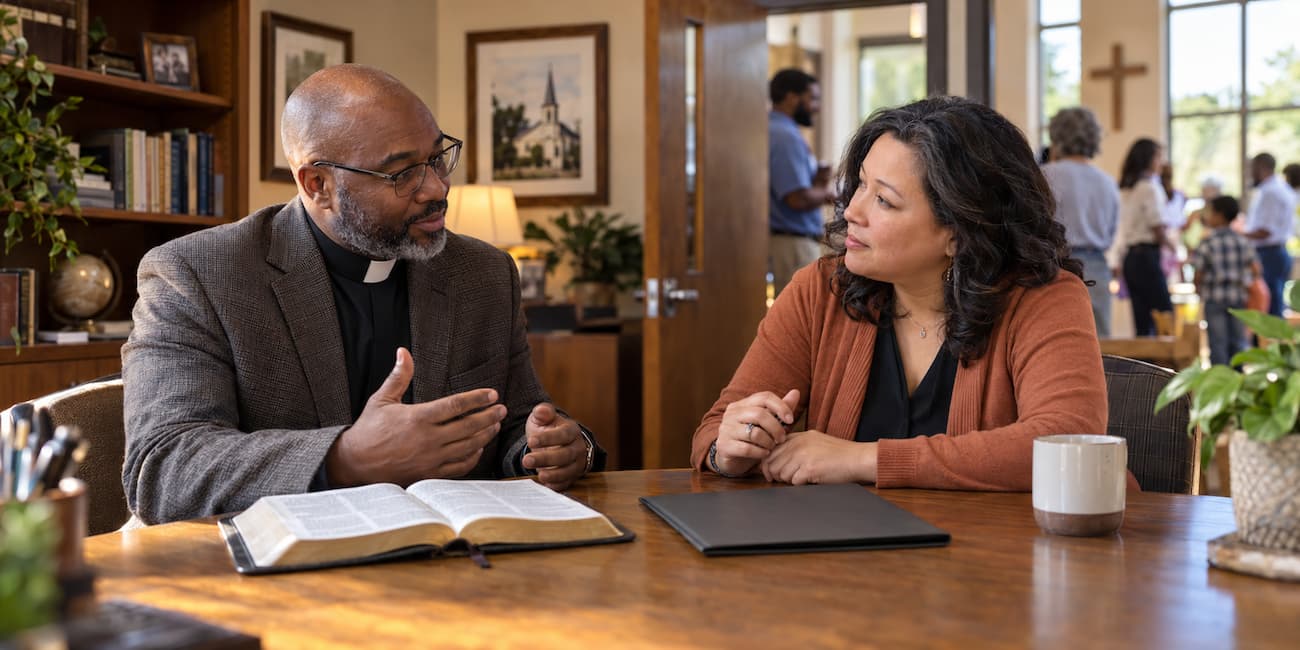
How Pastors Can Reduce Church Accounting Work by 10+ Hours a Month
Many pastors didn’t enter ministry expecting to spend hours inside spreadsheets. Yet church accounting often becomes a quiet weight that follows every week. The right systems can lift that burden and give time back for the work that truly matters.
.jpg)



When Administration Starts Taking Over
Pastor Alex noticed a pattern every Tuesday morning.
He would sit down with a cup of coffee intending to prepare for pastoral visits or sermon study. Instead, he opened a spreadsheet. Then another. Then a folder of giving reports sent by email.
Donations had come in online, through checks on Sunday morning, and through a mobile giving platform used by younger members of the church. None of it lived in the same place.
Two hours later, he was still reconciling numbers.
This wasn’t why he entered ministry. Yet like many pastors, he carried the quiet burden of church accounting work that never seemed to end.
Over time he realized something important. The issue wasn’t diligence. It was the system.
Why Church Accounting Consumes So Much Time
Many churches operate with tools that were never designed to work together.
A spreadsheet here. A giving platform there. A separate system for member records.
Individually, each tool makes sense. Together, they create unnecessary friction.
Common pain points often include:
- Fragmented financial data spread across multiple systems
- Manual data entry after every Sunday service
- Reconciling online giving with physical donations
- Preparing reports for finance teams or elders
- Tracking donor statements and contribution records
Each task feels small. Add them together and church accounting can quietly take ten hours or more every month.
That’s time pulled away from pastoral care, discipleship, and prayer.
What Happens When Systems Work Together
Technology can feel intimidating in ministry settings. Yet when it is designed well, it becomes a form of support rather than another responsibility.
Integrated church accounting tools reduce the need for repetitive work.
Giving records flow into one central system. Reports generate automatically. Contribution records stay organized throughout the year instead of being assembled during tax season.
Platforms like Tithely Church Management are designed to bring giving, financial tracking, and member data into one place so pastors and administrators spend less time sorting through numbers.
Instead of juggling tools, leaders gain a clearer view of what is happening financially inside the church.
And clarity saves time.
Practical Ways Churches Reduce Accounting Work
Churches that streamline their financial systems often recover 10 or more hours every month. That time adds up quickly across a year.
Here are a few practical shifts that make a noticeable difference.
1. Consolidating Giving Records
When online giving, mobile donations, and in-person offerings feed into one system, reconciliation becomes simple.
No more transferring numbers from one spreadsheet to another.
2. Automating Financial Reports
Finance committees and church boards need regular reporting. Preparing those reports manually can take hours.
Integrated systems generate reports automatically, allowing leaders to review clear financial summaries without assembling the data themselves.
3. Simplifying Donor Statements
Contribution statements often create stress at the end of the year.
When donations are tracked automatically, statements can be produced in minutes instead of days.
4. Creating Visibility for Leadership
Pastors and church leaders gain a real-time understanding of financial health.
Budget decisions become easier when the numbers are clear and accessible.
Stewardship Includes Our Time
Money matters in ministry. Yet so does time.
Every hour spent wrestling with spreadsheets is an hour that cannot be spent sitting with a grieving family, discipling a young believer, or preparing a message for Sunday morning.
Healthy church accounting systems support stewardship in both areas.
They protect financial integrity while also guarding the pastor’s calling.
If your church is exploring ways to simplify administration and reduce financial workload, it can be helpful to review available tools and what they include. You can see a breakdown of available options on Tithely’s pricing page.
Sometimes the right system does more than organize numbers.
It restores margin.
A Final Thought for Pastors
Administration will always be part of church leadership. That reality isn’t going away.
Yet it does not have to dominate the week.
When church accounting systems are designed to work together, the hours spent managing finances begin to shrink. Slowly at first. Then noticeably.
Ten hours recovered each month becomes time invested back into people.
And people are the heart of ministry.
Over to You
If church accounting is quietly consuming your schedule, it may be time to simplify the system behind it.
Explore how integrated tools like Tithely Church Management can help your church reduce administrative workload and reclaim time for shepherding your community.
Sign Up for Product Updates

Tithely provides the tools you need to engage with your church online, stay connected, increase generosity, and simplify the lives of your staff.
With tools like text and email messaging, custom church apps and websites, church management software, digital giving, and so much more… it’s no wonder why over 53,000 churches in 50 countries trust Tithely to help run their church.
When Administration Starts Taking Over
Pastor Alex noticed a pattern every Tuesday morning.
He would sit down with a cup of coffee intending to prepare for pastoral visits or sermon study. Instead, he opened a spreadsheet. Then another. Then a folder of giving reports sent by email.
Donations had come in online, through checks on Sunday morning, and through a mobile giving platform used by younger members of the church. None of it lived in the same place.
Two hours later, he was still reconciling numbers.
This wasn’t why he entered ministry. Yet like many pastors, he carried the quiet burden of church accounting work that never seemed to end.
Over time he realized something important. The issue wasn’t diligence. It was the system.
Why Church Accounting Consumes So Much Time
Many churches operate with tools that were never designed to work together.
A spreadsheet here. A giving platform there. A separate system for member records.
Individually, each tool makes sense. Together, they create unnecessary friction.
Common pain points often include:
- Fragmented financial data spread across multiple systems
- Manual data entry after every Sunday service
- Reconciling online giving with physical donations
- Preparing reports for finance teams or elders
- Tracking donor statements and contribution records
Each task feels small. Add them together and church accounting can quietly take ten hours or more every month.
That’s time pulled away from pastoral care, discipleship, and prayer.
What Happens When Systems Work Together
Technology can feel intimidating in ministry settings. Yet when it is designed well, it becomes a form of support rather than another responsibility.
Integrated church accounting tools reduce the need for repetitive work.
Giving records flow into one central system. Reports generate automatically. Contribution records stay organized throughout the year instead of being assembled during tax season.
Platforms like Tithely Church Management are designed to bring giving, financial tracking, and member data into one place so pastors and administrators spend less time sorting through numbers.
Instead of juggling tools, leaders gain a clearer view of what is happening financially inside the church.
And clarity saves time.
Practical Ways Churches Reduce Accounting Work
Churches that streamline their financial systems often recover 10 or more hours every month. That time adds up quickly across a year.
Here are a few practical shifts that make a noticeable difference.
1. Consolidating Giving Records
When online giving, mobile donations, and in-person offerings feed into one system, reconciliation becomes simple.
No more transferring numbers from one spreadsheet to another.
2. Automating Financial Reports
Finance committees and church boards need regular reporting. Preparing those reports manually can take hours.
Integrated systems generate reports automatically, allowing leaders to review clear financial summaries without assembling the data themselves.
3. Simplifying Donor Statements
Contribution statements often create stress at the end of the year.
When donations are tracked automatically, statements can be produced in minutes instead of days.
4. Creating Visibility for Leadership
Pastors and church leaders gain a real-time understanding of financial health.
Budget decisions become easier when the numbers are clear and accessible.
Stewardship Includes Our Time
Money matters in ministry. Yet so does time.
Every hour spent wrestling with spreadsheets is an hour that cannot be spent sitting with a grieving family, discipling a young believer, or preparing a message for Sunday morning.
Healthy church accounting systems support stewardship in both areas.
They protect financial integrity while also guarding the pastor’s calling.
If your church is exploring ways to simplify administration and reduce financial workload, it can be helpful to review available tools and what they include. You can see a breakdown of available options on Tithely’s pricing page.
Sometimes the right system does more than organize numbers.
It restores margin.
A Final Thought for Pastors
Administration will always be part of church leadership. That reality isn’t going away.
Yet it does not have to dominate the week.
When church accounting systems are designed to work together, the hours spent managing finances begin to shrink. Slowly at first. Then noticeably.
Ten hours recovered each month becomes time invested back into people.
And people are the heart of ministry.
Over to You
If church accounting is quietly consuming your schedule, it may be time to simplify the system behind it.
Explore how integrated tools like Tithely Church Management can help your church reduce administrative workload and reclaim time for shepherding your community.
podcast transcript
Tithely provides the tools you need to engage with your church online, stay connected, increase generosity, and simplify the lives of your staff.
With tools like text and email messaging, custom church apps and websites, church management software, digital giving, and so much more… it’s no wonder why over 53,000 churches in 50 countries trust Tithely to help run their church.
When Administration Starts Taking Over
Pastor Alex noticed a pattern every Tuesday morning.
He would sit down with a cup of coffee intending to prepare for pastoral visits or sermon study. Instead, he opened a spreadsheet. Then another. Then a folder of giving reports sent by email.
Donations had come in online, through checks on Sunday morning, and through a mobile giving platform used by younger members of the church. None of it lived in the same place.
Two hours later, he was still reconciling numbers.
This wasn’t why he entered ministry. Yet like many pastors, he carried the quiet burden of church accounting work that never seemed to end.
Over time he realized something important. The issue wasn’t diligence. It was the system.
Why Church Accounting Consumes So Much Time
Many churches operate with tools that were never designed to work together.
A spreadsheet here. A giving platform there. A separate system for member records.
Individually, each tool makes sense. Together, they create unnecessary friction.
Common pain points often include:
- Fragmented financial data spread across multiple systems
- Manual data entry after every Sunday service
- Reconciling online giving with physical donations
- Preparing reports for finance teams or elders
- Tracking donor statements and contribution records
Each task feels small. Add them together and church accounting can quietly take ten hours or more every month.
That’s time pulled away from pastoral care, discipleship, and prayer.
What Happens When Systems Work Together
Technology can feel intimidating in ministry settings. Yet when it is designed well, it becomes a form of support rather than another responsibility.
Integrated church accounting tools reduce the need for repetitive work.
Giving records flow into one central system. Reports generate automatically. Contribution records stay organized throughout the year instead of being assembled during tax season.
Platforms like Tithely Church Management are designed to bring giving, financial tracking, and member data into one place so pastors and administrators spend less time sorting through numbers.
Instead of juggling tools, leaders gain a clearer view of what is happening financially inside the church.
And clarity saves time.
Practical Ways Churches Reduce Accounting Work
Churches that streamline their financial systems often recover 10 or more hours every month. That time adds up quickly across a year.
Here are a few practical shifts that make a noticeable difference.
1. Consolidating Giving Records
When online giving, mobile donations, and in-person offerings feed into one system, reconciliation becomes simple.
No more transferring numbers from one spreadsheet to another.
2. Automating Financial Reports
Finance committees and church boards need regular reporting. Preparing those reports manually can take hours.
Integrated systems generate reports automatically, allowing leaders to review clear financial summaries without assembling the data themselves.
3. Simplifying Donor Statements
Contribution statements often create stress at the end of the year.
When donations are tracked automatically, statements can be produced in minutes instead of days.
4. Creating Visibility for Leadership
Pastors and church leaders gain a real-time understanding of financial health.
Budget decisions become easier when the numbers are clear and accessible.
Stewardship Includes Our Time
Money matters in ministry. Yet so does time.
Every hour spent wrestling with spreadsheets is an hour that cannot be spent sitting with a grieving family, discipling a young believer, or preparing a message for Sunday morning.
Healthy church accounting systems support stewardship in both areas.
They protect financial integrity while also guarding the pastor’s calling.
If your church is exploring ways to simplify administration and reduce financial workload, it can be helpful to review available tools and what they include. You can see a breakdown of available options on Tithely’s pricing page.
Sometimes the right system does more than organize numbers.
It restores margin.
A Final Thought for Pastors
Administration will always be part of church leadership. That reality isn’t going away.
Yet it does not have to dominate the week.
When church accounting systems are designed to work together, the hours spent managing finances begin to shrink. Slowly at first. Then noticeably.
Ten hours recovered each month becomes time invested back into people.
And people are the heart of ministry.
Over to You
If church accounting is quietly consuming your schedule, it may be time to simplify the system behind it.
Explore how integrated tools like Tithely Church Management can help your church reduce administrative workload and reclaim time for shepherding your community.
VIDEO transcript
When Administration Starts Taking Over
Pastor Alex noticed a pattern every Tuesday morning.
He would sit down with a cup of coffee intending to prepare for pastoral visits or sermon study. Instead, he opened a spreadsheet. Then another. Then a folder of giving reports sent by email.
Donations had come in online, through checks on Sunday morning, and through a mobile giving platform used by younger members of the church. None of it lived in the same place.
Two hours later, he was still reconciling numbers.
This wasn’t why he entered ministry. Yet like many pastors, he carried the quiet burden of church accounting work that never seemed to end.
Over time he realized something important. The issue wasn’t diligence. It was the system.
Why Church Accounting Consumes So Much Time
Many churches operate with tools that were never designed to work together.
A spreadsheet here. A giving platform there. A separate system for member records.
Individually, each tool makes sense. Together, they create unnecessary friction.
Common pain points often include:
- Fragmented financial data spread across multiple systems
- Manual data entry after every Sunday service
- Reconciling online giving with physical donations
- Preparing reports for finance teams or elders
- Tracking donor statements and contribution records
Each task feels small. Add them together and church accounting can quietly take ten hours or more every month.
That’s time pulled away from pastoral care, discipleship, and prayer.
What Happens When Systems Work Together
Technology can feel intimidating in ministry settings. Yet when it is designed well, it becomes a form of support rather than another responsibility.
Integrated church accounting tools reduce the need for repetitive work.
Giving records flow into one central system. Reports generate automatically. Contribution records stay organized throughout the year instead of being assembled during tax season.
Platforms like Tithely Church Management are designed to bring giving, financial tracking, and member data into one place so pastors and administrators spend less time sorting through numbers.
Instead of juggling tools, leaders gain a clearer view of what is happening financially inside the church.
And clarity saves time.
Practical Ways Churches Reduce Accounting Work
Churches that streamline their financial systems often recover 10 or more hours every month. That time adds up quickly across a year.
Here are a few practical shifts that make a noticeable difference.
1. Consolidating Giving Records
When online giving, mobile donations, and in-person offerings feed into one system, reconciliation becomes simple.
No more transferring numbers from one spreadsheet to another.
2. Automating Financial Reports
Finance committees and church boards need regular reporting. Preparing those reports manually can take hours.
Integrated systems generate reports automatically, allowing leaders to review clear financial summaries without assembling the data themselves.
3. Simplifying Donor Statements
Contribution statements often create stress at the end of the year.
When donations are tracked automatically, statements can be produced in minutes instead of days.
4. Creating Visibility for Leadership
Pastors and church leaders gain a real-time understanding of financial health.
Budget decisions become easier when the numbers are clear and accessible.
Stewardship Includes Our Time
Money matters in ministry. Yet so does time.
Every hour spent wrestling with spreadsheets is an hour that cannot be spent sitting with a grieving family, discipling a young believer, or preparing a message for Sunday morning.
Healthy church accounting systems support stewardship in both areas.
They protect financial integrity while also guarding the pastor’s calling.
If your church is exploring ways to simplify administration and reduce financial workload, it can be helpful to review available tools and what they include. You can see a breakdown of available options on Tithely’s pricing page.
Sometimes the right system does more than organize numbers.
It restores margin.
A Final Thought for Pastors
Administration will always be part of church leadership. That reality isn’t going away.
Yet it does not have to dominate the week.
When church accounting systems are designed to work together, the hours spent managing finances begin to shrink. Slowly at first. Then noticeably.
Ten hours recovered each month becomes time invested back into people.
And people are the heart of ministry.
Over to You
If church accounting is quietly consuming your schedule, it may be time to simplify the system behind it.
Explore how integrated tools like Tithely Church Management can help your church reduce administrative workload and reclaim time for shepherding your community.
Sign Up for Product Updates
Tithely provides the tools you need to engage with your church online, stay connected, increase generosity, and simplify the lives of your staff.
With tools like text and email messaging, custom church apps and websites, church management software, digital giving, and so much more… it’s no wonder why over 53,000 churches in 50 countries trust Tithely to help run their church.

You Might Also Like
More Resources

From increasing giving, managing your congregation, and engaging your church, our collection of resources will keep you up-to-date on the latest church and ministry trends.
Free Resources.jpg)
.jpg)
.jpg)