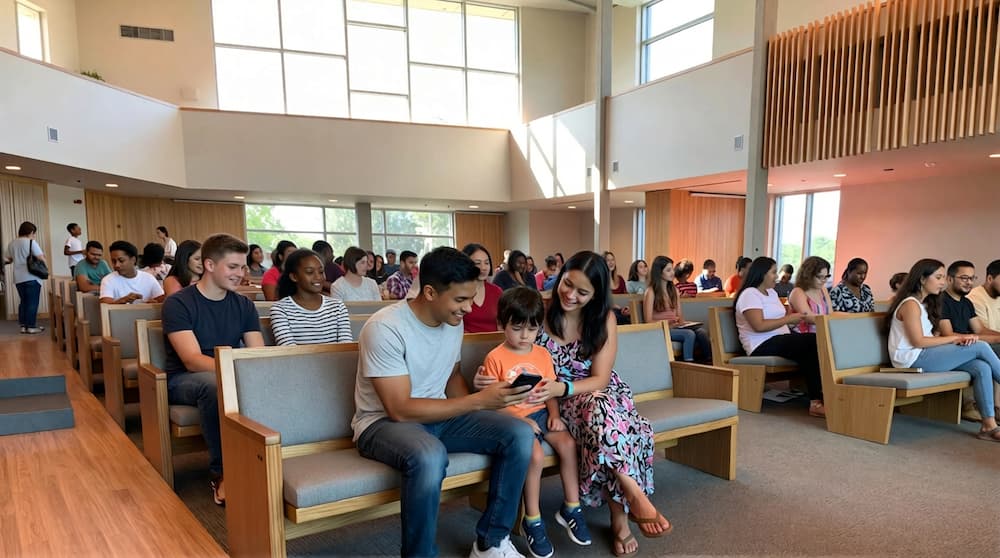
How to Measure Church Growth
Every church should be measuring their growth. Here's how to do that well.




A growing church signifies that all involved ministries, services, and communities are doing well. But the most pressing question that looms over most church leaders is this: how do you precisely measure church growth?
Sadly, many church leaders fail to measure church growth because it isn’t part of their church growth strategy. Even worse, many church leaders don't know the concrete indicators that measure whether the church is growing.
In the same way church leaders pray for church growth, they must also pray for the ability and commitment to measure church growth as an integral component of the church's welfare.
Let’s unpack the essential elements of church growth and how you can measure these indicators for your church's benefit.
Why Should You Measure Church Growth?
Many church leaders think measuring church growth isn’t spiritual. Some have even claimed that measuring church growth strategies or churchgoers' behaviors is too secular. They say that narrowing the church's activities into a numbers game oversimplifies everything.
Numbers can't tell the whole story of the church, but you can't deny the implications they suggest for your church's growth or services.
For instance, if you had 500 congregants at the start of the year, but by the next quarter, you had only 300 active churchgoers, would you still be able to convince yourself and the church that everything is going right?
Disregarding indicators of church growth is a dangerous approach. To improve church growth, you must measure which growth strategies are working and which ones need improvement.
Ways to Measure Church Growth
Church growth is sometimes subjective, but there are several indicators you can use to assess if your church is growing.
1. First-time Churchgoers
The number of first-time churchgoers indicates the journey of a person who visits your church, from their first visit to potentially their baptism or even their role as a church leader. More importantly, this indicator suggests your church's attractiveness to non-church members.
Aside from collecting the number of first-time churchgoers at monthly, quarterly, or yearly intervals, you can also ask for these details:
- What made them visit your church?
- How many other churches have they visited for the first time?
- What are they looking forward to in your church?
- What did they think of their experience at your church?
2. First-time Churchgoers Who Remained at Church
As mentioned earlier, the number of first-time churchgoers is an essential indicator of potential growth for your church.
Your data for first-time churchgoers could be more meaningful in evaluating your church growth strategy if you also measured how many people remained as church members.
Simply put, you can check the date of their first-time visit and see how long they stayed at your church. Is it for a month, a quarter of a year, or are they still present year-to-date?
If you've been looking for ideas to convince first-time churchgoers to become regular church attendees, we have you covered with our free guide, How to Convert First-Time Visitors into Regular Attenders.
3. Weekly Worship Attendance
If there's one church activity that visibly and publicly indicates church growth, it has to be your church's weekly worship service, particularly your Sunday service.
Your Sunday service could be your best church growth strategy. It's that one moment in the week that everyone—the church members, the ministries, and leaders—gets to be nourished by the Word of God.
For instance, if less than 50% of the church membership attends the Sunday service, the likelihood of church growth decreases. Church attendance speaks volumes about the church's reputation and services.
Aside from that, church leaders must also remember that attendance is often seasonal. For example, a lot of people might attend at the start of the year or towards Christmas but not during the summer.
A more practical approach would be to check the weekly worship attendance and compare it to the attendance from last week.
In the end, you have 52 weeks in a year to evaluate your weekly worship services, and attendance is an objective indicator. If you're wondering how to improve your church's worship experience, check out our guide on The Perfect Church Service Plan.
4. Number of Baptisms
What better way to measure church growth than to keep track of the people who professed their commitment and belief in Jesus through baptism at church? Baptisms signify the official beginning of a Christian's journey.
More baptized Christians at your church can signify that more people are willing to grow as Christians with the help of your church. And yes, you can measure the number of baptisms depending on the desired timeframe for evaluation.
5. Spiritual Growth Markers
In addition to measuring your church’s growth, it’s crucial to measure spiritual growth. In our church, we’ve decided that the best markers of spiritual growth are engagement.
Engagement in Environments of Discipleship
We believe that our people will grow spiritually when they engage in three environments of discipleship. We call them the row, the circle and the chair.
- The row: The row is our weekend service or the age-appropriate equivalent. We believe that gathering together to worship and open the scriptures is a crucial component for spiritual growth.
- The circle: The circle is our word for the small groups environment. We believe that intentional relationships are an essential ingredient for spiritual growth.
- The chair: The chair is our word for personally pursuing God through prayer, journaling and Bible reading. We believe this is also a necessary pursuit for spiritual growth.
In a perfect scenario, a person in our congregation attends the weekend service, participates in a small group that further explores the weekend content and then also uses a resource we provide called Beyond the Weekend, which is a personal devotional that expands on the Scriptures we explored in the weekend service.
So, how do we measure spiritual growth?
- We track weekend attendance numbers
- We track the percentage of our attenders that are engaged in a small group
- We track the percentage of our attenders that use our "Beyond the Weekend" resource (which helps people dive deeper into Sunday's message on an individual level)
Church management systems can go a long way in helping make data like this easy to access. While this isn’t a perfect way to measure, it does provide us with some tangible measurements of engagement.
Engagement in Serving and Giving
In addition to our three discipleship environments, we also believe that engagement in serving and giving are good indicators of spiritual growth.
We emphasize structured serving and giving over spontaneous serving and giving. To measure spiritual growth in these areas, we track the percent of our regular attenders that serve regularly within our church and the percent of our regular attenders who give regularly.
Engagement in Next Steps
The last marker I’ll share has to do with something we call next steps. This is a phrase that we use constantly. If you attend one of our weekend services, you’ll hear this phrase from the platform because we consistently invite our people to take a "next step" in their faith. As we said earlier, one of the big ones we measure is baptism.
In our church, we practice adult baptism as an act of obedience to Jesus. So we encourage our congregation to take the next step of baptism. We measure the number of baptisms in a year as a measure of spiritual growth in our congregation.
6. Tithes and Donations
Churches must treat tithes and donations with the utmost reverence. After all, tithes and donations provide resources for all the church's growth strategies and stewardship efforts.
That means churches must monitor every donated dollar from all churchgoers and donors. Can the monthly, quarterly, and annual tithing collections and donations help sustain all the church's activities and operations?
It may be tempting to do manual monitoring of your church's fundraising efforts on a spreadsheet, but Tithe.ly is here to assist church leaders in being more efficient in evaluating the church's funds.
You can check out how our top-notch services work by reading this article, The Importance of Fundraising Software.
7. Number of Givers
The number of tithes a church receives may not always be proportional to the number of givers. Don't let a massive sum of collected money distract you from the fact that this amount may have only come from a few people. It’s still quite possible that many church members are not committed to helping the church financially.
Remember: a growing church is a giving church. Churchgoers could spend every Sunday in your halls but not give their tithes. Unless they offer to help the church through tithing, you can't really measure the transformation that the church brings to their hearts.
The task of encouraging more church members to give to the church can be simplified with the aid of Tithe.ly Giving, which is designed to make giving to the church as convenient as possible.
8. Budget Breakdown
A growing church is a financially viable church.
If church leaders know how to prioritize and allocate the church's funds, then that would be a good indication that the ministries and services are well-supported and fulfilling their functions. Furthermore, a church's budget will dictate which areas of its growth strategies require more support.
More often than not, the ministries that thrive the most have the largest share of the budget. When you observe that some aspects of church activities aren’t working, aside from evaluating the activity itself, you may also want to examine whether these activities have proportional support, as reflected in the church's budget.
Not monitoring your church's budget is not a form of good stewardship, and ineffective stewardship doesn’t lead to church growth. As a church leader, you need to know where your budget goes. You can check out this article, How to Track Giving at Church, to help keep track of your church's budget.
9. Number of Volunteers
Every church member can volunteer to offer their time, talent, and resources for the church. However, a more effective way to utilize the data on the number of volunteers is to identify the number of volunteers with formal roles within your church.
You can include details about church volunteerism, such as:
- Number of church members serving in the different ministries
- Percentage of church volunteers versus non-volunteers
- Number of volunteers who transitioned to church leaders
A general rule of thumb is that at least 50% of your church's population should volunteer for the church to be considered as growing.
Learn more: Check out our guide on increasing the number of volunteers in your church to grow your volunteer base.
10. Number of Church Leaders
When Jesus was engaged in his public ministry, he was also forming leaders among his twelve apostles, who would continue to spread the Gospel even after he was no longer on earth.
More than two thousand years later, what started with Jesus and his twelve apostles has multiplied to thousands of church leaders and billions of believers. The lesson is clear: produce leaders as Jesus did.
With you at the helm of the church's activities, the other church leaders you appoint will be responsible for most of the essential activities at the church. Your leaders are most likely assigned to small groups, ministries, and church committees. Moreover, they directly influence other church members and help you establish the church's reputation.
Identify and equip church members who can serve as leaders after God's heart. And as you pray for church growth, pray for leaders who can help you grow the church, too.
A church with the right number of leaders will be able to facilitate the growth of its congregation. Our podcast, Modern Church Leader, is designed to help church leaders like you grow your church through effective leadership.
11. Number of Churches and Communities Planted
The growth of your church is not exclusive to your church members and leaders who have taken the next spiritual steps. Nor is it exclusive to your church's weekly attendance.
If your church is growing in numbers, finances, and spirit, it’s more likely that these blessings you have received will not remain in your church alone.
The ability to help other churches in need, provide outreach and support in the community, or even establish other branches are all signs of a thriving church. Additionally, all your outreach can help you plant the church's seeds, which will eventually bear fruit.
If your church has aspirations to plant in the future, make sure to consider these 6 Critical Habits Of Successful Church Planters.
Measure What Matters Most
Church growth, and the overall spiritual growth of your church members, involves several elements and variables. While individual member growth can be subjective, there are tangible behaviors that influence the church as a whole. The church must properly evaluate these indicators to determine whether it is growing or stagnating.
Remember not only to pray for church growth but also to pray for discernment when measuring church growth.
Equip your church with the necessary tools and know-how by checking out Tithely and experiencing the positive effects of measuring church growth with the tips above.
Sign Up for Product Updates

Tithely provides the tools you need to engage with your church online, stay connected, increase generosity, and simplify the lives of your staff.
With tools like text and email messaging, custom church apps and websites, church management software, digital giving, and so much more… it’s no wonder why over 53,000 churches in 50 countries trust Tithely to help run their church.
A growing church signifies that all involved ministries, services, and communities are doing well. But the most pressing question that looms over most church leaders is this: how do you precisely measure church growth?
Sadly, many church leaders fail to measure church growth because it isn’t part of their church growth strategy. Even worse, many church leaders don't know the concrete indicators that measure whether the church is growing.
In the same way church leaders pray for church growth, they must also pray for the ability and commitment to measure church growth as an integral component of the church's welfare.
Let’s unpack the essential elements of church growth and how you can measure these indicators for your church's benefit.
Why Should You Measure Church Growth?
Many church leaders think measuring church growth isn’t spiritual. Some have even claimed that measuring church growth strategies or churchgoers' behaviors is too secular. They say that narrowing the church's activities into a numbers game oversimplifies everything.
Numbers can't tell the whole story of the church, but you can't deny the implications they suggest for your church's growth or services.
For instance, if you had 500 congregants at the start of the year, but by the next quarter, you had only 300 active churchgoers, would you still be able to convince yourself and the church that everything is going right?
Disregarding indicators of church growth is a dangerous approach. To improve church growth, you must measure which growth strategies are working and which ones need improvement.
Ways to Measure Church Growth
Church growth is sometimes subjective, but there are several indicators you can use to assess if your church is growing.
1. First-time Churchgoers
The number of first-time churchgoers indicates the journey of a person who visits your church, from their first visit to potentially their baptism or even their role as a church leader. More importantly, this indicator suggests your church's attractiveness to non-church members.
Aside from collecting the number of first-time churchgoers at monthly, quarterly, or yearly intervals, you can also ask for these details:
- What made them visit your church?
- How many other churches have they visited for the first time?
- What are they looking forward to in your church?
- What did they think of their experience at your church?
2. First-time Churchgoers Who Remained at Church
As mentioned earlier, the number of first-time churchgoers is an essential indicator of potential growth for your church.
Your data for first-time churchgoers could be more meaningful in evaluating your church growth strategy if you also measured how many people remained as church members.
Simply put, you can check the date of their first-time visit and see how long they stayed at your church. Is it for a month, a quarter of a year, or are they still present year-to-date?
If you've been looking for ideas to convince first-time churchgoers to become regular church attendees, we have you covered with our free guide, How to Convert First-Time Visitors into Regular Attenders.
3. Weekly Worship Attendance
If there's one church activity that visibly and publicly indicates church growth, it has to be your church's weekly worship service, particularly your Sunday service.
Your Sunday service could be your best church growth strategy. It's that one moment in the week that everyone—the church members, the ministries, and leaders—gets to be nourished by the Word of God.
For instance, if less than 50% of the church membership attends the Sunday service, the likelihood of church growth decreases. Church attendance speaks volumes about the church's reputation and services.
Aside from that, church leaders must also remember that attendance is often seasonal. For example, a lot of people might attend at the start of the year or towards Christmas but not during the summer.
A more practical approach would be to check the weekly worship attendance and compare it to the attendance from last week.
In the end, you have 52 weeks in a year to evaluate your weekly worship services, and attendance is an objective indicator. If you're wondering how to improve your church's worship experience, check out our guide on The Perfect Church Service Plan.
4. Number of Baptisms
What better way to measure church growth than to keep track of the people who professed their commitment and belief in Jesus through baptism at church? Baptisms signify the official beginning of a Christian's journey.
More baptized Christians at your church can signify that more people are willing to grow as Christians with the help of your church. And yes, you can measure the number of baptisms depending on the desired timeframe for evaluation.
5. Spiritual Growth Markers
In addition to measuring your church’s growth, it’s crucial to measure spiritual growth. In our church, we’ve decided that the best markers of spiritual growth are engagement.
Engagement in Environments of Discipleship
We believe that our people will grow spiritually when they engage in three environments of discipleship. We call them the row, the circle and the chair.
- The row: The row is our weekend service or the age-appropriate equivalent. We believe that gathering together to worship and open the scriptures is a crucial component for spiritual growth.
- The circle: The circle is our word for the small groups environment. We believe that intentional relationships are an essential ingredient for spiritual growth.
- The chair: The chair is our word for personally pursuing God through prayer, journaling and Bible reading. We believe this is also a necessary pursuit for spiritual growth.
In a perfect scenario, a person in our congregation attends the weekend service, participates in a small group that further explores the weekend content and then also uses a resource we provide called Beyond the Weekend, which is a personal devotional that expands on the Scriptures we explored in the weekend service.
So, how do we measure spiritual growth?
- We track weekend attendance numbers
- We track the percentage of our attenders that are engaged in a small group
- We track the percentage of our attenders that use our "Beyond the Weekend" resource (which helps people dive deeper into Sunday's message on an individual level)
Church management systems can go a long way in helping make data like this easy to access. While this isn’t a perfect way to measure, it does provide us with some tangible measurements of engagement.
Engagement in Serving and Giving
In addition to our three discipleship environments, we also believe that engagement in serving and giving are good indicators of spiritual growth.
We emphasize structured serving and giving over spontaneous serving and giving. To measure spiritual growth in these areas, we track the percent of our regular attenders that serve regularly within our church and the percent of our regular attenders who give regularly.
Engagement in Next Steps
The last marker I’ll share has to do with something we call next steps. This is a phrase that we use constantly. If you attend one of our weekend services, you’ll hear this phrase from the platform because we consistently invite our people to take a "next step" in their faith. As we said earlier, one of the big ones we measure is baptism.
In our church, we practice adult baptism as an act of obedience to Jesus. So we encourage our congregation to take the next step of baptism. We measure the number of baptisms in a year as a measure of spiritual growth in our congregation.
6. Tithes and Donations
Churches must treat tithes and donations with the utmost reverence. After all, tithes and donations provide resources for all the church's growth strategies and stewardship efforts.
That means churches must monitor every donated dollar from all churchgoers and donors. Can the monthly, quarterly, and annual tithing collections and donations help sustain all the church's activities and operations?
It may be tempting to do manual monitoring of your church's fundraising efforts on a spreadsheet, but Tithe.ly is here to assist church leaders in being more efficient in evaluating the church's funds.
You can check out how our top-notch services work by reading this article, The Importance of Fundraising Software.
7. Number of Givers
The number of tithes a church receives may not always be proportional to the number of givers. Don't let a massive sum of collected money distract you from the fact that this amount may have only come from a few people. It’s still quite possible that many church members are not committed to helping the church financially.
Remember: a growing church is a giving church. Churchgoers could spend every Sunday in your halls but not give their tithes. Unless they offer to help the church through tithing, you can't really measure the transformation that the church brings to their hearts.
The task of encouraging more church members to give to the church can be simplified with the aid of Tithe.ly Giving, which is designed to make giving to the church as convenient as possible.
8. Budget Breakdown
A growing church is a financially viable church.
If church leaders know how to prioritize and allocate the church's funds, then that would be a good indication that the ministries and services are well-supported and fulfilling their functions. Furthermore, a church's budget will dictate which areas of its growth strategies require more support.
More often than not, the ministries that thrive the most have the largest share of the budget. When you observe that some aspects of church activities aren’t working, aside from evaluating the activity itself, you may also want to examine whether these activities have proportional support, as reflected in the church's budget.
Not monitoring your church's budget is not a form of good stewardship, and ineffective stewardship doesn’t lead to church growth. As a church leader, you need to know where your budget goes. You can check out this article, How to Track Giving at Church, to help keep track of your church's budget.
9. Number of Volunteers
Every church member can volunteer to offer their time, talent, and resources for the church. However, a more effective way to utilize the data on the number of volunteers is to identify the number of volunteers with formal roles within your church.
You can include details about church volunteerism, such as:
- Number of church members serving in the different ministries
- Percentage of church volunteers versus non-volunteers
- Number of volunteers who transitioned to church leaders
A general rule of thumb is that at least 50% of your church's population should volunteer for the church to be considered as growing.
Learn more: Check out our guide on increasing the number of volunteers in your church to grow your volunteer base.
10. Number of Church Leaders
When Jesus was engaged in his public ministry, he was also forming leaders among his twelve apostles, who would continue to spread the Gospel even after he was no longer on earth.
More than two thousand years later, what started with Jesus and his twelve apostles has multiplied to thousands of church leaders and billions of believers. The lesson is clear: produce leaders as Jesus did.
With you at the helm of the church's activities, the other church leaders you appoint will be responsible for most of the essential activities at the church. Your leaders are most likely assigned to small groups, ministries, and church committees. Moreover, they directly influence other church members and help you establish the church's reputation.
Identify and equip church members who can serve as leaders after God's heart. And as you pray for church growth, pray for leaders who can help you grow the church, too.
A church with the right number of leaders will be able to facilitate the growth of its congregation. Our podcast, Modern Church Leader, is designed to help church leaders like you grow your church through effective leadership.
11. Number of Churches and Communities Planted
The growth of your church is not exclusive to your church members and leaders who have taken the next spiritual steps. Nor is it exclusive to your church's weekly attendance.
If your church is growing in numbers, finances, and spirit, it’s more likely that these blessings you have received will not remain in your church alone.
The ability to help other churches in need, provide outreach and support in the community, or even establish other branches are all signs of a thriving church. Additionally, all your outreach can help you plant the church's seeds, which will eventually bear fruit.
If your church has aspirations to plant in the future, make sure to consider these 6 Critical Habits Of Successful Church Planters.
Measure What Matters Most
Church growth, and the overall spiritual growth of your church members, involves several elements and variables. While individual member growth can be subjective, there are tangible behaviors that influence the church as a whole. The church must properly evaluate these indicators to determine whether it is growing or stagnating.
Remember not only to pray for church growth but also to pray for discernment when measuring church growth.
Equip your church with the necessary tools and know-how by checking out Tithely and experiencing the positive effects of measuring church growth with the tips above.
podcast transcript
Tithely provides the tools you need to engage with your church online, stay connected, increase generosity, and simplify the lives of your staff.
With tools like text and email messaging, custom church apps and websites, church management software, digital giving, and so much more… it’s no wonder why over 53,000 churches in 50 countries trust Tithely to help run their church.
A growing church signifies that all involved ministries, services, and communities are doing well. But the most pressing question that looms over most church leaders is this: how do you precisely measure church growth?
Sadly, many church leaders fail to measure church growth because it isn’t part of their church growth strategy. Even worse, many church leaders don't know the concrete indicators that measure whether the church is growing.
In the same way church leaders pray for church growth, they must also pray for the ability and commitment to measure church growth as an integral component of the church's welfare.
Let’s unpack the essential elements of church growth and how you can measure these indicators for your church's benefit.
Why Should You Measure Church Growth?
Many church leaders think measuring church growth isn’t spiritual. Some have even claimed that measuring church growth strategies or churchgoers' behaviors is too secular. They say that narrowing the church's activities into a numbers game oversimplifies everything.
Numbers can't tell the whole story of the church, but you can't deny the implications they suggest for your church's growth or services.
For instance, if you had 500 congregants at the start of the year, but by the next quarter, you had only 300 active churchgoers, would you still be able to convince yourself and the church that everything is going right?
Disregarding indicators of church growth is a dangerous approach. To improve church growth, you must measure which growth strategies are working and which ones need improvement.
Ways to Measure Church Growth
Church growth is sometimes subjective, but there are several indicators you can use to assess if your church is growing.
1. First-time Churchgoers
The number of first-time churchgoers indicates the journey of a person who visits your church, from their first visit to potentially their baptism or even their role as a church leader. More importantly, this indicator suggests your church's attractiveness to non-church members.
Aside from collecting the number of first-time churchgoers at monthly, quarterly, or yearly intervals, you can also ask for these details:
- What made them visit your church?
- How many other churches have they visited for the first time?
- What are they looking forward to in your church?
- What did they think of their experience at your church?
2. First-time Churchgoers Who Remained at Church
As mentioned earlier, the number of first-time churchgoers is an essential indicator of potential growth for your church.
Your data for first-time churchgoers could be more meaningful in evaluating your church growth strategy if you also measured how many people remained as church members.
Simply put, you can check the date of their first-time visit and see how long they stayed at your church. Is it for a month, a quarter of a year, or are they still present year-to-date?
If you've been looking for ideas to convince first-time churchgoers to become regular church attendees, we have you covered with our free guide, How to Convert First-Time Visitors into Regular Attenders.
3. Weekly Worship Attendance
If there's one church activity that visibly and publicly indicates church growth, it has to be your church's weekly worship service, particularly your Sunday service.
Your Sunday service could be your best church growth strategy. It's that one moment in the week that everyone—the church members, the ministries, and leaders—gets to be nourished by the Word of God.
For instance, if less than 50% of the church membership attends the Sunday service, the likelihood of church growth decreases. Church attendance speaks volumes about the church's reputation and services.
Aside from that, church leaders must also remember that attendance is often seasonal. For example, a lot of people might attend at the start of the year or towards Christmas but not during the summer.
A more practical approach would be to check the weekly worship attendance and compare it to the attendance from last week.
In the end, you have 52 weeks in a year to evaluate your weekly worship services, and attendance is an objective indicator. If you're wondering how to improve your church's worship experience, check out our guide on The Perfect Church Service Plan.
4. Number of Baptisms
What better way to measure church growth than to keep track of the people who professed their commitment and belief in Jesus through baptism at church? Baptisms signify the official beginning of a Christian's journey.
More baptized Christians at your church can signify that more people are willing to grow as Christians with the help of your church. And yes, you can measure the number of baptisms depending on the desired timeframe for evaluation.
5. Spiritual Growth Markers
In addition to measuring your church’s growth, it’s crucial to measure spiritual growth. In our church, we’ve decided that the best markers of spiritual growth are engagement.
Engagement in Environments of Discipleship
We believe that our people will grow spiritually when they engage in three environments of discipleship. We call them the row, the circle and the chair.
- The row: The row is our weekend service or the age-appropriate equivalent. We believe that gathering together to worship and open the scriptures is a crucial component for spiritual growth.
- The circle: The circle is our word for the small groups environment. We believe that intentional relationships are an essential ingredient for spiritual growth.
- The chair: The chair is our word for personally pursuing God through prayer, journaling and Bible reading. We believe this is also a necessary pursuit for spiritual growth.
In a perfect scenario, a person in our congregation attends the weekend service, participates in a small group that further explores the weekend content and then also uses a resource we provide called Beyond the Weekend, which is a personal devotional that expands on the Scriptures we explored in the weekend service.
So, how do we measure spiritual growth?
- We track weekend attendance numbers
- We track the percentage of our attenders that are engaged in a small group
- We track the percentage of our attenders that use our "Beyond the Weekend" resource (which helps people dive deeper into Sunday's message on an individual level)
Church management systems can go a long way in helping make data like this easy to access. While this isn’t a perfect way to measure, it does provide us with some tangible measurements of engagement.
Engagement in Serving and Giving
In addition to our three discipleship environments, we also believe that engagement in serving and giving are good indicators of spiritual growth.
We emphasize structured serving and giving over spontaneous serving and giving. To measure spiritual growth in these areas, we track the percent of our regular attenders that serve regularly within our church and the percent of our regular attenders who give regularly.
Engagement in Next Steps
The last marker I’ll share has to do with something we call next steps. This is a phrase that we use constantly. If you attend one of our weekend services, you’ll hear this phrase from the platform because we consistently invite our people to take a "next step" in their faith. As we said earlier, one of the big ones we measure is baptism.
In our church, we practice adult baptism as an act of obedience to Jesus. So we encourage our congregation to take the next step of baptism. We measure the number of baptisms in a year as a measure of spiritual growth in our congregation.
6. Tithes and Donations
Churches must treat tithes and donations with the utmost reverence. After all, tithes and donations provide resources for all the church's growth strategies and stewardship efforts.
That means churches must monitor every donated dollar from all churchgoers and donors. Can the monthly, quarterly, and annual tithing collections and donations help sustain all the church's activities and operations?
It may be tempting to do manual monitoring of your church's fundraising efforts on a spreadsheet, but Tithe.ly is here to assist church leaders in being more efficient in evaluating the church's funds.
You can check out how our top-notch services work by reading this article, The Importance of Fundraising Software.
7. Number of Givers
The number of tithes a church receives may not always be proportional to the number of givers. Don't let a massive sum of collected money distract you from the fact that this amount may have only come from a few people. It’s still quite possible that many church members are not committed to helping the church financially.
Remember: a growing church is a giving church. Churchgoers could spend every Sunday in your halls but not give their tithes. Unless they offer to help the church through tithing, you can't really measure the transformation that the church brings to their hearts.
The task of encouraging more church members to give to the church can be simplified with the aid of Tithe.ly Giving, which is designed to make giving to the church as convenient as possible.
8. Budget Breakdown
A growing church is a financially viable church.
If church leaders know how to prioritize and allocate the church's funds, then that would be a good indication that the ministries and services are well-supported and fulfilling their functions. Furthermore, a church's budget will dictate which areas of its growth strategies require more support.
More often than not, the ministries that thrive the most have the largest share of the budget. When you observe that some aspects of church activities aren’t working, aside from evaluating the activity itself, you may also want to examine whether these activities have proportional support, as reflected in the church's budget.
Not monitoring your church's budget is not a form of good stewardship, and ineffective stewardship doesn’t lead to church growth. As a church leader, you need to know where your budget goes. You can check out this article, How to Track Giving at Church, to help keep track of your church's budget.
9. Number of Volunteers
Every church member can volunteer to offer their time, talent, and resources for the church. However, a more effective way to utilize the data on the number of volunteers is to identify the number of volunteers with formal roles within your church.
You can include details about church volunteerism, such as:
- Number of church members serving in the different ministries
- Percentage of church volunteers versus non-volunteers
- Number of volunteers who transitioned to church leaders
A general rule of thumb is that at least 50% of your church's population should volunteer for the church to be considered as growing.
Learn more: Check out our guide on increasing the number of volunteers in your church to grow your volunteer base.
10. Number of Church Leaders
When Jesus was engaged in his public ministry, he was also forming leaders among his twelve apostles, who would continue to spread the Gospel even after he was no longer on earth.
More than two thousand years later, what started with Jesus and his twelve apostles has multiplied to thousands of church leaders and billions of believers. The lesson is clear: produce leaders as Jesus did.
With you at the helm of the church's activities, the other church leaders you appoint will be responsible for most of the essential activities at the church. Your leaders are most likely assigned to small groups, ministries, and church committees. Moreover, they directly influence other church members and help you establish the church's reputation.
Identify and equip church members who can serve as leaders after God's heart. And as you pray for church growth, pray for leaders who can help you grow the church, too.
A church with the right number of leaders will be able to facilitate the growth of its congregation. Our podcast, Modern Church Leader, is designed to help church leaders like you grow your church through effective leadership.
11. Number of Churches and Communities Planted
The growth of your church is not exclusive to your church members and leaders who have taken the next spiritual steps. Nor is it exclusive to your church's weekly attendance.
If your church is growing in numbers, finances, and spirit, it’s more likely that these blessings you have received will not remain in your church alone.
The ability to help other churches in need, provide outreach and support in the community, or even establish other branches are all signs of a thriving church. Additionally, all your outreach can help you plant the church's seeds, which will eventually bear fruit.
If your church has aspirations to plant in the future, make sure to consider these 6 Critical Habits Of Successful Church Planters.
Measure What Matters Most
Church growth, and the overall spiritual growth of your church members, involves several elements and variables. While individual member growth can be subjective, there are tangible behaviors that influence the church as a whole. The church must properly evaluate these indicators to determine whether it is growing or stagnating.
Remember not only to pray for church growth but also to pray for discernment when measuring church growth.
Equip your church with the necessary tools and know-how by checking out Tithely and experiencing the positive effects of measuring church growth with the tips above.
VIDEO transcript
A growing church signifies that all involved ministries, services, and communities are doing well. But the most pressing question that looms over most church leaders is this: how do you precisely measure church growth?
Sadly, many church leaders fail to measure church growth because it isn’t part of their church growth strategy. Even worse, many church leaders don't know the concrete indicators that measure whether the church is growing.
In the same way church leaders pray for church growth, they must also pray for the ability and commitment to measure church growth as an integral component of the church's welfare.
Let’s unpack the essential elements of church growth and how you can measure these indicators for your church's benefit.
Why Should You Measure Church Growth?
Many church leaders think measuring church growth isn’t spiritual. Some have even claimed that measuring church growth strategies or churchgoers' behaviors is too secular. They say that narrowing the church's activities into a numbers game oversimplifies everything.
Numbers can't tell the whole story of the church, but you can't deny the implications they suggest for your church's growth or services.
For instance, if you had 500 congregants at the start of the year, but by the next quarter, you had only 300 active churchgoers, would you still be able to convince yourself and the church that everything is going right?
Disregarding indicators of church growth is a dangerous approach. To improve church growth, you must measure which growth strategies are working and which ones need improvement.
Ways to Measure Church Growth
Church growth is sometimes subjective, but there are several indicators you can use to assess if your church is growing.
1. First-time Churchgoers
The number of first-time churchgoers indicates the journey of a person who visits your church, from their first visit to potentially their baptism or even their role as a church leader. More importantly, this indicator suggests your church's attractiveness to non-church members.
Aside from collecting the number of first-time churchgoers at monthly, quarterly, or yearly intervals, you can also ask for these details:
- What made them visit your church?
- How many other churches have they visited for the first time?
- What are they looking forward to in your church?
- What did they think of their experience at your church?
2. First-time Churchgoers Who Remained at Church
As mentioned earlier, the number of first-time churchgoers is an essential indicator of potential growth for your church.
Your data for first-time churchgoers could be more meaningful in evaluating your church growth strategy if you also measured how many people remained as church members.
Simply put, you can check the date of their first-time visit and see how long they stayed at your church. Is it for a month, a quarter of a year, or are they still present year-to-date?
If you've been looking for ideas to convince first-time churchgoers to become regular church attendees, we have you covered with our free guide, How to Convert First-Time Visitors into Regular Attenders.
3. Weekly Worship Attendance
If there's one church activity that visibly and publicly indicates church growth, it has to be your church's weekly worship service, particularly your Sunday service.
Your Sunday service could be your best church growth strategy. It's that one moment in the week that everyone—the church members, the ministries, and leaders—gets to be nourished by the Word of God.
For instance, if less than 50% of the church membership attends the Sunday service, the likelihood of church growth decreases. Church attendance speaks volumes about the church's reputation and services.
Aside from that, church leaders must also remember that attendance is often seasonal. For example, a lot of people might attend at the start of the year or towards Christmas but not during the summer.
A more practical approach would be to check the weekly worship attendance and compare it to the attendance from last week.
In the end, you have 52 weeks in a year to evaluate your weekly worship services, and attendance is an objective indicator. If you're wondering how to improve your church's worship experience, check out our guide on The Perfect Church Service Plan.
4. Number of Baptisms
What better way to measure church growth than to keep track of the people who professed their commitment and belief in Jesus through baptism at church? Baptisms signify the official beginning of a Christian's journey.
More baptized Christians at your church can signify that more people are willing to grow as Christians with the help of your church. And yes, you can measure the number of baptisms depending on the desired timeframe for evaluation.
5. Spiritual Growth Markers
In addition to measuring your church’s growth, it’s crucial to measure spiritual growth. In our church, we’ve decided that the best markers of spiritual growth are engagement.
Engagement in Environments of Discipleship
We believe that our people will grow spiritually when they engage in three environments of discipleship. We call them the row, the circle and the chair.
- The row: The row is our weekend service or the age-appropriate equivalent. We believe that gathering together to worship and open the scriptures is a crucial component for spiritual growth.
- The circle: The circle is our word for the small groups environment. We believe that intentional relationships are an essential ingredient for spiritual growth.
- The chair: The chair is our word for personally pursuing God through prayer, journaling and Bible reading. We believe this is also a necessary pursuit for spiritual growth.
In a perfect scenario, a person in our congregation attends the weekend service, participates in a small group that further explores the weekend content and then also uses a resource we provide called Beyond the Weekend, which is a personal devotional that expands on the Scriptures we explored in the weekend service.
So, how do we measure spiritual growth?
- We track weekend attendance numbers
- We track the percentage of our attenders that are engaged in a small group
- We track the percentage of our attenders that use our "Beyond the Weekend" resource (which helps people dive deeper into Sunday's message on an individual level)
Church management systems can go a long way in helping make data like this easy to access. While this isn’t a perfect way to measure, it does provide us with some tangible measurements of engagement.
Engagement in Serving and Giving
In addition to our three discipleship environments, we also believe that engagement in serving and giving are good indicators of spiritual growth.
We emphasize structured serving and giving over spontaneous serving and giving. To measure spiritual growth in these areas, we track the percent of our regular attenders that serve regularly within our church and the percent of our regular attenders who give regularly.
Engagement in Next Steps
The last marker I’ll share has to do with something we call next steps. This is a phrase that we use constantly. If you attend one of our weekend services, you’ll hear this phrase from the platform because we consistently invite our people to take a "next step" in their faith. As we said earlier, one of the big ones we measure is baptism.
In our church, we practice adult baptism as an act of obedience to Jesus. So we encourage our congregation to take the next step of baptism. We measure the number of baptisms in a year as a measure of spiritual growth in our congregation.
6. Tithes and Donations
Churches must treat tithes and donations with the utmost reverence. After all, tithes and donations provide resources for all the church's growth strategies and stewardship efforts.
That means churches must monitor every donated dollar from all churchgoers and donors. Can the monthly, quarterly, and annual tithing collections and donations help sustain all the church's activities and operations?
It may be tempting to do manual monitoring of your church's fundraising efforts on a spreadsheet, but Tithe.ly is here to assist church leaders in being more efficient in evaluating the church's funds.
You can check out how our top-notch services work by reading this article, The Importance of Fundraising Software.
7. Number of Givers
The number of tithes a church receives may not always be proportional to the number of givers. Don't let a massive sum of collected money distract you from the fact that this amount may have only come from a few people. It’s still quite possible that many church members are not committed to helping the church financially.
Remember: a growing church is a giving church. Churchgoers could spend every Sunday in your halls but not give their tithes. Unless they offer to help the church through tithing, you can't really measure the transformation that the church brings to their hearts.
The task of encouraging more church members to give to the church can be simplified with the aid of Tithe.ly Giving, which is designed to make giving to the church as convenient as possible.
8. Budget Breakdown
A growing church is a financially viable church.
If church leaders know how to prioritize and allocate the church's funds, then that would be a good indication that the ministries and services are well-supported and fulfilling their functions. Furthermore, a church's budget will dictate which areas of its growth strategies require more support.
More often than not, the ministries that thrive the most have the largest share of the budget. When you observe that some aspects of church activities aren’t working, aside from evaluating the activity itself, you may also want to examine whether these activities have proportional support, as reflected in the church's budget.
Not monitoring your church's budget is not a form of good stewardship, and ineffective stewardship doesn’t lead to church growth. As a church leader, you need to know where your budget goes. You can check out this article, How to Track Giving at Church, to help keep track of your church's budget.
9. Number of Volunteers
Every church member can volunteer to offer their time, talent, and resources for the church. However, a more effective way to utilize the data on the number of volunteers is to identify the number of volunteers with formal roles within your church.
You can include details about church volunteerism, such as:
- Number of church members serving in the different ministries
- Percentage of church volunteers versus non-volunteers
- Number of volunteers who transitioned to church leaders
A general rule of thumb is that at least 50% of your church's population should volunteer for the church to be considered as growing.
Learn more: Check out our guide on increasing the number of volunteers in your church to grow your volunteer base.
10. Number of Church Leaders
When Jesus was engaged in his public ministry, he was also forming leaders among his twelve apostles, who would continue to spread the Gospel even after he was no longer on earth.
More than two thousand years later, what started with Jesus and his twelve apostles has multiplied to thousands of church leaders and billions of believers. The lesson is clear: produce leaders as Jesus did.
With you at the helm of the church's activities, the other church leaders you appoint will be responsible for most of the essential activities at the church. Your leaders are most likely assigned to small groups, ministries, and church committees. Moreover, they directly influence other church members and help you establish the church's reputation.
Identify and equip church members who can serve as leaders after God's heart. And as you pray for church growth, pray for leaders who can help you grow the church, too.
A church with the right number of leaders will be able to facilitate the growth of its congregation. Our podcast, Modern Church Leader, is designed to help church leaders like you grow your church through effective leadership.
11. Number of Churches and Communities Planted
The growth of your church is not exclusive to your church members and leaders who have taken the next spiritual steps. Nor is it exclusive to your church's weekly attendance.
If your church is growing in numbers, finances, and spirit, it’s more likely that these blessings you have received will not remain in your church alone.
The ability to help other churches in need, provide outreach and support in the community, or even establish other branches are all signs of a thriving church. Additionally, all your outreach can help you plant the church's seeds, which will eventually bear fruit.
If your church has aspirations to plant in the future, make sure to consider these 6 Critical Habits Of Successful Church Planters.
Measure What Matters Most
Church growth, and the overall spiritual growth of your church members, involves several elements and variables. While individual member growth can be subjective, there are tangible behaviors that influence the church as a whole. The church must properly evaluate these indicators to determine whether it is growing or stagnating.
Remember not only to pray for church growth but also to pray for discernment when measuring church growth.
Equip your church with the necessary tools and know-how by checking out Tithely and experiencing the positive effects of measuring church growth with the tips above.
Sign Up for Product Updates
Tithely provides the tools you need to engage with your church online, stay connected, increase generosity, and simplify the lives of your staff.
With tools like text and email messaging, custom church apps and websites, church management software, digital giving, and so much more… it’s no wonder why over 53,000 churches in 50 countries trust Tithely to help run their church.

You Might Also Like
More Resources

From increasing giving, managing your congregation, and engaging your church, our collection of resources will keep you up-to-date on the latest church and ministry trends.
Free Resources.jpg)


.jpg)