Beating the Church Summer Giving Slump: What Financial Peace University's Josh Britt Wants Pastors to Know
Learn why church giving declines during the summer and discover practical strategies from Financial Peace University's Josh Britt to strengthen generosity, encourage recurring giving, and prepare your church before Labor Day.




If your church giving dips every summer, you already know the feeling. Attendance thins out, the offering softens, and by August you are wondering whether something is wrong. We sat down with Josh Britt, Director of Sales for Financial Peace University at Ramsey Solutions, to talk through why the summer giving slump happens, what to do about it, and how generosity actually grows over the long haul. His answer reframes the whole problem, and it starts with a distinction most church leaders never make.
This conversation comes at a moment worth paying attention to. As we covered in our 2026 Church Giving Trends report, U.S. charitable giving hit a record, yet giving to faith-based organizations has stagnated after decades of leading every other sector. The summer slump is a seasonal version of a pressure churches are already feeling year-round.
Is the summer giving slump actually a problem?
Josh's first move is to challenge the premise. Not every dip is a problem to be solved. Some are tensions to be managed.
He points to a distinction Andy Stanley is known for: there are problems, and there are tensions. Problems you solve. Tensions you manage. Seasonality, Josh argues, is a tension. You are not going to change the natural rhythm of families taking vacations, kids getting out of school, and Sundays filling up with travel and ball games. So the goal is not to eliminate the tension. It is to work with it.
That reframe matters because it changes what you do next. If summer is a problem, you panic. If summer is a tension, you plan. And the churches that plan well tend to treat summer as an opportunity rather than a threat. Josh points to the way Life.Church runs its "At the Movies" series in the summer, or the reason so many churches still run Vacation Bible School when they do. These are not accidents of the calendar. They are intentional moves to draw people in during a season when everyone else assumes the church goes quiet.
If you want a practical checklist for this, our post on 8 ways to break out of a summer giving slump walks through specific tactics. But Josh's larger point is that a slump usually reveals a gap in planning, not a gap in your people's hearts.
Why does giving dip in summer?
A few forces stack up at once.
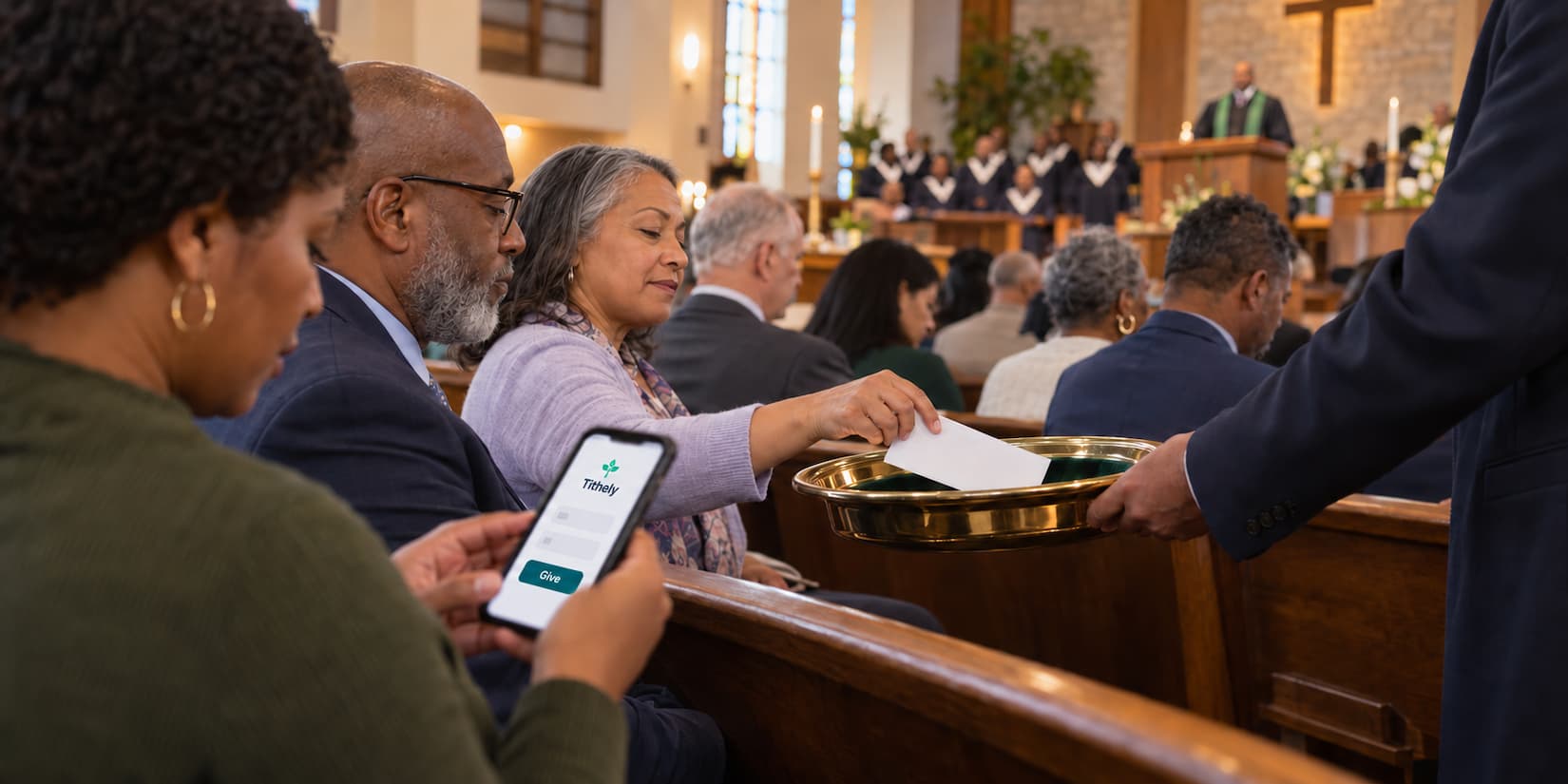
The first is practical. People are simply not in the room. When a family is at the lake for three weekends in a row, the plate passes by an empty seat. This is where physical payment methods quietly work against you. If giving depends on someone being present with cash or a check, absence equals a gap in the budget.
The second is attention. Summer moves fast. Vacations, camps, and travel pull focus, and if a church is not being intentional, the season slides by without much happening. Attendance drops, momentum cools, and giving follows.
The third is deeper, and it is the one Josh keeps returning to: discipleship. If generosity is only ever framed as something that happens in the Sunday offering, then it will always be fragile in the seasons when Sunday attendance wobbles. Our post on preventing the July 4th giving dip gets into the specifics of holiday weekends, but the principle holds all summer: giving that is tied only to a moment will always be vulnerable to that moment disappearing.
How can pastors talk about money without being manipulative?
This is where a lot of leaders get stuck. They worry that talking about money will feel self-serving, so they avoid it until there is a crisis, and then it comes across as desperate.
Josh's counsel is direct. If you are an expository preacher working through Scripture, you are going to land on the topic of money whether you plan to or not, because it is all over the Bible. So do not apologize for it. Preach it for what it says. Someone may be offended, and if they are, treat that as an invitation to lean in and understand why, not a signal to back off.
The manipulation problem, Josh says, usually shows up when money only ever gets discussed in two contexts: a desperate need, or a building campaign. That narrow framing is what makes it feel self-serving. The Bible talks about far more than giving. It talks about saving, about debt, about investing wisely, about stewardship. When money becomes a rounded, ongoing part of how you disciple people, generosity stops feeling like a pitch and starts feeling like a natural outflow of following Jesus.
He shared a story about a pastor in Minnesota who led his church through paying off a million dollars in debt. The framing was everything. The pastor did not say "we need this from you." He said, in effect, "we want this for you." The church had been unable to plant new churches for three years because giving was down, and paying off the debt was about freeing the church to do what it was called to do. Same facts, completely different posture.
How do you reach younger givers?
Here the data gets interesting, and it lines up with what we are seeing across churches.
The motivations shift by generation. Older givers tend to give more out of duty and obedience. Younger givers give more out of purpose and cause. Neither is wrong. But if you only ever make the duty argument, you will connect with part of your congregation and lose another part entirely.
The stakes are real. Boomers still give the most in raw dollars, but they will not be the anchor of church giving forever, and the generations behind them give differently. This is exactly why the "so that" matters so much. A younger giver is not moved by "we need a new HVAC system." They are moved by "we want to reach more families, and this is what stands in the way." The building, the repair, the budget line, all of it needs to connect to a mission bigger than the line item itself.
Josh's church leans into foster families. When they talk about giving, they talk about clothing kids for school and sending them off with backpacks, and they put faces and names to it. He pointed to organizations like Compassion International and St. Jude as models, because they make giving personal. You do not just give to a cause, you connect to a life. That is the lesson for churches: you do not need a marketing team to tell a real story about a real person your church has touched. You just have to be willing to do the work of telling it, and to pair it with genuine gratitude.
Our 2026 Church Giving Trends report digs deeper into how giving habits are shifting across generations, and it is worth a read if reaching younger givers is on your mind this year.
The one practical fix: recurring giving
When we asked Josh what single change he would make at a church struggling with giving, he gave two answers. First: do not wait until giving is down to talk about it. Second, and more tactical: recurring giving.
Recurring giving does something a passed plate cannot. It steadies the base. When a portion of your congregation has automated their giving, you can build a real budget around what you know is coming, instead of guessing month to month. It also protects you from exactly the seasonal dip we started with, because a family on vacation still gives even when their seat is empty.
The numbers back this up. Based on Tithely's own giving data, recurring givers give more than twice as much as one-time givers on average. One-time givers contribute around $1,245 a year, while recurring givers contribute around $2,739. That gap is not a rounding error. It is the difference between a church that is guessing and a church that is planning.
Josh lives this himself. He and his wife automate what matters most to them, including their giving, so their church can budget around it. He named the common objection head-on: some people feel that automating their gift means missing the moment of putting something in the plate. He wrestled with that too, having grown up using offering envelopes. But he found the opposite was true. Until he made giving important by automating it, he kept forgetting his envelope, and it never became consistent. Automating it did not diminish the act. It prioritized it, the same way you automate a mortgage because it matters too much to leave to memory.
If the "missing the moment" concern comes up in your church, that is exactly what text-to-give is built for. It lets people act on generosity the instant they feel it, right from their seat, and you can even set up a recurring gift from a single text. You capture the spontaneity and the consistency at the same time.
This is where recurring giving stops being a payment setting and becomes a discipleship tool. Our complete guide to recurring giving makes the case that recurring giving is the inflection point where giving stops being event-driven and becomes a discipline, and that framing is the whole point. It is the practical form of the heart change Josh keeps describing.
If you are ready to make giving simple and consistent for your congregation, Tithely's online giving form is built for it, with one-click recurring setup and no logins or clunky forms standing between your people and their generosity. A nice detail: about 60% of donors choose to cover the processing fees, so your church receives 100% of the gift.
Watch the full conversation
Want to go deeper? Watch the complete session with Josh Britt below, then keep reading for three things your church can do before Labor Day.
Three things to do before Labor Day
Josh gave us three concrete moves any church can make in the next few weeks.
First, welcome your visitors well. Summer is one of the highest-traffic seasons for first-time guests, second only to Christmas and Easter, and the Sunday that school starts back is one of the most-visited of the entire year. So have a way to collect visitor information, and actually use it. Write a handwritten thank-you note. If you get a cell number, text or call them Monday morning with something simple and warm: grateful you came, would love to see you back. It is low-stakes, and most churches overlook it entirely.
Second, invest in your leaders during this season. Use the slower summer weeks to pour into the people who will help you grow. If money is a topic you are leaning into, take your leadership team or your key volunteers through Financial Peace University together.
Third, start FPU at your church. Josh's point throughout is that generosity is not a one-off sermon or a single class you run every seven years. It is an ongoing process of discipling people in every area, including their finances. FPU's final lesson is called "Outrageous Generosity," and it is placed last on purpose. It comes after budgeting, saving, and getting out of debt, because generosity is the byproduct of everything that comes before it.
Where this leaves you
The through-line of the whole conversation is this: if you only chase the result, more giving, you will keep coming up short. But if you disciple the whole person, generosity becomes the natural fruit. As Josh put it, there are no silver bullets, only a thousand golden BBs. You try a lot of things, you keep going, and you build the rhythms that carry your church through every season, summer included.
Two of those rhythms are ready for you right now. Recurring giving steadies your budget and protects you from the seasonal dip, and Financial Peace University disciples your people toward generosity that lasts. If you are a Tithely All Access member, you already have five free FPU memberships waiting for you, so you can put both to work at once. Explore Tithely All Access and start building generosity that outlasts the summer.
Sign Up for Product Updates

Laura is a writer and ministry leader with experience in church communications, administration, worship ministry, and nonprofit support. She is passionate about helping people grow in their faith through biblical truth, practical encouragement, and honest conversations about the messy middle of everyday life.
When she's not writing, she's spending time with her family and hoping for the swift return of side parts and high-waisted skinny jeans.
If your church giving dips every summer, you already know the feeling. Attendance thins out, the offering softens, and by August you are wondering whether something is wrong. We sat down with Josh Britt, Director of Sales for Financial Peace University at Ramsey Solutions, to talk through why the summer giving slump happens, what to do about it, and how generosity actually grows over the long haul. His answer reframes the whole problem, and it starts with a distinction most church leaders never make.
This conversation comes at a moment worth paying attention to. As we covered in our 2026 Church Giving Trends report, U.S. charitable giving hit a record, yet giving to faith-based organizations has stagnated after decades of leading every other sector. The summer slump is a seasonal version of a pressure churches are already feeling year-round.
Is the summer giving slump actually a problem?
Josh's first move is to challenge the premise. Not every dip is a problem to be solved. Some are tensions to be managed.
He points to a distinction Andy Stanley is known for: there are problems, and there are tensions. Problems you solve. Tensions you manage. Seasonality, Josh argues, is a tension. You are not going to change the natural rhythm of families taking vacations, kids getting out of school, and Sundays filling up with travel and ball games. So the goal is not to eliminate the tension. It is to work with it.
That reframe matters because it changes what you do next. If summer is a problem, you panic. If summer is a tension, you plan. And the churches that plan well tend to treat summer as an opportunity rather than a threat. Josh points to the way Life.Church runs its "At the Movies" series in the summer, or the reason so many churches still run Vacation Bible School when they do. These are not accidents of the calendar. They are intentional moves to draw people in during a season when everyone else assumes the church goes quiet.
If you want a practical checklist for this, our post on 8 ways to break out of a summer giving slump walks through specific tactics. But Josh's larger point is that a slump usually reveals a gap in planning, not a gap in your people's hearts.
Why does giving dip in summer?
A few forces stack up at once.
The first is practical. People are simply not in the room. When a family is at the lake for three weekends in a row, the plate passes by an empty seat. This is where physical payment methods quietly work against you. If giving depends on someone being present with cash or a check, absence equals a gap in the budget.
The second is attention. Summer moves fast. Vacations, camps, and travel pull focus, and if a church is not being intentional, the season slides by without much happening. Attendance drops, momentum cools, and giving follows.
The third is deeper, and it is the one Josh keeps returning to: discipleship. If generosity is only ever framed as something that happens in the Sunday offering, then it will always be fragile in the seasons when Sunday attendance wobbles. Our post on preventing the July 4th giving dip gets into the specifics of holiday weekends, but the principle holds all summer: giving that is tied only to a moment will always be vulnerable to that moment disappearing.
How can pastors talk about money without being manipulative?
This is where a lot of leaders get stuck. They worry that talking about money will feel self-serving, so they avoid it until there is a crisis, and then it comes across as desperate.
Josh's counsel is direct. If you are an expository preacher working through Scripture, you are going to land on the topic of money whether you plan to or not, because it is all over the Bible. So do not apologize for it. Preach it for what it says. Someone may be offended, and if they are, treat that as an invitation to lean in and understand why, not a signal to back off.
The manipulation problem, Josh says, usually shows up when money only ever gets discussed in two contexts: a desperate need, or a building campaign. That narrow framing is what makes it feel self-serving. The Bible talks about far more than giving. It talks about saving, about debt, about investing wisely, about stewardship. When money becomes a rounded, ongoing part of how you disciple people, generosity stops feeling like a pitch and starts feeling like a natural outflow of following Jesus.
He shared a story about a pastor in Minnesota who led his church through paying off a million dollars in debt. The framing was everything. The pastor did not say "we need this from you." He said, in effect, "we want this for you." The church had been unable to plant new churches for three years because giving was down, and paying off the debt was about freeing the church to do what it was called to do. Same facts, completely different posture.
How do you reach younger givers?
Here the data gets interesting, and it lines up with what we are seeing across churches.
The motivations shift by generation. Older givers tend to give more out of duty and obedience. Younger givers give more out of purpose and cause. Neither is wrong. But if you only ever make the duty argument, you will connect with part of your congregation and lose another part entirely.
The stakes are real. Boomers still give the most in raw dollars, but they will not be the anchor of church giving forever, and the generations behind them give differently. This is exactly why the "so that" matters so much. A younger giver is not moved by "we need a new HVAC system." They are moved by "we want to reach more families, and this is what stands in the way." The building, the repair, the budget line, all of it needs to connect to a mission bigger than the line item itself.
Josh's church leans into foster families. When they talk about giving, they talk about clothing kids for school and sending them off with backpacks, and they put faces and names to it. He pointed to organizations like Compassion International and St. Jude as models, because they make giving personal. You do not just give to a cause, you connect to a life. That is the lesson for churches: you do not need a marketing team to tell a real story about a real person your church has touched. You just have to be willing to do the work of telling it, and to pair it with genuine gratitude.
Our 2026 Church Giving Trends report digs deeper into how giving habits are shifting across generations, and it is worth a read if reaching younger givers is on your mind this year.
The one practical fix: recurring giving
When we asked Josh what single change he would make at a church struggling with giving, he gave two answers. First: do not wait until giving is down to talk about it. Second, and more tactical: recurring giving.
Recurring giving does something a passed plate cannot. It steadies the base. When a portion of your congregation has automated their giving, you can build a real budget around what you know is coming, instead of guessing month to month. It also protects you from exactly the seasonal dip we started with, because a family on vacation still gives even when their seat is empty.
The numbers back this up. Based on Tithely's own giving data, recurring givers give more than twice as much as one-time givers on average. One-time givers contribute around $1,245 a year, while recurring givers contribute around $2,739. That gap is not a rounding error. It is the difference between a church that is guessing and a church that is planning.
Josh lives this himself. He and his wife automate what matters most to them, including their giving, so their church can budget around it. He named the common objection head-on: some people feel that automating their gift means missing the moment of putting something in the plate. He wrestled with that too, having grown up using offering envelopes. But he found the opposite was true. Until he made giving important by automating it, he kept forgetting his envelope, and it never became consistent. Automating it did not diminish the act. It prioritized it, the same way you automate a mortgage because it matters too much to leave to memory.
If the "missing the moment" concern comes up in your church, that is exactly what text-to-give is built for. It lets people act on generosity the instant they feel it, right from their seat, and you can even set up a recurring gift from a single text. You capture the spontaneity and the consistency at the same time.
This is where recurring giving stops being a payment setting and becomes a discipleship tool. Our complete guide to recurring giving makes the case that recurring giving is the inflection point where giving stops being event-driven and becomes a discipline, and that framing is the whole point. It is the practical form of the heart change Josh keeps describing.
If you are ready to make giving simple and consistent for your congregation, Tithely's online giving form is built for it, with one-click recurring setup and no logins or clunky forms standing between your people and their generosity. A nice detail: about 60% of donors choose to cover the processing fees, so your church receives 100% of the gift.
Watch the full conversation
Want to go deeper? Watch the complete session with Josh Britt below, then keep reading for three things your church can do before Labor Day.
Three things to do before Labor Day
Josh gave us three concrete moves any church can make in the next few weeks.
First, welcome your visitors well. Summer is one of the highest-traffic seasons for first-time guests, second only to Christmas and Easter, and the Sunday that school starts back is one of the most-visited of the entire year. So have a way to collect visitor information, and actually use it. Write a handwritten thank-you note. If you get a cell number, text or call them Monday morning with something simple and warm: grateful you came, would love to see you back. It is low-stakes, and most churches overlook it entirely.
Second, invest in your leaders during this season. Use the slower summer weeks to pour into the people who will help you grow. If money is a topic you are leaning into, take your leadership team or your key volunteers through Financial Peace University together.
Third, start FPU at your church. Josh's point throughout is that generosity is not a one-off sermon or a single class you run every seven years. It is an ongoing process of discipling people in every area, including their finances. FPU's final lesson is called "Outrageous Generosity," and it is placed last on purpose. It comes after budgeting, saving, and getting out of debt, because generosity is the byproduct of everything that comes before it.
Where this leaves you
The through-line of the whole conversation is this: if you only chase the result, more giving, you will keep coming up short. But if you disciple the whole person, generosity becomes the natural fruit. As Josh put it, there are no silver bullets, only a thousand golden BBs. You try a lot of things, you keep going, and you build the rhythms that carry your church through every season, summer included.
Two of those rhythms are ready for you right now. Recurring giving steadies your budget and protects you from the seasonal dip, and Financial Peace University disciples your people toward generosity that lasts. If you are a Tithely All Access member, you already have five free FPU memberships waiting for you, so you can put both to work at once. Explore Tithely All Access and start building generosity that outlasts the summer.
podcast transcript
Laura is a writer and ministry leader with experience in church communications, administration, worship ministry, and nonprofit support. She is passionate about helping people grow in their faith through biblical truth, practical encouragement, and honest conversations about the messy middle of everyday life.
When she's not writing, she's spending time with her family and hoping for the swift return of side parts and high-waisted skinny jeans.
If your church giving dips every summer, you already know the feeling. Attendance thins out, the offering softens, and by August you are wondering whether something is wrong. We sat down with Josh Britt, Director of Sales for Financial Peace University at Ramsey Solutions, to talk through why the summer giving slump happens, what to do about it, and how generosity actually grows over the long haul. His answer reframes the whole problem, and it starts with a distinction most church leaders never make.
This conversation comes at a moment worth paying attention to. As we covered in our 2026 Church Giving Trends report, U.S. charitable giving hit a record, yet giving to faith-based organizations has stagnated after decades of leading every other sector. The summer slump is a seasonal version of a pressure churches are already feeling year-round.
Is the summer giving slump actually a problem?
Josh's first move is to challenge the premise. Not every dip is a problem to be solved. Some are tensions to be managed.
He points to a distinction Andy Stanley is known for: there are problems, and there are tensions. Problems you solve. Tensions you manage. Seasonality, Josh argues, is a tension. You are not going to change the natural rhythm of families taking vacations, kids getting out of school, and Sundays filling up with travel and ball games. So the goal is not to eliminate the tension. It is to work with it.
That reframe matters because it changes what you do next. If summer is a problem, you panic. If summer is a tension, you plan. And the churches that plan well tend to treat summer as an opportunity rather than a threat. Josh points to the way Life.Church runs its "At the Movies" series in the summer, or the reason so many churches still run Vacation Bible School when they do. These are not accidents of the calendar. They are intentional moves to draw people in during a season when everyone else assumes the church goes quiet.
If you want a practical checklist for this, our post on 8 ways to break out of a summer giving slump walks through specific tactics. But Josh's larger point is that a slump usually reveals a gap in planning, not a gap in your people's hearts.
Why does giving dip in summer?
A few forces stack up at once.
The first is practical. People are simply not in the room. When a family is at the lake for three weekends in a row, the plate passes by an empty seat. This is where physical payment methods quietly work against you. If giving depends on someone being present with cash or a check, absence equals a gap in the budget.
The second is attention. Summer moves fast. Vacations, camps, and travel pull focus, and if a church is not being intentional, the season slides by without much happening. Attendance drops, momentum cools, and giving follows.
The third is deeper, and it is the one Josh keeps returning to: discipleship. If generosity is only ever framed as something that happens in the Sunday offering, then it will always be fragile in the seasons when Sunday attendance wobbles. Our post on preventing the July 4th giving dip gets into the specifics of holiday weekends, but the principle holds all summer: giving that is tied only to a moment will always be vulnerable to that moment disappearing.
How can pastors talk about money without being manipulative?
This is where a lot of leaders get stuck. They worry that talking about money will feel self-serving, so they avoid it until there is a crisis, and then it comes across as desperate.
Josh's counsel is direct. If you are an expository preacher working through Scripture, you are going to land on the topic of money whether you plan to or not, because it is all over the Bible. So do not apologize for it. Preach it for what it says. Someone may be offended, and if they are, treat that as an invitation to lean in and understand why, not a signal to back off.
The manipulation problem, Josh says, usually shows up when money only ever gets discussed in two contexts: a desperate need, or a building campaign. That narrow framing is what makes it feel self-serving. The Bible talks about far more than giving. It talks about saving, about debt, about investing wisely, about stewardship. When money becomes a rounded, ongoing part of how you disciple people, generosity stops feeling like a pitch and starts feeling like a natural outflow of following Jesus.
He shared a story about a pastor in Minnesota who led his church through paying off a million dollars in debt. The framing was everything. The pastor did not say "we need this from you." He said, in effect, "we want this for you." The church had been unable to plant new churches for three years because giving was down, and paying off the debt was about freeing the church to do what it was called to do. Same facts, completely different posture.
How do you reach younger givers?
Here the data gets interesting, and it lines up with what we are seeing across churches.
The motivations shift by generation. Older givers tend to give more out of duty and obedience. Younger givers give more out of purpose and cause. Neither is wrong. But if you only ever make the duty argument, you will connect with part of your congregation and lose another part entirely.
The stakes are real. Boomers still give the most in raw dollars, but they will not be the anchor of church giving forever, and the generations behind them give differently. This is exactly why the "so that" matters so much. A younger giver is not moved by "we need a new HVAC system." They are moved by "we want to reach more families, and this is what stands in the way." The building, the repair, the budget line, all of it needs to connect to a mission bigger than the line item itself.
Josh's church leans into foster families. When they talk about giving, they talk about clothing kids for school and sending them off with backpacks, and they put faces and names to it. He pointed to organizations like Compassion International and St. Jude as models, because they make giving personal. You do not just give to a cause, you connect to a life. That is the lesson for churches: you do not need a marketing team to tell a real story about a real person your church has touched. You just have to be willing to do the work of telling it, and to pair it with genuine gratitude.
Our 2026 Church Giving Trends report digs deeper into how giving habits are shifting across generations, and it is worth a read if reaching younger givers is on your mind this year.
The one practical fix: recurring giving
When we asked Josh what single change he would make at a church struggling with giving, he gave two answers. First: do not wait until giving is down to talk about it. Second, and more tactical: recurring giving.
Recurring giving does something a passed plate cannot. It steadies the base. When a portion of your congregation has automated their giving, you can build a real budget around what you know is coming, instead of guessing month to month. It also protects you from exactly the seasonal dip we started with, because a family on vacation still gives even when their seat is empty.
The numbers back this up. Based on Tithely's own giving data, recurring givers give more than twice as much as one-time givers on average. One-time givers contribute around $1,245 a year, while recurring givers contribute around $2,739. That gap is not a rounding error. It is the difference between a church that is guessing and a church that is planning.
Josh lives this himself. He and his wife automate what matters most to them, including their giving, so their church can budget around it. He named the common objection head-on: some people feel that automating their gift means missing the moment of putting something in the plate. He wrestled with that too, having grown up using offering envelopes. But he found the opposite was true. Until he made giving important by automating it, he kept forgetting his envelope, and it never became consistent. Automating it did not diminish the act. It prioritized it, the same way you automate a mortgage because it matters too much to leave to memory.
If the "missing the moment" concern comes up in your church, that is exactly what text-to-give is built for. It lets people act on generosity the instant they feel it, right from their seat, and you can even set up a recurring gift from a single text. You capture the spontaneity and the consistency at the same time.
This is where recurring giving stops being a payment setting and becomes a discipleship tool. Our complete guide to recurring giving makes the case that recurring giving is the inflection point where giving stops being event-driven and becomes a discipline, and that framing is the whole point. It is the practical form of the heart change Josh keeps describing.
If you are ready to make giving simple and consistent for your congregation, Tithely's online giving form is built for it, with one-click recurring setup and no logins or clunky forms standing between your people and their generosity. A nice detail: about 60% of donors choose to cover the processing fees, so your church receives 100% of the gift.
Watch the full conversation
Want to go deeper? Watch the complete session with Josh Britt below, then keep reading for three things your church can do before Labor Day.
Three things to do before Labor Day
Josh gave us three concrete moves any church can make in the next few weeks.
First, welcome your visitors well. Summer is one of the highest-traffic seasons for first-time guests, second only to Christmas and Easter, and the Sunday that school starts back is one of the most-visited of the entire year. So have a way to collect visitor information, and actually use it. Write a handwritten thank-you note. If you get a cell number, text or call them Monday morning with something simple and warm: grateful you came, would love to see you back. It is low-stakes, and most churches overlook it entirely.
Second, invest in your leaders during this season. Use the slower summer weeks to pour into the people who will help you grow. If money is a topic you are leaning into, take your leadership team or your key volunteers through Financial Peace University together.
Third, start FPU at your church. Josh's point throughout is that generosity is not a one-off sermon or a single class you run every seven years. It is an ongoing process of discipling people in every area, including their finances. FPU's final lesson is called "Outrageous Generosity," and it is placed last on purpose. It comes after budgeting, saving, and getting out of debt, because generosity is the byproduct of everything that comes before it.
Where this leaves you
The through-line of the whole conversation is this: if you only chase the result, more giving, you will keep coming up short. But if you disciple the whole person, generosity becomes the natural fruit. As Josh put it, there are no silver bullets, only a thousand golden BBs. You try a lot of things, you keep going, and you build the rhythms that carry your church through every season, summer included.
Two of those rhythms are ready for you right now. Recurring giving steadies your budget and protects you from the seasonal dip, and Financial Peace University disciples your people toward generosity that lasts. If you are a Tithely All Access member, you already have five free FPU memberships waiting for you, so you can put both to work at once. Explore Tithely All Access and start building generosity that outlasts the summer.
VIDEO transcript
If your church giving dips every summer, you already know the feeling. Attendance thins out, the offering softens, and by August you are wondering whether something is wrong. We sat down with Josh Britt, Director of Sales for Financial Peace University at Ramsey Solutions, to talk through why the summer giving slump happens, what to do about it, and how generosity actually grows over the long haul. His answer reframes the whole problem, and it starts with a distinction most church leaders never make.
This conversation comes at a moment worth paying attention to. As we covered in our 2026 Church Giving Trends report, U.S. charitable giving hit a record, yet giving to faith-based organizations has stagnated after decades of leading every other sector. The summer slump is a seasonal version of a pressure churches are already feeling year-round.
Is the summer giving slump actually a problem?
Josh's first move is to challenge the premise. Not every dip is a problem to be solved. Some are tensions to be managed.
He points to a distinction Andy Stanley is known for: there are problems, and there are tensions. Problems you solve. Tensions you manage. Seasonality, Josh argues, is a tension. You are not going to change the natural rhythm of families taking vacations, kids getting out of school, and Sundays filling up with travel and ball games. So the goal is not to eliminate the tension. It is to work with it.
That reframe matters because it changes what you do next. If summer is a problem, you panic. If summer is a tension, you plan. And the churches that plan well tend to treat summer as an opportunity rather than a threat. Josh points to the way Life.Church runs its "At the Movies" series in the summer, or the reason so many churches still run Vacation Bible School when they do. These are not accidents of the calendar. They are intentional moves to draw people in during a season when everyone else assumes the church goes quiet.
If you want a practical checklist for this, our post on 8 ways to break out of a summer giving slump walks through specific tactics. But Josh's larger point is that a slump usually reveals a gap in planning, not a gap in your people's hearts.
Why does giving dip in summer?
A few forces stack up at once.
The first is practical. People are simply not in the room. When a family is at the lake for three weekends in a row, the plate passes by an empty seat. This is where physical payment methods quietly work against you. If giving depends on someone being present with cash or a check, absence equals a gap in the budget.
The second is attention. Summer moves fast. Vacations, camps, and travel pull focus, and if a church is not being intentional, the season slides by without much happening. Attendance drops, momentum cools, and giving follows.
The third is deeper, and it is the one Josh keeps returning to: discipleship. If generosity is only ever framed as something that happens in the Sunday offering, then it will always be fragile in the seasons when Sunday attendance wobbles. Our post on preventing the July 4th giving dip gets into the specifics of holiday weekends, but the principle holds all summer: giving that is tied only to a moment will always be vulnerable to that moment disappearing.
How can pastors talk about money without being manipulative?
This is where a lot of leaders get stuck. They worry that talking about money will feel self-serving, so they avoid it until there is a crisis, and then it comes across as desperate.
Josh's counsel is direct. If you are an expository preacher working through Scripture, you are going to land on the topic of money whether you plan to or not, because it is all over the Bible. So do not apologize for it. Preach it for what it says. Someone may be offended, and if they are, treat that as an invitation to lean in and understand why, not a signal to back off.
The manipulation problem, Josh says, usually shows up when money only ever gets discussed in two contexts: a desperate need, or a building campaign. That narrow framing is what makes it feel self-serving. The Bible talks about far more than giving. It talks about saving, about debt, about investing wisely, about stewardship. When money becomes a rounded, ongoing part of how you disciple people, generosity stops feeling like a pitch and starts feeling like a natural outflow of following Jesus.
He shared a story about a pastor in Minnesota who led his church through paying off a million dollars in debt. The framing was everything. The pastor did not say "we need this from you." He said, in effect, "we want this for you." The church had been unable to plant new churches for three years because giving was down, and paying off the debt was about freeing the church to do what it was called to do. Same facts, completely different posture.
How do you reach younger givers?
Here the data gets interesting, and it lines up with what we are seeing across churches.
The motivations shift by generation. Older givers tend to give more out of duty and obedience. Younger givers give more out of purpose and cause. Neither is wrong. But if you only ever make the duty argument, you will connect with part of your congregation and lose another part entirely.
The stakes are real. Boomers still give the most in raw dollars, but they will not be the anchor of church giving forever, and the generations behind them give differently. This is exactly why the "so that" matters so much. A younger giver is not moved by "we need a new HVAC system." They are moved by "we want to reach more families, and this is what stands in the way." The building, the repair, the budget line, all of it needs to connect to a mission bigger than the line item itself.
Josh's church leans into foster families. When they talk about giving, they talk about clothing kids for school and sending them off with backpacks, and they put faces and names to it. He pointed to organizations like Compassion International and St. Jude as models, because they make giving personal. You do not just give to a cause, you connect to a life. That is the lesson for churches: you do not need a marketing team to tell a real story about a real person your church has touched. You just have to be willing to do the work of telling it, and to pair it with genuine gratitude.
Our 2026 Church Giving Trends report digs deeper into how giving habits are shifting across generations, and it is worth a read if reaching younger givers is on your mind this year.
The one practical fix: recurring giving
When we asked Josh what single change he would make at a church struggling with giving, he gave two answers. First: do not wait until giving is down to talk about it. Second, and more tactical: recurring giving.
Recurring giving does something a passed plate cannot. It steadies the base. When a portion of your congregation has automated their giving, you can build a real budget around what you know is coming, instead of guessing month to month. It also protects you from exactly the seasonal dip we started with, because a family on vacation still gives even when their seat is empty.
The numbers back this up. Based on Tithely's own giving data, recurring givers give more than twice as much as one-time givers on average. One-time givers contribute around $1,245 a year, while recurring givers contribute around $2,739. That gap is not a rounding error. It is the difference between a church that is guessing and a church that is planning.
Josh lives this himself. He and his wife automate what matters most to them, including their giving, so their church can budget around it. He named the common objection head-on: some people feel that automating their gift means missing the moment of putting something in the plate. He wrestled with that too, having grown up using offering envelopes. But he found the opposite was true. Until he made giving important by automating it, he kept forgetting his envelope, and it never became consistent. Automating it did not diminish the act. It prioritized it, the same way you automate a mortgage because it matters too much to leave to memory.
If the "missing the moment" concern comes up in your church, that is exactly what text-to-give is built for. It lets people act on generosity the instant they feel it, right from their seat, and you can even set up a recurring gift from a single text. You capture the spontaneity and the consistency at the same time.
This is where recurring giving stops being a payment setting and becomes a discipleship tool. Our complete guide to recurring giving makes the case that recurring giving is the inflection point where giving stops being event-driven and becomes a discipline, and that framing is the whole point. It is the practical form of the heart change Josh keeps describing.
If you are ready to make giving simple and consistent for your congregation, Tithely's online giving form is built for it, with one-click recurring setup and no logins or clunky forms standing between your people and their generosity. A nice detail: about 60% of donors choose to cover the processing fees, so your church receives 100% of the gift.
Watch the full conversation
Want to go deeper? Watch the complete session with Josh Britt below, then keep reading for three things your church can do before Labor Day.
Three things to do before Labor Day
Josh gave us three concrete moves any church can make in the next few weeks.
First, welcome your visitors well. Summer is one of the highest-traffic seasons for first-time guests, second only to Christmas and Easter, and the Sunday that school starts back is one of the most-visited of the entire year. So have a way to collect visitor information, and actually use it. Write a handwritten thank-you note. If you get a cell number, text or call them Monday morning with something simple and warm: grateful you came, would love to see you back. It is low-stakes, and most churches overlook it entirely.
Second, invest in your leaders during this season. Use the slower summer weeks to pour into the people who will help you grow. If money is a topic you are leaning into, take your leadership team or your key volunteers through Financial Peace University together.
Third, start FPU at your church. Josh's point throughout is that generosity is not a one-off sermon or a single class you run every seven years. It is an ongoing process of discipling people in every area, including their finances. FPU's final lesson is called "Outrageous Generosity," and it is placed last on purpose. It comes after budgeting, saving, and getting out of debt, because generosity is the byproduct of everything that comes before it.
Where this leaves you
The through-line of the whole conversation is this: if you only chase the result, more giving, you will keep coming up short. But if you disciple the whole person, generosity becomes the natural fruit. As Josh put it, there are no silver bullets, only a thousand golden BBs. You try a lot of things, you keep going, and you build the rhythms that carry your church through every season, summer included.
Two of those rhythms are ready for you right now. Recurring giving steadies your budget and protects you from the seasonal dip, and Financial Peace University disciples your people toward generosity that lasts. If you are a Tithely All Access member, you already have five free FPU memberships waiting for you, so you can put both to work at once. Explore Tithely All Access and start building generosity that outlasts the summer.
Sign Up for Product Updates
Laura is a writer and ministry leader with experience in church communications, administration, worship ministry, and nonprofit support. She is passionate about helping people grow in their faith through biblical truth, practical encouragement, and honest conversations about the messy middle of everyday life.
When she's not writing, she's spending time with her family and hoping for the swift return of side parts and high-waisted skinny jeans.

You Might Also Like
More Resources

From increasing giving, managing your congregation, and engaging your church, our collection of resources will keep you up-to-date on the latest church and ministry trends.
Free Resources