What Growing Churches Need from Their Church Software
Discover how church management software helps growing churches eliminate manual processes, automate admin tasks, and scale with confidence.
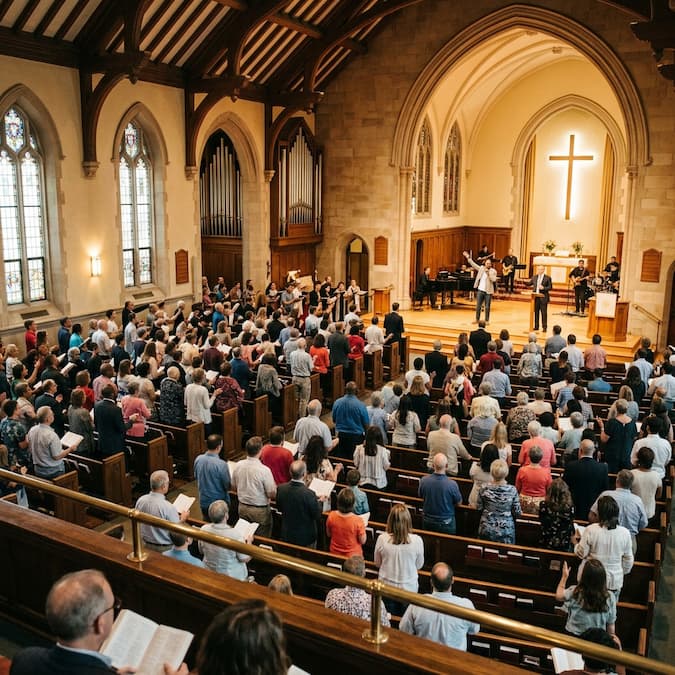



Seeing your church grow is exciting. You’ve got momentum. Ministries are thriving, and new people are getting connected. The future looks bright.
Until the systems you have in place to manage your church start to break.
At first, manual processes feel manageable. A spreadsheet tracks attendance. Donation totals are entered by hand, and visitor cards are manually entered into a document. Volunteers text each other reminders.
It works… until it doesn’t.
One day, you realize you’re not totally sure which first-time guests were followed up with. Giving reports take hours to prepare. Only one person understands the master spreadsheet and all the formulas it contains.
Church growth is wonderful, but if you rely heavily on manual processes, it can create problems too.
You need a church software that overcomes these problems and positions your church for continued growth.
Growth Multiplies Complexity
When attendance increases, the change often feels gradual. Ten new families. A few more kids in the children’s ministry. More volunteers signing up.
But growth, even if it’s subtle, multiplies responsibilities.
More people mean more contact information to manage and more follow-up to coordinate. Increased giving means more records to reconcile. You have more volunteers, which is fantastic. But coordinating the volunteers gets increasingly complicated.
If your church is still using spreadsheets, you probably already feel this strain. One sheet tracks members, and another tracks attendance. A third tracks giving. Moving information between any of these sheets requires hours of copying and pasting.
You can make this work for a while. When your church is between 50 and 75 people, it’s a pain, but it can be done.
But the more people you add, the more complicated things become. It’s much easier to make errors when manually entering, copying, and pasting information. The pressure to keep everything working usually lands on the same few staff members or volunteers who are already stretched thin.
Eventually, something will break.
The Hidden Cost of Manual Church Management
Many churches use manual systems in an effort to save money. After all, individual tools like spreadsheets and email platforms are relatively inexpensive.
But the financial savings come at an emotional and operational cost.
Visitor cards sit in a stack waiting to be typed in. Then someone must go through the list and send a follow-up to each new person. Giving reports are reconciled manually at the end of the month, and email lists are built from exported spreadsheets.
Every manual handoff creates a delay. Every extra step introduces an opportunity for error.
Over time, that leads to:
- Inconsistent guest follow-up
- Duplicate or outdated records
- Reporting mistakes
- Administrative burnout from repetitive work
Without a doubt, your staff and volunteers are doing their absolute best. But they’re human, which means they have limits.
The more your church grows, the further those limits are stretched.
You need a system that doesn’t require your staff and volunteers to operate on the edges of their limits.
Church Software For Growing Churches
At some point, every growing church reaches a crossroads. You can continue patching manual systems and hoping they hold. Or you can invest in infrastructure built for where your church is headed.
Church software for growing churches can create the foundation and stability your church needs to keep moving forward.
Here’s how it can help:
Scalability Without Constant Rebuilding
The problem with operating primarily through spreadsheets and paper is that every time you grow, something has to be rebuilt.
Create a new spreadsheet. Invent a new workaround. Figure out new, creative ways to make your tools work for you, even though they were never designed to be used like you’re using them.
The more you do this, the more likely it is that things will break.
Scalable church software allows your church to grow without completely redesigning your processes.
With the right system:
- More people can be added without increasing complexity
- Volunteers and ministries stay organized in one connected system
- Growing giving doesn’t mean growing reporting headaches
- Data stays organized and connected as your church grows
Church software for growing churches is built to expand naturally, without adding instability or complexity.
One Connected System Instead of Disconnected Tools
Growing churches often rely on several separate tools working loosely together. A spreadsheet may track members. Giving might run through a separate platform. Communication could happen through a third-party email system that isn’t connected to member records.
Each of these tools works fine on its own. But because they aren’t connected, you end up with information scattered across multiple platforms.
If a new person visits your church and gives a donation, you have to:
- Add them to a spreadsheet for follow-up
- Copy their contact info into your email platform
- Note the follow-up in your spreadsheet
- Connect their donation info to their profile
It’s all so complicated and error-prone. It’s also really difficult to get a clear snapshot of a person’s involvement in your church.
Church growth software gives you one unified system. Every person has a single profile where attendance, giving, communication, and involvement are fully connected.
With church growth software, you get instant clarity. Visitor follow-up becomes consistent and intentional. Reports are accurate and easy to generate. You can make decisions based on complete information rather than data pulled from multiple tools.
Automation That Frees Up Your Team
Administrative burnout is common in growing churches because attendance increases while systems remain the same. What used to take 30 minutes now takes two hours.
Eventually, things reach a point where you and your team spend more time on manual admin work than on connecting with people.
Church growth software automates many time-consuming manual tasks.
Attendance can be tracked digitally, donations can be automatically recorded, and follow-up emails can be triggered without anyone having to remember each step.
Automation tools allow you to handle growth-related admin work without taking time away from ministry.
When systems handle repetitive tasks, your team gains margin.
Communication That Scales With Your Church
Manual communication eventually breaks down.
When churches rely on personal text messages, group chats, exported email lists, or printed reminders, miscommunication becomes inevitable.
Church growth software provides growing churches with communication tools fully integrated into their systems. Email and text messaging are connected directly to real member profiles, so communication is tied to actual engagement, not separate lists.
Additionally, you can send reminders specifically to volunteers serving this Sunday or automatically begin a welcome email series the moment someone visits for the first time.
Because communication lives inside the same system as your attendance and member data, you don’t have to rebuild lists or export spreadsheets.
As your church grows, church growth software helps communication become more intentional and organized. Outreach becomes targeted, timely, and consistent instead of fragmented or reactive.
Reporting That Replaces Guesswork With Clarity
Manual reporting is time-consuming and exhausting.
If your church relies on spreadsheets, you’ve probably spent hours reconciling giving reports or trying to identify attendance trends. You may double-check the formulas to make sure the totals are correct.
Growing churches need insights without manual labor.
Church growth software gives you clear visibility into what is happening across your church without requiring exported files or custom-built reports.
Instead of pulling data from multiple sources, church growth software centralizes everything into one connected system that updates automatically.
With the software, you can quickly see:
- Attendance patterns over time
- Recurring giving performance and overall giving trends
- Volunteer engagement levels across ministries
- First-time guest follow-up progress
Built-in dashboards let you identify trends early, address concerns before they escalate, and make informed decisions based on the full picture.
When you have all the data in front of you, you don’t have to guess what’s happening in your church.
What Church Software Should Not Feel Like
Many churches hesitate to adopt church software because they’re worried it will be too complex.
They imagine steep learning curves or systems that feel corporate and impersonal.
But church software for growing churches should feel intuitive. It shouldn’t require technical expertise or managing multiple logins for basic functions.
The right system feels simple to use but powerful underneath. Staff log in, see their people, access their data, communicate easily, and move forward.
Built to Grow Your Church
Eventually, you have to decide whether to keep patching manual systems or invest in tools designed for growth.
Church Management Software (ChMS) like Tithely brings people management, giving, communication, attendance tracking, and reporting into one connected system.
With Tithely, growing churches can access:
- Centralized member profiles that connect attendance, giving, volunteer roles, and notes
- Online giving with recurring donations and automated tracking
- Built-in email and text messaging tied directly to member records
- Digital check-in for kids ministry and events
- Volunteer scheduling and ministry team organization
- Real-time dashboards and customizable reports for leadership insight
Tithely is designed to make church management easier so you can spend more time with people and less time on busywork.
Growth will stretch you. But it doesn’t have to cause things to break.
In fact, the right church growth software lets you grow while reducing stress compared to managing everything manually.
Your mission doesn’t change based on the tools you use. You’re still called to care for people, make disciples, and steward what God has entrusted to you. The question is whether your systems are helping you fulfill that mission or making it harder.
If a tool will help you more effectively fulfill your mission, it’s worth thinking about.
Try Tithely for 30 days for free.
Sign Up for Product Updates

Stephen Altrogge lives in Tallahassee, Florida. He is a dad to three wonderful girls and has written for publications like The Gospel Coalition, Church Leaders, Crosswalk, and many more. When he’s not writing, you’ll find him reading or watching The Lord Of the Rings for the 10th time.
Seeing your church grow is exciting. You’ve got momentum. Ministries are thriving, and new people are getting connected. The future looks bright.
Until the systems you have in place to manage your church start to break.
At first, manual processes feel manageable. A spreadsheet tracks attendance. Donation totals are entered by hand, and visitor cards are manually entered into a document. Volunteers text each other reminders.
It works… until it doesn’t.
One day, you realize you’re not totally sure which first-time guests were followed up with. Giving reports take hours to prepare. Only one person understands the master spreadsheet and all the formulas it contains.
Church growth is wonderful, but if you rely heavily on manual processes, it can create problems too.
You need a church software that overcomes these problems and positions your church for continued growth.
Growth Multiplies Complexity
When attendance increases, the change often feels gradual. Ten new families. A few more kids in the children’s ministry. More volunteers signing up.
But growth, even if it’s subtle, multiplies responsibilities.
More people mean more contact information to manage and more follow-up to coordinate. Increased giving means more records to reconcile. You have more volunteers, which is fantastic. But coordinating the volunteers gets increasingly complicated.
If your church is still using spreadsheets, you probably already feel this strain. One sheet tracks members, and another tracks attendance. A third tracks giving. Moving information between any of these sheets requires hours of copying and pasting.
You can make this work for a while. When your church is between 50 and 75 people, it’s a pain, but it can be done.
But the more people you add, the more complicated things become. It’s much easier to make errors when manually entering, copying, and pasting information. The pressure to keep everything working usually lands on the same few staff members or volunteers who are already stretched thin.
Eventually, something will break.
The Hidden Cost of Manual Church Management
Many churches use manual systems in an effort to save money. After all, individual tools like spreadsheets and email platforms are relatively inexpensive.
But the financial savings come at an emotional and operational cost.
Visitor cards sit in a stack waiting to be typed in. Then someone must go through the list and send a follow-up to each new person. Giving reports are reconciled manually at the end of the month, and email lists are built from exported spreadsheets.
Every manual handoff creates a delay. Every extra step introduces an opportunity for error.
Over time, that leads to:
- Inconsistent guest follow-up
- Duplicate or outdated records
- Reporting mistakes
- Administrative burnout from repetitive work
Without a doubt, your staff and volunteers are doing their absolute best. But they’re human, which means they have limits.
The more your church grows, the further those limits are stretched.
You need a system that doesn’t require your staff and volunteers to operate on the edges of their limits.
Church Software For Growing Churches
At some point, every growing church reaches a crossroads. You can continue patching manual systems and hoping they hold. Or you can invest in infrastructure built for where your church is headed.
Church software for growing churches can create the foundation and stability your church needs to keep moving forward.
Here’s how it can help:
Scalability Without Constant Rebuilding
The problem with operating primarily through spreadsheets and paper is that every time you grow, something has to be rebuilt.
Create a new spreadsheet. Invent a new workaround. Figure out new, creative ways to make your tools work for you, even though they were never designed to be used like you’re using them.
The more you do this, the more likely it is that things will break.
Scalable church software allows your church to grow without completely redesigning your processes.
With the right system:
- More people can be added without increasing complexity
- Volunteers and ministries stay organized in one connected system
- Growing giving doesn’t mean growing reporting headaches
- Data stays organized and connected as your church grows
Church software for growing churches is built to expand naturally, without adding instability or complexity.
One Connected System Instead of Disconnected Tools
Growing churches often rely on several separate tools working loosely together. A spreadsheet may track members. Giving might run through a separate platform. Communication could happen through a third-party email system that isn’t connected to member records.
Each of these tools works fine on its own. But because they aren’t connected, you end up with information scattered across multiple platforms.
If a new person visits your church and gives a donation, you have to:
- Add them to a spreadsheet for follow-up
- Copy their contact info into your email platform
- Note the follow-up in your spreadsheet
- Connect their donation info to their profile
It’s all so complicated and error-prone. It’s also really difficult to get a clear snapshot of a person’s involvement in your church.
Church growth software gives you one unified system. Every person has a single profile where attendance, giving, communication, and involvement are fully connected.
With church growth software, you get instant clarity. Visitor follow-up becomes consistent and intentional. Reports are accurate and easy to generate. You can make decisions based on complete information rather than data pulled from multiple tools.
Automation That Frees Up Your Team
Administrative burnout is common in growing churches because attendance increases while systems remain the same. What used to take 30 minutes now takes two hours.
Eventually, things reach a point where you and your team spend more time on manual admin work than on connecting with people.
Church growth software automates many time-consuming manual tasks.
Attendance can be tracked digitally, donations can be automatically recorded, and follow-up emails can be triggered without anyone having to remember each step.
Automation tools allow you to handle growth-related admin work without taking time away from ministry.
When systems handle repetitive tasks, your team gains margin.
Communication That Scales With Your Church
Manual communication eventually breaks down.
When churches rely on personal text messages, group chats, exported email lists, or printed reminders, miscommunication becomes inevitable.
Church growth software provides growing churches with communication tools fully integrated into their systems. Email and text messaging are connected directly to real member profiles, so communication is tied to actual engagement, not separate lists.
Additionally, you can send reminders specifically to volunteers serving this Sunday or automatically begin a welcome email series the moment someone visits for the first time.
Because communication lives inside the same system as your attendance and member data, you don’t have to rebuild lists or export spreadsheets.
As your church grows, church growth software helps communication become more intentional and organized. Outreach becomes targeted, timely, and consistent instead of fragmented or reactive.
Reporting That Replaces Guesswork With Clarity
Manual reporting is time-consuming and exhausting.
If your church relies on spreadsheets, you’ve probably spent hours reconciling giving reports or trying to identify attendance trends. You may double-check the formulas to make sure the totals are correct.
Growing churches need insights without manual labor.
Church growth software gives you clear visibility into what is happening across your church without requiring exported files or custom-built reports.
Instead of pulling data from multiple sources, church growth software centralizes everything into one connected system that updates automatically.
With the software, you can quickly see:
- Attendance patterns over time
- Recurring giving performance and overall giving trends
- Volunteer engagement levels across ministries
- First-time guest follow-up progress
Built-in dashboards let you identify trends early, address concerns before they escalate, and make informed decisions based on the full picture.
When you have all the data in front of you, you don’t have to guess what’s happening in your church.
What Church Software Should Not Feel Like
Many churches hesitate to adopt church software because they’re worried it will be too complex.
They imagine steep learning curves or systems that feel corporate and impersonal.
But church software for growing churches should feel intuitive. It shouldn’t require technical expertise or managing multiple logins for basic functions.
The right system feels simple to use but powerful underneath. Staff log in, see their people, access their data, communicate easily, and move forward.
Built to Grow Your Church
Eventually, you have to decide whether to keep patching manual systems or invest in tools designed for growth.
Church Management Software (ChMS) like Tithely brings people management, giving, communication, attendance tracking, and reporting into one connected system.
With Tithely, growing churches can access:
- Centralized member profiles that connect attendance, giving, volunteer roles, and notes
- Online giving with recurring donations and automated tracking
- Built-in email and text messaging tied directly to member records
- Digital check-in for kids ministry and events
- Volunteer scheduling and ministry team organization
- Real-time dashboards and customizable reports for leadership insight
Tithely is designed to make church management easier so you can spend more time with people and less time on busywork.
Growth will stretch you. But it doesn’t have to cause things to break.
In fact, the right church growth software lets you grow while reducing stress compared to managing everything manually.
Your mission doesn’t change based on the tools you use. You’re still called to care for people, make disciples, and steward what God has entrusted to you. The question is whether your systems are helping you fulfill that mission or making it harder.
If a tool will help you more effectively fulfill your mission, it’s worth thinking about.
Try Tithely for 30 days for free.
podcast transcript
Stephen Altrogge lives in Tallahassee, Florida. He is a dad to three wonderful girls and has written for publications like The Gospel Coalition, Church Leaders, Crosswalk, and many more. When he’s not writing, you’ll find him reading or watching The Lord Of the Rings for the 10th time.
Seeing your church grow is exciting. You’ve got momentum. Ministries are thriving, and new people are getting connected. The future looks bright.
Until the systems you have in place to manage your church start to break.
At first, manual processes feel manageable. A spreadsheet tracks attendance. Donation totals are entered by hand, and visitor cards are manually entered into a document. Volunteers text each other reminders.
It works… until it doesn’t.
One day, you realize you’re not totally sure which first-time guests were followed up with. Giving reports take hours to prepare. Only one person understands the master spreadsheet and all the formulas it contains.
Church growth is wonderful, but if you rely heavily on manual processes, it can create problems too.
You need a church software that overcomes these problems and positions your church for continued growth.
Growth Multiplies Complexity
When attendance increases, the change often feels gradual. Ten new families. A few more kids in the children’s ministry. More volunteers signing up.
But growth, even if it’s subtle, multiplies responsibilities.
More people mean more contact information to manage and more follow-up to coordinate. Increased giving means more records to reconcile. You have more volunteers, which is fantastic. But coordinating the volunteers gets increasingly complicated.
If your church is still using spreadsheets, you probably already feel this strain. One sheet tracks members, and another tracks attendance. A third tracks giving. Moving information between any of these sheets requires hours of copying and pasting.
You can make this work for a while. When your church is between 50 and 75 people, it’s a pain, but it can be done.
But the more people you add, the more complicated things become. It’s much easier to make errors when manually entering, copying, and pasting information. The pressure to keep everything working usually lands on the same few staff members or volunteers who are already stretched thin.
Eventually, something will break.
The Hidden Cost of Manual Church Management
Many churches use manual systems in an effort to save money. After all, individual tools like spreadsheets and email platforms are relatively inexpensive.
But the financial savings come at an emotional and operational cost.
Visitor cards sit in a stack waiting to be typed in. Then someone must go through the list and send a follow-up to each new person. Giving reports are reconciled manually at the end of the month, and email lists are built from exported spreadsheets.
Every manual handoff creates a delay. Every extra step introduces an opportunity for error.
Over time, that leads to:
- Inconsistent guest follow-up
- Duplicate or outdated records
- Reporting mistakes
- Administrative burnout from repetitive work
Without a doubt, your staff and volunteers are doing their absolute best. But they’re human, which means they have limits.
The more your church grows, the further those limits are stretched.
You need a system that doesn’t require your staff and volunteers to operate on the edges of their limits.
Church Software For Growing Churches
At some point, every growing church reaches a crossroads. You can continue patching manual systems and hoping they hold. Or you can invest in infrastructure built for where your church is headed.
Church software for growing churches can create the foundation and stability your church needs to keep moving forward.
Here’s how it can help:
Scalability Without Constant Rebuilding
The problem with operating primarily through spreadsheets and paper is that every time you grow, something has to be rebuilt.
Create a new spreadsheet. Invent a new workaround. Figure out new, creative ways to make your tools work for you, even though they were never designed to be used like you’re using them.
The more you do this, the more likely it is that things will break.
Scalable church software allows your church to grow without completely redesigning your processes.
With the right system:
- More people can be added without increasing complexity
- Volunteers and ministries stay organized in one connected system
- Growing giving doesn’t mean growing reporting headaches
- Data stays organized and connected as your church grows
Church software for growing churches is built to expand naturally, without adding instability or complexity.
One Connected System Instead of Disconnected Tools
Growing churches often rely on several separate tools working loosely together. A spreadsheet may track members. Giving might run through a separate platform. Communication could happen through a third-party email system that isn’t connected to member records.
Each of these tools works fine on its own. But because they aren’t connected, you end up with information scattered across multiple platforms.
If a new person visits your church and gives a donation, you have to:
- Add them to a spreadsheet for follow-up
- Copy their contact info into your email platform
- Note the follow-up in your spreadsheet
- Connect their donation info to their profile
It’s all so complicated and error-prone. It’s also really difficult to get a clear snapshot of a person’s involvement in your church.
Church growth software gives you one unified system. Every person has a single profile where attendance, giving, communication, and involvement are fully connected.
With church growth software, you get instant clarity. Visitor follow-up becomes consistent and intentional. Reports are accurate and easy to generate. You can make decisions based on complete information rather than data pulled from multiple tools.
Automation That Frees Up Your Team
Administrative burnout is common in growing churches because attendance increases while systems remain the same. What used to take 30 minutes now takes two hours.
Eventually, things reach a point where you and your team spend more time on manual admin work than on connecting with people.
Church growth software automates many time-consuming manual tasks.
Attendance can be tracked digitally, donations can be automatically recorded, and follow-up emails can be triggered without anyone having to remember each step.
Automation tools allow you to handle growth-related admin work without taking time away from ministry.
When systems handle repetitive tasks, your team gains margin.
Communication That Scales With Your Church
Manual communication eventually breaks down.
When churches rely on personal text messages, group chats, exported email lists, or printed reminders, miscommunication becomes inevitable.
Church growth software provides growing churches with communication tools fully integrated into their systems. Email and text messaging are connected directly to real member profiles, so communication is tied to actual engagement, not separate lists.
Additionally, you can send reminders specifically to volunteers serving this Sunday or automatically begin a welcome email series the moment someone visits for the first time.
Because communication lives inside the same system as your attendance and member data, you don’t have to rebuild lists or export spreadsheets.
As your church grows, church growth software helps communication become more intentional and organized. Outreach becomes targeted, timely, and consistent instead of fragmented or reactive.
Reporting That Replaces Guesswork With Clarity
Manual reporting is time-consuming and exhausting.
If your church relies on spreadsheets, you’ve probably spent hours reconciling giving reports or trying to identify attendance trends. You may double-check the formulas to make sure the totals are correct.
Growing churches need insights without manual labor.
Church growth software gives you clear visibility into what is happening across your church without requiring exported files or custom-built reports.
Instead of pulling data from multiple sources, church growth software centralizes everything into one connected system that updates automatically.
With the software, you can quickly see:
- Attendance patterns over time
- Recurring giving performance and overall giving trends
- Volunteer engagement levels across ministries
- First-time guest follow-up progress
Built-in dashboards let you identify trends early, address concerns before they escalate, and make informed decisions based on the full picture.
When you have all the data in front of you, you don’t have to guess what’s happening in your church.
What Church Software Should Not Feel Like
Many churches hesitate to adopt church software because they’re worried it will be too complex.
They imagine steep learning curves or systems that feel corporate and impersonal.
But church software for growing churches should feel intuitive. It shouldn’t require technical expertise or managing multiple logins for basic functions.
The right system feels simple to use but powerful underneath. Staff log in, see their people, access their data, communicate easily, and move forward.
Built to Grow Your Church
Eventually, you have to decide whether to keep patching manual systems or invest in tools designed for growth.
Church Management Software (ChMS) like Tithely brings people management, giving, communication, attendance tracking, and reporting into one connected system.
With Tithely, growing churches can access:
- Centralized member profiles that connect attendance, giving, volunteer roles, and notes
- Online giving with recurring donations and automated tracking
- Built-in email and text messaging tied directly to member records
- Digital check-in for kids ministry and events
- Volunteer scheduling and ministry team organization
- Real-time dashboards and customizable reports for leadership insight
Tithely is designed to make church management easier so you can spend more time with people and less time on busywork.
Growth will stretch you. But it doesn’t have to cause things to break.
In fact, the right church growth software lets you grow while reducing stress compared to managing everything manually.
Your mission doesn’t change based on the tools you use. You’re still called to care for people, make disciples, and steward what God has entrusted to you. The question is whether your systems are helping you fulfill that mission or making it harder.
If a tool will help you more effectively fulfill your mission, it’s worth thinking about.
Try Tithely for 30 days for free.
VIDEO transcript
Seeing your church grow is exciting. You’ve got momentum. Ministries are thriving, and new people are getting connected. The future looks bright.
Until the systems you have in place to manage your church start to break.
At first, manual processes feel manageable. A spreadsheet tracks attendance. Donation totals are entered by hand, and visitor cards are manually entered into a document. Volunteers text each other reminders.
It works… until it doesn’t.
One day, you realize you’re not totally sure which first-time guests were followed up with. Giving reports take hours to prepare. Only one person understands the master spreadsheet and all the formulas it contains.
Church growth is wonderful, but if you rely heavily on manual processes, it can create problems too.
You need a church software that overcomes these problems and positions your church for continued growth.
Growth Multiplies Complexity
When attendance increases, the change often feels gradual. Ten new families. A few more kids in the children’s ministry. More volunteers signing up.
But growth, even if it’s subtle, multiplies responsibilities.
More people mean more contact information to manage and more follow-up to coordinate. Increased giving means more records to reconcile. You have more volunteers, which is fantastic. But coordinating the volunteers gets increasingly complicated.
If your church is still using spreadsheets, you probably already feel this strain. One sheet tracks members, and another tracks attendance. A third tracks giving. Moving information between any of these sheets requires hours of copying and pasting.
You can make this work for a while. When your church is between 50 and 75 people, it’s a pain, but it can be done.
But the more people you add, the more complicated things become. It’s much easier to make errors when manually entering, copying, and pasting information. The pressure to keep everything working usually lands on the same few staff members or volunteers who are already stretched thin.
Eventually, something will break.
The Hidden Cost of Manual Church Management
Many churches use manual systems in an effort to save money. After all, individual tools like spreadsheets and email platforms are relatively inexpensive.
But the financial savings come at an emotional and operational cost.
Visitor cards sit in a stack waiting to be typed in. Then someone must go through the list and send a follow-up to each new person. Giving reports are reconciled manually at the end of the month, and email lists are built from exported spreadsheets.
Every manual handoff creates a delay. Every extra step introduces an opportunity for error.
Over time, that leads to:
- Inconsistent guest follow-up
- Duplicate or outdated records
- Reporting mistakes
- Administrative burnout from repetitive work
Without a doubt, your staff and volunteers are doing their absolute best. But they’re human, which means they have limits.
The more your church grows, the further those limits are stretched.
You need a system that doesn’t require your staff and volunteers to operate on the edges of their limits.
Church Software For Growing Churches
At some point, every growing church reaches a crossroads. You can continue patching manual systems and hoping they hold. Or you can invest in infrastructure built for where your church is headed.
Church software for growing churches can create the foundation and stability your church needs to keep moving forward.
Here’s how it can help:
Scalability Without Constant Rebuilding
The problem with operating primarily through spreadsheets and paper is that every time you grow, something has to be rebuilt.
Create a new spreadsheet. Invent a new workaround. Figure out new, creative ways to make your tools work for you, even though they were never designed to be used like you’re using them.
The more you do this, the more likely it is that things will break.
Scalable church software allows your church to grow without completely redesigning your processes.
With the right system:
- More people can be added without increasing complexity
- Volunteers and ministries stay organized in one connected system
- Growing giving doesn’t mean growing reporting headaches
- Data stays organized and connected as your church grows
Church software for growing churches is built to expand naturally, without adding instability or complexity.
One Connected System Instead of Disconnected Tools
Growing churches often rely on several separate tools working loosely together. A spreadsheet may track members. Giving might run through a separate platform. Communication could happen through a third-party email system that isn’t connected to member records.
Each of these tools works fine on its own. But because they aren’t connected, you end up with information scattered across multiple platforms.
If a new person visits your church and gives a donation, you have to:
- Add them to a spreadsheet for follow-up
- Copy their contact info into your email platform
- Note the follow-up in your spreadsheet
- Connect their donation info to their profile
It’s all so complicated and error-prone. It’s also really difficult to get a clear snapshot of a person’s involvement in your church.
Church growth software gives you one unified system. Every person has a single profile where attendance, giving, communication, and involvement are fully connected.
With church growth software, you get instant clarity. Visitor follow-up becomes consistent and intentional. Reports are accurate and easy to generate. You can make decisions based on complete information rather than data pulled from multiple tools.
Automation That Frees Up Your Team
Administrative burnout is common in growing churches because attendance increases while systems remain the same. What used to take 30 minutes now takes two hours.
Eventually, things reach a point where you and your team spend more time on manual admin work than on connecting with people.
Church growth software automates many time-consuming manual tasks.
Attendance can be tracked digitally, donations can be automatically recorded, and follow-up emails can be triggered without anyone having to remember each step.
Automation tools allow you to handle growth-related admin work without taking time away from ministry.
When systems handle repetitive tasks, your team gains margin.
Communication That Scales With Your Church
Manual communication eventually breaks down.
When churches rely on personal text messages, group chats, exported email lists, or printed reminders, miscommunication becomes inevitable.
Church growth software provides growing churches with communication tools fully integrated into their systems. Email and text messaging are connected directly to real member profiles, so communication is tied to actual engagement, not separate lists.
Additionally, you can send reminders specifically to volunteers serving this Sunday or automatically begin a welcome email series the moment someone visits for the first time.
Because communication lives inside the same system as your attendance and member data, you don’t have to rebuild lists or export spreadsheets.
As your church grows, church growth software helps communication become more intentional and organized. Outreach becomes targeted, timely, and consistent instead of fragmented or reactive.
Reporting That Replaces Guesswork With Clarity
Manual reporting is time-consuming and exhausting.
If your church relies on spreadsheets, you’ve probably spent hours reconciling giving reports or trying to identify attendance trends. You may double-check the formulas to make sure the totals are correct.
Growing churches need insights without manual labor.
Church growth software gives you clear visibility into what is happening across your church without requiring exported files or custom-built reports.
Instead of pulling data from multiple sources, church growth software centralizes everything into one connected system that updates automatically.
With the software, you can quickly see:
- Attendance patterns over time
- Recurring giving performance and overall giving trends
- Volunteer engagement levels across ministries
- First-time guest follow-up progress
Built-in dashboards let you identify trends early, address concerns before they escalate, and make informed decisions based on the full picture.
When you have all the data in front of you, you don’t have to guess what’s happening in your church.
What Church Software Should Not Feel Like
Many churches hesitate to adopt church software because they’re worried it will be too complex.
They imagine steep learning curves or systems that feel corporate and impersonal.
But church software for growing churches should feel intuitive. It shouldn’t require technical expertise or managing multiple logins for basic functions.
The right system feels simple to use but powerful underneath. Staff log in, see their people, access their data, communicate easily, and move forward.
Built to Grow Your Church
Eventually, you have to decide whether to keep patching manual systems or invest in tools designed for growth.
Church Management Software (ChMS) like Tithely brings people management, giving, communication, attendance tracking, and reporting into one connected system.
With Tithely, growing churches can access:
- Centralized member profiles that connect attendance, giving, volunteer roles, and notes
- Online giving with recurring donations and automated tracking
- Built-in email and text messaging tied directly to member records
- Digital check-in for kids ministry and events
- Volunteer scheduling and ministry team organization
- Real-time dashboards and customizable reports for leadership insight
Tithely is designed to make church management easier so you can spend more time with people and less time on busywork.
Growth will stretch you. But it doesn’t have to cause things to break.
In fact, the right church growth software lets you grow while reducing stress compared to managing everything manually.
Your mission doesn’t change based on the tools you use. You’re still called to care for people, make disciples, and steward what God has entrusted to you. The question is whether your systems are helping you fulfill that mission or making it harder.
If a tool will help you more effectively fulfill your mission, it’s worth thinking about.
Try Tithely for 30 days for free.
Sign Up for Product Updates
Stephen Altrogge lives in Tallahassee, Florida. He is a dad to three wonderful girls and has written for publications like The Gospel Coalition, Church Leaders, Crosswalk, and many more. When he’s not writing, you’ll find him reading or watching The Lord Of the Rings for the 10th time.

You Might Also Like
More Resources

From increasing giving, managing your congregation, and engaging your church, our collection of resources will keep you up-to-date on the latest church and ministry trends.
Free Resources






.jpg)