What Is a Church Planning App and Do You Really Need One?
Sunday mornings shouldn’t feel like controlled chaos. Yet for many pastors, planning services, coordinating volunteers, and tracking events consumes more time than shepherding people. A church planning app might not sound spiritual, but it can protect your ministry time.




Most pastors didn’t enter ministry to manage logistics.
You were called to preach. To pray. To shepherd.
But somewhere between adding a second service and launching new small groups, planning became complex. Schedules multiplied. Emails stacked up. Spreadsheets started breeding.
A church planning app isn’t about efficiency for efficiency’s sake. It’s about stewardship. It’s about clearing administrative noise so you can focus on people.
A Story: When Monday Became About Ministry Again
Pastor Andrew leads a church of about 220.
Every Sunday afternoon, his phone buzzed constantly.
“Who’s running slides next week?”
“Did we confirm the guest worship leader?”
“Where’s the final order of service?”
His worship leader tracked songs in Google Docs.
His tech director used a separate planning spreadsheet.
Volunteer schedules live in text threads.
On Mondays, Andrew rebuilt everything into a “master plan” for the week. It took three hours. Sometimes four.
One week, a key volunteer didn’t show. They had never seen the updated schedule.
That was the moment.
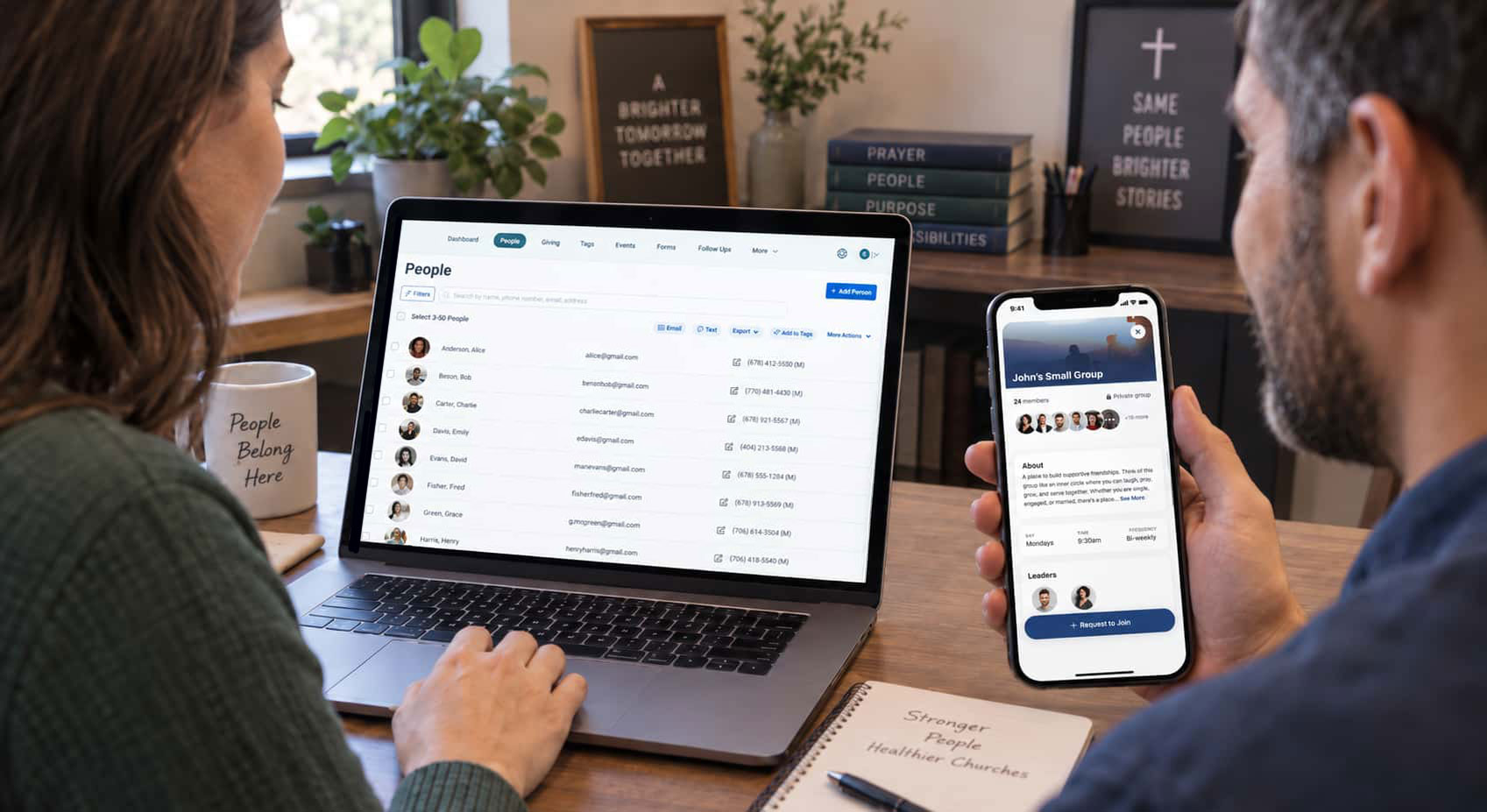
They moved their service planning, volunteers, and events into one integrated system using Tithely Church Management. The worship team could see the order of service. Volunteers received automatic reminders. Attendance synced instantly.
Nothing flashy happened.
But Andrew got his Mondays back.
And that changed everything.
The Real Problems Churches Face Without a Planning App
If you’re wondering whether you need one, look for these signs.
1. Fragmented Data
- Service order in one document
- Volunteers in another
- Events somewhere else
- Giving tracked separately
When information lives in silos, communication breaks down.
2. Manual Data Entry
Rebuilding reports.
Copying attendance numbers.
Re-entering event signups.
Hours disappear quietly.
3. Volunteer Confusion
Last-minute schedule changes.
No automated reminders.
Unclear expectations.
Frustrated volunteers eventually disengage.
4. Sunday Surprises
The wrong song order.
Missing slides.
Unconfirmed speakers.
Planning gaps show up publicly.
None of these problems are theological.
But they drain emotional energy. And emotional energy matters in ministry.
Practical Use Cases for a Church Planning App
This isn’t about adding another tool.
It’s about centralizing what you’re already doing.
Service Planning
- Build and share orders of service
- Assign volunteers
- Attach media files
- Keep everyone aligned in real time
Event Coordination
- Create event pages
- Track registrations
- Sync attendance directly to member records
Volunteer Management
- Automated scheduling
- Mobile reminders
- Clear role visibility
Leadership Reporting
- Attendance trends
- Engagement tracking
- Simple dashboards for board meetings
When planning connects directly to your member database and giving records, you move from reactive to proactive leadership.
That’s stewardship.
Planning Should Support Shepherding
Technology cannot disciple someone.
But it can remove friction.
It can reduce late-night emails.
It can prevent double entry.
It can protect your focus.
If your systems feel fragile, that’s not a failure. It’s often a sign of growth.
Healthy churches eventually need healthy infrastructure.
If you’re evaluating options, take time to compare features and long-term scalability on Tithely’s Pricing Page. Not just what works today—but what will still serve you in three years.
The Bigger Question
This isn’t about software.
It’s about margin.
Are your systems helping you pastor—or pulling you away from it?
A church planning app, when integrated well, doesn’t replace spiritual leadership.
It simply clears the weeds so you can plant seeds again.
What’s My Next Step?
If administrative work is quietly consuming your week, it may be time to rethink your systems. Explore how integrated church planning can restore clarity, reduce burnout, and create space for real ministry.
👉 Learn more about Tithely Church Management and see what integrated planning could look like for your church.
Sign Up for Product Updates

Chris Dunagan is a marketing strategist focused on church tech and digital engagement. He helps churches grow through SEO, email campaigns, and tools like Tithely and Breeze ChMS, with an emphasis on online giving, content strategy, and digital outreach.
Most pastors didn’t enter ministry to manage logistics.
You were called to preach. To pray. To shepherd.
But somewhere between adding a second service and launching new small groups, planning became complex. Schedules multiplied. Emails stacked up. Spreadsheets started breeding.
A church planning app isn’t about efficiency for efficiency’s sake. It’s about stewardship. It’s about clearing administrative noise so you can focus on people.
A Story: When Monday Became About Ministry Again
Pastor Andrew leads a church of about 220.
Every Sunday afternoon, his phone buzzed constantly.
“Who’s running slides next week?”
“Did we confirm the guest worship leader?”
“Where’s the final order of service?”
His worship leader tracked songs in Google Docs.
His tech director used a separate planning spreadsheet.
Volunteer schedules live in text threads.
On Mondays, Andrew rebuilt everything into a “master plan” for the week. It took three hours. Sometimes four.
One week, a key volunteer didn’t show. They had never seen the updated schedule.
That was the moment.
They moved their service planning, volunteers, and events into one integrated system using Tithely Church Management. The worship team could see the order of service. Volunteers received automatic reminders. Attendance synced instantly.
Nothing flashy happened.
But Andrew got his Mondays back.
And that changed everything.
The Real Problems Churches Face Without a Planning App
If you’re wondering whether you need one, look for these signs.
1. Fragmented Data
- Service order in one document
- Volunteers in another
- Events somewhere else
- Giving tracked separately
When information lives in silos, communication breaks down.
2. Manual Data Entry
Rebuilding reports.
Copying attendance numbers.
Re-entering event signups.
Hours disappear quietly.
3. Volunteer Confusion
Last-minute schedule changes.
No automated reminders.
Unclear expectations.
Frustrated volunteers eventually disengage.
4. Sunday Surprises
The wrong song order.
Missing slides.
Unconfirmed speakers.
Planning gaps show up publicly.
None of these problems are theological.
But they drain emotional energy. And emotional energy matters in ministry.
Practical Use Cases for a Church Planning App
This isn’t about adding another tool.
It’s about centralizing what you’re already doing.
Service Planning
- Build and share orders of service
- Assign volunteers
- Attach media files
- Keep everyone aligned in real time
Event Coordination
- Create event pages
- Track registrations
- Sync attendance directly to member records
Volunteer Management
- Automated scheduling
- Mobile reminders
- Clear role visibility
Leadership Reporting
- Attendance trends
- Engagement tracking
- Simple dashboards for board meetings
When planning connects directly to your member database and giving records, you move from reactive to proactive leadership.
That’s stewardship.
Planning Should Support Shepherding
Technology cannot disciple someone.
But it can remove friction.
It can reduce late-night emails.
It can prevent double entry.
It can protect your focus.
If your systems feel fragile, that’s not a failure. It’s often a sign of growth.
Healthy churches eventually need healthy infrastructure.
If you’re evaluating options, take time to compare features and long-term scalability on Tithely’s Pricing Page. Not just what works today—but what will still serve you in three years.
The Bigger Question
This isn’t about software.
It’s about margin.
Are your systems helping you pastor—or pulling you away from it?
A church planning app, when integrated well, doesn’t replace spiritual leadership.
It simply clears the weeds so you can plant seeds again.
What’s My Next Step?
If administrative work is quietly consuming your week, it may be time to rethink your systems. Explore how integrated church planning can restore clarity, reduce burnout, and create space for real ministry.
👉 Learn more about Tithely Church Management and see what integrated planning could look like for your church.
podcast transcript
Chris Dunagan is a marketing strategist focused on church tech and digital engagement. He helps churches grow through SEO, email campaigns, and tools like Tithely and Breeze ChMS, with an emphasis on online giving, content strategy, and digital outreach.
Most pastors didn’t enter ministry to manage logistics.
You were called to preach. To pray. To shepherd.
But somewhere between adding a second service and launching new small groups, planning became complex. Schedules multiplied. Emails stacked up. Spreadsheets started breeding.
A church planning app isn’t about efficiency for efficiency’s sake. It’s about stewardship. It’s about clearing administrative noise so you can focus on people.
A Story: When Monday Became About Ministry Again
Pastor Andrew leads a church of about 220.
Every Sunday afternoon, his phone buzzed constantly.
“Who’s running slides next week?”
“Did we confirm the guest worship leader?”
“Where’s the final order of service?”
His worship leader tracked songs in Google Docs.
His tech director used a separate planning spreadsheet.
Volunteer schedules live in text threads.
On Mondays, Andrew rebuilt everything into a “master plan” for the week. It took three hours. Sometimes four.
One week, a key volunteer didn’t show. They had never seen the updated schedule.
That was the moment.
They moved their service planning, volunteers, and events into one integrated system using Tithely Church Management. The worship team could see the order of service. Volunteers received automatic reminders. Attendance synced instantly.
Nothing flashy happened.
But Andrew got his Mondays back.
And that changed everything.
The Real Problems Churches Face Without a Planning App
If you’re wondering whether you need one, look for these signs.
1. Fragmented Data
- Service order in one document
- Volunteers in another
- Events somewhere else
- Giving tracked separately
When information lives in silos, communication breaks down.
2. Manual Data Entry
Rebuilding reports.
Copying attendance numbers.
Re-entering event signups.
Hours disappear quietly.
3. Volunteer Confusion
Last-minute schedule changes.
No automated reminders.
Unclear expectations.
Frustrated volunteers eventually disengage.
4. Sunday Surprises
The wrong song order.
Missing slides.
Unconfirmed speakers.
Planning gaps show up publicly.
None of these problems are theological.
But they drain emotional energy. And emotional energy matters in ministry.
Practical Use Cases for a Church Planning App
This isn’t about adding another tool.
It’s about centralizing what you’re already doing.
Service Planning
- Build and share orders of service
- Assign volunteers
- Attach media files
- Keep everyone aligned in real time
Event Coordination
- Create event pages
- Track registrations
- Sync attendance directly to member records
Volunteer Management
- Automated scheduling
- Mobile reminders
- Clear role visibility
Leadership Reporting
- Attendance trends
- Engagement tracking
- Simple dashboards for board meetings
When planning connects directly to your member database and giving records, you move from reactive to proactive leadership.
That’s stewardship.
Planning Should Support Shepherding
Technology cannot disciple someone.
But it can remove friction.
It can reduce late-night emails.
It can prevent double entry.
It can protect your focus.
If your systems feel fragile, that’s not a failure. It’s often a sign of growth.
Healthy churches eventually need healthy infrastructure.
If you’re evaluating options, take time to compare features and long-term scalability on Tithely’s Pricing Page. Not just what works today—but what will still serve you in three years.
The Bigger Question
This isn’t about software.
It’s about margin.
Are your systems helping you pastor—or pulling you away from it?
A church planning app, when integrated well, doesn’t replace spiritual leadership.
It simply clears the weeds so you can plant seeds again.
What’s My Next Step?
If administrative work is quietly consuming your week, it may be time to rethink your systems. Explore how integrated church planning can restore clarity, reduce burnout, and create space for real ministry.
👉 Learn more about Tithely Church Management and see what integrated planning could look like for your church.
VIDEO transcript
Most pastors didn’t enter ministry to manage logistics.
You were called to preach. To pray. To shepherd.
But somewhere between adding a second service and launching new small groups, planning became complex. Schedules multiplied. Emails stacked up. Spreadsheets started breeding.
A church planning app isn’t about efficiency for efficiency’s sake. It’s about stewardship. It’s about clearing administrative noise so you can focus on people.
A Story: When Monday Became About Ministry Again
Pastor Andrew leads a church of about 220.
Every Sunday afternoon, his phone buzzed constantly.
“Who’s running slides next week?”
“Did we confirm the guest worship leader?”
“Where’s the final order of service?”
His worship leader tracked songs in Google Docs.
His tech director used a separate planning spreadsheet.
Volunteer schedules live in text threads.
On Mondays, Andrew rebuilt everything into a “master plan” for the week. It took three hours. Sometimes four.
One week, a key volunteer didn’t show. They had never seen the updated schedule.
That was the moment.
They moved their service planning, volunteers, and events into one integrated system using Tithely Church Management. The worship team could see the order of service. Volunteers received automatic reminders. Attendance synced instantly.
Nothing flashy happened.
But Andrew got his Mondays back.
And that changed everything.
The Real Problems Churches Face Without a Planning App
If you’re wondering whether you need one, look for these signs.
1. Fragmented Data
- Service order in one document
- Volunteers in another
- Events somewhere else
- Giving tracked separately
When information lives in silos, communication breaks down.
2. Manual Data Entry
Rebuilding reports.
Copying attendance numbers.
Re-entering event signups.
Hours disappear quietly.
3. Volunteer Confusion
Last-minute schedule changes.
No automated reminders.
Unclear expectations.
Frustrated volunteers eventually disengage.
4. Sunday Surprises
The wrong song order.
Missing slides.
Unconfirmed speakers.
Planning gaps show up publicly.
None of these problems are theological.
But they drain emotional energy. And emotional energy matters in ministry.
Practical Use Cases for a Church Planning App
This isn’t about adding another tool.
It’s about centralizing what you’re already doing.
Service Planning
- Build and share orders of service
- Assign volunteers
- Attach media files
- Keep everyone aligned in real time
Event Coordination
- Create event pages
- Track registrations
- Sync attendance directly to member records
Volunteer Management
- Automated scheduling
- Mobile reminders
- Clear role visibility
Leadership Reporting
- Attendance trends
- Engagement tracking
- Simple dashboards for board meetings
When planning connects directly to your member database and giving records, you move from reactive to proactive leadership.
That’s stewardship.
Planning Should Support Shepherding
Technology cannot disciple someone.
But it can remove friction.
It can reduce late-night emails.
It can prevent double entry.
It can protect your focus.
If your systems feel fragile, that’s not a failure. It’s often a sign of growth.
Healthy churches eventually need healthy infrastructure.
If you’re evaluating options, take time to compare features and long-term scalability on Tithely’s Pricing Page. Not just what works today—but what will still serve you in three years.
The Bigger Question
This isn’t about software.
It’s about margin.
Are your systems helping you pastor—or pulling you away from it?
A church planning app, when integrated well, doesn’t replace spiritual leadership.
It simply clears the weeds so you can plant seeds again.
What’s My Next Step?
If administrative work is quietly consuming your week, it may be time to rethink your systems. Explore how integrated church planning can restore clarity, reduce burnout, and create space for real ministry.
👉 Learn more about Tithely Church Management and see what integrated planning could look like for your church.
Sign Up for Product Updates
Chris Dunagan is a marketing strategist focused on church tech and digital engagement. He helps churches grow through SEO, email campaigns, and tools like Tithely and Breeze ChMS, with an emphasis on online giving, content strategy, and digital outreach.

You Might Also Like
More Resources

From increasing giving, managing your congregation, and engaging your church, our collection of resources will keep you up-to-date on the latest church and ministry trends.
Free Resources


.jpeg)

.jpeg)