How to Optimize Church Sermon Videos for YouTube
Your church is already creating valuable sermon content every Sunday. But are people finding it on YouTube? Discover seven practical ways to optimize church sermon videos, improve audience retention, create compelling thumbnails, and reach more people with the gospel.
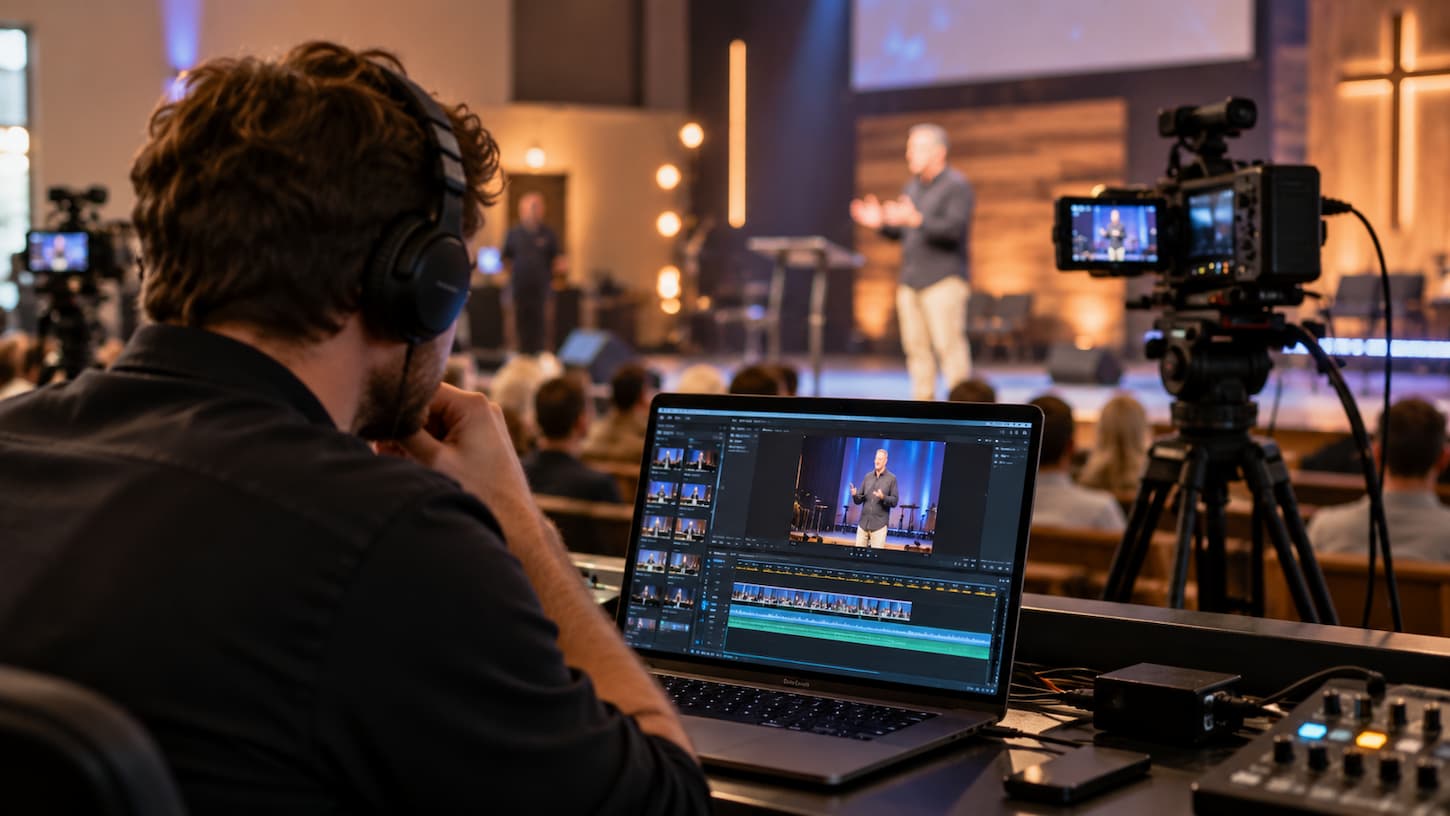



Every week, your church creates content. Your pastor spends hours studying Scripture, praying, writing, preparing, and preaching a message. Your team records the service, uploads it to YouTube, and then turns its attention toward the next Sunday.
But uploading a sermon to YouTube and optimizing a sermon for YouTube are two very different things.
A sermon preached this Sunday could still reach someone six months—or even several years—from now. Someone searching for biblical guidance about anxiety, marriage, parenting, forgiveness, prayer, or generosity may already be looking for the very message your pastor just preached.
The question is whether they'll be able to find it, and whether they'll keep watching once they do.
During a recent Tithely webinar, Thomas Costello, pastor and founder of ReachRight, shared practical strategies churches can use to get more from the sermons they're already publishing. His advice doesn't require pastors to become full-time content creators. Instead, it focuses on packaging existing sermons so they're easier to find, more compelling to click, and easier to watch.
Want to hear the full conversation? Watch the full YouTube webinar with Thomas Costello.
Why YouTube Sermons Have More Potential Than You Think
Churches often treat YouTube like a digital sermon archive. Sunday’s service gets uploaded, members who missed church can catch up, and eventually the video gets buried beneath newer services.
But YouTube has something other platforms don't offer in quite the same way: longevity.
Content on Facebook and Instagram tends to move quickly through people's feeds. YouTube videos can continue appearing in searches and recommendations months or years after they're published. That's particularly valuable for churches because biblical teaching doesn't become irrelevant when the calendar changes.
YouTube is also a search-driven platform. Someone wrestling with fear may search, “What does the Bible say about fear?” Someone learning about faith may ask, “How do I pray?” Another person might search, “What does the Bible say about tithing?”
Your church may already have sermons answering those questions. Optimizing them for YouTube helps those messages reach people who may have never heard of your church.
For a broader look at building your church's presence on the platform, check out Tithely’s guide to growing your church through YouTube. Here, we're going to focus specifically on getting more mileage out of the sermons you're already producing.
1. Don’t Make Viewers Sit Through the Entire Service
Imagine searching YouTube for biblical guidance about something you're struggling with. You find a promising video, click it, and encounter a five-minute countdown followed by worship, announcements, an offering, and several transitions before the sermon finally begins.
A church member may understand the format. A person who discovered the video through search probably won't.
Costello recommends separating the full-service livestream from the sermon itself. Your livestream can remain available for people who want to experience the entire service, while the sermon can be uploaded separately and optimized for viewers who came specifically for the message.
This isn't a statement about the value of worship, Scripture reading, announcements, or any other part of the service. It's about recognizing the intent of the person who clicked the video.
If they clicked a sermon, help them get to the sermon.
The beginning of the message is especially important. Costello recommends paying close attention to roughly the first 30 seconds. Long stretches of introductory banter, applause, or transitions may work in the room but create unnecessary friction for an online viewer.
That doesn't mean pastors need gimmicky YouTube hooks. A compelling story, thoughtful question, unresolved tension, or clear statement of the problem can create a natural opening that works both in person and online.
For more ideas on making messages accessible outside the Sunday service, see 5 Best Practices for Making Your Sermons Available Online.
2. Rewrite Your Sermon Title for Search
Your Sunday sermon title and your YouTube sermon title don't have to be the same.
Creative sermon titles work well within the context of a church. Members know the current series, recognize the graphics, and understand where a particular message fits. Someone discovering your sermon through YouTube doesn't have any of that context.
Consider a sermon called Faith Over Fear. It's memorable, but someone struggling with fear probably isn't searching YouTube for that phrase.
They may be searching, “What does the Bible say about fear?”
That difference matters.
Instead of simply copying your Sunday sermon title into YouTube, ask what question the sermon answers or what problem it addresses. Then consider how someone unfamiliar with your church would phrase that question.
For example:
When the Waves Come could become How to Trust God When Life Feels Out of Control.
Enough could become What Does the Bible Say About Contentment?
Open Hands could become What Does the Bible Say About Generosity?
This isn't clickbait. The title should accurately represent the sermon. You're simply translating the message into the language people are more likely to use when searching for it.
Costello also recommends avoiding titles built primarily around the date, pastor's name, or sermon-series information. Unless someone is already familiar with your church or pastor, those details aren't usually what they're searching for.
3. Create a Thumbnail People Can Understand at a Glance
If the title helps people understand what a sermon is about, the thumbnail gives them a reason to stop scrolling.
One mistake churches make is putting too much information on the thumbnail—or simply allowing YouTube to choose an automatic frame from the video.
Costello recommends keeping thumbnail text extremely short, often no more than a few words. The thumbnail can complement the title rather than repeating it.
For a video titled How to Trust God When You’re Afraid, the thumbnail might simply say:
WHEN FEAR WINS
or
CAN I TRUST HIM?
The title communicates the topic. The thumbnail creates curiosity.
You don't need an elaborate creative department to make this work. A clear image, readable text, and consistent visual style can go a long way. Tithely Media also provides church-specific graphics, photos, videos, sermon design kits, and social media assets that can help teams build a consistent visual presence.
4. Pay More Attention to Watch Time Than Subscriber Count
Subscriber counts and views are easy to notice, but Costello encourages churches to pay close attention to watch time and audience retention.
A video receiving hundreds of clicks may look successful until you discover that most viewers leave within the first minute. For churches, the goal isn't simply to get someone to click a sermon. You want them to hear the message.
YouTube Studio's audience-retention data can show where people remain engaged, skip ahead, or leave the video altogether.
Look for patterns across multiple sermons. Are people consistently skipping the first several minutes? Is there a major drop during a lengthy introduction? Are viewers jumping forward to a particular point in the message?
That information can help you improve future uploads.
Costello cautions churches against allowing the algorithm to dictate what they preach. Analytics shouldn't determine your theology, Scripture selection, or Sunday message. They can, however, help you understand how people are consuming that message online.
Use the data to improve distribution, not to determine what gets preached.
5. Keep YouTube SEO Simple
You don't need to spend hours stuffing keywords into descriptions or researching dozens of hashtags.
Start with the sermon itself.
What is the primary topic? What question does it answer? What might someone search to find biblical teaching on that subject?
Suppose your pastor preaches from Matthew 6 about worry. Instead of publishing the video as Matthew Series: Week 14 | Pastor John Smith, you might use What Does the Bible Say About Worry and Anxiety?
Then reinforce the topic naturally in the description:
What does the Bible say about worry? In this sermon from Matthew 6, we explore Jesus' words about anxiety, trust, and seeking God's kingdom first.
That's enough to provide useful context without turning the description into a wall of keywords.
Costello also suggests that churches avoid spending disproportionate amounts of time on tags and hashtags. If your team has limited time, prioritize the things viewers actually experience: the sermon, title, thumbnail, opening, and overall viewing experience.
6. Turn One Sermon Into More Than One Video
Once you've optimized the full sermon, don't stop there.
Churches have a content advantage many organizations would love to have: every week, they create substantial original teaching. A pastor may spend 10 or 15 hours studying, praying, writing, and preparing one sermon.
That sermon doesn't have to become one YouTube upload.
Look for moments that can stand on their own as short-form content: a concise explanation of Scripture, a compelling answer to a common question, a memorable illustration, or a brief encouragement.
Those moments can become YouTube Shorts and can often be repurposed for Instagram Reels, Facebook Reels, and TikTok.
Costello recommends being intentional about these clips rather than simply pulling a random 45-second section from the middle of a sermon. The strongest short-form content typically has enough context to make sense on its own.
Churches can also go beyond video. A sermon can become a devotional, discussion guide, social post, email, or other resource. In How to Repurpose Sermon Content with AI (And Reach More People Without More Work), we explore ways churches can use tools like Sermon Shots to extend the life of a sermon without requiring pastors to create entirely new content.
The goal isn't to turn your ministry team into a content factory. It's to make better use of something your church has already invested heavily in creating.
7. Choose a Posting Schedule You Can Actually Maintain
YouTube rewards consistency, but consistency doesn't mean your church needs to publish every day.
Costello recommends that churches start by consistently publishing the weekly sermon. If your team has additional capacity, consider adding two or three Shorts throughout the week.
A simple schedule might look like this: publish the sermon after Sunday, then share short-form clips on Tuesday and Thursday.
If that sounds overwhelming, start smaller. A consistently optimized weekly sermon is better than an ambitious content calendar your team abandons after three weeks.
You can also repurpose the same short-form video across several platforms rather than creating something completely different for each one. The caption or description may change, but the video itself can often do more than one job.
YouTube Views Are People, Not Just Metrics
There's a larger reason any of this matters.
People often research a church before they ever walk through its doors. They may visit the website, browse social media, or watch several sermons before deciding to attend. By the time they arrive, they may already recognize the pastor and have a sense of what the church teaches.
But Costello cautions against treating online ministry as merely advertising for the ministry that happens inside the building.
Someone can encounter Scripture through a YouTube video. A person can hear the gospel, find biblical guidance during a crisis, or take a meaningful step toward Christ without ever having heard of your church before clicking a sermon.
That means the ultimate goal isn't simply moving someone from YouTube into a Sunday service. Digital ministry can also create pathways toward relationships, discipleship, and Christian community. Tithely explores that broader opportunity in From Scrolls to Souls: A Smarter Digital Ministry Strategy for Churches.
Metrics still matter because they help you understand whether your content is reaching people. But they're valuable because of the people they represent.
Someone searching YouTube late at night because their marriage is struggling isn't simply a view. The parent searching for biblical guidance isn't an impression. The person wondering whether God could forgive them isn't an engagement metric.
Your church may already have a sermon that speaks directly to what they're facing.
A good YouTube strategy helps them find it.
Start With Your Next Sermon
You don't need to overhaul your church's entire YouTube channel this week. Start with the next sermon you upload.
Before publishing it, make three changes:
- Give it a searchable title. Ask what someone might type into YouTube to find a message like this.
- Create a custom thumbnail. Keep it clear, simple, and compelling.
- Trim the beginning. Help viewers reach the message they clicked to hear and pay particular attention to the first 30 seconds.
Then watch your audience-retention data, learn from it, and repeat the process the following week.
Your church is already doing the hardest part. You're studying Scripture, preparing messages, and faithfully creating meaningful content week after week.
Optimizing your sermons for YouTube doesn't mean replacing ministry with a content strategy. It means giving the ministry you're already doing a longer life, and making it easier for someone who needs that message to find it.
Sign Up for Product Updates

Laura is a writer and ministry leader with experience in church communications, administration, worship ministry, and nonprofit support. She is passionate about helping people grow in their faith through biblical truth, practical encouragement, and honest conversations about the messy middle of everyday life.
When she's not writing, she's spending time with her family and hoping for the swift return of side parts and high-waisted skinny jeans.
Every week, your church creates content. Your pastor spends hours studying Scripture, praying, writing, preparing, and preaching a message. Your team records the service, uploads it to YouTube, and then turns its attention toward the next Sunday.
But uploading a sermon to YouTube and optimizing a sermon for YouTube are two very different things.
A sermon preached this Sunday could still reach someone six months—or even several years—from now. Someone searching for biblical guidance about anxiety, marriage, parenting, forgiveness, prayer, or generosity may already be looking for the very message your pastor just preached.
The question is whether they'll be able to find it, and whether they'll keep watching once they do.
During a recent Tithely webinar, Thomas Costello, pastor and founder of ReachRight, shared practical strategies churches can use to get more from the sermons they're already publishing. His advice doesn't require pastors to become full-time content creators. Instead, it focuses on packaging existing sermons so they're easier to find, more compelling to click, and easier to watch.
Want to hear the full conversation? Watch the full YouTube webinar with Thomas Costello.
Why YouTube Sermons Have More Potential Than You Think
Churches often treat YouTube like a digital sermon archive. Sunday’s service gets uploaded, members who missed church can catch up, and eventually the video gets buried beneath newer services.
But YouTube has something other platforms don't offer in quite the same way: longevity.
Content on Facebook and Instagram tends to move quickly through people's feeds. YouTube videos can continue appearing in searches and recommendations months or years after they're published. That's particularly valuable for churches because biblical teaching doesn't become irrelevant when the calendar changes.
YouTube is also a search-driven platform. Someone wrestling with fear may search, “What does the Bible say about fear?” Someone learning about faith may ask, “How do I pray?” Another person might search, “What does the Bible say about tithing?”
Your church may already have sermons answering those questions. Optimizing them for YouTube helps those messages reach people who may have never heard of your church.
For a broader look at building your church's presence on the platform, check out Tithely’s guide to growing your church through YouTube. Here, we're going to focus specifically on getting more mileage out of the sermons you're already producing.
1. Don’t Make Viewers Sit Through the Entire Service
Imagine searching YouTube for biblical guidance about something you're struggling with. You find a promising video, click it, and encounter a five-minute countdown followed by worship, announcements, an offering, and several transitions before the sermon finally begins.
A church member may understand the format. A person who discovered the video through search probably won't.
Costello recommends separating the full-service livestream from the sermon itself. Your livestream can remain available for people who want to experience the entire service, while the sermon can be uploaded separately and optimized for viewers who came specifically for the message.
This isn't a statement about the value of worship, Scripture reading, announcements, or any other part of the service. It's about recognizing the intent of the person who clicked the video.
If they clicked a sermon, help them get to the sermon.
The beginning of the message is especially important. Costello recommends paying close attention to roughly the first 30 seconds. Long stretches of introductory banter, applause, or transitions may work in the room but create unnecessary friction for an online viewer.
That doesn't mean pastors need gimmicky YouTube hooks. A compelling story, thoughtful question, unresolved tension, or clear statement of the problem can create a natural opening that works both in person and online.
For more ideas on making messages accessible outside the Sunday service, see 5 Best Practices for Making Your Sermons Available Online.
2. Rewrite Your Sermon Title for Search
Your Sunday sermon title and your YouTube sermon title don't have to be the same.
Creative sermon titles work well within the context of a church. Members know the current series, recognize the graphics, and understand where a particular message fits. Someone discovering your sermon through YouTube doesn't have any of that context.
Consider a sermon called Faith Over Fear. It's memorable, but someone struggling with fear probably isn't searching YouTube for that phrase.
They may be searching, “What does the Bible say about fear?”
That difference matters.
Instead of simply copying your Sunday sermon title into YouTube, ask what question the sermon answers or what problem it addresses. Then consider how someone unfamiliar with your church would phrase that question.
For example:
When the Waves Come could become How to Trust God When Life Feels Out of Control.
Enough could become What Does the Bible Say About Contentment?
Open Hands could become What Does the Bible Say About Generosity?
This isn't clickbait. The title should accurately represent the sermon. You're simply translating the message into the language people are more likely to use when searching for it.
Costello also recommends avoiding titles built primarily around the date, pastor's name, or sermon-series information. Unless someone is already familiar with your church or pastor, those details aren't usually what they're searching for.
3. Create a Thumbnail People Can Understand at a Glance
If the title helps people understand what a sermon is about, the thumbnail gives them a reason to stop scrolling.
One mistake churches make is putting too much information on the thumbnail—or simply allowing YouTube to choose an automatic frame from the video.
Costello recommends keeping thumbnail text extremely short, often no more than a few words. The thumbnail can complement the title rather than repeating it.
For a video titled How to Trust God When You’re Afraid, the thumbnail might simply say:
WHEN FEAR WINS
or
CAN I TRUST HIM?
The title communicates the topic. The thumbnail creates curiosity.
You don't need an elaborate creative department to make this work. A clear image, readable text, and consistent visual style can go a long way. Tithely Media also provides church-specific graphics, photos, videos, sermon design kits, and social media assets that can help teams build a consistent visual presence.
4. Pay More Attention to Watch Time Than Subscriber Count
Subscriber counts and views are easy to notice, but Costello encourages churches to pay close attention to watch time and audience retention.
A video receiving hundreds of clicks may look successful until you discover that most viewers leave within the first minute. For churches, the goal isn't simply to get someone to click a sermon. You want them to hear the message.
YouTube Studio's audience-retention data can show where people remain engaged, skip ahead, or leave the video altogether.
Look for patterns across multiple sermons. Are people consistently skipping the first several minutes? Is there a major drop during a lengthy introduction? Are viewers jumping forward to a particular point in the message?
That information can help you improve future uploads.
Costello cautions churches against allowing the algorithm to dictate what they preach. Analytics shouldn't determine your theology, Scripture selection, or Sunday message. They can, however, help you understand how people are consuming that message online.
Use the data to improve distribution, not to determine what gets preached.
5. Keep YouTube SEO Simple
You don't need to spend hours stuffing keywords into descriptions or researching dozens of hashtags.
Start with the sermon itself.
What is the primary topic? What question does it answer? What might someone search to find biblical teaching on that subject?
Suppose your pastor preaches from Matthew 6 about worry. Instead of publishing the video as Matthew Series: Week 14 | Pastor John Smith, you might use What Does the Bible Say About Worry and Anxiety?
Then reinforce the topic naturally in the description:
What does the Bible say about worry? In this sermon from Matthew 6, we explore Jesus' words about anxiety, trust, and seeking God's kingdom first.
That's enough to provide useful context without turning the description into a wall of keywords.
Costello also suggests that churches avoid spending disproportionate amounts of time on tags and hashtags. If your team has limited time, prioritize the things viewers actually experience: the sermon, title, thumbnail, opening, and overall viewing experience.
6. Turn One Sermon Into More Than One Video
Once you've optimized the full sermon, don't stop there.
Churches have a content advantage many organizations would love to have: every week, they create substantial original teaching. A pastor may spend 10 or 15 hours studying, praying, writing, and preparing one sermon.
That sermon doesn't have to become one YouTube upload.
Look for moments that can stand on their own as short-form content: a concise explanation of Scripture, a compelling answer to a common question, a memorable illustration, or a brief encouragement.
Those moments can become YouTube Shorts and can often be repurposed for Instagram Reels, Facebook Reels, and TikTok.
Costello recommends being intentional about these clips rather than simply pulling a random 45-second section from the middle of a sermon. The strongest short-form content typically has enough context to make sense on its own.
Churches can also go beyond video. A sermon can become a devotional, discussion guide, social post, email, or other resource. In How to Repurpose Sermon Content with AI (And Reach More People Without More Work), we explore ways churches can use tools like Sermon Shots to extend the life of a sermon without requiring pastors to create entirely new content.
The goal isn't to turn your ministry team into a content factory. It's to make better use of something your church has already invested heavily in creating.
7. Choose a Posting Schedule You Can Actually Maintain
YouTube rewards consistency, but consistency doesn't mean your church needs to publish every day.
Costello recommends that churches start by consistently publishing the weekly sermon. If your team has additional capacity, consider adding two or three Shorts throughout the week.
A simple schedule might look like this: publish the sermon after Sunday, then share short-form clips on Tuesday and Thursday.
If that sounds overwhelming, start smaller. A consistently optimized weekly sermon is better than an ambitious content calendar your team abandons after three weeks.
You can also repurpose the same short-form video across several platforms rather than creating something completely different for each one. The caption or description may change, but the video itself can often do more than one job.
YouTube Views Are People, Not Just Metrics
There's a larger reason any of this matters.
People often research a church before they ever walk through its doors. They may visit the website, browse social media, or watch several sermons before deciding to attend. By the time they arrive, they may already recognize the pastor and have a sense of what the church teaches.
But Costello cautions against treating online ministry as merely advertising for the ministry that happens inside the building.
Someone can encounter Scripture through a YouTube video. A person can hear the gospel, find biblical guidance during a crisis, or take a meaningful step toward Christ without ever having heard of your church before clicking a sermon.
That means the ultimate goal isn't simply moving someone from YouTube into a Sunday service. Digital ministry can also create pathways toward relationships, discipleship, and Christian community. Tithely explores that broader opportunity in From Scrolls to Souls: A Smarter Digital Ministry Strategy for Churches.
Metrics still matter because they help you understand whether your content is reaching people. But they're valuable because of the people they represent.
Someone searching YouTube late at night because their marriage is struggling isn't simply a view. The parent searching for biblical guidance isn't an impression. The person wondering whether God could forgive them isn't an engagement metric.
Your church may already have a sermon that speaks directly to what they're facing.
A good YouTube strategy helps them find it.
Start With Your Next Sermon
You don't need to overhaul your church's entire YouTube channel this week. Start with the next sermon you upload.
Before publishing it, make three changes:
- Give it a searchable title. Ask what someone might type into YouTube to find a message like this.
- Create a custom thumbnail. Keep it clear, simple, and compelling.
- Trim the beginning. Help viewers reach the message they clicked to hear and pay particular attention to the first 30 seconds.
Then watch your audience-retention data, learn from it, and repeat the process the following week.
Your church is already doing the hardest part. You're studying Scripture, preparing messages, and faithfully creating meaningful content week after week.
Optimizing your sermons for YouTube doesn't mean replacing ministry with a content strategy. It means giving the ministry you're already doing a longer life, and making it easier for someone who needs that message to find it.
podcast transcript
Laura is a writer and ministry leader with experience in church communications, administration, worship ministry, and nonprofit support. She is passionate about helping people grow in their faith through biblical truth, practical encouragement, and honest conversations about the messy middle of everyday life.
When she's not writing, she's spending time with her family and hoping for the swift return of side parts and high-waisted skinny jeans.
Every week, your church creates content. Your pastor spends hours studying Scripture, praying, writing, preparing, and preaching a message. Your team records the service, uploads it to YouTube, and then turns its attention toward the next Sunday.
But uploading a sermon to YouTube and optimizing a sermon for YouTube are two very different things.
A sermon preached this Sunday could still reach someone six months—or even several years—from now. Someone searching for biblical guidance about anxiety, marriage, parenting, forgiveness, prayer, or generosity may already be looking for the very message your pastor just preached.
The question is whether they'll be able to find it, and whether they'll keep watching once they do.
During a recent Tithely webinar, Thomas Costello, pastor and founder of ReachRight, shared practical strategies churches can use to get more from the sermons they're already publishing. His advice doesn't require pastors to become full-time content creators. Instead, it focuses on packaging existing sermons so they're easier to find, more compelling to click, and easier to watch.
Want to hear the full conversation? Watch the full YouTube webinar with Thomas Costello.
Why YouTube Sermons Have More Potential Than You Think
Churches often treat YouTube like a digital sermon archive. Sunday’s service gets uploaded, members who missed church can catch up, and eventually the video gets buried beneath newer services.
But YouTube has something other platforms don't offer in quite the same way: longevity.
Content on Facebook and Instagram tends to move quickly through people's feeds. YouTube videos can continue appearing in searches and recommendations months or years after they're published. That's particularly valuable for churches because biblical teaching doesn't become irrelevant when the calendar changes.
YouTube is also a search-driven platform. Someone wrestling with fear may search, “What does the Bible say about fear?” Someone learning about faith may ask, “How do I pray?” Another person might search, “What does the Bible say about tithing?”
Your church may already have sermons answering those questions. Optimizing them for YouTube helps those messages reach people who may have never heard of your church.
For a broader look at building your church's presence on the platform, check out Tithely’s guide to growing your church through YouTube. Here, we're going to focus specifically on getting more mileage out of the sermons you're already producing.
1. Don’t Make Viewers Sit Through the Entire Service
Imagine searching YouTube for biblical guidance about something you're struggling with. You find a promising video, click it, and encounter a five-minute countdown followed by worship, announcements, an offering, and several transitions before the sermon finally begins.
A church member may understand the format. A person who discovered the video through search probably won't.
Costello recommends separating the full-service livestream from the sermon itself. Your livestream can remain available for people who want to experience the entire service, while the sermon can be uploaded separately and optimized for viewers who came specifically for the message.
This isn't a statement about the value of worship, Scripture reading, announcements, or any other part of the service. It's about recognizing the intent of the person who clicked the video.
If they clicked a sermon, help them get to the sermon.
The beginning of the message is especially important. Costello recommends paying close attention to roughly the first 30 seconds. Long stretches of introductory banter, applause, or transitions may work in the room but create unnecessary friction for an online viewer.
That doesn't mean pastors need gimmicky YouTube hooks. A compelling story, thoughtful question, unresolved tension, or clear statement of the problem can create a natural opening that works both in person and online.
For more ideas on making messages accessible outside the Sunday service, see 5 Best Practices for Making Your Sermons Available Online.
2. Rewrite Your Sermon Title for Search
Your Sunday sermon title and your YouTube sermon title don't have to be the same.
Creative sermon titles work well within the context of a church. Members know the current series, recognize the graphics, and understand where a particular message fits. Someone discovering your sermon through YouTube doesn't have any of that context.
Consider a sermon called Faith Over Fear. It's memorable, but someone struggling with fear probably isn't searching YouTube for that phrase.
They may be searching, “What does the Bible say about fear?”
That difference matters.
Instead of simply copying your Sunday sermon title into YouTube, ask what question the sermon answers or what problem it addresses. Then consider how someone unfamiliar with your church would phrase that question.
For example:
When the Waves Come could become How to Trust God When Life Feels Out of Control.
Enough could become What Does the Bible Say About Contentment?
Open Hands could become What Does the Bible Say About Generosity?
This isn't clickbait. The title should accurately represent the sermon. You're simply translating the message into the language people are more likely to use when searching for it.
Costello also recommends avoiding titles built primarily around the date, pastor's name, or sermon-series information. Unless someone is already familiar with your church or pastor, those details aren't usually what they're searching for.
3. Create a Thumbnail People Can Understand at a Glance
If the title helps people understand what a sermon is about, the thumbnail gives them a reason to stop scrolling.
One mistake churches make is putting too much information on the thumbnail—or simply allowing YouTube to choose an automatic frame from the video.
Costello recommends keeping thumbnail text extremely short, often no more than a few words. The thumbnail can complement the title rather than repeating it.
For a video titled How to Trust God When You’re Afraid, the thumbnail might simply say:
WHEN FEAR WINS
or
CAN I TRUST HIM?
The title communicates the topic. The thumbnail creates curiosity.
You don't need an elaborate creative department to make this work. A clear image, readable text, and consistent visual style can go a long way. Tithely Media also provides church-specific graphics, photos, videos, sermon design kits, and social media assets that can help teams build a consistent visual presence.
4. Pay More Attention to Watch Time Than Subscriber Count
Subscriber counts and views are easy to notice, but Costello encourages churches to pay close attention to watch time and audience retention.
A video receiving hundreds of clicks may look successful until you discover that most viewers leave within the first minute. For churches, the goal isn't simply to get someone to click a sermon. You want them to hear the message.
YouTube Studio's audience-retention data can show where people remain engaged, skip ahead, or leave the video altogether.
Look for patterns across multiple sermons. Are people consistently skipping the first several minutes? Is there a major drop during a lengthy introduction? Are viewers jumping forward to a particular point in the message?
That information can help you improve future uploads.
Costello cautions churches against allowing the algorithm to dictate what they preach. Analytics shouldn't determine your theology, Scripture selection, or Sunday message. They can, however, help you understand how people are consuming that message online.
Use the data to improve distribution, not to determine what gets preached.
5. Keep YouTube SEO Simple
You don't need to spend hours stuffing keywords into descriptions or researching dozens of hashtags.
Start with the sermon itself.
What is the primary topic? What question does it answer? What might someone search to find biblical teaching on that subject?
Suppose your pastor preaches from Matthew 6 about worry. Instead of publishing the video as Matthew Series: Week 14 | Pastor John Smith, you might use What Does the Bible Say About Worry and Anxiety?
Then reinforce the topic naturally in the description:
What does the Bible say about worry? In this sermon from Matthew 6, we explore Jesus' words about anxiety, trust, and seeking God's kingdom first.
That's enough to provide useful context without turning the description into a wall of keywords.
Costello also suggests that churches avoid spending disproportionate amounts of time on tags and hashtags. If your team has limited time, prioritize the things viewers actually experience: the sermon, title, thumbnail, opening, and overall viewing experience.
6. Turn One Sermon Into More Than One Video
Once you've optimized the full sermon, don't stop there.
Churches have a content advantage many organizations would love to have: every week, they create substantial original teaching. A pastor may spend 10 or 15 hours studying, praying, writing, and preparing one sermon.
That sermon doesn't have to become one YouTube upload.
Look for moments that can stand on their own as short-form content: a concise explanation of Scripture, a compelling answer to a common question, a memorable illustration, or a brief encouragement.
Those moments can become YouTube Shorts and can often be repurposed for Instagram Reels, Facebook Reels, and TikTok.
Costello recommends being intentional about these clips rather than simply pulling a random 45-second section from the middle of a sermon. The strongest short-form content typically has enough context to make sense on its own.
Churches can also go beyond video. A sermon can become a devotional, discussion guide, social post, email, or other resource. In How to Repurpose Sermon Content with AI (And Reach More People Without More Work), we explore ways churches can use tools like Sermon Shots to extend the life of a sermon without requiring pastors to create entirely new content.
The goal isn't to turn your ministry team into a content factory. It's to make better use of something your church has already invested heavily in creating.
7. Choose a Posting Schedule You Can Actually Maintain
YouTube rewards consistency, but consistency doesn't mean your church needs to publish every day.
Costello recommends that churches start by consistently publishing the weekly sermon. If your team has additional capacity, consider adding two or three Shorts throughout the week.
A simple schedule might look like this: publish the sermon after Sunday, then share short-form clips on Tuesday and Thursday.
If that sounds overwhelming, start smaller. A consistently optimized weekly sermon is better than an ambitious content calendar your team abandons after three weeks.
You can also repurpose the same short-form video across several platforms rather than creating something completely different for each one. The caption or description may change, but the video itself can often do more than one job.
YouTube Views Are People, Not Just Metrics
There's a larger reason any of this matters.
People often research a church before they ever walk through its doors. They may visit the website, browse social media, or watch several sermons before deciding to attend. By the time they arrive, they may already recognize the pastor and have a sense of what the church teaches.
But Costello cautions against treating online ministry as merely advertising for the ministry that happens inside the building.
Someone can encounter Scripture through a YouTube video. A person can hear the gospel, find biblical guidance during a crisis, or take a meaningful step toward Christ without ever having heard of your church before clicking a sermon.
That means the ultimate goal isn't simply moving someone from YouTube into a Sunday service. Digital ministry can also create pathways toward relationships, discipleship, and Christian community. Tithely explores that broader opportunity in From Scrolls to Souls: A Smarter Digital Ministry Strategy for Churches.
Metrics still matter because they help you understand whether your content is reaching people. But they're valuable because of the people they represent.
Someone searching YouTube late at night because their marriage is struggling isn't simply a view. The parent searching for biblical guidance isn't an impression. The person wondering whether God could forgive them isn't an engagement metric.
Your church may already have a sermon that speaks directly to what they're facing.
A good YouTube strategy helps them find it.
Start With Your Next Sermon
You don't need to overhaul your church's entire YouTube channel this week. Start with the next sermon you upload.
Before publishing it, make three changes:
- Give it a searchable title. Ask what someone might type into YouTube to find a message like this.
- Create a custom thumbnail. Keep it clear, simple, and compelling.
- Trim the beginning. Help viewers reach the message they clicked to hear and pay particular attention to the first 30 seconds.
Then watch your audience-retention data, learn from it, and repeat the process the following week.
Your church is already doing the hardest part. You're studying Scripture, preparing messages, and faithfully creating meaningful content week after week.
Optimizing your sermons for YouTube doesn't mean replacing ministry with a content strategy. It means giving the ministry you're already doing a longer life, and making it easier for someone who needs that message to find it.
VIDEO transcript
Every week, your church creates content. Your pastor spends hours studying Scripture, praying, writing, preparing, and preaching a message. Your team records the service, uploads it to YouTube, and then turns its attention toward the next Sunday.
But uploading a sermon to YouTube and optimizing a sermon for YouTube are two very different things.
A sermon preached this Sunday could still reach someone six months—or even several years—from now. Someone searching for biblical guidance about anxiety, marriage, parenting, forgiveness, prayer, or generosity may already be looking for the very message your pastor just preached.
The question is whether they'll be able to find it, and whether they'll keep watching once they do.
During a recent Tithely webinar, Thomas Costello, pastor and founder of ReachRight, shared practical strategies churches can use to get more from the sermons they're already publishing. His advice doesn't require pastors to become full-time content creators. Instead, it focuses on packaging existing sermons so they're easier to find, more compelling to click, and easier to watch.
Want to hear the full conversation? Watch the full YouTube webinar with Thomas Costello.
Why YouTube Sermons Have More Potential Than You Think
Churches often treat YouTube like a digital sermon archive. Sunday’s service gets uploaded, members who missed church can catch up, and eventually the video gets buried beneath newer services.
But YouTube has something other platforms don't offer in quite the same way: longevity.
Content on Facebook and Instagram tends to move quickly through people's feeds. YouTube videos can continue appearing in searches and recommendations months or years after they're published. That's particularly valuable for churches because biblical teaching doesn't become irrelevant when the calendar changes.
YouTube is also a search-driven platform. Someone wrestling with fear may search, “What does the Bible say about fear?” Someone learning about faith may ask, “How do I pray?” Another person might search, “What does the Bible say about tithing?”
Your church may already have sermons answering those questions. Optimizing them for YouTube helps those messages reach people who may have never heard of your church.
For a broader look at building your church's presence on the platform, check out Tithely’s guide to growing your church through YouTube. Here, we're going to focus specifically on getting more mileage out of the sermons you're already producing.
1. Don’t Make Viewers Sit Through the Entire Service
Imagine searching YouTube for biblical guidance about something you're struggling with. You find a promising video, click it, and encounter a five-minute countdown followed by worship, announcements, an offering, and several transitions before the sermon finally begins.
A church member may understand the format. A person who discovered the video through search probably won't.
Costello recommends separating the full-service livestream from the sermon itself. Your livestream can remain available for people who want to experience the entire service, while the sermon can be uploaded separately and optimized for viewers who came specifically for the message.
This isn't a statement about the value of worship, Scripture reading, announcements, or any other part of the service. It's about recognizing the intent of the person who clicked the video.
If they clicked a sermon, help them get to the sermon.
The beginning of the message is especially important. Costello recommends paying close attention to roughly the first 30 seconds. Long stretches of introductory banter, applause, or transitions may work in the room but create unnecessary friction for an online viewer.
That doesn't mean pastors need gimmicky YouTube hooks. A compelling story, thoughtful question, unresolved tension, or clear statement of the problem can create a natural opening that works both in person and online.
For more ideas on making messages accessible outside the Sunday service, see 5 Best Practices for Making Your Sermons Available Online.
2. Rewrite Your Sermon Title for Search
Your Sunday sermon title and your YouTube sermon title don't have to be the same.
Creative sermon titles work well within the context of a church. Members know the current series, recognize the graphics, and understand where a particular message fits. Someone discovering your sermon through YouTube doesn't have any of that context.
Consider a sermon called Faith Over Fear. It's memorable, but someone struggling with fear probably isn't searching YouTube for that phrase.
They may be searching, “What does the Bible say about fear?”
That difference matters.
Instead of simply copying your Sunday sermon title into YouTube, ask what question the sermon answers or what problem it addresses. Then consider how someone unfamiliar with your church would phrase that question.
For example:
When the Waves Come could become How to Trust God When Life Feels Out of Control.
Enough could become What Does the Bible Say About Contentment?
Open Hands could become What Does the Bible Say About Generosity?
This isn't clickbait. The title should accurately represent the sermon. You're simply translating the message into the language people are more likely to use when searching for it.
Costello also recommends avoiding titles built primarily around the date, pastor's name, or sermon-series information. Unless someone is already familiar with your church or pastor, those details aren't usually what they're searching for.
3. Create a Thumbnail People Can Understand at a Glance
If the title helps people understand what a sermon is about, the thumbnail gives them a reason to stop scrolling.
One mistake churches make is putting too much information on the thumbnail—or simply allowing YouTube to choose an automatic frame from the video.
Costello recommends keeping thumbnail text extremely short, often no more than a few words. The thumbnail can complement the title rather than repeating it.
For a video titled How to Trust God When You’re Afraid, the thumbnail might simply say:
WHEN FEAR WINS
or
CAN I TRUST HIM?
The title communicates the topic. The thumbnail creates curiosity.
You don't need an elaborate creative department to make this work. A clear image, readable text, and consistent visual style can go a long way. Tithely Media also provides church-specific graphics, photos, videos, sermon design kits, and social media assets that can help teams build a consistent visual presence.
4. Pay More Attention to Watch Time Than Subscriber Count
Subscriber counts and views are easy to notice, but Costello encourages churches to pay close attention to watch time and audience retention.
A video receiving hundreds of clicks may look successful until you discover that most viewers leave within the first minute. For churches, the goal isn't simply to get someone to click a sermon. You want them to hear the message.
YouTube Studio's audience-retention data can show where people remain engaged, skip ahead, or leave the video altogether.
Look for patterns across multiple sermons. Are people consistently skipping the first several minutes? Is there a major drop during a lengthy introduction? Are viewers jumping forward to a particular point in the message?
That information can help you improve future uploads.
Costello cautions churches against allowing the algorithm to dictate what they preach. Analytics shouldn't determine your theology, Scripture selection, or Sunday message. They can, however, help you understand how people are consuming that message online.
Use the data to improve distribution, not to determine what gets preached.
5. Keep YouTube SEO Simple
You don't need to spend hours stuffing keywords into descriptions or researching dozens of hashtags.
Start with the sermon itself.
What is the primary topic? What question does it answer? What might someone search to find biblical teaching on that subject?
Suppose your pastor preaches from Matthew 6 about worry. Instead of publishing the video as Matthew Series: Week 14 | Pastor John Smith, you might use What Does the Bible Say About Worry and Anxiety?
Then reinforce the topic naturally in the description:
What does the Bible say about worry? In this sermon from Matthew 6, we explore Jesus' words about anxiety, trust, and seeking God's kingdom first.
That's enough to provide useful context without turning the description into a wall of keywords.
Costello also suggests that churches avoid spending disproportionate amounts of time on tags and hashtags. If your team has limited time, prioritize the things viewers actually experience: the sermon, title, thumbnail, opening, and overall viewing experience.
6. Turn One Sermon Into More Than One Video
Once you've optimized the full sermon, don't stop there.
Churches have a content advantage many organizations would love to have: every week, they create substantial original teaching. A pastor may spend 10 or 15 hours studying, praying, writing, and preparing one sermon.
That sermon doesn't have to become one YouTube upload.
Look for moments that can stand on their own as short-form content: a concise explanation of Scripture, a compelling answer to a common question, a memorable illustration, or a brief encouragement.
Those moments can become YouTube Shorts and can often be repurposed for Instagram Reels, Facebook Reels, and TikTok.
Costello recommends being intentional about these clips rather than simply pulling a random 45-second section from the middle of a sermon. The strongest short-form content typically has enough context to make sense on its own.
Churches can also go beyond video. A sermon can become a devotional, discussion guide, social post, email, or other resource. In How to Repurpose Sermon Content with AI (And Reach More People Without More Work), we explore ways churches can use tools like Sermon Shots to extend the life of a sermon without requiring pastors to create entirely new content.
The goal isn't to turn your ministry team into a content factory. It's to make better use of something your church has already invested heavily in creating.
7. Choose a Posting Schedule You Can Actually Maintain
YouTube rewards consistency, but consistency doesn't mean your church needs to publish every day.
Costello recommends that churches start by consistently publishing the weekly sermon. If your team has additional capacity, consider adding two or three Shorts throughout the week.
A simple schedule might look like this: publish the sermon after Sunday, then share short-form clips on Tuesday and Thursday.
If that sounds overwhelming, start smaller. A consistently optimized weekly sermon is better than an ambitious content calendar your team abandons after three weeks.
You can also repurpose the same short-form video across several platforms rather than creating something completely different for each one. The caption or description may change, but the video itself can often do more than one job.
YouTube Views Are People, Not Just Metrics
There's a larger reason any of this matters.
People often research a church before they ever walk through its doors. They may visit the website, browse social media, or watch several sermons before deciding to attend. By the time they arrive, they may already recognize the pastor and have a sense of what the church teaches.
But Costello cautions against treating online ministry as merely advertising for the ministry that happens inside the building.
Someone can encounter Scripture through a YouTube video. A person can hear the gospel, find biblical guidance during a crisis, or take a meaningful step toward Christ without ever having heard of your church before clicking a sermon.
That means the ultimate goal isn't simply moving someone from YouTube into a Sunday service. Digital ministry can also create pathways toward relationships, discipleship, and Christian community. Tithely explores that broader opportunity in From Scrolls to Souls: A Smarter Digital Ministry Strategy for Churches.
Metrics still matter because they help you understand whether your content is reaching people. But they're valuable because of the people they represent.
Someone searching YouTube late at night because their marriage is struggling isn't simply a view. The parent searching for biblical guidance isn't an impression. The person wondering whether God could forgive them isn't an engagement metric.
Your church may already have a sermon that speaks directly to what they're facing.
A good YouTube strategy helps them find it.
Start With Your Next Sermon
You don't need to overhaul your church's entire YouTube channel this week. Start with the next sermon you upload.
Before publishing it, make three changes:
- Give it a searchable title. Ask what someone might type into YouTube to find a message like this.
- Create a custom thumbnail. Keep it clear, simple, and compelling.
- Trim the beginning. Help viewers reach the message they clicked to hear and pay particular attention to the first 30 seconds.
Then watch your audience-retention data, learn from it, and repeat the process the following week.
Your church is already doing the hardest part. You're studying Scripture, preparing messages, and faithfully creating meaningful content week after week.
Optimizing your sermons for YouTube doesn't mean replacing ministry with a content strategy. It means giving the ministry you're already doing a longer life, and making it easier for someone who needs that message to find it.
Sign Up for Product Updates
Laura is a writer and ministry leader with experience in church communications, administration, worship ministry, and nonprofit support. She is passionate about helping people grow in their faith through biblical truth, practical encouragement, and honest conversations about the messy middle of everyday life.
When she's not writing, she's spending time with her family and hoping for the swift return of side parts and high-waisted skinny jeans.

You Might Also Like
More Resources

From increasing giving, managing your congregation, and engaging your church, our collection of resources will keep you up-to-date on the latest church and ministry trends.
Free Resources

.jpeg)
.jpeg)
.jpeg)

.jpeg)