The Hidden Cost of July 4th Weekend: Why Church Giving Dips and How to Protect It
July 4th weekend can create a predictable drop in church attendance and giving. Discover practical strategies to protect church giving, encourage recurring donations, improve guest follow-up, and keep ministry momentum strong during the summer months.
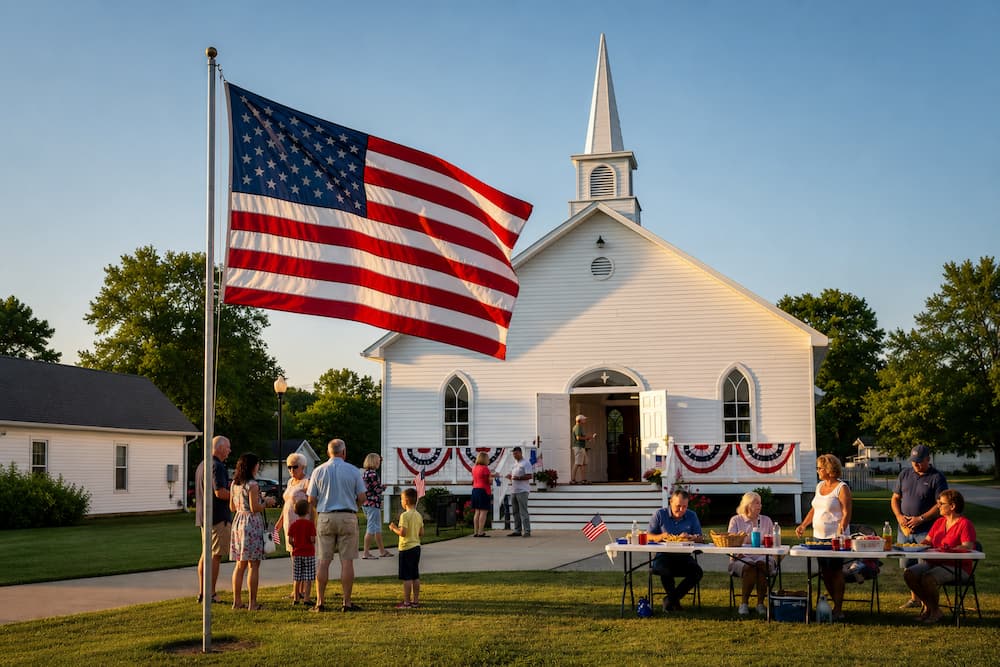



Every pastor knows the feeling. The week of July 4th rolls around, half your regulars are at the lake or at a cookout three states away, and Sunday attendance drops in a way that's predictable but somehow still catches you off guard every year.
What's easier to miss is what happens to giving. A long holiday weekend doesn't just mean empty seats. It means fewer envelopes in the plate, fewer people opening the church app, and a giving dip that can linger into the following week while everyone gets back into their routine.
The good news is that this particular dip is one of the most preventable problems in a church's calendar. You know it's coming every single year. Here's how to plan for it instead of just absorbing the hit.
Why July 4th Hits Giving Harder Than a Typical Sunday
It's not just one factor working against you, it's three stacked on top of each other:
Travel. July 4th is one of the heaviest travel weekends of the year, and when it falls near or on a Sunday, a meaningful chunk of your congregation is somewhere else entirely.
Routine disruption. Even people who stay in town often skip church for a holiday gathering, a kids' parade, or a backyard barbecue. It's not a loss of commitment, it's just a different Sunday than usual.
The cash habit. For churches still leaning on in-person giving, no physical presence means no physical gift. If your only giving pathway runs through Sunday morning, a holiday weekend is a direct hit to that week's giving.
None of this means people stopped wanting to give. It usually means they didn't have an easy way to do it from wherever they ended up.
Three Ways to Protect Your Church Through the Holiday
1. Make Giving Possible From Anywhere
If giving only happens in the building, it only happens when people are in the building. The fix isn't complicated: give people a way to give from the lake house, the in-laws' driveway, or wherever they're watching fireworks.
Recurring and scheduled giving are the simplest insurance policy here. A member who's already set up automatic recurring giving doesn't have to remember anything on a holiday weekend, their gift goes through whether they're in the sanctuary or not. If you haven't pushed recurring giving sign-ups recently, late June is a good time, before the dip rather than after it.
Text-to-give closes the rest of the gap. Someone scrolling their phone at a cookout can give in under a minute if the option is right there. No app download, no remembering a login, just a text.
2. Turn the Holiday Into a Gathering, Not Just a Gap
Some churches treat July 4th as a week to get through. Others treat it as a chance to bring people in who wouldn't normally show up on a regular Sunday: a patriotic service, a community cookout, an outdoor movie night, a service project honoring local veterans or first responders. (If you need a starting point, we've rounded up 5 creative ways to celebrate the 4th of July at your church and a set of 4th of July message ideas and Scripture if you're still shaping the service itself.)
These events work because they lower the bar for a first visit. Someone who'd never walk into a Sunday service might come to a free community cookout with fireworks. That's a real opportunity, but only if you're set up to capture it. A simple event signup and check-in process at the door means you're not relying on memory to know who showed up and how to follow up.
3. Don't Let First-Time Guests Disappear After the Holiday
This is the step most churches skip. A holiday event brings in visitors who don't fit your normal follow-up rhythm, because they showed up on a Thursday cookout instead of a Sunday service. If your follow-up process only triggers off Sunday attendance, these guests fall through the cracks.
Treat every July 4th visitor the way you'd treat a first-time Sunday guest: a welcome text or email within a day or two, a clear next step (a regular service time, a small group, a way to connect) tracked in your church management system, and a giving option included from the start. People are most open to taking a next step right after a positive first experience, not three weeks later when the holiday is a distant memory.
Plan for It Before the Week Gets Away From You
The churches that come through July 4th weekend strongest aren't doing anything drastic or overly complicated. They're just not leaving church giving and follow-up to chance during a week when normal patterns break down anyway.
If you want a simple way to walk through this before the holiday hits, we put together a short planning checklist you can use with your team: setting up recurring and text-to-give ahead of time, a sample patriotic service outline, and a follow-up sequence for new guests. Grab it below and you'll be ready well before the fireworks start.
Download: The July 4th Weekend Playbook for Churches
Related reading:
- 5 Creative Ways to Celebrate the 4th of July at Your Church
- 4th of July Message Ideas to Celebrate Independence
- Best Children's Ministry Check-In Systems for Safety & Efficiency
- What Is Text-to-Give? How Mobile Giving Is Revolutionizing Fundraising
Sign Up for Product Updates

Laura is a writer and ministry leader with experience in church communications, administration, worship ministry, and nonprofit support. She is passionate about helping people grow in their faith through biblical truth, practical encouragement, and honest conversations about the messy middle of everyday life.
When she's not writing, she's spending time with her family and hoping for the swift return of side parts and high-waisted skinny jeans.
Every pastor knows the feeling. The week of July 4th rolls around, half your regulars are at the lake or at a cookout three states away, and Sunday attendance drops in a way that's predictable but somehow still catches you off guard every year.
What's easier to miss is what happens to giving. A long holiday weekend doesn't just mean empty seats. It means fewer envelopes in the plate, fewer people opening the church app, and a giving dip that can linger into the following week while everyone gets back into their routine.
The good news is that this particular dip is one of the most preventable problems in a church's calendar. You know it's coming every single year. Here's how to plan for it instead of just absorbing the hit.
Why July 4th Hits Giving Harder Than a Typical Sunday
It's not just one factor working against you, it's three stacked on top of each other:
Travel. July 4th is one of the heaviest travel weekends of the year, and when it falls near or on a Sunday, a meaningful chunk of your congregation is somewhere else entirely.
Routine disruption. Even people who stay in town often skip church for a holiday gathering, a kids' parade, or a backyard barbecue. It's not a loss of commitment, it's just a different Sunday than usual.
The cash habit. For churches still leaning on in-person giving, no physical presence means no physical gift. If your only giving pathway runs through Sunday morning, a holiday weekend is a direct hit to that week's giving.
None of this means people stopped wanting to give. It usually means they didn't have an easy way to do it from wherever they ended up.
Three Ways to Protect Your Church Through the Holiday
1. Make Giving Possible From Anywhere
If giving only happens in the building, it only happens when people are in the building. The fix isn't complicated: give people a way to give from the lake house, the in-laws' driveway, or wherever they're watching fireworks.
Recurring and scheduled giving are the simplest insurance policy here. A member who's already set up automatic recurring giving doesn't have to remember anything on a holiday weekend, their gift goes through whether they're in the sanctuary or not. If you haven't pushed recurring giving sign-ups recently, late June is a good time, before the dip rather than after it.
Text-to-give closes the rest of the gap. Someone scrolling their phone at a cookout can give in under a minute if the option is right there. No app download, no remembering a login, just a text.
2. Turn the Holiday Into a Gathering, Not Just a Gap
Some churches treat July 4th as a week to get through. Others treat it as a chance to bring people in who wouldn't normally show up on a regular Sunday: a patriotic service, a community cookout, an outdoor movie night, a service project honoring local veterans or first responders. (If you need a starting point, we've rounded up 5 creative ways to celebrate the 4th of July at your church and a set of 4th of July message ideas and Scripture if you're still shaping the service itself.)
These events work because they lower the bar for a first visit. Someone who'd never walk into a Sunday service might come to a free community cookout with fireworks. That's a real opportunity, but only if you're set up to capture it. A simple event signup and check-in process at the door means you're not relying on memory to know who showed up and how to follow up.
3. Don't Let First-Time Guests Disappear After the Holiday
This is the step most churches skip. A holiday event brings in visitors who don't fit your normal follow-up rhythm, because they showed up on a Thursday cookout instead of a Sunday service. If your follow-up process only triggers off Sunday attendance, these guests fall through the cracks.
Treat every July 4th visitor the way you'd treat a first-time Sunday guest: a welcome text or email within a day or two, a clear next step (a regular service time, a small group, a way to connect) tracked in your church management system, and a giving option included from the start. People are most open to taking a next step right after a positive first experience, not three weeks later when the holiday is a distant memory.
Plan for It Before the Week Gets Away From You
The churches that come through July 4th weekend strongest aren't doing anything drastic or overly complicated. They're just not leaving church giving and follow-up to chance during a week when normal patterns break down anyway.
If you want a simple way to walk through this before the holiday hits, we put together a short planning checklist you can use with your team: setting up recurring and text-to-give ahead of time, a sample patriotic service outline, and a follow-up sequence for new guests. Grab it below and you'll be ready well before the fireworks start.
Download: The July 4th Weekend Playbook for Churches
Related reading:
- 5 Creative Ways to Celebrate the 4th of July at Your Church
- 4th of July Message Ideas to Celebrate Independence
- Best Children's Ministry Check-In Systems for Safety & Efficiency
- What Is Text-to-Give? How Mobile Giving Is Revolutionizing Fundraising
podcast transcript
Laura is a writer and ministry leader with experience in church communications, administration, worship ministry, and nonprofit support. She is passionate about helping people grow in their faith through biblical truth, practical encouragement, and honest conversations about the messy middle of everyday life.
When she's not writing, she's spending time with her family and hoping for the swift return of side parts and high-waisted skinny jeans.
Every pastor knows the feeling. The week of July 4th rolls around, half your regulars are at the lake or at a cookout three states away, and Sunday attendance drops in a way that's predictable but somehow still catches you off guard every year.
What's easier to miss is what happens to giving. A long holiday weekend doesn't just mean empty seats. It means fewer envelopes in the plate, fewer people opening the church app, and a giving dip that can linger into the following week while everyone gets back into their routine.
The good news is that this particular dip is one of the most preventable problems in a church's calendar. You know it's coming every single year. Here's how to plan for it instead of just absorbing the hit.
Why July 4th Hits Giving Harder Than a Typical Sunday
It's not just one factor working against you, it's three stacked on top of each other:
Travel. July 4th is one of the heaviest travel weekends of the year, and when it falls near or on a Sunday, a meaningful chunk of your congregation is somewhere else entirely.
Routine disruption. Even people who stay in town often skip church for a holiday gathering, a kids' parade, or a backyard barbecue. It's not a loss of commitment, it's just a different Sunday than usual.
The cash habit. For churches still leaning on in-person giving, no physical presence means no physical gift. If your only giving pathway runs through Sunday morning, a holiday weekend is a direct hit to that week's giving.
None of this means people stopped wanting to give. It usually means they didn't have an easy way to do it from wherever they ended up.
Three Ways to Protect Your Church Through the Holiday
1. Make Giving Possible From Anywhere
If giving only happens in the building, it only happens when people are in the building. The fix isn't complicated: give people a way to give from the lake house, the in-laws' driveway, or wherever they're watching fireworks.
Recurring and scheduled giving are the simplest insurance policy here. A member who's already set up automatic recurring giving doesn't have to remember anything on a holiday weekend, their gift goes through whether they're in the sanctuary or not. If you haven't pushed recurring giving sign-ups recently, late June is a good time, before the dip rather than after it.
Text-to-give closes the rest of the gap. Someone scrolling their phone at a cookout can give in under a minute if the option is right there. No app download, no remembering a login, just a text.
2. Turn the Holiday Into a Gathering, Not Just a Gap
Some churches treat July 4th as a week to get through. Others treat it as a chance to bring people in who wouldn't normally show up on a regular Sunday: a patriotic service, a community cookout, an outdoor movie night, a service project honoring local veterans or first responders. (If you need a starting point, we've rounded up 5 creative ways to celebrate the 4th of July at your church and a set of 4th of July message ideas and Scripture if you're still shaping the service itself.)
These events work because they lower the bar for a first visit. Someone who'd never walk into a Sunday service might come to a free community cookout with fireworks. That's a real opportunity, but only if you're set up to capture it. A simple event signup and check-in process at the door means you're not relying on memory to know who showed up and how to follow up.
3. Don't Let First-Time Guests Disappear After the Holiday
This is the step most churches skip. A holiday event brings in visitors who don't fit your normal follow-up rhythm, because they showed up on a Thursday cookout instead of a Sunday service. If your follow-up process only triggers off Sunday attendance, these guests fall through the cracks.
Treat every July 4th visitor the way you'd treat a first-time Sunday guest: a welcome text or email within a day or two, a clear next step (a regular service time, a small group, a way to connect) tracked in your church management system, and a giving option included from the start. People are most open to taking a next step right after a positive first experience, not three weeks later when the holiday is a distant memory.
Plan for It Before the Week Gets Away From You
The churches that come through July 4th weekend strongest aren't doing anything drastic or overly complicated. They're just not leaving church giving and follow-up to chance during a week when normal patterns break down anyway.
If you want a simple way to walk through this before the holiday hits, we put together a short planning checklist you can use with your team: setting up recurring and text-to-give ahead of time, a sample patriotic service outline, and a follow-up sequence for new guests. Grab it below and you'll be ready well before the fireworks start.
Download: The July 4th Weekend Playbook for Churches
Related reading:
- 5 Creative Ways to Celebrate the 4th of July at Your Church
- 4th of July Message Ideas to Celebrate Independence
- Best Children's Ministry Check-In Systems for Safety & Efficiency
- What Is Text-to-Give? How Mobile Giving Is Revolutionizing Fundraising
VIDEO transcript
Every pastor knows the feeling. The week of July 4th rolls around, half your regulars are at the lake or at a cookout three states away, and Sunday attendance drops in a way that's predictable but somehow still catches you off guard every year.
What's easier to miss is what happens to giving. A long holiday weekend doesn't just mean empty seats. It means fewer envelopes in the plate, fewer people opening the church app, and a giving dip that can linger into the following week while everyone gets back into their routine.
The good news is that this particular dip is one of the most preventable problems in a church's calendar. You know it's coming every single year. Here's how to plan for it instead of just absorbing the hit.
Why July 4th Hits Giving Harder Than a Typical Sunday
It's not just one factor working against you, it's three stacked on top of each other:
Travel. July 4th is one of the heaviest travel weekends of the year, and when it falls near or on a Sunday, a meaningful chunk of your congregation is somewhere else entirely.
Routine disruption. Even people who stay in town often skip church for a holiday gathering, a kids' parade, or a backyard barbecue. It's not a loss of commitment, it's just a different Sunday than usual.
The cash habit. For churches still leaning on in-person giving, no physical presence means no physical gift. If your only giving pathway runs through Sunday morning, a holiday weekend is a direct hit to that week's giving.
None of this means people stopped wanting to give. It usually means they didn't have an easy way to do it from wherever they ended up.
Three Ways to Protect Your Church Through the Holiday
1. Make Giving Possible From Anywhere
If giving only happens in the building, it only happens when people are in the building. The fix isn't complicated: give people a way to give from the lake house, the in-laws' driveway, or wherever they're watching fireworks.
Recurring and scheduled giving are the simplest insurance policy here. A member who's already set up automatic recurring giving doesn't have to remember anything on a holiday weekend, their gift goes through whether they're in the sanctuary or not. If you haven't pushed recurring giving sign-ups recently, late June is a good time, before the dip rather than after it.
Text-to-give closes the rest of the gap. Someone scrolling their phone at a cookout can give in under a minute if the option is right there. No app download, no remembering a login, just a text.
2. Turn the Holiday Into a Gathering, Not Just a Gap
Some churches treat July 4th as a week to get through. Others treat it as a chance to bring people in who wouldn't normally show up on a regular Sunday: a patriotic service, a community cookout, an outdoor movie night, a service project honoring local veterans or first responders. (If you need a starting point, we've rounded up 5 creative ways to celebrate the 4th of July at your church and a set of 4th of July message ideas and Scripture if you're still shaping the service itself.)
These events work because they lower the bar for a first visit. Someone who'd never walk into a Sunday service might come to a free community cookout with fireworks. That's a real opportunity, but only if you're set up to capture it. A simple event signup and check-in process at the door means you're not relying on memory to know who showed up and how to follow up.
3. Don't Let First-Time Guests Disappear After the Holiday
This is the step most churches skip. A holiday event brings in visitors who don't fit your normal follow-up rhythm, because they showed up on a Thursday cookout instead of a Sunday service. If your follow-up process only triggers off Sunday attendance, these guests fall through the cracks.
Treat every July 4th visitor the way you'd treat a first-time Sunday guest: a welcome text or email within a day or two, a clear next step (a regular service time, a small group, a way to connect) tracked in your church management system, and a giving option included from the start. People are most open to taking a next step right after a positive first experience, not three weeks later when the holiday is a distant memory.
Plan for It Before the Week Gets Away From You
The churches that come through July 4th weekend strongest aren't doing anything drastic or overly complicated. They're just not leaving church giving and follow-up to chance during a week when normal patterns break down anyway.
If you want a simple way to walk through this before the holiday hits, we put together a short planning checklist you can use with your team: setting up recurring and text-to-give ahead of time, a sample patriotic service outline, and a follow-up sequence for new guests. Grab it below and you'll be ready well before the fireworks start.
Download: The July 4th Weekend Playbook for Churches
Related reading:
- 5 Creative Ways to Celebrate the 4th of July at Your Church
- 4th of July Message Ideas to Celebrate Independence
- Best Children's Ministry Check-In Systems for Safety & Efficiency
- What Is Text-to-Give? How Mobile Giving Is Revolutionizing Fundraising
Sign Up for Product Updates
Laura is a writer and ministry leader with experience in church communications, administration, worship ministry, and nonprofit support. She is passionate about helping people grow in their faith through biblical truth, practical encouragement, and honest conversations about the messy middle of everyday life.
When she's not writing, she's spending time with her family and hoping for the swift return of side parts and high-waisted skinny jeans.

You Might Also Like
More Resources

From increasing giving, managing your congregation, and engaging your church, our collection of resources will keep you up-to-date on the latest church and ministry trends.
Free Resources