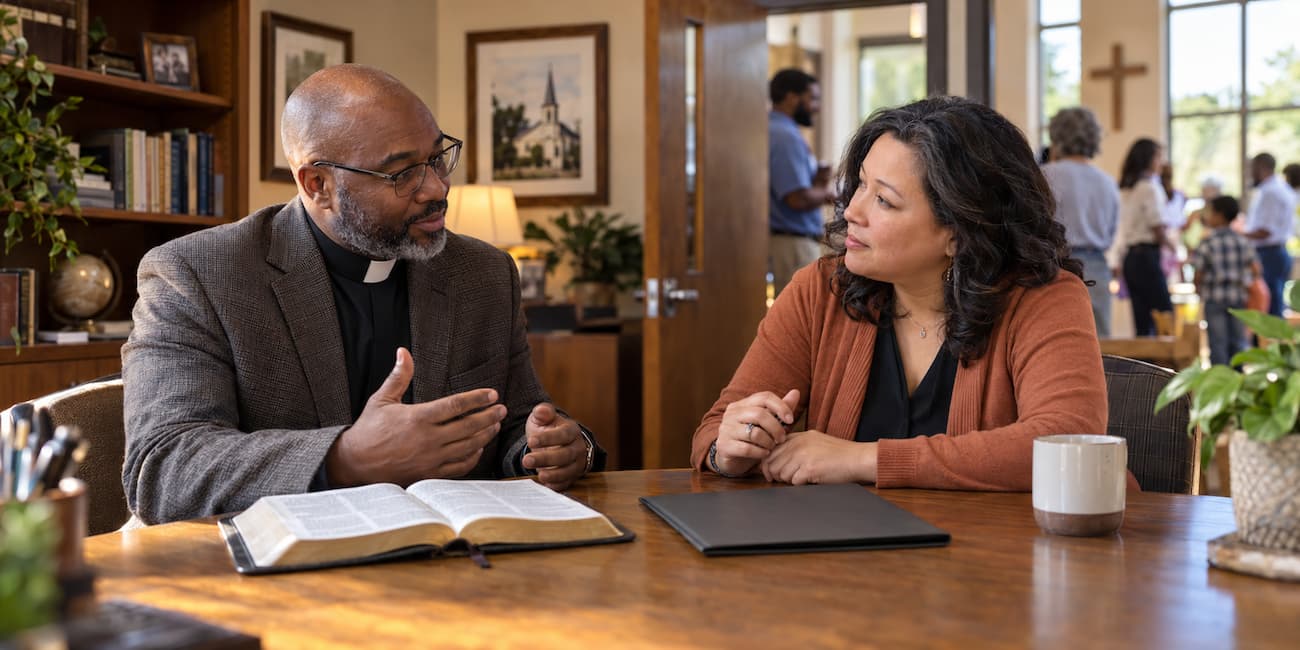
How Pastors Can Support Church Members Who Are Not Able to Attend in Person
Church isn't just for the people sitting in the pews each Sunday. Discover practical ways pastors can support homebound church members, strengthen relationships, and help everyone stay connected to the life of the church.
.jpg)



As pastors, we spend much of the week preparing for Sunday. We pray over the message, refine our notes, and think through the service so everything flows and resonates. Sunday matters deeply, and it should.
At the same time, not everyone in your congregation is able to walk through your church doors each week.
For some, it is a matter of schedule. They work weekends or are navigating busy seasons. For others, the barriers run deeper. Older adults who can no longer manage a full morning. Individuals living with chronic illness or disability. Caregivers who cannot easily leave home. Parents navigating complex family dynamics.
There are also those walking through other challenges. Anxiety, grief, or life transitions that make being in a crowded space feel overwhelming, even when their faith remains steady.
These people are still part of your church. They are just not in the room on Sundays. And if we are honest, most of our church systems are only built for the people who are.
Instead of only asking how to fill seats on Sundays, it is just as important to ask how to pastor the people you may not see, but who are still yours to shepherd.
Why a Livestream Alone Is Not Enough
Most churches have responded to this reality by adding a livestream, and that was an important first step. Being able to watch a service from home, from a hospital room, or from a care facility genuinely matters.
But watching is passive, while belonging is relational. A person can watch your service every single week and still feel completely invisible.
Supporting homebound church members is not just about access. It is about building real points of connection so people feel known, included, and part of the community.
Here are some of the most practical and creative ways to do that well.
How to Stay Connected With Church Members Who Cannot Attend in Person
Send a Personal Voice Memo After Service
After service on Sunday, take 60 to 90 seconds and record a voice memo. Share a brief reflection on what you preached, what you are praying for your congregation this week, and a brief encouragement. Then, send it personally to a handful of members who were not able to be there.
There is something about hearing a pastor's actual voice, unpolished and personal, that a sermon recording simply cannot replicate. For a homebound member who has not been in a building in months, that small act of remembrance can mean more than you know.
This does not scale to your entire congregation, but it does not need to. Even reaching five or ten people consistently each week can be transformative for the individuals receiving it. And if you train a care team or staff member to do the same, the reach grows without the burden falling on one person.
Deliver Communion Kits
Communion is one of the most significant acts of corporate worship in the life of a church, and it is also one of the experiences homebound members most often miss.
Consider preparing simple communion kits, even the pre-made ones, and delivering them to members who cannot attend before your next communion Sunday. Then, invite them to participate at home at the same time your congregation celebrates together in the building.
It takes a bit of coordination, but it goes a long way. The act of sharing communion simultaneously, even from different locations, reinforces that church members are still part of the Body of Christ.
Create a Small Group Specifically for Homebound Members
One of the most common mistakes churches make with hybrid community groups is making the remote participant the only person on a screen in a room full of people. That dynamic almost always feels awkward and rarely produces a genuine connection.
A more effective approach is to create a dedicated online small group for members who cannot attend in person, where everyone is joining remotely, and no one is the odd one out. A pastoral staff member or trained volunteer leads the group, everyone is on equal footing, and a real community can actually form.
This kind of intentional group gives homebound church members a place where they can contribute, be known, and genuinely belong, without feeling like an afterthought.
Start a Church Pen Pal Program
This one is low-tech, low-cost, and surprisingly meaningful.
Pair homebound or remote members with in-person attenders for an ongoing written correspondence. For older members, especially, receiving a handwritten letter from someone in the congregation can feel like a real gift. Even just a brief scripture encouragement and a few lines about the week can go incredibly far.
And for the person writing it, it builds a kind of pastoral attentiveness and generosity that deepens their own faith.
Start a Tablet Lending Program
For older members or those with limited access to technology, the barrier to joining a livestream or a video call is often simply not having the right device or not knowing how to use it.
A tablet lending program, where your church purchases a small number of devices and loans them to members who need them, can remove that barrier entirely. Pair the device with a volunteer who helps the member get set up and comfortable. This helps remove friction, makes participation possible, and shows love and genuine care to congregants.
This is one of the most concrete ways to serve your older adult population and members with disabilities, and it communicates clearly that their participation matters enough to invest in.
Give People a Way to Contribute, Not Just Receive
One of the fastest ways a homebound or remote member starts to feel disconnected is when they no longer feel needed. Being cared for is meaningful, but it is not the same as belonging. Belonging happens when you have something to give.
Members who cannot attend in person still have gifts, wisdom, and a genuine desire to contribute. Older adults often carry decades of spiritual insight. People navigating illness frequently have a powerful ministry of intercessory prayer. Caregivers and remote workers may have skills in writing, design, or administration that they can offer from home.
Look for ways to invite them in and build your volunteer systems so participation is not limited by physical presence.
Build a Dedicated Care Team
All of these ideas require someone to own them. And the most sustainable way to care for members who cannot attend in person is to build a small, committed team whose specific role is staying connected with them.
Even two or three volunteers who are each responsible for a handful of members, checking in weekly, delivering communion kits, sending voice memos, and flagging pastoral needs to staff, can transform the care culture of your church.
When people know that someone is specifically watching out for them, their experience of belonging changes completely.
The Systems That Make Consistent Care Possible
The biggest challenge in caring for members who cannot attend in person is visibility. People who are not physically present are easier to overlook. Without a system for tracking and following up, even the most caring church can unintentionally let people slip through.
This is where the right church management software becomes genuinely important. When you can see who has not been engaged recently, log follow-up conversations, manage your care team's assignments, and communicate consistently across your congregation, the pastoral care that used to depend on someone remembering becomes something your whole team can sustain together.
Tools like Tithely's church management software are built to help churches do exactly that, keeping track of your people, streamlining communication, and making sure the members who are hardest to see are not the ones who fall through the cracks.
Ultimately, the goal is not just helping homebound members feel a little less lonely, although that matters deeply. The goal is to build a church that reflects what the body of Christ is meant to be: a community where everyone belongs, everyone contributes, and no one is left out simply because they cannot make it through the doors on a Sunday morning.
Sign Up for Product Updates

Susanna is a theological content writer with a Master of Arts in Intercultural Studies from Fuller Theological Seminary. She is passionate about ministry, running, and exploring new cultures through international travel. In her free time, you’ll find her surfing, obsessing over the Olympics, or enjoying the San Diego sunshine!
As pastors, we spend much of the week preparing for Sunday. We pray over the message, refine our notes, and think through the service so everything flows and resonates. Sunday matters deeply, and it should.
At the same time, not everyone in your congregation is able to walk through your church doors each week.
For some, it is a matter of schedule. They work weekends or are navigating busy seasons. For others, the barriers run deeper. Older adults who can no longer manage a full morning. Individuals living with chronic illness or disability. Caregivers who cannot easily leave home. Parents navigating complex family dynamics.
There are also those walking through other challenges. Anxiety, grief, or life transitions that make being in a crowded space feel overwhelming, even when their faith remains steady.
These people are still part of your church. They are just not in the room on Sundays. And if we are honest, most of our church systems are only built for the people who are.
Instead of only asking how to fill seats on Sundays, it is just as important to ask how to pastor the people you may not see, but who are still yours to shepherd.
Why a Livestream Alone Is Not Enough
Most churches have responded to this reality by adding a livestream, and that was an important first step. Being able to watch a service from home, from a hospital room, or from a care facility genuinely matters.
But watching is passive, while belonging is relational. A person can watch your service every single week and still feel completely invisible.
Supporting homebound church members is not just about access. It is about building real points of connection so people feel known, included, and part of the community.
Here are some of the most practical and creative ways to do that well.
How to Stay Connected With Church Members Who Cannot Attend in Person
Send a Personal Voice Memo After Service
After service on Sunday, take 60 to 90 seconds and record a voice memo. Share a brief reflection on what you preached, what you are praying for your congregation this week, and a brief encouragement. Then, send it personally to a handful of members who were not able to be there.
There is something about hearing a pastor's actual voice, unpolished and personal, that a sermon recording simply cannot replicate. For a homebound member who has not been in a building in months, that small act of remembrance can mean more than you know.
This does not scale to your entire congregation, but it does not need to. Even reaching five or ten people consistently each week can be transformative for the individuals receiving it. And if you train a care team or staff member to do the same, the reach grows without the burden falling on one person.
Deliver Communion Kits
Communion is one of the most significant acts of corporate worship in the life of a church, and it is also one of the experiences homebound members most often miss.
Consider preparing simple communion kits, even the pre-made ones, and delivering them to members who cannot attend before your next communion Sunday. Then, invite them to participate at home at the same time your congregation celebrates together in the building.
It takes a bit of coordination, but it goes a long way. The act of sharing communion simultaneously, even from different locations, reinforces that church members are still part of the Body of Christ.
Create a Small Group Specifically for Homebound Members
One of the most common mistakes churches make with hybrid community groups is making the remote participant the only person on a screen in a room full of people. That dynamic almost always feels awkward and rarely produces a genuine connection.
A more effective approach is to create a dedicated online small group for members who cannot attend in person, where everyone is joining remotely, and no one is the odd one out. A pastoral staff member or trained volunteer leads the group, everyone is on equal footing, and a real community can actually form.
This kind of intentional group gives homebound church members a place where they can contribute, be known, and genuinely belong, without feeling like an afterthought.
Start a Church Pen Pal Program
This one is low-tech, low-cost, and surprisingly meaningful.
Pair homebound or remote members with in-person attenders for an ongoing written correspondence. For older members, especially, receiving a handwritten letter from someone in the congregation can feel like a real gift. Even just a brief scripture encouragement and a few lines about the week can go incredibly far.
And for the person writing it, it builds a kind of pastoral attentiveness and generosity that deepens their own faith.
Start a Tablet Lending Program
For older members or those with limited access to technology, the barrier to joining a livestream or a video call is often simply not having the right device or not knowing how to use it.
A tablet lending program, where your church purchases a small number of devices and loans them to members who need them, can remove that barrier entirely. Pair the device with a volunteer who helps the member get set up and comfortable. This helps remove friction, makes participation possible, and shows love and genuine care to congregants.
This is one of the most concrete ways to serve your older adult population and members with disabilities, and it communicates clearly that their participation matters enough to invest in.
Give People a Way to Contribute, Not Just Receive
One of the fastest ways a homebound or remote member starts to feel disconnected is when they no longer feel needed. Being cared for is meaningful, but it is not the same as belonging. Belonging happens when you have something to give.
Members who cannot attend in person still have gifts, wisdom, and a genuine desire to contribute. Older adults often carry decades of spiritual insight. People navigating illness frequently have a powerful ministry of intercessory prayer. Caregivers and remote workers may have skills in writing, design, or administration that they can offer from home.
Look for ways to invite them in and build your volunteer systems so participation is not limited by physical presence.
Build a Dedicated Care Team
All of these ideas require someone to own them. And the most sustainable way to care for members who cannot attend in person is to build a small, committed team whose specific role is staying connected with them.
Even two or three volunteers who are each responsible for a handful of members, checking in weekly, delivering communion kits, sending voice memos, and flagging pastoral needs to staff, can transform the care culture of your church.
When people know that someone is specifically watching out for them, their experience of belonging changes completely.
The Systems That Make Consistent Care Possible
The biggest challenge in caring for members who cannot attend in person is visibility. People who are not physically present are easier to overlook. Without a system for tracking and following up, even the most caring church can unintentionally let people slip through.
This is where the right church management software becomes genuinely important. When you can see who has not been engaged recently, log follow-up conversations, manage your care team's assignments, and communicate consistently across your congregation, the pastoral care that used to depend on someone remembering becomes something your whole team can sustain together.
Tools like Tithely's church management software are built to help churches do exactly that, keeping track of your people, streamlining communication, and making sure the members who are hardest to see are not the ones who fall through the cracks.
Ultimately, the goal is not just helping homebound members feel a little less lonely, although that matters deeply. The goal is to build a church that reflects what the body of Christ is meant to be: a community where everyone belongs, everyone contributes, and no one is left out simply because they cannot make it through the doors on a Sunday morning.
podcast transcript
Susanna is a theological content writer with a Master of Arts in Intercultural Studies from Fuller Theological Seminary. She is passionate about ministry, running, and exploring new cultures through international travel. In her free time, you’ll find her surfing, obsessing over the Olympics, or enjoying the San Diego sunshine!
As pastors, we spend much of the week preparing for Sunday. We pray over the message, refine our notes, and think through the service so everything flows and resonates. Sunday matters deeply, and it should.
At the same time, not everyone in your congregation is able to walk through your church doors each week.
For some, it is a matter of schedule. They work weekends or are navigating busy seasons. For others, the barriers run deeper. Older adults who can no longer manage a full morning. Individuals living with chronic illness or disability. Caregivers who cannot easily leave home. Parents navigating complex family dynamics.
There are also those walking through other challenges. Anxiety, grief, or life transitions that make being in a crowded space feel overwhelming, even when their faith remains steady.
These people are still part of your church. They are just not in the room on Sundays. And if we are honest, most of our church systems are only built for the people who are.
Instead of only asking how to fill seats on Sundays, it is just as important to ask how to pastor the people you may not see, but who are still yours to shepherd.
Why a Livestream Alone Is Not Enough
Most churches have responded to this reality by adding a livestream, and that was an important first step. Being able to watch a service from home, from a hospital room, or from a care facility genuinely matters.
But watching is passive, while belonging is relational. A person can watch your service every single week and still feel completely invisible.
Supporting homebound church members is not just about access. It is about building real points of connection so people feel known, included, and part of the community.
Here are some of the most practical and creative ways to do that well.
How to Stay Connected With Church Members Who Cannot Attend in Person
Send a Personal Voice Memo After Service
After service on Sunday, take 60 to 90 seconds and record a voice memo. Share a brief reflection on what you preached, what you are praying for your congregation this week, and a brief encouragement. Then, send it personally to a handful of members who were not able to be there.
There is something about hearing a pastor's actual voice, unpolished and personal, that a sermon recording simply cannot replicate. For a homebound member who has not been in a building in months, that small act of remembrance can mean more than you know.
This does not scale to your entire congregation, but it does not need to. Even reaching five or ten people consistently each week can be transformative for the individuals receiving it. And if you train a care team or staff member to do the same, the reach grows without the burden falling on one person.
Deliver Communion Kits
Communion is one of the most significant acts of corporate worship in the life of a church, and it is also one of the experiences homebound members most often miss.
Consider preparing simple communion kits, even the pre-made ones, and delivering them to members who cannot attend before your next communion Sunday. Then, invite them to participate at home at the same time your congregation celebrates together in the building.
It takes a bit of coordination, but it goes a long way. The act of sharing communion simultaneously, even from different locations, reinforces that church members are still part of the Body of Christ.
Create a Small Group Specifically for Homebound Members
One of the most common mistakes churches make with hybrid community groups is making the remote participant the only person on a screen in a room full of people. That dynamic almost always feels awkward and rarely produces a genuine connection.
A more effective approach is to create a dedicated online small group for members who cannot attend in person, where everyone is joining remotely, and no one is the odd one out. A pastoral staff member or trained volunteer leads the group, everyone is on equal footing, and a real community can actually form.
This kind of intentional group gives homebound church members a place where they can contribute, be known, and genuinely belong, without feeling like an afterthought.
Start a Church Pen Pal Program
This one is low-tech, low-cost, and surprisingly meaningful.
Pair homebound or remote members with in-person attenders for an ongoing written correspondence. For older members, especially, receiving a handwritten letter from someone in the congregation can feel like a real gift. Even just a brief scripture encouragement and a few lines about the week can go incredibly far.
And for the person writing it, it builds a kind of pastoral attentiveness and generosity that deepens their own faith.
Start a Tablet Lending Program
For older members or those with limited access to technology, the barrier to joining a livestream or a video call is often simply not having the right device or not knowing how to use it.
A tablet lending program, where your church purchases a small number of devices and loans them to members who need them, can remove that barrier entirely. Pair the device with a volunteer who helps the member get set up and comfortable. This helps remove friction, makes participation possible, and shows love and genuine care to congregants.
This is one of the most concrete ways to serve your older adult population and members with disabilities, and it communicates clearly that their participation matters enough to invest in.
Give People a Way to Contribute, Not Just Receive
One of the fastest ways a homebound or remote member starts to feel disconnected is when they no longer feel needed. Being cared for is meaningful, but it is not the same as belonging. Belonging happens when you have something to give.
Members who cannot attend in person still have gifts, wisdom, and a genuine desire to contribute. Older adults often carry decades of spiritual insight. People navigating illness frequently have a powerful ministry of intercessory prayer. Caregivers and remote workers may have skills in writing, design, or administration that they can offer from home.
Look for ways to invite them in and build your volunteer systems so participation is not limited by physical presence.
Build a Dedicated Care Team
All of these ideas require someone to own them. And the most sustainable way to care for members who cannot attend in person is to build a small, committed team whose specific role is staying connected with them.
Even two or three volunteers who are each responsible for a handful of members, checking in weekly, delivering communion kits, sending voice memos, and flagging pastoral needs to staff, can transform the care culture of your church.
When people know that someone is specifically watching out for them, their experience of belonging changes completely.
The Systems That Make Consistent Care Possible
The biggest challenge in caring for members who cannot attend in person is visibility. People who are not physically present are easier to overlook. Without a system for tracking and following up, even the most caring church can unintentionally let people slip through.
This is where the right church management software becomes genuinely important. When you can see who has not been engaged recently, log follow-up conversations, manage your care team's assignments, and communicate consistently across your congregation, the pastoral care that used to depend on someone remembering becomes something your whole team can sustain together.
Tools like Tithely's church management software are built to help churches do exactly that, keeping track of your people, streamlining communication, and making sure the members who are hardest to see are not the ones who fall through the cracks.
Ultimately, the goal is not just helping homebound members feel a little less lonely, although that matters deeply. The goal is to build a church that reflects what the body of Christ is meant to be: a community where everyone belongs, everyone contributes, and no one is left out simply because they cannot make it through the doors on a Sunday morning.
VIDEO transcript
As pastors, we spend much of the week preparing for Sunday. We pray over the message, refine our notes, and think through the service so everything flows and resonates. Sunday matters deeply, and it should.
At the same time, not everyone in your congregation is able to walk through your church doors each week.
For some, it is a matter of schedule. They work weekends or are navigating busy seasons. For others, the barriers run deeper. Older adults who can no longer manage a full morning. Individuals living with chronic illness or disability. Caregivers who cannot easily leave home. Parents navigating complex family dynamics.
There are also those walking through other challenges. Anxiety, grief, or life transitions that make being in a crowded space feel overwhelming, even when their faith remains steady.
These people are still part of your church. They are just not in the room on Sundays. And if we are honest, most of our church systems are only built for the people who are.
Instead of only asking how to fill seats on Sundays, it is just as important to ask how to pastor the people you may not see, but who are still yours to shepherd.
Why a Livestream Alone Is Not Enough
Most churches have responded to this reality by adding a livestream, and that was an important first step. Being able to watch a service from home, from a hospital room, or from a care facility genuinely matters.
But watching is passive, while belonging is relational. A person can watch your service every single week and still feel completely invisible.
Supporting homebound church members is not just about access. It is about building real points of connection so people feel known, included, and part of the community.
Here are some of the most practical and creative ways to do that well.
How to Stay Connected With Church Members Who Cannot Attend in Person
Send a Personal Voice Memo After Service
After service on Sunday, take 60 to 90 seconds and record a voice memo. Share a brief reflection on what you preached, what you are praying for your congregation this week, and a brief encouragement. Then, send it personally to a handful of members who were not able to be there.
There is something about hearing a pastor's actual voice, unpolished and personal, that a sermon recording simply cannot replicate. For a homebound member who has not been in a building in months, that small act of remembrance can mean more than you know.
This does not scale to your entire congregation, but it does not need to. Even reaching five or ten people consistently each week can be transformative for the individuals receiving it. And if you train a care team or staff member to do the same, the reach grows without the burden falling on one person.
Deliver Communion Kits
Communion is one of the most significant acts of corporate worship in the life of a church, and it is also one of the experiences homebound members most often miss.
Consider preparing simple communion kits, even the pre-made ones, and delivering them to members who cannot attend before your next communion Sunday. Then, invite them to participate at home at the same time your congregation celebrates together in the building.
It takes a bit of coordination, but it goes a long way. The act of sharing communion simultaneously, even from different locations, reinforces that church members are still part of the Body of Christ.
Create a Small Group Specifically for Homebound Members
One of the most common mistakes churches make with hybrid community groups is making the remote participant the only person on a screen in a room full of people. That dynamic almost always feels awkward and rarely produces a genuine connection.
A more effective approach is to create a dedicated online small group for members who cannot attend in person, where everyone is joining remotely, and no one is the odd one out. A pastoral staff member or trained volunteer leads the group, everyone is on equal footing, and a real community can actually form.
This kind of intentional group gives homebound church members a place where they can contribute, be known, and genuinely belong, without feeling like an afterthought.
Start a Church Pen Pal Program
This one is low-tech, low-cost, and surprisingly meaningful.
Pair homebound or remote members with in-person attenders for an ongoing written correspondence. For older members, especially, receiving a handwritten letter from someone in the congregation can feel like a real gift. Even just a brief scripture encouragement and a few lines about the week can go incredibly far.
And for the person writing it, it builds a kind of pastoral attentiveness and generosity that deepens their own faith.
Start a Tablet Lending Program
For older members or those with limited access to technology, the barrier to joining a livestream or a video call is often simply not having the right device or not knowing how to use it.
A tablet lending program, where your church purchases a small number of devices and loans them to members who need them, can remove that barrier entirely. Pair the device with a volunteer who helps the member get set up and comfortable. This helps remove friction, makes participation possible, and shows love and genuine care to congregants.
This is one of the most concrete ways to serve your older adult population and members with disabilities, and it communicates clearly that their participation matters enough to invest in.
Give People a Way to Contribute, Not Just Receive
One of the fastest ways a homebound or remote member starts to feel disconnected is when they no longer feel needed. Being cared for is meaningful, but it is not the same as belonging. Belonging happens when you have something to give.
Members who cannot attend in person still have gifts, wisdom, and a genuine desire to contribute. Older adults often carry decades of spiritual insight. People navigating illness frequently have a powerful ministry of intercessory prayer. Caregivers and remote workers may have skills in writing, design, or administration that they can offer from home.
Look for ways to invite them in and build your volunteer systems so participation is not limited by physical presence.
Build a Dedicated Care Team
All of these ideas require someone to own them. And the most sustainable way to care for members who cannot attend in person is to build a small, committed team whose specific role is staying connected with them.
Even two or three volunteers who are each responsible for a handful of members, checking in weekly, delivering communion kits, sending voice memos, and flagging pastoral needs to staff, can transform the care culture of your church.
When people know that someone is specifically watching out for them, their experience of belonging changes completely.
The Systems That Make Consistent Care Possible
The biggest challenge in caring for members who cannot attend in person is visibility. People who are not physically present are easier to overlook. Without a system for tracking and following up, even the most caring church can unintentionally let people slip through.
This is where the right church management software becomes genuinely important. When you can see who has not been engaged recently, log follow-up conversations, manage your care team's assignments, and communicate consistently across your congregation, the pastoral care that used to depend on someone remembering becomes something your whole team can sustain together.
Tools like Tithely's church management software are built to help churches do exactly that, keeping track of your people, streamlining communication, and making sure the members who are hardest to see are not the ones who fall through the cracks.
Ultimately, the goal is not just helping homebound members feel a little less lonely, although that matters deeply. The goal is to build a church that reflects what the body of Christ is meant to be: a community where everyone belongs, everyone contributes, and no one is left out simply because they cannot make it through the doors on a Sunday morning.
Sign Up for Product Updates
Susanna is a theological content writer with a Master of Arts in Intercultural Studies from Fuller Theological Seminary. She is passionate about ministry, running, and exploring new cultures through international travel. In her free time, you’ll find her surfing, obsessing over the Olympics, or enjoying the San Diego sunshine!

You Might Also Like
More Resources

From increasing giving, managing your congregation, and engaging your church, our collection of resources will keep you up-to-date on the latest church and ministry trends.
Free Resources