The Bivocational Pastor: Thriving in Ministry When You Also Have a 9-to-5
Practical guidance for bivocational pastors balancing church ministry, a full-time job, sermon preparation, family responsibilities, and Sabbath rest.
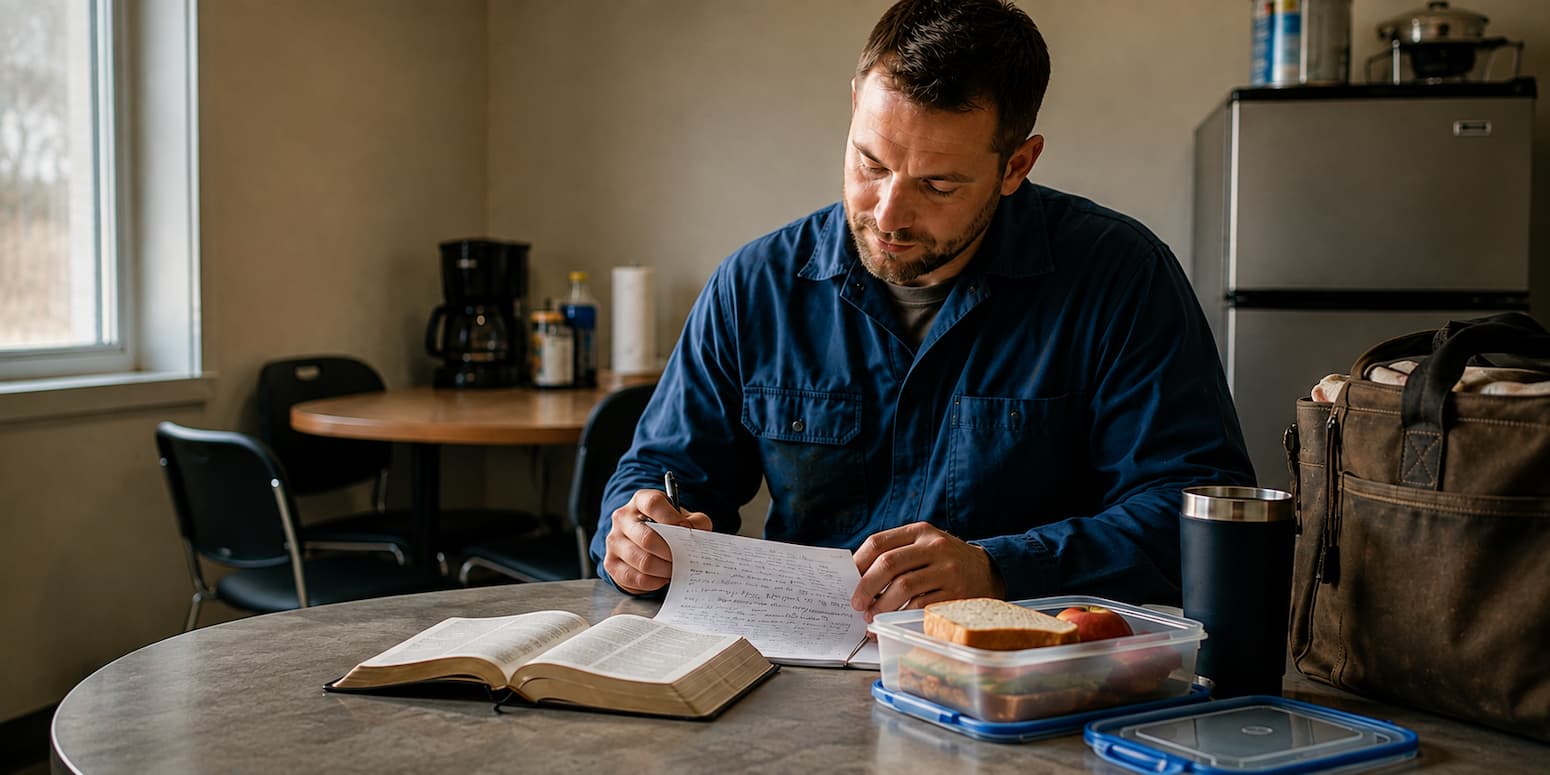



My dad was never “just” a pastor. Growing up, I watched him preach on Sundays and paint houses on Mondays. He was a pastor and a painter. A pastor and a school principal. A pastor and a professor. He wore a lot of hats (some of them literally), and he always wore them with grace.
I didn't fully appreciate what this modeled for me until years later, when I found myself on a church staff and started picking up freelance marketing projects on the side to make ends meet. For many pastors and church leaders, this is the reality of ministry in the United States. Bivocational ministry is not always a backup plan. For some of us, it is the plan.
And if that's you, this is for you.
You're Not Alone, and You're in Good Company
According to the National Survey of Religious Leaders (NSRL) report, 35% of clergy in the United States hold an additional job outside of church ministry.
Some do this by necessity. Some do it by design. Many do it by a combination of both. Importantly, the Bible doesn't treat this career strategy as a lesser calling than full-time church ministry.
Paul Was the Original Bivocational Pastor
Paul, arguably the most prolific church planter in history, was also a tentmaker. He made no secret of this. In Acts 18, we see him working alongside Priscilla and Aquila, making tents by trade while simultaneously planting what would become some of the most influential churches in the ancient world. He wrote about it openly in his letters: "We work hard with our own hands" (1 Corinthians 4:12). He even used his financial independence from the church as a point of pastoral integrity.
Paul wasn't bivocational because he failed to build a church big enough to pay him. He was bivocational because that was the calling and configuration God gave him for that season and context. His tent-making wasn't separate from his ministry. In some very real ways, it was his ministry. It put him in rooms, relationships, and cities that a full-time church salary never would have.
If Paul can plant churches while stitching canvas, you can feel confident preaching on Sundays while running your spreadsheets Monday through Friday or painting houses as a side hustle.
The Honest Challenges of Bivocational Ministry
Still, the bivocational pastor's life is not without its hurdles, and glossing over them does not help anyone. Here are a few of the challenges that come with working multiple jobs in ministry – followed by practical ways to balance it all.
Time is a rare commodity
When you are splitting your week between ministry responsibilities and another job, margin becomes a rare thing. Sermon prep may have to happen late at night. Pastoral care calls come during lunch breaks. Administrative tasks can accumulate quickly in the background. Family time can get crowded in by other responsibilities. None of this is sustainable without some intention behind scheduling.
The guilt can be real
When you’re working multiple jobs, you may feel like you are never quite fully present anywhere, not at church, not at your job, not at home. That feeling, left unaddressed, has a way of wearing people down over time.
It gets hard to know where ministry ends
When you are the pastor at church and a recognizable face everywhere else, too, it can be difficult to find the places where you are just a person. And when everything carries the weight of ministry, it is easy for nothing to get your full presence.
How to Manage Your Time as a Bivocational Pastor
Managing your time as a bivocational pastor requires many of the same time management skills that any busy leader needs. With the right strategies, it is possible to live a balanced, thriving life in both vocations – as well as your personal life!
Protect your sermon prep time
If sermon prep time is not on the calendar with some kind of boundary around it, it will get displaced by something more urgent every single week. Whatever that time looks like for you, early mornings, a lunch hour, a specific evening, it needs to be consistent, and it needs to be guarded.
Protect your Sabbath
Sabbath is often the first thing to go when we are in particularly busy seasons, but bivocational pastors needs to protect their Sabbath at all costs. Find a day that works for you to take completely off, and stick with it. This day of rest will do wonders for your physical, emotional, spiritual, and relational health, and it will make it possible for you to continue to do the work you’re called to!
Be honest with your congregation about what you can carry
You are not failing anyone by having limits. In fact, being clear about your capacity is one of the healthier things a bivocational pastor can model. If you cannot be available at 2pm on a Tuesday, say so, and work with your community and leaders to build a ministry model that does not depend entirely on you.
Think of your other job as part of your mission field
My dad understood this intuitively, even if he never articulated it that way. When you are at your other workplace, you are not absent from ministry. You are forming relationships with people who may never walk into a church building. You are living out your faith in ordinary spaces, which is exactly what the Church has always been called to do. Paul knew this. Priscilla and Aquila knew this. You can live it out!
Find tools that protect the time you do have
One of the most practical things that helped me during my time serving on a church staff was having better systems in place. When communication, giving, follow-up, and volunteer coordination are scattered and disorganized, your limited hours get absorbed by logistics instead of people. Tools like Tithely are built to consolidate a lot of that behind-the-scenes work, so the hours you do have can go toward the things that you need to be present for: shepherding, preaching, and discipling.
Find people who understand the load you are carrying
Pastoral loneliness is real for full-time ministers, and it tends to be more pronounced for bivocational ones. You may not have a staff to process with or colleagues who understand both sides of your week. Finding even one or two other pastors in a similar situation, whether through a local cohort, a denominational network, or something informal, makes a meaningful difference over time.
There Is No Single Template for Bivocational Ministry
There is no single right vocational path for pastors and church leaders. Some are called to full-time ministry, trusting God to provide through the generosity of their congregation. That is a real and beautiful calling. God is our provider, and we can trust Him.
Others are called to bivocational ministry, for a season or for a lifetime. Their work outside the church helps fund their calling, expands their mission field, and keeps them connected to the rhythms of everyday life in ways that often make them better church ministers.
And some of us are somewhere in between, figuring it out as we go.
What God does not call any of us to is building our ministry path based on what someone else's looks like. He asks us to steward what He has given us, our hours, our gifts, our context, our specific and particular calling.
My dad never apologized for painting houses. He also never stopped pastoring. Both were expressions of faithfulness. Both were his calling.
Yours may look different. That's the point. Build it accordingly.
Looking for tools that help bivocational leaders do more ministry with the time they have? Explore Tithely's suite of church tools, built by ministry-minded people, for ministry-minded people.
Sign Up for Product Updates

Susanna is a theological content writer with a Master of Arts in Intercultural Studies from Fuller Theological Seminary. She is passionate about ministry, running, and exploring new cultures through international travel. In her free time, you’ll find her surfing, obsessing over the Olympics, or enjoying the San Diego sunshine!
My dad was never “just” a pastor. Growing up, I watched him preach on Sundays and paint houses on Mondays. He was a pastor and a painter. A pastor and a school principal. A pastor and a professor. He wore a lot of hats (some of them literally), and he always wore them with grace.
I didn't fully appreciate what this modeled for me until years later, when I found myself on a church staff and started picking up freelance marketing projects on the side to make ends meet. For many pastors and church leaders, this is the reality of ministry in the United States. Bivocational ministry is not always a backup plan. For some of us, it is the plan.
And if that's you, this is for you.
You're Not Alone, and You're in Good Company
According to the National Survey of Religious Leaders (NSRL) report, 35% of clergy in the United States hold an additional job outside of church ministry.
Some do this by necessity. Some do it by design. Many do it by a combination of both. Importantly, the Bible doesn't treat this career strategy as a lesser calling than full-time church ministry.
Paul Was the Original Bivocational Pastor
Paul, arguably the most prolific church planter in history, was also a tentmaker. He made no secret of this. In Acts 18, we see him working alongside Priscilla and Aquila, making tents by trade while simultaneously planting what would become some of the most influential churches in the ancient world. He wrote about it openly in his letters: "We work hard with our own hands" (1 Corinthians 4:12). He even used his financial independence from the church as a point of pastoral integrity.
Paul wasn't bivocational because he failed to build a church big enough to pay him. He was bivocational because that was the calling and configuration God gave him for that season and context. His tent-making wasn't separate from his ministry. In some very real ways, it was his ministry. It put him in rooms, relationships, and cities that a full-time church salary never would have.
If Paul can plant churches while stitching canvas, you can feel confident preaching on Sundays while running your spreadsheets Monday through Friday or painting houses as a side hustle.
The Honest Challenges of Bivocational Ministry
Still, the bivocational pastor's life is not without its hurdles, and glossing over them does not help anyone. Here are a few of the challenges that come with working multiple jobs in ministry – followed by practical ways to balance it all.
Time is a rare commodity
When you are splitting your week between ministry responsibilities and another job, margin becomes a rare thing. Sermon prep may have to happen late at night. Pastoral care calls come during lunch breaks. Administrative tasks can accumulate quickly in the background. Family time can get crowded in by other responsibilities. None of this is sustainable without some intention behind scheduling.
The guilt can be real
When you’re working multiple jobs, you may feel like you are never quite fully present anywhere, not at church, not at your job, not at home. That feeling, left unaddressed, has a way of wearing people down over time.
It gets hard to know where ministry ends
When you are the pastor at church and a recognizable face everywhere else, too, it can be difficult to find the places where you are just a person. And when everything carries the weight of ministry, it is easy for nothing to get your full presence.
How to Manage Your Time as a Bivocational Pastor
Managing your time as a bivocational pastor requires many of the same time management skills that any busy leader needs. With the right strategies, it is possible to live a balanced, thriving life in both vocations – as well as your personal life!
Protect your sermon prep time
If sermon prep time is not on the calendar with some kind of boundary around it, it will get displaced by something more urgent every single week. Whatever that time looks like for you, early mornings, a lunch hour, a specific evening, it needs to be consistent, and it needs to be guarded.
Protect your Sabbath
Sabbath is often the first thing to go when we are in particularly busy seasons, but bivocational pastors needs to protect their Sabbath at all costs. Find a day that works for you to take completely off, and stick with it. This day of rest will do wonders for your physical, emotional, spiritual, and relational health, and it will make it possible for you to continue to do the work you’re called to!
Be honest with your congregation about what you can carry
You are not failing anyone by having limits. In fact, being clear about your capacity is one of the healthier things a bivocational pastor can model. If you cannot be available at 2pm on a Tuesday, say so, and work with your community and leaders to build a ministry model that does not depend entirely on you.
Think of your other job as part of your mission field
My dad understood this intuitively, even if he never articulated it that way. When you are at your other workplace, you are not absent from ministry. You are forming relationships with people who may never walk into a church building. You are living out your faith in ordinary spaces, which is exactly what the Church has always been called to do. Paul knew this. Priscilla and Aquila knew this. You can live it out!
Find tools that protect the time you do have
One of the most practical things that helped me during my time serving on a church staff was having better systems in place. When communication, giving, follow-up, and volunteer coordination are scattered and disorganized, your limited hours get absorbed by logistics instead of people. Tools like Tithely are built to consolidate a lot of that behind-the-scenes work, so the hours you do have can go toward the things that you need to be present for: shepherding, preaching, and discipling.
Find people who understand the load you are carrying
Pastoral loneliness is real for full-time ministers, and it tends to be more pronounced for bivocational ones. You may not have a staff to process with or colleagues who understand both sides of your week. Finding even one or two other pastors in a similar situation, whether through a local cohort, a denominational network, or something informal, makes a meaningful difference over time.
There Is No Single Template for Bivocational Ministry
There is no single right vocational path for pastors and church leaders. Some are called to full-time ministry, trusting God to provide through the generosity of their congregation. That is a real and beautiful calling. God is our provider, and we can trust Him.
Others are called to bivocational ministry, for a season or for a lifetime. Their work outside the church helps fund their calling, expands their mission field, and keeps them connected to the rhythms of everyday life in ways that often make them better church ministers.
And some of us are somewhere in between, figuring it out as we go.
What God does not call any of us to is building our ministry path based on what someone else's looks like. He asks us to steward what He has given us, our hours, our gifts, our context, our specific and particular calling.
My dad never apologized for painting houses. He also never stopped pastoring. Both were expressions of faithfulness. Both were his calling.
Yours may look different. That's the point. Build it accordingly.
Looking for tools that help bivocational leaders do more ministry with the time they have? Explore Tithely's suite of church tools, built by ministry-minded people, for ministry-minded people.
podcast transcript
Susanna is a theological content writer with a Master of Arts in Intercultural Studies from Fuller Theological Seminary. She is passionate about ministry, running, and exploring new cultures through international travel. In her free time, you’ll find her surfing, obsessing over the Olympics, or enjoying the San Diego sunshine!
My dad was never “just” a pastor. Growing up, I watched him preach on Sundays and paint houses on Mondays. He was a pastor and a painter. A pastor and a school principal. A pastor and a professor. He wore a lot of hats (some of them literally), and he always wore them with grace.
I didn't fully appreciate what this modeled for me until years later, when I found myself on a church staff and started picking up freelance marketing projects on the side to make ends meet. For many pastors and church leaders, this is the reality of ministry in the United States. Bivocational ministry is not always a backup plan. For some of us, it is the plan.
And if that's you, this is for you.
You're Not Alone, and You're in Good Company
According to the National Survey of Religious Leaders (NSRL) report, 35% of clergy in the United States hold an additional job outside of church ministry.
Some do this by necessity. Some do it by design. Many do it by a combination of both. Importantly, the Bible doesn't treat this career strategy as a lesser calling than full-time church ministry.
Paul Was the Original Bivocational Pastor
Paul, arguably the most prolific church planter in history, was also a tentmaker. He made no secret of this. In Acts 18, we see him working alongside Priscilla and Aquila, making tents by trade while simultaneously planting what would become some of the most influential churches in the ancient world. He wrote about it openly in his letters: "We work hard with our own hands" (1 Corinthians 4:12). He even used his financial independence from the church as a point of pastoral integrity.
Paul wasn't bivocational because he failed to build a church big enough to pay him. He was bivocational because that was the calling and configuration God gave him for that season and context. His tent-making wasn't separate from his ministry. In some very real ways, it was his ministry. It put him in rooms, relationships, and cities that a full-time church salary never would have.
If Paul can plant churches while stitching canvas, you can feel confident preaching on Sundays while running your spreadsheets Monday through Friday or painting houses as a side hustle.
The Honest Challenges of Bivocational Ministry
Still, the bivocational pastor's life is not without its hurdles, and glossing over them does not help anyone. Here are a few of the challenges that come with working multiple jobs in ministry – followed by practical ways to balance it all.
Time is a rare commodity
When you are splitting your week between ministry responsibilities and another job, margin becomes a rare thing. Sermon prep may have to happen late at night. Pastoral care calls come during lunch breaks. Administrative tasks can accumulate quickly in the background. Family time can get crowded in by other responsibilities. None of this is sustainable without some intention behind scheduling.
The guilt can be real
When you’re working multiple jobs, you may feel like you are never quite fully present anywhere, not at church, not at your job, not at home. That feeling, left unaddressed, has a way of wearing people down over time.
It gets hard to know where ministry ends
When you are the pastor at church and a recognizable face everywhere else, too, it can be difficult to find the places where you are just a person. And when everything carries the weight of ministry, it is easy for nothing to get your full presence.
How to Manage Your Time as a Bivocational Pastor
Managing your time as a bivocational pastor requires many of the same time management skills that any busy leader needs. With the right strategies, it is possible to live a balanced, thriving life in both vocations – as well as your personal life!
Protect your sermon prep time
If sermon prep time is not on the calendar with some kind of boundary around it, it will get displaced by something more urgent every single week. Whatever that time looks like for you, early mornings, a lunch hour, a specific evening, it needs to be consistent, and it needs to be guarded.
Protect your Sabbath
Sabbath is often the first thing to go when we are in particularly busy seasons, but bivocational pastors needs to protect their Sabbath at all costs. Find a day that works for you to take completely off, and stick with it. This day of rest will do wonders for your physical, emotional, spiritual, and relational health, and it will make it possible for you to continue to do the work you’re called to!
Be honest with your congregation about what you can carry
You are not failing anyone by having limits. In fact, being clear about your capacity is one of the healthier things a bivocational pastor can model. If you cannot be available at 2pm on a Tuesday, say so, and work with your community and leaders to build a ministry model that does not depend entirely on you.
Think of your other job as part of your mission field
My dad understood this intuitively, even if he never articulated it that way. When you are at your other workplace, you are not absent from ministry. You are forming relationships with people who may never walk into a church building. You are living out your faith in ordinary spaces, which is exactly what the Church has always been called to do. Paul knew this. Priscilla and Aquila knew this. You can live it out!
Find tools that protect the time you do have
One of the most practical things that helped me during my time serving on a church staff was having better systems in place. When communication, giving, follow-up, and volunteer coordination are scattered and disorganized, your limited hours get absorbed by logistics instead of people. Tools like Tithely are built to consolidate a lot of that behind-the-scenes work, so the hours you do have can go toward the things that you need to be present for: shepherding, preaching, and discipling.
Find people who understand the load you are carrying
Pastoral loneliness is real for full-time ministers, and it tends to be more pronounced for bivocational ones. You may not have a staff to process with or colleagues who understand both sides of your week. Finding even one or two other pastors in a similar situation, whether through a local cohort, a denominational network, or something informal, makes a meaningful difference over time.
There Is No Single Template for Bivocational Ministry
There is no single right vocational path for pastors and church leaders. Some are called to full-time ministry, trusting God to provide through the generosity of their congregation. That is a real and beautiful calling. God is our provider, and we can trust Him.
Others are called to bivocational ministry, for a season or for a lifetime. Their work outside the church helps fund their calling, expands their mission field, and keeps them connected to the rhythms of everyday life in ways that often make them better church ministers.
And some of us are somewhere in between, figuring it out as we go.
What God does not call any of us to is building our ministry path based on what someone else's looks like. He asks us to steward what He has given us, our hours, our gifts, our context, our specific and particular calling.
My dad never apologized for painting houses. He also never stopped pastoring. Both were expressions of faithfulness. Both were his calling.
Yours may look different. That's the point. Build it accordingly.
Looking for tools that help bivocational leaders do more ministry with the time they have? Explore Tithely's suite of church tools, built by ministry-minded people, for ministry-minded people.
VIDEO transcript
My dad was never “just” a pastor. Growing up, I watched him preach on Sundays and paint houses on Mondays. He was a pastor and a painter. A pastor and a school principal. A pastor and a professor. He wore a lot of hats (some of them literally), and he always wore them with grace.
I didn't fully appreciate what this modeled for me until years later, when I found myself on a church staff and started picking up freelance marketing projects on the side to make ends meet. For many pastors and church leaders, this is the reality of ministry in the United States. Bivocational ministry is not always a backup plan. For some of us, it is the plan.
And if that's you, this is for you.
You're Not Alone, and You're in Good Company
According to the National Survey of Religious Leaders (NSRL) report, 35% of clergy in the United States hold an additional job outside of church ministry.
Some do this by necessity. Some do it by design. Many do it by a combination of both. Importantly, the Bible doesn't treat this career strategy as a lesser calling than full-time church ministry.
Paul Was the Original Bivocational Pastor
Paul, arguably the most prolific church planter in history, was also a tentmaker. He made no secret of this. In Acts 18, we see him working alongside Priscilla and Aquila, making tents by trade while simultaneously planting what would become some of the most influential churches in the ancient world. He wrote about it openly in his letters: "We work hard with our own hands" (1 Corinthians 4:12). He even used his financial independence from the church as a point of pastoral integrity.
Paul wasn't bivocational because he failed to build a church big enough to pay him. He was bivocational because that was the calling and configuration God gave him for that season and context. His tent-making wasn't separate from his ministry. In some very real ways, it was his ministry. It put him in rooms, relationships, and cities that a full-time church salary never would have.
If Paul can plant churches while stitching canvas, you can feel confident preaching on Sundays while running your spreadsheets Monday through Friday or painting houses as a side hustle.
The Honest Challenges of Bivocational Ministry
Still, the bivocational pastor's life is not without its hurdles, and glossing over them does not help anyone. Here are a few of the challenges that come with working multiple jobs in ministry – followed by practical ways to balance it all.
Time is a rare commodity
When you are splitting your week between ministry responsibilities and another job, margin becomes a rare thing. Sermon prep may have to happen late at night. Pastoral care calls come during lunch breaks. Administrative tasks can accumulate quickly in the background. Family time can get crowded in by other responsibilities. None of this is sustainable without some intention behind scheduling.
The guilt can be real
When you’re working multiple jobs, you may feel like you are never quite fully present anywhere, not at church, not at your job, not at home. That feeling, left unaddressed, has a way of wearing people down over time.
It gets hard to know where ministry ends
When you are the pastor at church and a recognizable face everywhere else, too, it can be difficult to find the places where you are just a person. And when everything carries the weight of ministry, it is easy for nothing to get your full presence.
How to Manage Your Time as a Bivocational Pastor
Managing your time as a bivocational pastor requires many of the same time management skills that any busy leader needs. With the right strategies, it is possible to live a balanced, thriving life in both vocations – as well as your personal life!
Protect your sermon prep time
If sermon prep time is not on the calendar with some kind of boundary around it, it will get displaced by something more urgent every single week. Whatever that time looks like for you, early mornings, a lunch hour, a specific evening, it needs to be consistent, and it needs to be guarded.
Protect your Sabbath
Sabbath is often the first thing to go when we are in particularly busy seasons, but bivocational pastors needs to protect their Sabbath at all costs. Find a day that works for you to take completely off, and stick with it. This day of rest will do wonders for your physical, emotional, spiritual, and relational health, and it will make it possible for you to continue to do the work you’re called to!
Be honest with your congregation about what you can carry
You are not failing anyone by having limits. In fact, being clear about your capacity is one of the healthier things a bivocational pastor can model. If you cannot be available at 2pm on a Tuesday, say so, and work with your community and leaders to build a ministry model that does not depend entirely on you.
Think of your other job as part of your mission field
My dad understood this intuitively, even if he never articulated it that way. When you are at your other workplace, you are not absent from ministry. You are forming relationships with people who may never walk into a church building. You are living out your faith in ordinary spaces, which is exactly what the Church has always been called to do. Paul knew this. Priscilla and Aquila knew this. You can live it out!
Find tools that protect the time you do have
One of the most practical things that helped me during my time serving on a church staff was having better systems in place. When communication, giving, follow-up, and volunteer coordination are scattered and disorganized, your limited hours get absorbed by logistics instead of people. Tools like Tithely are built to consolidate a lot of that behind-the-scenes work, so the hours you do have can go toward the things that you need to be present for: shepherding, preaching, and discipling.
Find people who understand the load you are carrying
Pastoral loneliness is real for full-time ministers, and it tends to be more pronounced for bivocational ones. You may not have a staff to process with or colleagues who understand both sides of your week. Finding even one or two other pastors in a similar situation, whether through a local cohort, a denominational network, or something informal, makes a meaningful difference over time.
There Is No Single Template for Bivocational Ministry
There is no single right vocational path for pastors and church leaders. Some are called to full-time ministry, trusting God to provide through the generosity of their congregation. That is a real and beautiful calling. God is our provider, and we can trust Him.
Others are called to bivocational ministry, for a season or for a lifetime. Their work outside the church helps fund their calling, expands their mission field, and keeps them connected to the rhythms of everyday life in ways that often make them better church ministers.
And some of us are somewhere in between, figuring it out as we go.
What God does not call any of us to is building our ministry path based on what someone else's looks like. He asks us to steward what He has given us, our hours, our gifts, our context, our specific and particular calling.
My dad never apologized for painting houses. He also never stopped pastoring. Both were expressions of faithfulness. Both were his calling.
Yours may look different. That's the point. Build it accordingly.
Looking for tools that help bivocational leaders do more ministry with the time they have? Explore Tithely's suite of church tools, built by ministry-minded people, for ministry-minded people.
Sign Up for Product Updates
Susanna is a theological content writer with a Master of Arts in Intercultural Studies from Fuller Theological Seminary. She is passionate about ministry, running, and exploring new cultures through international travel. In her free time, you’ll find her surfing, obsessing over the Olympics, or enjoying the San Diego sunshine!

You Might Also Like
More Resources

From increasing giving, managing your congregation, and engaging your church, our collection of resources will keep you up-to-date on the latest church and ministry trends.
Free Resources