180 Trunk or Treat Ideas for Church: Themes, Logistics, and the Follow-Up Plan
Explore 180 church trunk-or-treat ideas covering creative themes, activities, promotion, layout, volunteers, safety, guest follow-up, and outreach.
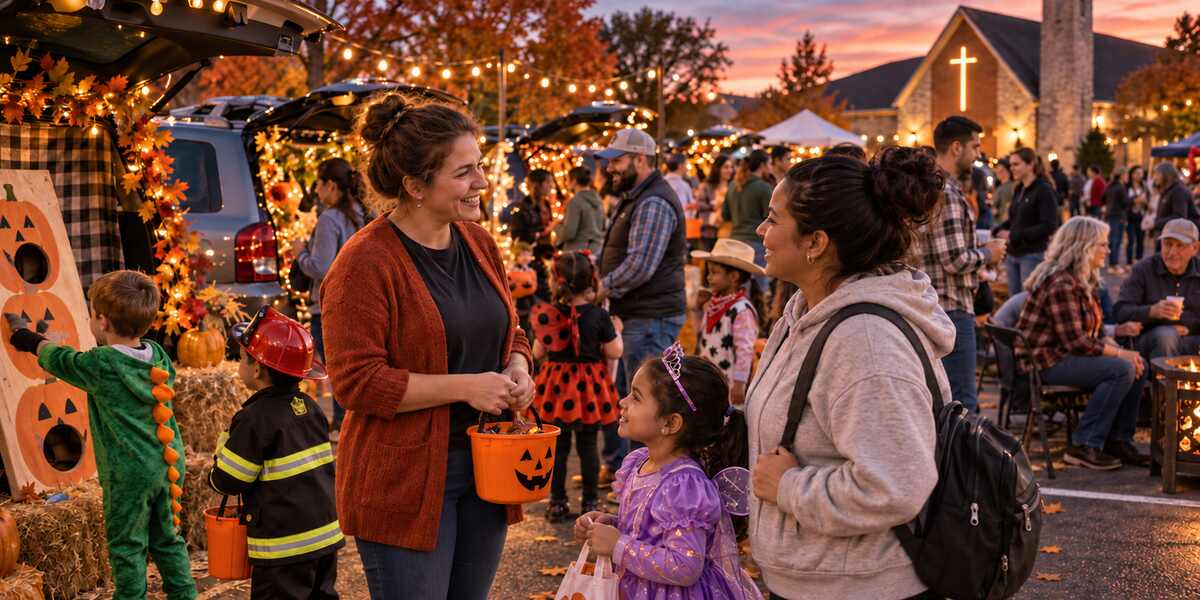



Search for trunk or treat ideas in October and you will drown in themes. Hundreds of them. Dinosaurs, mermaids, a taco truck, a spaceship, the whole parking lot turned into a Pinterest board.
Themes are the easy part. Your volunteers already have opinions about themes.
The hard part is what happens on November 1.
Most churches do trunk or treat well. Four hundred people show up, the candy runs out early, somebody's minivan wins the decorating contest, and the leadership team goes home tired and happy. Then Sunday comes and almost none of those families are in the building, and nobody can say for certain who was even there.
The event worked. It just stopped at the parking lot.
So this list is built differently. There are 180 ideas below, and they are organized by the job each one does: filling the lot, keeping families there longer than four minutes, starting an actual conversation, making the next step obvious, and getting the follow-up right. Ninety-four of them are trunk themes, because you did come here for themes. The other eighty-six are the parts that determine whether the themes were worth the effort.
Pick the ones that fit your church location and congregation. Then share a link to this post with a friend or two.
First, decide what you want to be true in November
Before anybody buys a single bag of candy, get your team to answer one question out loud: what does a win look like three weeks after this event?
If the answer is "a fun night for our church families," that is a completely legitimate goal, and it changes your planning. You need good food, warm drinks, and enough seating. You do not need a guest capture strategy.
If the answer is "we want to meet families in our neighborhood who do not have a church," that is a different event. Same candy, different design. You need name tags, a reason for people to linger, volunteers who know what to say, and a way to remember who came.
Most churches never make that call, which is why most trunk or treats produce a crowd and not much else. Decide first. Everything below gets easier once you have.
One more decision to make early, because it saves arguments later. Settle your church's position on Halloween imagery before you send out theme signups. Some congregations are fine with pumpkins and friendly ghosts. Others want nothing but harvest and Scripture. Say so in writing at the start, and no volunteer has to be told no after they have already spent forty dollars at the craft store. If your leadership is still working through this, Should Christians Celebrate Halloween? and the connection between Reformation Day and Halloween are a good place to start the conversation.
Themes that give kids something to do
Here is the honest math. If a family walks a loop of twenty trunks and leaves, you have had roughly six minutes with them, and four of those minutes were spent walking. Nobody builds a relationship in six minutes.
The fix is to give trunks a reason to hold people. Pair the theme with something to do, not just something to take. You do not need all of these. Three or four anchor stations spread around the loop will slow the whole event down in the best way.
- Catch of the Day. A kiddie pool, a magnet pole, and prizes clipped to paper fish. Takes ninety seconds per kid instead of five.
- The Frosting Bar. Plain sugar cookies, six colors of icing, and a wall of sprinkles. Messy, slow, and beloved.
- The Marshmallow Ring. A fire pit if your city allows one, camp chairs, and roasting sticks. This one holds adults, which is the harder audience.
- Farm stand. Hay bales, cider, and a guess-the-weight-of-the-pumpkin jar with the winner announced at the end of the night.
- Post office. Kids write and decorate a card that your church actually mails to homebound members or a missionary family you support.
- Take a Book Home. Give away gently used children's books alongside the candy. Parents remember this one.
- Backseat Planetarium. A black backdrop, glow stars, and a borrowed telescope if someone in your church has one.
- Rivalry Row. Cornhole, a football toss, and two rival team flags flying off the same hatch. Dads will stand there for twenty minutes.
- The Lug Nut Challenge. A board with four oversized lug nuts and a stopwatch. Kids race to beat the posted time.
- Ice cream shop. One scoop, hand dipped, one kid at a time. The line itself becomes a gathering spot.
- Fire station. If your local department will send a truck, kids will climb on it for an hour. Ask in August, not October.
- Paint a Mini Pumpkin. Mini pumpkins and paint pens. Kids decorate one and carry it home.
- The Flower Bed Rocks. Kids paint a rock that goes straight into the church flower bed, and families come back in the spring to find theirs.
- Spring Bulb Giveaway. Plant a bulb in a paper cup with a note about when it will bloom.
- Backyard birds. Pinecones, peanut butter, and birdseed. Four minutes per kid, easy.
- Sock hop. A volunteer teaching a simple line dance on repeat. Kids stay to learn it.
- The Mulling Pot. Cider simmering with cinnamon sticks and orange peel, plus a bench. The smell carries across the lot.
- Hands Behind Your Back. A row of glazed rings hung on strings at kid height. Ancient, still funny.
- Cake walk. Numbered squares, music, home-baked prizes. This one turns a crowd into a room.
- Hay bale maze. Twenty bales and an hour of setup buys you the busiest corner of the event.
- Portrait studio. A backdrop, good lighting, and a volunteer with a real camera. More on why this one matters in the conversation section.
- Puppet stage. A two-minute show running on a loop, with kids sitting on a tarp in front of it.
Themes built on one verse
Scripture themes work best when they are one verse and one clear visual, not a whole chapter the kid has to decode while holding a candy bucket. Each of these pairs a verse with something a child can actually see or touch.
- The Potter's Hands. A tub of air-dry clay, and a volunteer who reshapes a lopsided pot in front of the kids. Jeremiah 18:6.
- The lost sheep. Hide one stuffed sheep somewhere in the trunk and let every kid find it. Luke 15.
- The good shepherd. A small fenced pen, a shepherd's crook, and a volunteer in a robe who is genuinely warm with children. Psalm 23.
- The vine and the branches. A paper vine that grows across the trunk as each kid adds a leaf with their name on it. John 15.
- The mustard seed. Every kid takes home an actual seed in a labeled envelope. Matthew 13:31.
- Sand Versus Stone. A pan of sand and a flat stone, with a spray bottle to test both. Matthew 7:24.
- A lamp unto my feet. A short dark tunnel made of cardboard and a flashlight to borrow. Psalm 119:105.
- Living water. A well made from a plastic barrel and cups of cold water. John 4.
- Manna at Dawn. A white sheet scattered with wafer cookies, restocked every half hour so it is never empty and never a pile. Exodus 16.
- Pearl of great price. A bin of rice with one pearl bead hidden in it. Matthew 13:45.
- Wings like eagles. A paper airplane folding station and a distance line taped on the asphalt. Isaiah 40:31.
- Fearfully and wonderfully made. An ink pad and cards so every kid takes home their own fingerprint. Psalm 139:14.
- Count the stars. Glow-in-the-dark stars on a black sheet, and a volunteer who asks kids to try counting them. Genesis 15:5.
- The narrow gate. Two doorways, one wide and one narrow, and a prize either way. Matthew 7:13.
- Be still. A quiet tent with cushions and low light, for the kid who is overstimulated forty minutes in. Psalm 46:10. Parents of sensory-sensitive children will remember your church for this.
- The widow's offering. A clear jar and a penny for every child to drop in, with the total going to a named mission. Mark 12.
- The good Samaritan. A first aid theme with bandages kids can put on a stuffed animal. Luke 10.
- Ask, seek, knock. Three cardboard doors, all of which open onto something. Matthew 7:7.
Themes you can build from what is already in your garage
Nobody should spend two hundred dollars to hand out candy. Every theme here is assembled from things most households already own.
- Appliance Box Fortress. Three refrigerator boxes and a box cutter.
- Bed sheet backdrop. A queen flat sheet turns any trunk into a scene.
- The Christmas lights in the attic. Pull them down two months early. Nothing changes a parking lot faster.
- The Backyard Overnight. The tent, the lantern, the sleeping bags. Set it up and you are done.
- October Boardwalk. The umbrella, the towels, the cooler, a bucket of sand.
- The Pegboard Wall. Whatever gear is already in the garage, hung up and labeled.
- Three Baskets, Three Distances. One point, two points, three points, using the laundry baskets from the hall closet.
- Candy chute. A wrapping paper tube and duct tape. Kids love the delivery more than the candy.
- Toy bin scene. Dump the dinosaur bin or the farm animal bin into the trunk and call it a habitat.
- The Wheelbarrow Trunk. The wheelbarrow, the watering can, the terracotta pots.
- Pool noodles. An arch, a fence, a set of swords, a caterpillar. They become anything.
- City skyline. Moving boxes stacked and spray painted, with windows cut out.
- Picnic. Old quilts, a basket, a checkered cloth, and a jar of daisies.
- Upside Down Umbrellas. Hung open above the trunk with blue streamers falling out of them.
- Pots and Spoons Percussion. A volunteer with high tolerance and everything from the bottom cabinet.
- The front porch. Two rocking chairs, a cooler, and an older member of your church handing out candy from a bowl in their lap. This one is quietly the best trunk at most events.
Themes drawn from what your people do all week
This category does something the others do not. It puts adults in your church next to their actual life, which makes conversation effortless, and it shows neighborhood families that your congregation is made of people who do real work. Ask around. You have more of these than you think.
- Nurse or paramedic. Stethoscopes kids can listen through.
- Firefighter. Turnout gear, a helmet to try on, a photo op.
- Farmer. Real equipment if it will fit in the lot, seed corn, work gloves.
- Mechanic. A tool board, a creeper to lie on, an oil pan of candy.
- Teacher. A classroom scene, a chalkboard, and pencils instead of candy for the kid with allergies.
- Librarian. A card catalog drawer, a stamp, and the book giveaway from number 6.
- Baker. See number 2, but staffed by someone who does it professionally and will not run out of frosting.
- Barber or stylist. A chair, a cape, and glitter hairspray. The line will be long.
- Contractor. Hard hats, a toy tool bench, and scrap wood kids can hammer a nail into with supervision.
- Pilot or flight attendant. Rows of chairs, a drink cart, and boarding passes.
- Veterinarian. Stuffed animals, a scale, and a checkup station.
- Delivery driver. Boxes, a hand truck, and a clipboard to sign.
- Chef. A food truck window cut out of cardboard and something genuinely good to eat.
- The Acoustic Set. Live, at moderate volume, positioned where families will sit down.
- Photographer. Same as number 21, but the person knows what they are doing.
- Engineer. A simple robot, a circuit kit, or a marble run kids can add a piece to.
- Landscaper. Mums, pumpkins, straw bales. The best-looking trunk in the lot, guaranteed.
- Long haul driver. If a member owns a rig and can safely park it, that is the trunk everyone photographs.
Themes that belong to your town
Local themes do something a nationally recognizable theme cannot. They tell a visiting family that this church is from here.
- The county fair. Ribbons, a ferris wheel cutout, funnel cake if you are ambitious.
- High school colors. Check with the school before using a mascot, but colors are fair game and students notice.
- Your region's crop or industry. Tobacco, corn, coal, citrus, cattle, shipping. Whatever built your town.
- The River or the Lake. A canoe in the lot, tackle boxes, and a hand-drawn map of where everybody swims in July.
- Founder's day. Your town's founding year, old photographs, outfits from that time period.
- The minor league team. Pennants, foam fingers, a between-innings game.
- The Trailhead Nearest You. A trail map, hiking poles, and a station where kids identify three local leaves.
- The landmark. The water tower, the courthouse, the bridge. Build it out of cardboard and people will stop.
- Your church's own history. A blown-up photo of the original building, the founding year on a banner, and someone who remembers it standing there to tell stories.
- The Place Your Church Sends People. Flags, a map, food from that country, and a short word about why your church cares about it.
Trunks that serve the grown-ups
Every kid at your event arrives attached to an adult who is standing in a cold parking lot holding a coat. Those adults are the people you are actually hoping to meet. Give them a reason to stay.
- The Good Coffee Station. Real coffee, not a percolator of church basement coffee. This one is worth spending money on.
- The Warm-Up Table. Something hot and something fried, set where parents can still see their kids. The single most efficient way to hold adults in one place.
- Soup station. Two crockpots and cups. In cold climates this turns a walk-through into an evening.
- Fire ring and chairs. Where the actual conversations happen. Staff it with people who are good at listening.
- Changing and supplies table. Diapers, wipes, a clean surface. Parents of infants are the most likely to leave early and the most grateful when they do not have to.
- Charging station. A power strip and a folding table. People will stand there for ten minutes.
- Stroller parking. A marked area near the entrance so the loop does not jam.
- The quiet corner. See number 37. Worth listing twice.
- Prayer trunk. Staffed by a pastor, clearly labeled, no pressure and no sign-up sheet. Some people have been waiting for an excuse.
- Two chairs and nothing else. A volunteer whose entire job is to sit down and be available. It looks like doing nothing. It is not.
Ideas that get people into the lot
Attendance is mostly a distribution problem, not a creativity problem.
- Use a ready-made graphics pack. Here are free Trunk or Treat graphics you can download and use right now, no design work required.
- Give your church members something to forward. Most guests come because a friend invited them, not because they saw a yard sign. Send your congregation a text with a shareable image and one line they can paste into a group chat.
- Send a reminder text the morning of. Not a week before. The morning of. This single habit moves attendance more than almost anything else on this list, and Tithely's text and email messaging tools let you schedule it ahead so nobody has to remember.
- Post the boring details prominently. Date, start time, end time, address, cost (free), and whether it is drive-through or walk-around. Parents are deciding between your event and three others. Ambiguity loses.
- Ask every trunk host to invite two families personally. Twenty trunks become forty invitations, and those are the guests most likely to come back.
- Partner with one local business. A coffee shop, a hardware store, a pizza place. Partners bring their own audience and their own mailing list.
- Yard signs at neighborhood entrances. Ask three members who live in three different subdivisions.
- Flyers through the school, if your district allows it. Many do. Ask in September.
- A Facebook event, shared into local community groups. Have five members share it rather than posting it five times from the church page.
- A registration link on your website. Optional registration still tells you roughly how many are coming, and it collects names before the night even starts. Events and registration handles this.
- The community calendar. Local paper, radio station, library board, city website. All free, all underused.
- A neighborhood app post. Written by a member who lives there, not by the church account.
- An announcement two Sundays running. Once is not enough and everyone knows it.
- Postcards handed out the Sunday before. Physical, in hand, with the date large.
- Balloons and chalk on the day. Simple, visible from the road, and it signals that something is happening right now.
- A sign at the road with an arrow. Obvious, and constantly forgotten. More on promotion in 20 creative church event promotion ideas.
Layout and flow
- Build a loop, not a line. A line creates a conveyor belt. A loop creates a room.
- Put the food at the far end of the lot. It pulls people all the way through.
- Put seating in the middle. People stay where there are chairs. This is close to a law of nature.
- Spread your anchor stations. Four slow trunks at four points around the loop, not four in a row.
- Light everything. String lights, work lights, lanterns. Dark corners create both safety and supervision problems.
- One obvious entrance. If guests can enter from three directions, your greeters cannot meet anyone.
- A map at the entrance. Numbered trunks, food, restrooms, and the time of the costume contest.
- Wide lanes. Strollers and wagons need more room than you think.
- Trash cans every fifty feet. Wrappers are the entire aftermath of this event.
- Signs to the restrooms. Guests will not ask. They will leave.
- Music low enough to talk over. Loud music quietly guarantees that nobody has a conversation.
- A stated end time and a closing moment. A costume parade, a prize announcement, a two-minute word from your pastor. Otherwise the event dribbles out and your last guests leave unnoticed.
Ideas that turn a crowd into a conversation
This is the section most trunk or treat articles skip entirely, and it is the one that determines whether the night was worth the volunteer hours.
- Name tags for volunteers, first name only, in large print. Guests are far more likely to start a conversation with someone whose name they can read.
- Give your volunteers one question. Not a script, one question. "Is this your first time at one of these?" works better than "How are you doing tonight?" because it invites a real answer.
- Staff a welcome table, not a signup table. A welcome table hands out the map, the schedule, and a pen. A signup table asks for information before offering anything. Lead with the map.
- Run the photo booth as your contact capture. Take a family photo and offer to text or email it to them tonight. Almost everyone says yes to a free photo of their kids in costume.
- Check in the kids. If you are running kids programming alongside the event, or if you simply want a safe way to reunite children with parents, kids check-in does double duty. It keeps the night safe and it means every family who walked through is already in your system.
- Put greeters at the entrance, not only at the trunks. The first thirty seconds set the tone for the whole visit.
- Get your pastor out from behind a table. Standing in the flow, in a costume, with a candy bucket. Approachable beats official.
- Ask trunk hosts to stand in front of their trunk. Behind the tailgate is a counter. In front of it is a conversation.
- Brief your volunteers on what to say when someone asks what church this is. One sentence, warm, no pitch. Most volunteers freeze on this.
- Dress your kids ministry team in one color. Guests learn instantly who to ask.
- Ask every trunk host to remember one name. Not a form. One name, written down at the end of the night.
- Do not run a raffle that requires a form. It converts worse than a free photo and it feels like a trap.
Ideas that make the next step obvious
Guests do not need a pitch. They need a specific, dated, low-pressure invitation.
- Invite them to one named thing with a date on it. A family movie night on November 14 converts better than a general invitation to "church sometime."
- Put the invitation in their hands as they leave, not as they arrive. People throw away the flyers they have to carry all night.
- Make the ask small. A text signup for a monthly family events list is a much easier yes than a membership conversation.
- Hand out a card for one specific group. If your church runs small groups, the fall is when new ones start. Name the group that would fit a young family, with a real leader's name and a real meeting time on it.
- Mention Christmas Eve. It is six weeks out and it is the easiest service in the year for an unchurched family to attend.
- Put a QR code on everything you hand out. Point it at one page, not your homepage.
- Offer a prayer card. No email required. Just a place to write something down and hand it back if they want to.
- Send kids home with something for the parents to read. A single page about your kids ministry, with service times on it.
The follow-up plan, which is the actual event
Write this down before the event, because after the event you will be tired and still have a parking lot to clean up.
- Within 48 hours, send the photos. One warm sentence and nothing else. No invitation, no ask. Just the photo. This is the most underused move in church outreach.
- Within one week, send a personal message. From a real person, ideally the family ministry lead, naming the specific next event with the date.
- Within three weeks, call anyone who came to that next event. This is where a first visit turns into a second one.
- Tag every guest the same way. One tag, applied consistently, so you can find this group again in January.
- Assign names to actual people. A list nobody owns is a list nobody calls.
- Hold a debrief within a week. What ran out, what jammed, what nobody used. You will not remember in September.
- Put the whole plan in one place. Registrations, names, notes, and the follow-up schedule together, so next year starts from something instead of from scratch.
That last group is the quiet hinge of the whole event. A name written on a paper card in a shoebox is not follow-up. A name in your church management software is the start of a relationship, because next week you can actually find it. If you want the longer version of this argument, why most church outreach doesn't work makes the case with numbers.
Volunteers and roles
- Name every role out loud. Trunk hosts, greeters, traffic, food, setup, teardown, floaters, photographer, check-in. Unnamed jobs become the staff's job.
- Send trunk hosts a one-page packet. Arrival time, where to park, how much candy, what is allowed, when to be ready.
- Run background checks on anyone working with children. Not optional, and not something to sort out the week of.
- Make setup and teardown different people. The crew that arrives at noon should not be the crew stacking chairs at nine.
- Assign two floaters. Their only job is to fill gaps and cover breaks.
- Appoint a candy captain. One person who tracks the bulk supply and restocks trunks that run dry at 6:40.
- Give someone the job of not working. Their assignment is to walk the loop and talk to strangers. It will feel like slacking to them. Tell them it is not.
- Feed your volunteers before the gates open. They will be there four hours.
- Huddle and pray fifteen minutes before opening. It is also when you communicate the one question from number 124.
- Thank them within 24 hours. Specifically, by name, for the thing they actually did.
Safety
- Engines off, keys collected, wheels chocked if the lot slopes. Decide this in advance and tell hosts in the packet.
- Put two or three volunteers in vests on traffic. Cars and costumed six-year-olds in the dark is the risk of the night.
- No vehicle movement after a stated time. Nobody backs out until the lot is cleared, full stop.
- Run a teal pumpkin table. Non-food treats for kids with allergies. Parents of those kids notice, every time.
- Keep one clearly labeled nut-free bowl at every trunk. Cheap, easy, and it lets a family relax.
- Check your fire ordinance before you light anything, and keep an extinguisher at the fire ring.
- Staff a first aid table. You almost certainly have a nurse in your congregation who will do it gladly.
- Write down your lost child plan and pick a reunion spot. Tell every volunteer where it is before the event starts.
- Offer wristbands with a parent's phone number. Takes thirty seconds at the entrance and solves the worst possible version of the evening.
- Walk the lot after dark the night before. You will find a hole, a curb, or a dead light you did not know about.
- Post your photo policy at the entrance. One sign, plainly worded, so nobody is surprised.
- Ask volunteers to skip full face masks. Visible faces are both safer and friendlier.
Weather and contingency
- Announce the rain plan when you announce the event. Families should never have to guess.
- Map the indoor version on paper. Which hallways, which rooms, how trunks become tables.
- Set a decision time and publish it. "We will decide by 2 p.m. and text everyone."
- Plan for cold, not just rain. Patio heaters, hot drinks, and a warm room to duck into.
- Send the call by text. A website update nobody checks is not a communication plan.
What to measure
Pick four numbers and write them on a whiteboard the next morning.
- How many people came. A clicker at the entrance is enough.
- How many of them were not already connected to your church.
- How many of those you can name.
- How many showed up at the next thing you invited them to.
Number three is the one that matters most. If it is zero, you had a party. Parties are fine. But if you wanted an outreach event, the gap between two and three is the thing to correct before your next one, and it is fixable.
Make next year's easier than this year's
The churches that do this well are not more creative than yours. They are just working from a system instead of memory. Registrations, check-in, volunteer scheduling, the text that goes out the morning of, and the follow-up three weeks later all live in one place, so October does not start from scratch every fall.
That is what Tithely's church management software is built for. Events and check-in, messaging, groups, background checks, and giving, all connected, so the family who came for candy can actually be found again in November.
See how Tithely can help you run your next event.
Sign Up for Product Updates
Laura is a writer and ministry leader with experience in church communications, administration, worship ministry, and nonprofit support. She is passionate about helping people grow in their faith through biblical truth, practical encouragement, and honest conversations about the messy middle of everyday life.
When she's not writing, she's spending time with her family and hoping for the swift return of side parts and high-waisted skinny jeans.
Search for trunk or treat ideas in October and you will drown in themes. Hundreds of them. Dinosaurs, mermaids, a taco truck, a spaceship, the whole parking lot turned into a Pinterest board.
Themes are the easy part. Your volunteers already have opinions about themes.
The hard part is what happens on November 1.
Most churches do trunk or treat well. Four hundred people show up, the candy runs out early, somebody's minivan wins the decorating contest, and the leadership team goes home tired and happy. Then Sunday comes and almost none of those families are in the building, and nobody can say for certain who was even there.
The event worked. It just stopped at the parking lot.
So this list is built differently. There are 180 ideas below, and they are organized by the job each one does: filling the lot, keeping families there longer than four minutes, starting an actual conversation, making the next step obvious, and getting the follow-up right. Ninety-four of them are trunk themes, because you did come here for themes. The other eighty-six are the parts that determine whether the themes were worth the effort.
Pick the ones that fit your church location and congregation. Then share a link to this post with a friend or two.
First, decide what you want to be true in November
Before anybody buys a single bag of candy, get your team to answer one question out loud: what does a win look like three weeks after this event?
If the answer is "a fun night for our church families," that is a completely legitimate goal, and it changes your planning. You need good food, warm drinks, and enough seating. You do not need a guest capture strategy.
If the answer is "we want to meet families in our neighborhood who do not have a church," that is a different event. Same candy, different design. You need name tags, a reason for people to linger, volunteers who know what to say, and a way to remember who came.
Most churches never make that call, which is why most trunk or treats produce a crowd and not much else. Decide first. Everything below gets easier once you have.
One more decision to make early, because it saves arguments later. Settle your church's position on Halloween imagery before you send out theme signups. Some congregations are fine with pumpkins and friendly ghosts. Others want nothing but harvest and Scripture. Say so in writing at the start, and no volunteer has to be told no after they have already spent forty dollars at the craft store. If your leadership is still working through this, Should Christians Celebrate Halloween? and the connection between Reformation Day and Halloween are a good place to start the conversation.
Themes that give kids something to do
Here is the honest math. If a family walks a loop of twenty trunks and leaves, you have had roughly six minutes with them, and four of those minutes were spent walking. Nobody builds a relationship in six minutes.
The fix is to give trunks a reason to hold people. Pair the theme with something to do, not just something to take. You do not need all of these. Three or four anchor stations spread around the loop will slow the whole event down in the best way.
- Catch of the Day. A kiddie pool, a magnet pole, and prizes clipped to paper fish. Takes ninety seconds per kid instead of five.
- The Frosting Bar. Plain sugar cookies, six colors of icing, and a wall of sprinkles. Messy, slow, and beloved.
- The Marshmallow Ring. A fire pit if your city allows one, camp chairs, and roasting sticks. This one holds adults, which is the harder audience.
- Farm stand. Hay bales, cider, and a guess-the-weight-of-the-pumpkin jar with the winner announced at the end of the night.
- Post office. Kids write and decorate a card that your church actually mails to homebound members or a missionary family you support.
- Take a Book Home. Give away gently used children's books alongside the candy. Parents remember this one.
- Backseat Planetarium. A black backdrop, glow stars, and a borrowed telescope if someone in your church has one.
- Rivalry Row. Cornhole, a football toss, and two rival team flags flying off the same hatch. Dads will stand there for twenty minutes.
- The Lug Nut Challenge. A board with four oversized lug nuts and a stopwatch. Kids race to beat the posted time.
- Ice cream shop. One scoop, hand dipped, one kid at a time. The line itself becomes a gathering spot.
- Fire station. If your local department will send a truck, kids will climb on it for an hour. Ask in August, not October.
- Paint a Mini Pumpkin. Mini pumpkins and paint pens. Kids decorate one and carry it home.
- The Flower Bed Rocks. Kids paint a rock that goes straight into the church flower bed, and families come back in the spring to find theirs.
- Spring Bulb Giveaway. Plant a bulb in a paper cup with a note about when it will bloom.
- Backyard birds. Pinecones, peanut butter, and birdseed. Four minutes per kid, easy.
- Sock hop. A volunteer teaching a simple line dance on repeat. Kids stay to learn it.
- The Mulling Pot. Cider simmering with cinnamon sticks and orange peel, plus a bench. The smell carries across the lot.
- Hands Behind Your Back. A row of glazed rings hung on strings at kid height. Ancient, still funny.
- Cake walk. Numbered squares, music, home-baked prizes. This one turns a crowd into a room.
- Hay bale maze. Twenty bales and an hour of setup buys you the busiest corner of the event.
- Portrait studio. A backdrop, good lighting, and a volunteer with a real camera. More on why this one matters in the conversation section.
- Puppet stage. A two-minute show running on a loop, with kids sitting on a tarp in front of it.
Themes built on one verse
Scripture themes work best when they are one verse and one clear visual, not a whole chapter the kid has to decode while holding a candy bucket. Each of these pairs a verse with something a child can actually see or touch.
- The Potter's Hands. A tub of air-dry clay, and a volunteer who reshapes a lopsided pot in front of the kids. Jeremiah 18:6.
- The lost sheep. Hide one stuffed sheep somewhere in the trunk and let every kid find it. Luke 15.
- The good shepherd. A small fenced pen, a shepherd's crook, and a volunteer in a robe who is genuinely warm with children. Psalm 23.
- The vine and the branches. A paper vine that grows across the trunk as each kid adds a leaf with their name on it. John 15.
- The mustard seed. Every kid takes home an actual seed in a labeled envelope. Matthew 13:31.
- Sand Versus Stone. A pan of sand and a flat stone, with a spray bottle to test both. Matthew 7:24.
- A lamp unto my feet. A short dark tunnel made of cardboard and a flashlight to borrow. Psalm 119:105.
- Living water. A well made from a plastic barrel and cups of cold water. John 4.
- Manna at Dawn. A white sheet scattered with wafer cookies, restocked every half hour so it is never empty and never a pile. Exodus 16.
- Pearl of great price. A bin of rice with one pearl bead hidden in it. Matthew 13:45.
- Wings like eagles. A paper airplane folding station and a distance line taped on the asphalt. Isaiah 40:31.
- Fearfully and wonderfully made. An ink pad and cards so every kid takes home their own fingerprint. Psalm 139:14.
- Count the stars. Glow-in-the-dark stars on a black sheet, and a volunteer who asks kids to try counting them. Genesis 15:5.
- The narrow gate. Two doorways, one wide and one narrow, and a prize either way. Matthew 7:13.
- Be still. A quiet tent with cushions and low light, for the kid who is overstimulated forty minutes in. Psalm 46:10. Parents of sensory-sensitive children will remember your church for this.
- The widow's offering. A clear jar and a penny for every child to drop in, with the total going to a named mission. Mark 12.
- The good Samaritan. A first aid theme with bandages kids can put on a stuffed animal. Luke 10.
- Ask, seek, knock. Three cardboard doors, all of which open onto something. Matthew 7:7.
Themes you can build from what is already in your garage
Nobody should spend two hundred dollars to hand out candy. Every theme here is assembled from things most households already own.
- Appliance Box Fortress. Three refrigerator boxes and a box cutter.
- Bed sheet backdrop. A queen flat sheet turns any trunk into a scene.
- The Christmas lights in the attic. Pull them down two months early. Nothing changes a parking lot faster.
- The Backyard Overnight. The tent, the lantern, the sleeping bags. Set it up and you are done.
- October Boardwalk. The umbrella, the towels, the cooler, a bucket of sand.
- The Pegboard Wall. Whatever gear is already in the garage, hung up and labeled.
- Three Baskets, Three Distances. One point, two points, three points, using the laundry baskets from the hall closet.
- Candy chute. A wrapping paper tube and duct tape. Kids love the delivery more than the candy.
- Toy bin scene. Dump the dinosaur bin or the farm animal bin into the trunk and call it a habitat.
- The Wheelbarrow Trunk. The wheelbarrow, the watering can, the terracotta pots.
- Pool noodles. An arch, a fence, a set of swords, a caterpillar. They become anything.
- City skyline. Moving boxes stacked and spray painted, with windows cut out.
- Picnic. Old quilts, a basket, a checkered cloth, and a jar of daisies.
- Upside Down Umbrellas. Hung open above the trunk with blue streamers falling out of them.
- Pots and Spoons Percussion. A volunteer with high tolerance and everything from the bottom cabinet.
- The front porch. Two rocking chairs, a cooler, and an older member of your church handing out candy from a bowl in their lap. This one is quietly the best trunk at most events.
Themes drawn from what your people do all week
This category does something the others do not. It puts adults in your church next to their actual life, which makes conversation effortless, and it shows neighborhood families that your congregation is made of people who do real work. Ask around. You have more of these than you think.
- Nurse or paramedic. Stethoscopes kids can listen through.
- Firefighter. Turnout gear, a helmet to try on, a photo op.
- Farmer. Real equipment if it will fit in the lot, seed corn, work gloves.
- Mechanic. A tool board, a creeper to lie on, an oil pan of candy.
- Teacher. A classroom scene, a chalkboard, and pencils instead of candy for the kid with allergies.
- Librarian. A card catalog drawer, a stamp, and the book giveaway from number 6.
- Baker. See number 2, but staffed by someone who does it professionally and will not run out of frosting.
- Barber or stylist. A chair, a cape, and glitter hairspray. The line will be long.
- Contractor. Hard hats, a toy tool bench, and scrap wood kids can hammer a nail into with supervision.
- Pilot or flight attendant. Rows of chairs, a drink cart, and boarding passes.
- Veterinarian. Stuffed animals, a scale, and a checkup station.
- Delivery driver. Boxes, a hand truck, and a clipboard to sign.
- Chef. A food truck window cut out of cardboard and something genuinely good to eat.
- The Acoustic Set. Live, at moderate volume, positioned where families will sit down.
- Photographer. Same as number 21, but the person knows what they are doing.
- Engineer. A simple robot, a circuit kit, or a marble run kids can add a piece to.
- Landscaper. Mums, pumpkins, straw bales. The best-looking trunk in the lot, guaranteed.
- Long haul driver. If a member owns a rig and can safely park it, that is the trunk everyone photographs.
Themes that belong to your town
Local themes do something a nationally recognizable theme cannot. They tell a visiting family that this church is from here.
- The county fair. Ribbons, a ferris wheel cutout, funnel cake if you are ambitious.
- High school colors. Check with the school before using a mascot, but colors are fair game and students notice.
- Your region's crop or industry. Tobacco, corn, coal, citrus, cattle, shipping. Whatever built your town.
- The River or the Lake. A canoe in the lot, tackle boxes, and a hand-drawn map of where everybody swims in July.
- Founder's day. Your town's founding year, old photographs, outfits from that time period.
- The minor league team. Pennants, foam fingers, a between-innings game.
- The Trailhead Nearest You. A trail map, hiking poles, and a station where kids identify three local leaves.
- The landmark. The water tower, the courthouse, the bridge. Build it out of cardboard and people will stop.
- Your church's own history. A blown-up photo of the original building, the founding year on a banner, and someone who remembers it standing there to tell stories.
- The Place Your Church Sends People. Flags, a map, food from that country, and a short word about why your church cares about it.
Trunks that serve the grown-ups
Every kid at your event arrives attached to an adult who is standing in a cold parking lot holding a coat. Those adults are the people you are actually hoping to meet. Give them a reason to stay.
- The Good Coffee Station. Real coffee, not a percolator of church basement coffee. This one is worth spending money on.
- The Warm-Up Table. Something hot and something fried, set where parents can still see their kids. The single most efficient way to hold adults in one place.
- Soup station. Two crockpots and cups. In cold climates this turns a walk-through into an evening.
- Fire ring and chairs. Where the actual conversations happen. Staff it with people who are good at listening.
- Changing and supplies table. Diapers, wipes, a clean surface. Parents of infants are the most likely to leave early and the most grateful when they do not have to.
- Charging station. A power strip and a folding table. People will stand there for ten minutes.
- Stroller parking. A marked area near the entrance so the loop does not jam.
- The quiet corner. See number 37. Worth listing twice.
- Prayer trunk. Staffed by a pastor, clearly labeled, no pressure and no sign-up sheet. Some people have been waiting for an excuse.
- Two chairs and nothing else. A volunteer whose entire job is to sit down and be available. It looks like doing nothing. It is not.
Ideas that get people into the lot
Attendance is mostly a distribution problem, not a creativity problem.
- Use a ready-made graphics pack. Here are free Trunk or Treat graphics you can download and use right now, no design work required.
- Give your church members something to forward. Most guests come because a friend invited them, not because they saw a yard sign. Send your congregation a text with a shareable image and one line they can paste into a group chat.
- Send a reminder text the morning of. Not a week before. The morning of. This single habit moves attendance more than almost anything else on this list, and Tithely's text and email messaging tools let you schedule it ahead so nobody has to remember.
- Post the boring details prominently. Date, start time, end time, address, cost (free), and whether it is drive-through or walk-around. Parents are deciding between your event and three others. Ambiguity loses.
- Ask every trunk host to invite two families personally. Twenty trunks become forty invitations, and those are the guests most likely to come back.
- Partner with one local business. A coffee shop, a hardware store, a pizza place. Partners bring their own audience and their own mailing list.
- Yard signs at neighborhood entrances. Ask three members who live in three different subdivisions.
- Flyers through the school, if your district allows it. Many do. Ask in September.
- A Facebook event, shared into local community groups. Have five members share it rather than posting it five times from the church page.
- A registration link on your website. Optional registration still tells you roughly how many are coming, and it collects names before the night even starts. Events and registration handles this.
- The community calendar. Local paper, radio station, library board, city website. All free, all underused.
- A neighborhood app post. Written by a member who lives there, not by the church account.
- An announcement two Sundays running. Once is not enough and everyone knows it.
- Postcards handed out the Sunday before. Physical, in hand, with the date large.
- Balloons and chalk on the day. Simple, visible from the road, and it signals that something is happening right now.
- A sign at the road with an arrow. Obvious, and constantly forgotten. More on promotion in 20 creative church event promotion ideas.
Layout and flow
- Build a loop, not a line. A line creates a conveyor belt. A loop creates a room.
- Put the food at the far end of the lot. It pulls people all the way through.
- Put seating in the middle. People stay where there are chairs. This is close to a law of nature.
- Spread your anchor stations. Four slow trunks at four points around the loop, not four in a row.
- Light everything. String lights, work lights, lanterns. Dark corners create both safety and supervision problems.
- One obvious entrance. If guests can enter from three directions, your greeters cannot meet anyone.
- A map at the entrance. Numbered trunks, food, restrooms, and the time of the costume contest.
- Wide lanes. Strollers and wagons need more room than you think.
- Trash cans every fifty feet. Wrappers are the entire aftermath of this event.
- Signs to the restrooms. Guests will not ask. They will leave.
- Music low enough to talk over. Loud music quietly guarantees that nobody has a conversation.
- A stated end time and a closing moment. A costume parade, a prize announcement, a two-minute word from your pastor. Otherwise the event dribbles out and your last guests leave unnoticed.
Ideas that turn a crowd into a conversation
This is the section most trunk or treat articles skip entirely, and it is the one that determines whether the night was worth the volunteer hours.
- Name tags for volunteers, first name only, in large print. Guests are far more likely to start a conversation with someone whose name they can read.
- Give your volunteers one question. Not a script, one question. "Is this your first time at one of these?" works better than "How are you doing tonight?" because it invites a real answer.
- Staff a welcome table, not a signup table. A welcome table hands out the map, the schedule, and a pen. A signup table asks for information before offering anything. Lead with the map.
- Run the photo booth as your contact capture. Take a family photo and offer to text or email it to them tonight. Almost everyone says yes to a free photo of their kids in costume.
- Check in the kids. If you are running kids programming alongside the event, or if you simply want a safe way to reunite children with parents, kids check-in does double duty. It keeps the night safe and it means every family who walked through is already in your system.
- Put greeters at the entrance, not only at the trunks. The first thirty seconds set the tone for the whole visit.
- Get your pastor out from behind a table. Standing in the flow, in a costume, with a candy bucket. Approachable beats official.
- Ask trunk hosts to stand in front of their trunk. Behind the tailgate is a counter. In front of it is a conversation.
- Brief your volunteers on what to say when someone asks what church this is. One sentence, warm, no pitch. Most volunteers freeze on this.
- Dress your kids ministry team in one color. Guests learn instantly who to ask.
- Ask every trunk host to remember one name. Not a form. One name, written down at the end of the night.
- Do not run a raffle that requires a form. It converts worse than a free photo and it feels like a trap.
Ideas that make the next step obvious
Guests do not need a pitch. They need a specific, dated, low-pressure invitation.
- Invite them to one named thing with a date on it. A family movie night on November 14 converts better than a general invitation to "church sometime."
- Put the invitation in their hands as they leave, not as they arrive. People throw away the flyers they have to carry all night.
- Make the ask small. A text signup for a monthly family events list is a much easier yes than a membership conversation.
- Hand out a card for one specific group. If your church runs small groups, the fall is when new ones start. Name the group that would fit a young family, with a real leader's name and a real meeting time on it.
- Mention Christmas Eve. It is six weeks out and it is the easiest service in the year for an unchurched family to attend.
- Put a QR code on everything you hand out. Point it at one page, not your homepage.
- Offer a prayer card. No email required. Just a place to write something down and hand it back if they want to.
- Send kids home with something for the parents to read. A single page about your kids ministry, with service times on it.
The follow-up plan, which is the actual event
Write this down before the event, because after the event you will be tired and still have a parking lot to clean up.
- Within 48 hours, send the photos. One warm sentence and nothing else. No invitation, no ask. Just the photo. This is the most underused move in church outreach.
- Within one week, send a personal message. From a real person, ideally the family ministry lead, naming the specific next event with the date.
- Within three weeks, call anyone who came to that next event. This is where a first visit turns into a second one.
- Tag every guest the same way. One tag, applied consistently, so you can find this group again in January.
- Assign names to actual people. A list nobody owns is a list nobody calls.
- Hold a debrief within a week. What ran out, what jammed, what nobody used. You will not remember in September.
- Put the whole plan in one place. Registrations, names, notes, and the follow-up schedule together, so next year starts from something instead of from scratch.
That last group is the quiet hinge of the whole event. A name written on a paper card in a shoebox is not follow-up. A name in your church management software is the start of a relationship, because next week you can actually find it. If you want the longer version of this argument, why most church outreach doesn't work makes the case with numbers.
Volunteers and roles
- Name every role out loud. Trunk hosts, greeters, traffic, food, setup, teardown, floaters, photographer, check-in. Unnamed jobs become the staff's job.
- Send trunk hosts a one-page packet. Arrival time, where to park, how much candy, what is allowed, when to be ready.
- Run background checks on anyone working with children. Not optional, and not something to sort out the week of.
- Make setup and teardown different people. The crew that arrives at noon should not be the crew stacking chairs at nine.
- Assign two floaters. Their only job is to fill gaps and cover breaks.
- Appoint a candy captain. One person who tracks the bulk supply and restocks trunks that run dry at 6:40.
- Give someone the job of not working. Their assignment is to walk the loop and talk to strangers. It will feel like slacking to them. Tell them it is not.
- Feed your volunteers before the gates open. They will be there four hours.
- Huddle and pray fifteen minutes before opening. It is also when you communicate the one question from number 124.
- Thank them within 24 hours. Specifically, by name, for the thing they actually did.
Safety
- Engines off, keys collected, wheels chocked if the lot slopes. Decide this in advance and tell hosts in the packet.
- Put two or three volunteers in vests on traffic. Cars and costumed six-year-olds in the dark is the risk of the night.
- No vehicle movement after a stated time. Nobody backs out until the lot is cleared, full stop.
- Run a teal pumpkin table. Non-food treats for kids with allergies. Parents of those kids notice, every time.
- Keep one clearly labeled nut-free bowl at every trunk. Cheap, easy, and it lets a family relax.
- Check your fire ordinance before you light anything, and keep an extinguisher at the fire ring.
- Staff a first aid table. You almost certainly have a nurse in your congregation who will do it gladly.
- Write down your lost child plan and pick a reunion spot. Tell every volunteer where it is before the event starts.
- Offer wristbands with a parent's phone number. Takes thirty seconds at the entrance and solves the worst possible version of the evening.
- Walk the lot after dark the night before. You will find a hole, a curb, or a dead light you did not know about.
- Post your photo policy at the entrance. One sign, plainly worded, so nobody is surprised.
- Ask volunteers to skip full face masks. Visible faces are both safer and friendlier.
Weather and contingency
- Announce the rain plan when you announce the event. Families should never have to guess.
- Map the indoor version on paper. Which hallways, which rooms, how trunks become tables.
- Set a decision time and publish it. "We will decide by 2 p.m. and text everyone."
- Plan for cold, not just rain. Patio heaters, hot drinks, and a warm room to duck into.
- Send the call by text. A website update nobody checks is not a communication plan.
What to measure
Pick four numbers and write them on a whiteboard the next morning.
- How many people came. A clicker at the entrance is enough.
- How many of them were not already connected to your church.
- How many of those you can name.
- How many showed up at the next thing you invited them to.
Number three is the one that matters most. If it is zero, you had a party. Parties are fine. But if you wanted an outreach event, the gap between two and three is the thing to correct before your next one, and it is fixable.
Make next year's easier than this year's
The churches that do this well are not more creative than yours. They are just working from a system instead of memory. Registrations, check-in, volunteer scheduling, the text that goes out the morning of, and the follow-up three weeks later all live in one place, so October does not start from scratch every fall.
That is what Tithely's church management software is built for. Events and check-in, messaging, groups, background checks, and giving, all connected, so the family who came for candy can actually be found again in November.
See how Tithely can help you run your next event.
podcast transcript
Laura is a writer and ministry leader with experience in church communications, administration, worship ministry, and nonprofit support. She is passionate about helping people grow in their faith through biblical truth, practical encouragement, and honest conversations about the messy middle of everyday life.
When she's not writing, she's spending time with her family and hoping for the swift return of side parts and high-waisted skinny jeans.
Search for trunk or treat ideas in October and you will drown in themes. Hundreds of them. Dinosaurs, mermaids, a taco truck, a spaceship, the whole parking lot turned into a Pinterest board.
Themes are the easy part. Your volunteers already have opinions about themes.
The hard part is what happens on November 1.
Most churches do trunk or treat well. Four hundred people show up, the candy runs out early, somebody's minivan wins the decorating contest, and the leadership team goes home tired and happy. Then Sunday comes and almost none of those families are in the building, and nobody can say for certain who was even there.
The event worked. It just stopped at the parking lot.
So this list is built differently. There are 180 ideas below, and they are organized by the job each one does: filling the lot, keeping families there longer than four minutes, starting an actual conversation, making the next step obvious, and getting the follow-up right. Ninety-four of them are trunk themes, because you did come here for themes. The other eighty-six are the parts that determine whether the themes were worth the effort.
Pick the ones that fit your church location and congregation. Then share a link to this post with a friend or two.
First, decide what you want to be true in November
Before anybody buys a single bag of candy, get your team to answer one question out loud: what does a win look like three weeks after this event?
If the answer is "a fun night for our church families," that is a completely legitimate goal, and it changes your planning. You need good food, warm drinks, and enough seating. You do not need a guest capture strategy.
If the answer is "we want to meet families in our neighborhood who do not have a church," that is a different event. Same candy, different design. You need name tags, a reason for people to linger, volunteers who know what to say, and a way to remember who came.
Most churches never make that call, which is why most trunk or treats produce a crowd and not much else. Decide first. Everything below gets easier once you have.
One more decision to make early, because it saves arguments later. Settle your church's position on Halloween imagery before you send out theme signups. Some congregations are fine with pumpkins and friendly ghosts. Others want nothing but harvest and Scripture. Say so in writing at the start, and no volunteer has to be told no after they have already spent forty dollars at the craft store. If your leadership is still working through this, Should Christians Celebrate Halloween? and the connection between Reformation Day and Halloween are a good place to start the conversation.
Themes that give kids something to do
Here is the honest math. If a family walks a loop of twenty trunks and leaves, you have had roughly six minutes with them, and four of those minutes were spent walking. Nobody builds a relationship in six minutes.
The fix is to give trunks a reason to hold people. Pair the theme with something to do, not just something to take. You do not need all of these. Three or four anchor stations spread around the loop will slow the whole event down in the best way.
- Catch of the Day. A kiddie pool, a magnet pole, and prizes clipped to paper fish. Takes ninety seconds per kid instead of five.
- The Frosting Bar. Plain sugar cookies, six colors of icing, and a wall of sprinkles. Messy, slow, and beloved.
- The Marshmallow Ring. A fire pit if your city allows one, camp chairs, and roasting sticks. This one holds adults, which is the harder audience.
- Farm stand. Hay bales, cider, and a guess-the-weight-of-the-pumpkin jar with the winner announced at the end of the night.
- Post office. Kids write and decorate a card that your church actually mails to homebound members or a missionary family you support.
- Take a Book Home. Give away gently used children's books alongside the candy. Parents remember this one.
- Backseat Planetarium. A black backdrop, glow stars, and a borrowed telescope if someone in your church has one.
- Rivalry Row. Cornhole, a football toss, and two rival team flags flying off the same hatch. Dads will stand there for twenty minutes.
- The Lug Nut Challenge. A board with four oversized lug nuts and a stopwatch. Kids race to beat the posted time.
- Ice cream shop. One scoop, hand dipped, one kid at a time. The line itself becomes a gathering spot.
- Fire station. If your local department will send a truck, kids will climb on it for an hour. Ask in August, not October.
- Paint a Mini Pumpkin. Mini pumpkins and paint pens. Kids decorate one and carry it home.
- The Flower Bed Rocks. Kids paint a rock that goes straight into the church flower bed, and families come back in the spring to find theirs.
- Spring Bulb Giveaway. Plant a bulb in a paper cup with a note about when it will bloom.
- Backyard birds. Pinecones, peanut butter, and birdseed. Four minutes per kid, easy.
- Sock hop. A volunteer teaching a simple line dance on repeat. Kids stay to learn it.
- The Mulling Pot. Cider simmering with cinnamon sticks and orange peel, plus a bench. The smell carries across the lot.
- Hands Behind Your Back. A row of glazed rings hung on strings at kid height. Ancient, still funny.
- Cake walk. Numbered squares, music, home-baked prizes. This one turns a crowd into a room.
- Hay bale maze. Twenty bales and an hour of setup buys you the busiest corner of the event.
- Portrait studio. A backdrop, good lighting, and a volunteer with a real camera. More on why this one matters in the conversation section.
- Puppet stage. A two-minute show running on a loop, with kids sitting on a tarp in front of it.
Themes built on one verse
Scripture themes work best when they are one verse and one clear visual, not a whole chapter the kid has to decode while holding a candy bucket. Each of these pairs a verse with something a child can actually see or touch.
- The Potter's Hands. A tub of air-dry clay, and a volunteer who reshapes a lopsided pot in front of the kids. Jeremiah 18:6.
- The lost sheep. Hide one stuffed sheep somewhere in the trunk and let every kid find it. Luke 15.
- The good shepherd. A small fenced pen, a shepherd's crook, and a volunteer in a robe who is genuinely warm with children. Psalm 23.
- The vine and the branches. A paper vine that grows across the trunk as each kid adds a leaf with their name on it. John 15.
- The mustard seed. Every kid takes home an actual seed in a labeled envelope. Matthew 13:31.
- Sand Versus Stone. A pan of sand and a flat stone, with a spray bottle to test both. Matthew 7:24.
- A lamp unto my feet. A short dark tunnel made of cardboard and a flashlight to borrow. Psalm 119:105.
- Living water. A well made from a plastic barrel and cups of cold water. John 4.
- Manna at Dawn. A white sheet scattered with wafer cookies, restocked every half hour so it is never empty and never a pile. Exodus 16.
- Pearl of great price. A bin of rice with one pearl bead hidden in it. Matthew 13:45.
- Wings like eagles. A paper airplane folding station and a distance line taped on the asphalt. Isaiah 40:31.
- Fearfully and wonderfully made. An ink pad and cards so every kid takes home their own fingerprint. Psalm 139:14.
- Count the stars. Glow-in-the-dark stars on a black sheet, and a volunteer who asks kids to try counting them. Genesis 15:5.
- The narrow gate. Two doorways, one wide and one narrow, and a prize either way. Matthew 7:13.
- Be still. A quiet tent with cushions and low light, for the kid who is overstimulated forty minutes in. Psalm 46:10. Parents of sensory-sensitive children will remember your church for this.
- The widow's offering. A clear jar and a penny for every child to drop in, with the total going to a named mission. Mark 12.
- The good Samaritan. A first aid theme with bandages kids can put on a stuffed animal. Luke 10.
- Ask, seek, knock. Three cardboard doors, all of which open onto something. Matthew 7:7.
Themes you can build from what is already in your garage
Nobody should spend two hundred dollars to hand out candy. Every theme here is assembled from things most households already own.
- Appliance Box Fortress. Three refrigerator boxes and a box cutter.
- Bed sheet backdrop. A queen flat sheet turns any trunk into a scene.
- The Christmas lights in the attic. Pull them down two months early. Nothing changes a parking lot faster.
- The Backyard Overnight. The tent, the lantern, the sleeping bags. Set it up and you are done.
- October Boardwalk. The umbrella, the towels, the cooler, a bucket of sand.
- The Pegboard Wall. Whatever gear is already in the garage, hung up and labeled.
- Three Baskets, Three Distances. One point, two points, three points, using the laundry baskets from the hall closet.
- Candy chute. A wrapping paper tube and duct tape. Kids love the delivery more than the candy.
- Toy bin scene. Dump the dinosaur bin or the farm animal bin into the trunk and call it a habitat.
- The Wheelbarrow Trunk. The wheelbarrow, the watering can, the terracotta pots.
- Pool noodles. An arch, a fence, a set of swords, a caterpillar. They become anything.
- City skyline. Moving boxes stacked and spray painted, with windows cut out.
- Picnic. Old quilts, a basket, a checkered cloth, and a jar of daisies.
- Upside Down Umbrellas. Hung open above the trunk with blue streamers falling out of them.
- Pots and Spoons Percussion. A volunteer with high tolerance and everything from the bottom cabinet.
- The front porch. Two rocking chairs, a cooler, and an older member of your church handing out candy from a bowl in their lap. This one is quietly the best trunk at most events.
Themes drawn from what your people do all week
This category does something the others do not. It puts adults in your church next to their actual life, which makes conversation effortless, and it shows neighborhood families that your congregation is made of people who do real work. Ask around. You have more of these than you think.
- Nurse or paramedic. Stethoscopes kids can listen through.
- Firefighter. Turnout gear, a helmet to try on, a photo op.
- Farmer. Real equipment if it will fit in the lot, seed corn, work gloves.
- Mechanic. A tool board, a creeper to lie on, an oil pan of candy.
- Teacher. A classroom scene, a chalkboard, and pencils instead of candy for the kid with allergies.
- Librarian. A card catalog drawer, a stamp, and the book giveaway from number 6.
- Baker. See number 2, but staffed by someone who does it professionally and will not run out of frosting.
- Barber or stylist. A chair, a cape, and glitter hairspray. The line will be long.
- Contractor. Hard hats, a toy tool bench, and scrap wood kids can hammer a nail into with supervision.
- Pilot or flight attendant. Rows of chairs, a drink cart, and boarding passes.
- Veterinarian. Stuffed animals, a scale, and a checkup station.
- Delivery driver. Boxes, a hand truck, and a clipboard to sign.
- Chef. A food truck window cut out of cardboard and something genuinely good to eat.
- The Acoustic Set. Live, at moderate volume, positioned where families will sit down.
- Photographer. Same as number 21, but the person knows what they are doing.
- Engineer. A simple robot, a circuit kit, or a marble run kids can add a piece to.
- Landscaper. Mums, pumpkins, straw bales. The best-looking trunk in the lot, guaranteed.
- Long haul driver. If a member owns a rig and can safely park it, that is the trunk everyone photographs.
Themes that belong to your town
Local themes do something a nationally recognizable theme cannot. They tell a visiting family that this church is from here.
- The county fair. Ribbons, a ferris wheel cutout, funnel cake if you are ambitious.
- High school colors. Check with the school before using a mascot, but colors are fair game and students notice.
- Your region's crop or industry. Tobacco, corn, coal, citrus, cattle, shipping. Whatever built your town.
- The River or the Lake. A canoe in the lot, tackle boxes, and a hand-drawn map of where everybody swims in July.
- Founder's day. Your town's founding year, old photographs, outfits from that time period.
- The minor league team. Pennants, foam fingers, a between-innings game.
- The Trailhead Nearest You. A trail map, hiking poles, and a station where kids identify three local leaves.
- The landmark. The water tower, the courthouse, the bridge. Build it out of cardboard and people will stop.
- Your church's own history. A blown-up photo of the original building, the founding year on a banner, and someone who remembers it standing there to tell stories.
- The Place Your Church Sends People. Flags, a map, food from that country, and a short word about why your church cares about it.
Trunks that serve the grown-ups
Every kid at your event arrives attached to an adult who is standing in a cold parking lot holding a coat. Those adults are the people you are actually hoping to meet. Give them a reason to stay.
- The Good Coffee Station. Real coffee, not a percolator of church basement coffee. This one is worth spending money on.
- The Warm-Up Table. Something hot and something fried, set where parents can still see their kids. The single most efficient way to hold adults in one place.
- Soup station. Two crockpots and cups. In cold climates this turns a walk-through into an evening.
- Fire ring and chairs. Where the actual conversations happen. Staff it with people who are good at listening.
- Changing and supplies table. Diapers, wipes, a clean surface. Parents of infants are the most likely to leave early and the most grateful when they do not have to.
- Charging station. A power strip and a folding table. People will stand there for ten minutes.
- Stroller parking. A marked area near the entrance so the loop does not jam.
- The quiet corner. See number 37. Worth listing twice.
- Prayer trunk. Staffed by a pastor, clearly labeled, no pressure and no sign-up sheet. Some people have been waiting for an excuse.
- Two chairs and nothing else. A volunteer whose entire job is to sit down and be available. It looks like doing nothing. It is not.
Ideas that get people into the lot
Attendance is mostly a distribution problem, not a creativity problem.
- Use a ready-made graphics pack. Here are free Trunk or Treat graphics you can download and use right now, no design work required.
- Give your church members something to forward. Most guests come because a friend invited them, not because they saw a yard sign. Send your congregation a text with a shareable image and one line they can paste into a group chat.
- Send a reminder text the morning of. Not a week before. The morning of. This single habit moves attendance more than almost anything else on this list, and Tithely's text and email messaging tools let you schedule it ahead so nobody has to remember.
- Post the boring details prominently. Date, start time, end time, address, cost (free), and whether it is drive-through or walk-around. Parents are deciding between your event and three others. Ambiguity loses.
- Ask every trunk host to invite two families personally. Twenty trunks become forty invitations, and those are the guests most likely to come back.
- Partner with one local business. A coffee shop, a hardware store, a pizza place. Partners bring their own audience and their own mailing list.
- Yard signs at neighborhood entrances. Ask three members who live in three different subdivisions.
- Flyers through the school, if your district allows it. Many do. Ask in September.
- A Facebook event, shared into local community groups. Have five members share it rather than posting it five times from the church page.
- A registration link on your website. Optional registration still tells you roughly how many are coming, and it collects names before the night even starts. Events and registration handles this.
- The community calendar. Local paper, radio station, library board, city website. All free, all underused.
- A neighborhood app post. Written by a member who lives there, not by the church account.
- An announcement two Sundays running. Once is not enough and everyone knows it.
- Postcards handed out the Sunday before. Physical, in hand, with the date large.
- Balloons and chalk on the day. Simple, visible from the road, and it signals that something is happening right now.
- A sign at the road with an arrow. Obvious, and constantly forgotten. More on promotion in 20 creative church event promotion ideas.
Layout and flow
- Build a loop, not a line. A line creates a conveyor belt. A loop creates a room.
- Put the food at the far end of the lot. It pulls people all the way through.
- Put seating in the middle. People stay where there are chairs. This is close to a law of nature.
- Spread your anchor stations. Four slow trunks at four points around the loop, not four in a row.
- Light everything. String lights, work lights, lanterns. Dark corners create both safety and supervision problems.
- One obvious entrance. If guests can enter from three directions, your greeters cannot meet anyone.
- A map at the entrance. Numbered trunks, food, restrooms, and the time of the costume contest.
- Wide lanes. Strollers and wagons need more room than you think.
- Trash cans every fifty feet. Wrappers are the entire aftermath of this event.
- Signs to the restrooms. Guests will not ask. They will leave.
- Music low enough to talk over. Loud music quietly guarantees that nobody has a conversation.
- A stated end time and a closing moment. A costume parade, a prize announcement, a two-minute word from your pastor. Otherwise the event dribbles out and your last guests leave unnoticed.
Ideas that turn a crowd into a conversation
This is the section most trunk or treat articles skip entirely, and it is the one that determines whether the night was worth the volunteer hours.
- Name tags for volunteers, first name only, in large print. Guests are far more likely to start a conversation with someone whose name they can read.
- Give your volunteers one question. Not a script, one question. "Is this your first time at one of these?" works better than "How are you doing tonight?" because it invites a real answer.
- Staff a welcome table, not a signup table. A welcome table hands out the map, the schedule, and a pen. A signup table asks for information before offering anything. Lead with the map.
- Run the photo booth as your contact capture. Take a family photo and offer to text or email it to them tonight. Almost everyone says yes to a free photo of their kids in costume.
- Check in the kids. If you are running kids programming alongside the event, or if you simply want a safe way to reunite children with parents, kids check-in does double duty. It keeps the night safe and it means every family who walked through is already in your system.
- Put greeters at the entrance, not only at the trunks. The first thirty seconds set the tone for the whole visit.
- Get your pastor out from behind a table. Standing in the flow, in a costume, with a candy bucket. Approachable beats official.
- Ask trunk hosts to stand in front of their trunk. Behind the tailgate is a counter. In front of it is a conversation.
- Brief your volunteers on what to say when someone asks what church this is. One sentence, warm, no pitch. Most volunteers freeze on this.
- Dress your kids ministry team in one color. Guests learn instantly who to ask.
- Ask every trunk host to remember one name. Not a form. One name, written down at the end of the night.
- Do not run a raffle that requires a form. It converts worse than a free photo and it feels like a trap.
Ideas that make the next step obvious
Guests do not need a pitch. They need a specific, dated, low-pressure invitation.
- Invite them to one named thing with a date on it. A family movie night on November 14 converts better than a general invitation to "church sometime."
- Put the invitation in their hands as they leave, not as they arrive. People throw away the flyers they have to carry all night.
- Make the ask small. A text signup for a monthly family events list is a much easier yes than a membership conversation.
- Hand out a card for one specific group. If your church runs small groups, the fall is when new ones start. Name the group that would fit a young family, with a real leader's name and a real meeting time on it.
- Mention Christmas Eve. It is six weeks out and it is the easiest service in the year for an unchurched family to attend.
- Put a QR code on everything you hand out. Point it at one page, not your homepage.
- Offer a prayer card. No email required. Just a place to write something down and hand it back if they want to.
- Send kids home with something for the parents to read. A single page about your kids ministry, with service times on it.
The follow-up plan, which is the actual event
Write this down before the event, because after the event you will be tired and still have a parking lot to clean up.
- Within 48 hours, send the photos. One warm sentence and nothing else. No invitation, no ask. Just the photo. This is the most underused move in church outreach.
- Within one week, send a personal message. From a real person, ideally the family ministry lead, naming the specific next event with the date.
- Within three weeks, call anyone who came to that next event. This is where a first visit turns into a second one.
- Tag every guest the same way. One tag, applied consistently, so you can find this group again in January.
- Assign names to actual people. A list nobody owns is a list nobody calls.
- Hold a debrief within a week. What ran out, what jammed, what nobody used. You will not remember in September.
- Put the whole plan in one place. Registrations, names, notes, and the follow-up schedule together, so next year starts from something instead of from scratch.
That last group is the quiet hinge of the whole event. A name written on a paper card in a shoebox is not follow-up. A name in your church management software is the start of a relationship, because next week you can actually find it. If you want the longer version of this argument, why most church outreach doesn't work makes the case with numbers.
Volunteers and roles
- Name every role out loud. Trunk hosts, greeters, traffic, food, setup, teardown, floaters, photographer, check-in. Unnamed jobs become the staff's job.
- Send trunk hosts a one-page packet. Arrival time, where to park, how much candy, what is allowed, when to be ready.
- Run background checks on anyone working with children. Not optional, and not something to sort out the week of.
- Make setup and teardown different people. The crew that arrives at noon should not be the crew stacking chairs at nine.
- Assign two floaters. Their only job is to fill gaps and cover breaks.
- Appoint a candy captain. One person who tracks the bulk supply and restocks trunks that run dry at 6:40.
- Give someone the job of not working. Their assignment is to walk the loop and talk to strangers. It will feel like slacking to them. Tell them it is not.
- Feed your volunteers before the gates open. They will be there four hours.
- Huddle and pray fifteen minutes before opening. It is also when you communicate the one question from number 124.
- Thank them within 24 hours. Specifically, by name, for the thing they actually did.
Safety
- Engines off, keys collected, wheels chocked if the lot slopes. Decide this in advance and tell hosts in the packet.
- Put two or three volunteers in vests on traffic. Cars and costumed six-year-olds in the dark is the risk of the night.
- No vehicle movement after a stated time. Nobody backs out until the lot is cleared, full stop.
- Run a teal pumpkin table. Non-food treats for kids with allergies. Parents of those kids notice, every time.
- Keep one clearly labeled nut-free bowl at every trunk. Cheap, easy, and it lets a family relax.
- Check your fire ordinance before you light anything, and keep an extinguisher at the fire ring.
- Staff a first aid table. You almost certainly have a nurse in your congregation who will do it gladly.
- Write down your lost child plan and pick a reunion spot. Tell every volunteer where it is before the event starts.
- Offer wristbands with a parent's phone number. Takes thirty seconds at the entrance and solves the worst possible version of the evening.
- Walk the lot after dark the night before. You will find a hole, a curb, or a dead light you did not know about.
- Post your photo policy at the entrance. One sign, plainly worded, so nobody is surprised.
- Ask volunteers to skip full face masks. Visible faces are both safer and friendlier.
Weather and contingency
- Announce the rain plan when you announce the event. Families should never have to guess.
- Map the indoor version on paper. Which hallways, which rooms, how trunks become tables.
- Set a decision time and publish it. "We will decide by 2 p.m. and text everyone."
- Plan for cold, not just rain. Patio heaters, hot drinks, and a warm room to duck into.
- Send the call by text. A website update nobody checks is not a communication plan.
What to measure
Pick four numbers and write them on a whiteboard the next morning.
- How many people came. A clicker at the entrance is enough.
- How many of them were not already connected to your church.
- How many of those you can name.
- How many showed up at the next thing you invited them to.
Number three is the one that matters most. If it is zero, you had a party. Parties are fine. But if you wanted an outreach event, the gap between two and three is the thing to correct before your next one, and it is fixable.
Make next year's easier than this year's
The churches that do this well are not more creative than yours. They are just working from a system instead of memory. Registrations, check-in, volunteer scheduling, the text that goes out the morning of, and the follow-up three weeks later all live in one place, so October does not start from scratch every fall.
That is what Tithely's church management software is built for. Events and check-in, messaging, groups, background checks, and giving, all connected, so the family who came for candy can actually be found again in November.
See how Tithely can help you run your next event.
VIDEO transcript
Search for trunk or treat ideas in October and you will drown in themes. Hundreds of them. Dinosaurs, mermaids, a taco truck, a spaceship, the whole parking lot turned into a Pinterest board.
Themes are the easy part. Your volunteers already have opinions about themes.
The hard part is what happens on November 1.
Most churches do trunk or treat well. Four hundred people show up, the candy runs out early, somebody's minivan wins the decorating contest, and the leadership team goes home tired and happy. Then Sunday comes and almost none of those families are in the building, and nobody can say for certain who was even there.
The event worked. It just stopped at the parking lot.
So this list is built differently. There are 180 ideas below, and they are organized by the job each one does: filling the lot, keeping families there longer than four minutes, starting an actual conversation, making the next step obvious, and getting the follow-up right. Ninety-four of them are trunk themes, because you did come here for themes. The other eighty-six are the parts that determine whether the themes were worth the effort.
Pick the ones that fit your church location and congregation. Then share a link to this post with a friend or two.
First, decide what you want to be true in November
Before anybody buys a single bag of candy, get your team to answer one question out loud: what does a win look like three weeks after this event?
If the answer is "a fun night for our church families," that is a completely legitimate goal, and it changes your planning. You need good food, warm drinks, and enough seating. You do not need a guest capture strategy.
If the answer is "we want to meet families in our neighborhood who do not have a church," that is a different event. Same candy, different design. You need name tags, a reason for people to linger, volunteers who know what to say, and a way to remember who came.
Most churches never make that call, which is why most trunk or treats produce a crowd and not much else. Decide first. Everything below gets easier once you have.
One more decision to make early, because it saves arguments later. Settle your church's position on Halloween imagery before you send out theme signups. Some congregations are fine with pumpkins and friendly ghosts. Others want nothing but harvest and Scripture. Say so in writing at the start, and no volunteer has to be told no after they have already spent forty dollars at the craft store. If your leadership is still working through this, Should Christians Celebrate Halloween? and the connection between Reformation Day and Halloween are a good place to start the conversation.
Themes that give kids something to do
Here is the honest math. If a family walks a loop of twenty trunks and leaves, you have had roughly six minutes with them, and four of those minutes were spent walking. Nobody builds a relationship in six minutes.
The fix is to give trunks a reason to hold people. Pair the theme with something to do, not just something to take. You do not need all of these. Three or four anchor stations spread around the loop will slow the whole event down in the best way.
- Catch of the Day. A kiddie pool, a magnet pole, and prizes clipped to paper fish. Takes ninety seconds per kid instead of five.
- The Frosting Bar. Plain sugar cookies, six colors of icing, and a wall of sprinkles. Messy, slow, and beloved.
- The Marshmallow Ring. A fire pit if your city allows one, camp chairs, and roasting sticks. This one holds adults, which is the harder audience.
- Farm stand. Hay bales, cider, and a guess-the-weight-of-the-pumpkin jar with the winner announced at the end of the night.
- Post office. Kids write and decorate a card that your church actually mails to homebound members or a missionary family you support.
- Take a Book Home. Give away gently used children's books alongside the candy. Parents remember this one.
- Backseat Planetarium. A black backdrop, glow stars, and a borrowed telescope if someone in your church has one.
- Rivalry Row. Cornhole, a football toss, and two rival team flags flying off the same hatch. Dads will stand there for twenty minutes.
- The Lug Nut Challenge. A board with four oversized lug nuts and a stopwatch. Kids race to beat the posted time.
- Ice cream shop. One scoop, hand dipped, one kid at a time. The line itself becomes a gathering spot.
- Fire station. If your local department will send a truck, kids will climb on it for an hour. Ask in August, not October.
- Paint a Mini Pumpkin. Mini pumpkins and paint pens. Kids decorate one and carry it home.
- The Flower Bed Rocks. Kids paint a rock that goes straight into the church flower bed, and families come back in the spring to find theirs.
- Spring Bulb Giveaway. Plant a bulb in a paper cup with a note about when it will bloom.
- Backyard birds. Pinecones, peanut butter, and birdseed. Four minutes per kid, easy.
- Sock hop. A volunteer teaching a simple line dance on repeat. Kids stay to learn it.
- The Mulling Pot. Cider simmering with cinnamon sticks and orange peel, plus a bench. The smell carries across the lot.
- Hands Behind Your Back. A row of glazed rings hung on strings at kid height. Ancient, still funny.
- Cake walk. Numbered squares, music, home-baked prizes. This one turns a crowd into a room.
- Hay bale maze. Twenty bales and an hour of setup buys you the busiest corner of the event.
- Portrait studio. A backdrop, good lighting, and a volunteer with a real camera. More on why this one matters in the conversation section.
- Puppet stage. A two-minute show running on a loop, with kids sitting on a tarp in front of it.
Themes built on one verse
Scripture themes work best when they are one verse and one clear visual, not a whole chapter the kid has to decode while holding a candy bucket. Each of these pairs a verse with something a child can actually see or touch.
- The Potter's Hands. A tub of air-dry clay, and a volunteer who reshapes a lopsided pot in front of the kids. Jeremiah 18:6.
- The lost sheep. Hide one stuffed sheep somewhere in the trunk and let every kid find it. Luke 15.
- The good shepherd. A small fenced pen, a shepherd's crook, and a volunteer in a robe who is genuinely warm with children. Psalm 23.
- The vine and the branches. A paper vine that grows across the trunk as each kid adds a leaf with their name on it. John 15.
- The mustard seed. Every kid takes home an actual seed in a labeled envelope. Matthew 13:31.
- Sand Versus Stone. A pan of sand and a flat stone, with a spray bottle to test both. Matthew 7:24.
- A lamp unto my feet. A short dark tunnel made of cardboard and a flashlight to borrow. Psalm 119:105.
- Living water. A well made from a plastic barrel and cups of cold water. John 4.
- Manna at Dawn. A white sheet scattered with wafer cookies, restocked every half hour so it is never empty and never a pile. Exodus 16.
- Pearl of great price. A bin of rice with one pearl bead hidden in it. Matthew 13:45.
- Wings like eagles. A paper airplane folding station and a distance line taped on the asphalt. Isaiah 40:31.
- Fearfully and wonderfully made. An ink pad and cards so every kid takes home their own fingerprint. Psalm 139:14.
- Count the stars. Glow-in-the-dark stars on a black sheet, and a volunteer who asks kids to try counting them. Genesis 15:5.
- The narrow gate. Two doorways, one wide and one narrow, and a prize either way. Matthew 7:13.
- Be still. A quiet tent with cushions and low light, for the kid who is overstimulated forty minutes in. Psalm 46:10. Parents of sensory-sensitive children will remember your church for this.
- The widow's offering. A clear jar and a penny for every child to drop in, with the total going to a named mission. Mark 12.
- The good Samaritan. A first aid theme with bandages kids can put on a stuffed animal. Luke 10.
- Ask, seek, knock. Three cardboard doors, all of which open onto something. Matthew 7:7.
Themes you can build from what is already in your garage
Nobody should spend two hundred dollars to hand out candy. Every theme here is assembled from things most households already own.
- Appliance Box Fortress. Three refrigerator boxes and a box cutter.
- Bed sheet backdrop. A queen flat sheet turns any trunk into a scene.
- The Christmas lights in the attic. Pull them down two months early. Nothing changes a parking lot faster.
- The Backyard Overnight. The tent, the lantern, the sleeping bags. Set it up and you are done.
- October Boardwalk. The umbrella, the towels, the cooler, a bucket of sand.
- The Pegboard Wall. Whatever gear is already in the garage, hung up and labeled.
- Three Baskets, Three Distances. One point, two points, three points, using the laundry baskets from the hall closet.
- Candy chute. A wrapping paper tube and duct tape. Kids love the delivery more than the candy.
- Toy bin scene. Dump the dinosaur bin or the farm animal bin into the trunk and call it a habitat.
- The Wheelbarrow Trunk. The wheelbarrow, the watering can, the terracotta pots.
- Pool noodles. An arch, a fence, a set of swords, a caterpillar. They become anything.
- City skyline. Moving boxes stacked and spray painted, with windows cut out.
- Picnic. Old quilts, a basket, a checkered cloth, and a jar of daisies.
- Upside Down Umbrellas. Hung open above the trunk with blue streamers falling out of them.
- Pots and Spoons Percussion. A volunteer with high tolerance and everything from the bottom cabinet.
- The front porch. Two rocking chairs, a cooler, and an older member of your church handing out candy from a bowl in their lap. This one is quietly the best trunk at most events.
Themes drawn from what your people do all week
This category does something the others do not. It puts adults in your church next to their actual life, which makes conversation effortless, and it shows neighborhood families that your congregation is made of people who do real work. Ask around. You have more of these than you think.
- Nurse or paramedic. Stethoscopes kids can listen through.
- Firefighter. Turnout gear, a helmet to try on, a photo op.
- Farmer. Real equipment if it will fit in the lot, seed corn, work gloves.
- Mechanic. A tool board, a creeper to lie on, an oil pan of candy.
- Teacher. A classroom scene, a chalkboard, and pencils instead of candy for the kid with allergies.
- Librarian. A card catalog drawer, a stamp, and the book giveaway from number 6.
- Baker. See number 2, but staffed by someone who does it professionally and will not run out of frosting.
- Barber or stylist. A chair, a cape, and glitter hairspray. The line will be long.
- Contractor. Hard hats, a toy tool bench, and scrap wood kids can hammer a nail into with supervision.
- Pilot or flight attendant. Rows of chairs, a drink cart, and boarding passes.
- Veterinarian. Stuffed animals, a scale, and a checkup station.
- Delivery driver. Boxes, a hand truck, and a clipboard to sign.
- Chef. A food truck window cut out of cardboard and something genuinely good to eat.
- The Acoustic Set. Live, at moderate volume, positioned where families will sit down.
- Photographer. Same as number 21, but the person knows what they are doing.
- Engineer. A simple robot, a circuit kit, or a marble run kids can add a piece to.
- Landscaper. Mums, pumpkins, straw bales. The best-looking trunk in the lot, guaranteed.
- Long haul driver. If a member owns a rig and can safely park it, that is the trunk everyone photographs.
Themes that belong to your town
Local themes do something a nationally recognizable theme cannot. They tell a visiting family that this church is from here.
- The county fair. Ribbons, a ferris wheel cutout, funnel cake if you are ambitious.
- High school colors. Check with the school before using a mascot, but colors are fair game and students notice.
- Your region's crop or industry. Tobacco, corn, coal, citrus, cattle, shipping. Whatever built your town.
- The River or the Lake. A canoe in the lot, tackle boxes, and a hand-drawn map of where everybody swims in July.
- Founder's day. Your town's founding year, old photographs, outfits from that time period.
- The minor league team. Pennants, foam fingers, a between-innings game.
- The Trailhead Nearest You. A trail map, hiking poles, and a station where kids identify three local leaves.
- The landmark. The water tower, the courthouse, the bridge. Build it out of cardboard and people will stop.
- Your church's own history. A blown-up photo of the original building, the founding year on a banner, and someone who remembers it standing there to tell stories.
- The Place Your Church Sends People. Flags, a map, food from that country, and a short word about why your church cares about it.
Trunks that serve the grown-ups
Every kid at your event arrives attached to an adult who is standing in a cold parking lot holding a coat. Those adults are the people you are actually hoping to meet. Give them a reason to stay.
- The Good Coffee Station. Real coffee, not a percolator of church basement coffee. This one is worth spending money on.
- The Warm-Up Table. Something hot and something fried, set where parents can still see their kids. The single most efficient way to hold adults in one place.
- Soup station. Two crockpots and cups. In cold climates this turns a walk-through into an evening.
- Fire ring and chairs. Where the actual conversations happen. Staff it with people who are good at listening.
- Changing and supplies table. Diapers, wipes, a clean surface. Parents of infants are the most likely to leave early and the most grateful when they do not have to.
- Charging station. A power strip and a folding table. People will stand there for ten minutes.
- Stroller parking. A marked area near the entrance so the loop does not jam.
- The quiet corner. See number 37. Worth listing twice.
- Prayer trunk. Staffed by a pastor, clearly labeled, no pressure and no sign-up sheet. Some people have been waiting for an excuse.
- Two chairs and nothing else. A volunteer whose entire job is to sit down and be available. It looks like doing nothing. It is not.
Ideas that get people into the lot
Attendance is mostly a distribution problem, not a creativity problem.
- Use a ready-made graphics pack. Here are free Trunk or Treat graphics you can download and use right now, no design work required.
- Give your church members something to forward. Most guests come because a friend invited them, not because they saw a yard sign. Send your congregation a text with a shareable image and one line they can paste into a group chat.
- Send a reminder text the morning of. Not a week before. The morning of. This single habit moves attendance more than almost anything else on this list, and Tithely's text and email messaging tools let you schedule it ahead so nobody has to remember.
- Post the boring details prominently. Date, start time, end time, address, cost (free), and whether it is drive-through or walk-around. Parents are deciding between your event and three others. Ambiguity loses.
- Ask every trunk host to invite two families personally. Twenty trunks become forty invitations, and those are the guests most likely to come back.
- Partner with one local business. A coffee shop, a hardware store, a pizza place. Partners bring their own audience and their own mailing list.
- Yard signs at neighborhood entrances. Ask three members who live in three different subdivisions.
- Flyers through the school, if your district allows it. Many do. Ask in September.
- A Facebook event, shared into local community groups. Have five members share it rather than posting it five times from the church page.
- A registration link on your website. Optional registration still tells you roughly how many are coming, and it collects names before the night even starts. Events and registration handles this.
- The community calendar. Local paper, radio station, library board, city website. All free, all underused.
- A neighborhood app post. Written by a member who lives there, not by the church account.
- An announcement two Sundays running. Once is not enough and everyone knows it.
- Postcards handed out the Sunday before. Physical, in hand, with the date large.
- Balloons and chalk on the day. Simple, visible from the road, and it signals that something is happening right now.
- A sign at the road with an arrow. Obvious, and constantly forgotten. More on promotion in 20 creative church event promotion ideas.
Layout and flow
- Build a loop, not a line. A line creates a conveyor belt. A loop creates a room.
- Put the food at the far end of the lot. It pulls people all the way through.
- Put seating in the middle. People stay where there are chairs. This is close to a law of nature.
- Spread your anchor stations. Four slow trunks at four points around the loop, not four in a row.
- Light everything. String lights, work lights, lanterns. Dark corners create both safety and supervision problems.
- One obvious entrance. If guests can enter from three directions, your greeters cannot meet anyone.
- A map at the entrance. Numbered trunks, food, restrooms, and the time of the costume contest.
- Wide lanes. Strollers and wagons need more room than you think.
- Trash cans every fifty feet. Wrappers are the entire aftermath of this event.
- Signs to the restrooms. Guests will not ask. They will leave.
- Music low enough to talk over. Loud music quietly guarantees that nobody has a conversation.
- A stated end time and a closing moment. A costume parade, a prize announcement, a two-minute word from your pastor. Otherwise the event dribbles out and your last guests leave unnoticed.
Ideas that turn a crowd into a conversation
This is the section most trunk or treat articles skip entirely, and it is the one that determines whether the night was worth the volunteer hours.
- Name tags for volunteers, first name only, in large print. Guests are far more likely to start a conversation with someone whose name they can read.
- Give your volunteers one question. Not a script, one question. "Is this your first time at one of these?" works better than "How are you doing tonight?" because it invites a real answer.
- Staff a welcome table, not a signup table. A welcome table hands out the map, the schedule, and a pen. A signup table asks for information before offering anything. Lead with the map.
- Run the photo booth as your contact capture. Take a family photo and offer to text or email it to them tonight. Almost everyone says yes to a free photo of their kids in costume.
- Check in the kids. If you are running kids programming alongside the event, or if you simply want a safe way to reunite children with parents, kids check-in does double duty. It keeps the night safe and it means every family who walked through is already in your system.
- Put greeters at the entrance, not only at the trunks. The first thirty seconds set the tone for the whole visit.
- Get your pastor out from behind a table. Standing in the flow, in a costume, with a candy bucket. Approachable beats official.
- Ask trunk hosts to stand in front of their trunk. Behind the tailgate is a counter. In front of it is a conversation.
- Brief your volunteers on what to say when someone asks what church this is. One sentence, warm, no pitch. Most volunteers freeze on this.
- Dress your kids ministry team in one color. Guests learn instantly who to ask.
- Ask every trunk host to remember one name. Not a form. One name, written down at the end of the night.
- Do not run a raffle that requires a form. It converts worse than a free photo and it feels like a trap.
Ideas that make the next step obvious
Guests do not need a pitch. They need a specific, dated, low-pressure invitation.
- Invite them to one named thing with a date on it. A family movie night on November 14 converts better than a general invitation to "church sometime."
- Put the invitation in their hands as they leave, not as they arrive. People throw away the flyers they have to carry all night.
- Make the ask small. A text signup for a monthly family events list is a much easier yes than a membership conversation.
- Hand out a card for one specific group. If your church runs small groups, the fall is when new ones start. Name the group that would fit a young family, with a real leader's name and a real meeting time on it.
- Mention Christmas Eve. It is six weeks out and it is the easiest service in the year for an unchurched family to attend.
- Put a QR code on everything you hand out. Point it at one page, not your homepage.
- Offer a prayer card. No email required. Just a place to write something down and hand it back if they want to.
- Send kids home with something for the parents to read. A single page about your kids ministry, with service times on it.
The follow-up plan, which is the actual event
Write this down before the event, because after the event you will be tired and still have a parking lot to clean up.
- Within 48 hours, send the photos. One warm sentence and nothing else. No invitation, no ask. Just the photo. This is the most underused move in church outreach.
- Within one week, send a personal message. From a real person, ideally the family ministry lead, naming the specific next event with the date.
- Within three weeks, call anyone who came to that next event. This is where a first visit turns into a second one.
- Tag every guest the same way. One tag, applied consistently, so you can find this group again in January.
- Assign names to actual people. A list nobody owns is a list nobody calls.
- Hold a debrief within a week. What ran out, what jammed, what nobody used. You will not remember in September.
- Put the whole plan in one place. Registrations, names, notes, and the follow-up schedule together, so next year starts from something instead of from scratch.
That last group is the quiet hinge of the whole event. A name written on a paper card in a shoebox is not follow-up. A name in your church management software is the start of a relationship, because next week you can actually find it. If you want the longer version of this argument, why most church outreach doesn't work makes the case with numbers.
Volunteers and roles
- Name every role out loud. Trunk hosts, greeters, traffic, food, setup, teardown, floaters, photographer, check-in. Unnamed jobs become the staff's job.
- Send trunk hosts a one-page packet. Arrival time, where to park, how much candy, what is allowed, when to be ready.
- Run background checks on anyone working with children. Not optional, and not something to sort out the week of.
- Make setup and teardown different people. The crew that arrives at noon should not be the crew stacking chairs at nine.
- Assign two floaters. Their only job is to fill gaps and cover breaks.
- Appoint a candy captain. One person who tracks the bulk supply and restocks trunks that run dry at 6:40.
- Give someone the job of not working. Their assignment is to walk the loop and talk to strangers. It will feel like slacking to them. Tell them it is not.
- Feed your volunteers before the gates open. They will be there four hours.
- Huddle and pray fifteen minutes before opening. It is also when you communicate the one question from number 124.
- Thank them within 24 hours. Specifically, by name, for the thing they actually did.
Safety
- Engines off, keys collected, wheels chocked if the lot slopes. Decide this in advance and tell hosts in the packet.
- Put two or three volunteers in vests on traffic. Cars and costumed six-year-olds in the dark is the risk of the night.
- No vehicle movement after a stated time. Nobody backs out until the lot is cleared, full stop.
- Run a teal pumpkin table. Non-food treats for kids with allergies. Parents of those kids notice, every time.
- Keep one clearly labeled nut-free bowl at every trunk. Cheap, easy, and it lets a family relax.
- Check your fire ordinance before you light anything, and keep an extinguisher at the fire ring.
- Staff a first aid table. You almost certainly have a nurse in your congregation who will do it gladly.
- Write down your lost child plan and pick a reunion spot. Tell every volunteer where it is before the event starts.
- Offer wristbands with a parent's phone number. Takes thirty seconds at the entrance and solves the worst possible version of the evening.
- Walk the lot after dark the night before. You will find a hole, a curb, or a dead light you did not know about.
- Post your photo policy at the entrance. One sign, plainly worded, so nobody is surprised.
- Ask volunteers to skip full face masks. Visible faces are both safer and friendlier.
Weather and contingency
- Announce the rain plan when you announce the event. Families should never have to guess.
- Map the indoor version on paper. Which hallways, which rooms, how trunks become tables.
- Set a decision time and publish it. "We will decide by 2 p.m. and text everyone."
- Plan for cold, not just rain. Patio heaters, hot drinks, and a warm room to duck into.
- Send the call by text. A website update nobody checks is not a communication plan.
What to measure
Pick four numbers and write them on a whiteboard the next morning.
- How many people came. A clicker at the entrance is enough.
- How many of them were not already connected to your church.
- How many of those you can name.
- How many showed up at the next thing you invited them to.
Number three is the one that matters most. If it is zero, you had a party. Parties are fine. But if you wanted an outreach event, the gap between two and three is the thing to correct before your next one, and it is fixable.
Make next year's easier than this year's
The churches that do this well are not more creative than yours. They are just working from a system instead of memory. Registrations, check-in, volunteer scheduling, the text that goes out the morning of, and the follow-up three weeks later all live in one place, so October does not start from scratch every fall.
That is what Tithely's church management software is built for. Events and check-in, messaging, groups, background checks, and giving, all connected, so the family who came for candy can actually be found again in November.
See how Tithely can help you run your next event.
Sign Up for Product Updates
Laura is a writer and ministry leader with experience in church communications, administration, worship ministry, and nonprofit support. She is passionate about helping people grow in their faith through biblical truth, practical encouragement, and honest conversations about the messy middle of everyday life.
When she's not writing, she's spending time with her family and hoping for the swift return of side parts and high-waisted skinny jeans.

You Might Also Like
More Resources

From increasing giving, managing your congregation, and engaging your church, our collection of resources will keep you up-to-date on the latest church and ministry trends.
Free Resources
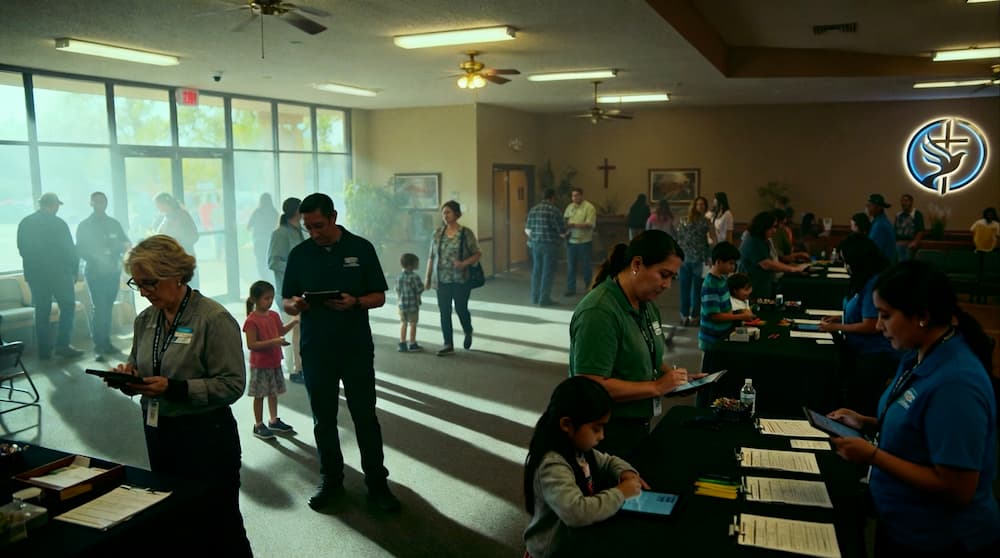


.jpg)


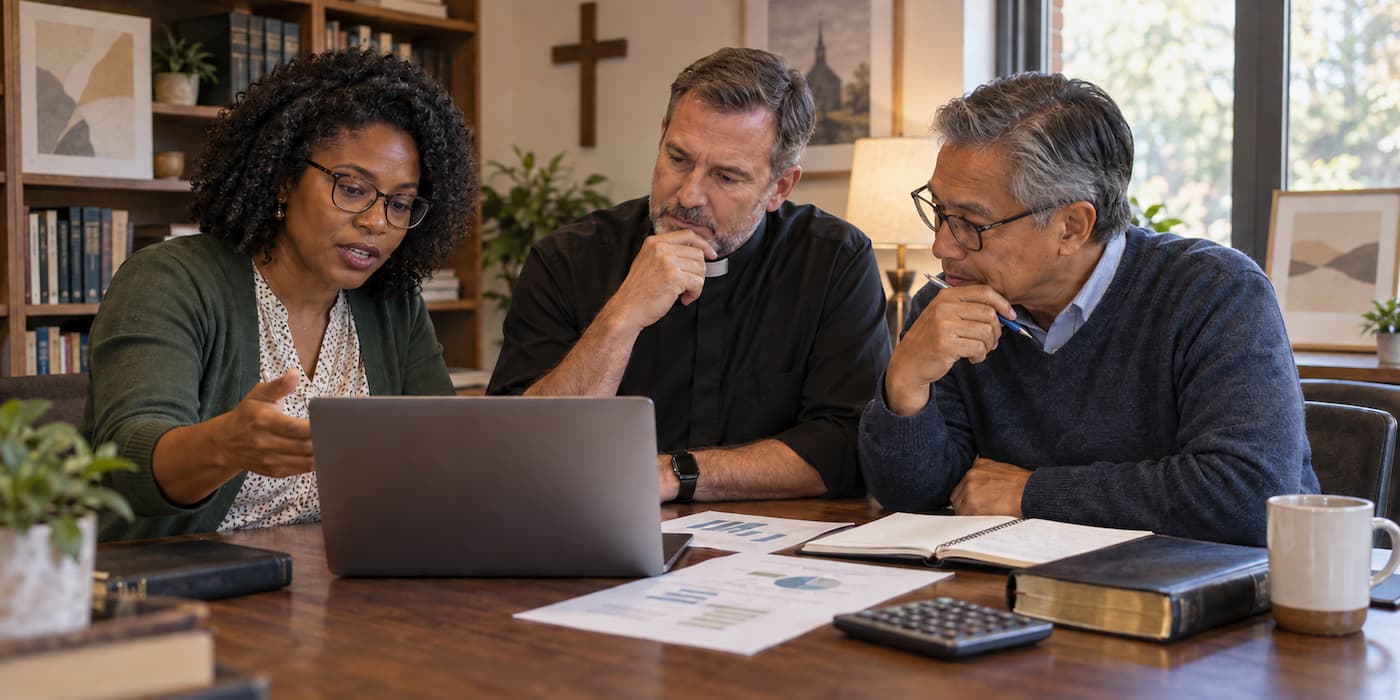
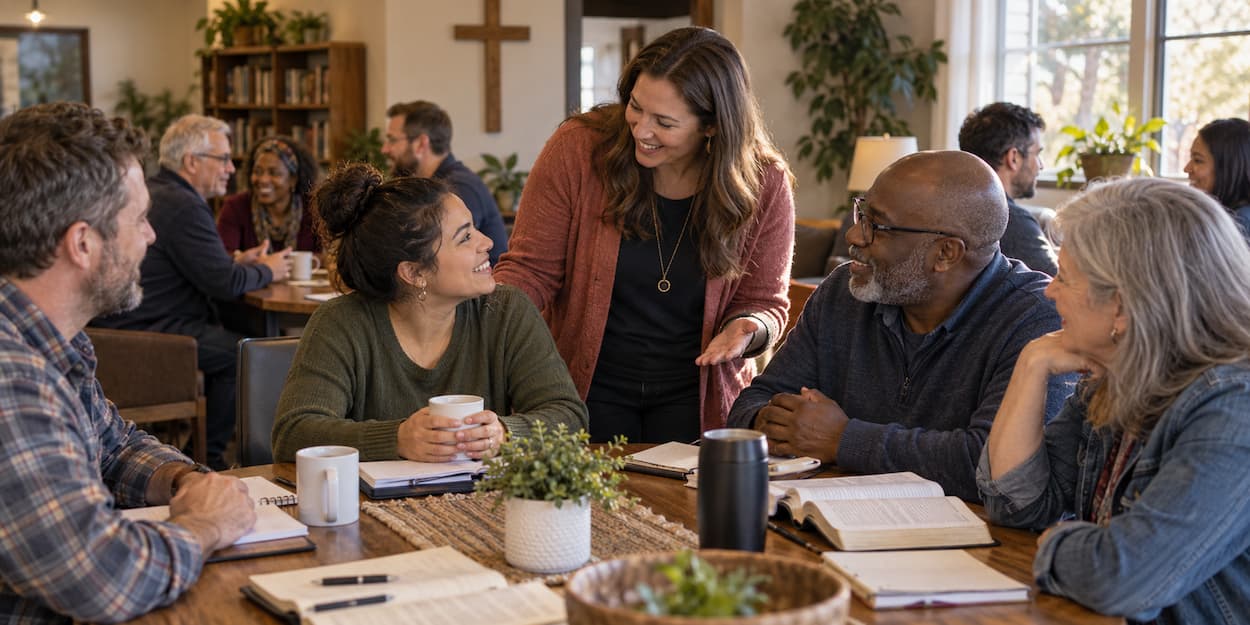
.jpg)