How Churches Can Utilize Text-to-Give to Encourage Recurring Donations
Generosity often begins in small moments throughout the week—not just during the Sunday offering. Text-to-give makes it easy for people to act on that moment instantly. In this guide, we’ll explore how churches can use text-to-give to capture spontaneous generosity and turn it into recurring support for ministry.




On Sundays, it’s simple to give. There’s a clear moment in the service, and everyone knows what to do.
But generosity doesn’t only happen on Sundays. It sparks on Tuesday night after a small group hears about a family in need, or during a Thursday livestream when a missions update moves someone to act.
The problem?
By the time people remember to bring cash or find a checkbook, the feeling has faded.
Text-to-give stands in the gap, turning those sparks of generosity into action.
With a quick keyword and a tap, anyone can give in seconds, right when generosity is top-of-mind. And when setting a recurring donation is just as easy as giving a one-time gift, your members will be much more inclined to do so.
This article shows you how to set up, launch, and optimize text-to-give so it does more than capture spontaneous gifts; it grows recurring donations.
What Is Text-to-Give?
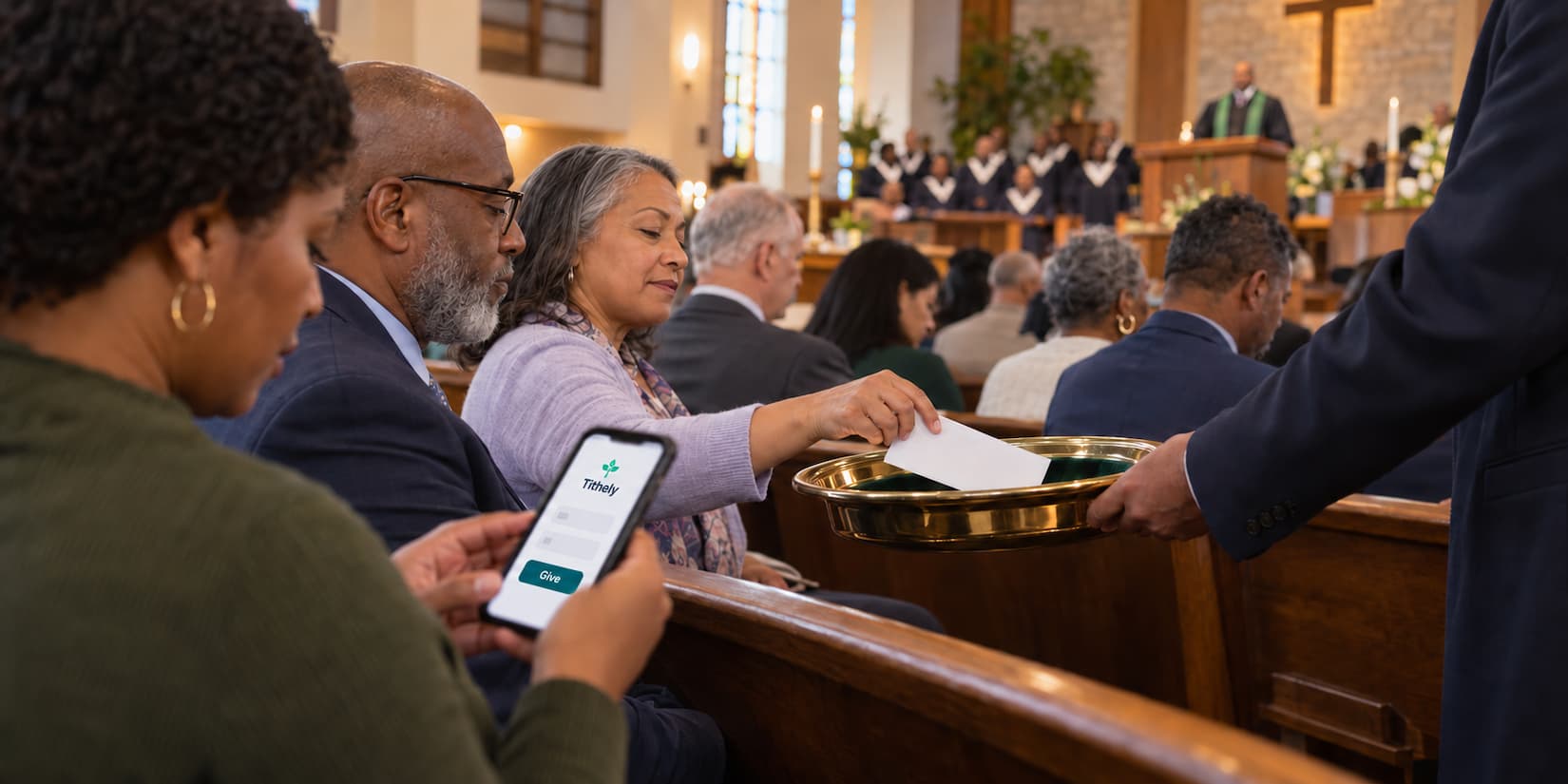
Text-to-give is exactly what it sounds like. It's a way for donors to give using their mobile devices by simply texting a keyword to a designated number. It requires your church members to do a one-time setup to provide a payment method that will be used to give by text message.
Text-to-give platforms also allow donors to set up recurring donations, making it easy for them to give consistently over time. It also allows them to give to specific funds, like missions or student ministry.
Why Recurring Giving Matters for Ministry Health
Recurring giving is very important for the health of a church. Several reasons why.
First, recurring giving provides budget stability. This allows churches to better plan for programs and staffing. When donations are consistent, churches can be more strategic with their spending and not have to worry about unexpected dips in giving.
Recurring giving also provides a steady stream of income throughout the year. This is especially important during times when attendance may be lower, such as during holiday seasons or summer vacations.
Having a consistent source of income through recurring donations helps churches maintain financial stability and continue their ministries without interruption.
Another reason recurring giving is so important is that it dramatically reduces the amount of administrative labor that must be spent on processing cash and checks.
With recurring donations, the funds are automatically deposited into the church's account on a regular basis, eliminating the need for manual processing. This frees up staff and volunteers to focus on other important tasks within the church.
Finally, recurring giving helps church members grow in the spiritual discipline of generosity. By committing to give a certain amount on a regular basis, people are reminded of their blessings and are encouraged to give out of gratitude rather than obligation.
The “Top-of-Mind” Advantage: Converting Moments into Momentum
People are not inspired to give only on Sundays. Throughout the week, your members experience micro-moments where God prompts them to give. It may be during a small-group meeting when people hear someone's testimony. Or it might happen when someone learns of a need in the church. Or God might work in someone's heart in response to a missions update email from the church.
The point is that when God inspires people to give, they need to be able to act on that conviction as quickly as possible. The longer the delay between inspiration and action, the less likely people are to give.
Making text-to-give available to your members allows you to capture those moments of God-inspired generosity and convert them into meaningful giving.
Design a Friction-Free Text-to-Recurring Flow
To implement text-to-give recurring donations in your church, you'll need to create a page on your website and mobile app (if you have one) where people can set up recurring giving.
You can also include a link to this page in your email newsletters and social media posts, making it easily accessible for anyone who wants to give regularly through text-to-give.
It's important to keep this process as friction-free as possible, so people don't get frustrated and abandon their giving intentions.
Here are some tips for designing a smooth text-to-recurring flow:
- Keep the form simple: Only ask for essential information such as name, email address, phone number, and desired donation amount. The more fields you add, the more cumbersome the process becomes.
- Use pre-filled fields: If someone has previously given through text-to-give or online giving, pre-fill their information to make the process even easier for them.
- Provide clear cadence options and start date: Allow donors to choose the frequency of their recurring donation (monthly, quarterly, annually) and when it will start. This gives them control over their giving schedule.
- Offer customization: Give donors the option to designate where their recurring donation goes (i.e., general fund, specific program, or project). This allows them to feel more connected to your organization and its impact.
- Include a confirmation step: Before finalizing the recurring donation, give donors a chance to review and confirm their information. This helps prevent accidental donations and ensures transparency in the process.
Donor Journeys to Encourage Recurring Giving
Donors to your church go through different journeys depending on their engagement with the church.
New Giver
When a person gives to your church for the first time, you want to give them the opportunity to set up recurring giving. As soon as they give, they should get an instant text thank you from your church. They should also be given a call-to-action like, "Set a monthly gift in 10 seconds,” accompanied by a link to the recurring giving page.
Approximately 30 days later, they should receive a follow-up text or email reminding them of the opportunity to set up recurring giving. If you send an email, consider including a story about the impact of someone's recurring donation.
Returning Giver
If a member or attendee has given at least two one-time gifts in the last 60 days, you can send them a little nudge via text message or email to switch over to monthly or weekly giving.
This can be a more personalized message, thanking them for their past support and explaining how consistent giving allows the organization to better plan and budget for its programs. You can also include a success story or testimonial from someone who has made the switch to recurring giving.
Recurring Giver
If someone is already a recurring giver, it's important to focus on retention and care. For example, if someone's payment method is about to expire, send them a friendly reminder to update their information. You can also periodically check in with recurring givers to express your gratitude and provide updates on how their support is making an impact.
Additionally, consider providing a recurring giving regular impact report about how their giving is empowering the mission of the church. Once a year, send them an annual report, as well as some sort of thank you.
Lapsed Recurring Giver
If you have someone who used to be a recurring giver but has lapsed, send them a gentle message inviting them to restart their giving. Give them a warm reminder of the impact their support has made in the past and invite them to continue making a difference through recurring giving once again.
Make Recurring Generosity the Easiest Next Tap
When giving is simple and immediate, people act on it. That’s the core advantage of text-to-give: it meets generosity at the exact moment it’s top-of-mind and turns a good intention into a finished gift in seconds.
By pairing that instant pathway with a clear “make it monthly” invitation, you transform one-time responses into consistent support that funds ministry all year long.
Bottom line: remove barriers, honor every nudge to be generous, and make recurring gifts the most natural next tap.
Sign Up for Product Updates

Stephen Altrogge lives in Tallahassee, Florida. He is a dad to three wonderful girls and has written for publications like The Gospel Coalition, Church Leaders, Crosswalk, and many more. When he’s not writing, you’ll find him reading or watching The Lord Of the Rings for the 10th time.
On Sundays, it’s simple to give. There’s a clear moment in the service, and everyone knows what to do.
But generosity doesn’t only happen on Sundays. It sparks on Tuesday night after a small group hears about a family in need, or during a Thursday livestream when a missions update moves someone to act.
The problem?
By the time people remember to bring cash or find a checkbook, the feeling has faded.
Text-to-give stands in the gap, turning those sparks of generosity into action.
With a quick keyword and a tap, anyone can give in seconds, right when generosity is top-of-mind. And when setting a recurring donation is just as easy as giving a one-time gift, your members will be much more inclined to do so.
This article shows you how to set up, launch, and optimize text-to-give so it does more than capture spontaneous gifts; it grows recurring donations.
What Is Text-to-Give?
Text-to-give is exactly what it sounds like. It's a way for donors to give using their mobile devices by simply texting a keyword to a designated number. It requires your church members to do a one-time setup to provide a payment method that will be used to give by text message.
Text-to-give platforms also allow donors to set up recurring donations, making it easy for them to give consistently over time. It also allows them to give to specific funds, like missions or student ministry.
Why Recurring Giving Matters for Ministry Health
Recurring giving is very important for the health of a church. Several reasons why.
First, recurring giving provides budget stability. This allows churches to better plan for programs and staffing. When donations are consistent, churches can be more strategic with their spending and not have to worry about unexpected dips in giving.
Recurring giving also provides a steady stream of income throughout the year. This is especially important during times when attendance may be lower, such as during holiday seasons or summer vacations.
Having a consistent source of income through recurring donations helps churches maintain financial stability and continue their ministries without interruption.
Another reason recurring giving is so important is that it dramatically reduces the amount of administrative labor that must be spent on processing cash and checks.
With recurring donations, the funds are automatically deposited into the church's account on a regular basis, eliminating the need for manual processing. This frees up staff and volunteers to focus on other important tasks within the church.
Finally, recurring giving helps church members grow in the spiritual discipline of generosity. By committing to give a certain amount on a regular basis, people are reminded of their blessings and are encouraged to give out of gratitude rather than obligation.
The “Top-of-Mind” Advantage: Converting Moments into Momentum
People are not inspired to give only on Sundays. Throughout the week, your members experience micro-moments where God prompts them to give. It may be during a small-group meeting when people hear someone's testimony. Or it might happen when someone learns of a need in the church. Or God might work in someone's heart in response to a missions update email from the church.
The point is that when God inspires people to give, they need to be able to act on that conviction as quickly as possible. The longer the delay between inspiration and action, the less likely people are to give.
Making text-to-give available to your members allows you to capture those moments of God-inspired generosity and convert them into meaningful giving.
Design a Friction-Free Text-to-Recurring Flow
To implement text-to-give recurring donations in your church, you'll need to create a page on your website and mobile app (if you have one) where people can set up recurring giving.
You can also include a link to this page in your email newsletters and social media posts, making it easily accessible for anyone who wants to give regularly through text-to-give.
It's important to keep this process as friction-free as possible, so people don't get frustrated and abandon their giving intentions.
Here are some tips for designing a smooth text-to-recurring flow:
- Keep the form simple: Only ask for essential information such as name, email address, phone number, and desired donation amount. The more fields you add, the more cumbersome the process becomes.
- Use pre-filled fields: If someone has previously given through text-to-give or online giving, pre-fill their information to make the process even easier for them.
- Provide clear cadence options and start date: Allow donors to choose the frequency of their recurring donation (monthly, quarterly, annually) and when it will start. This gives them control over their giving schedule.
- Offer customization: Give donors the option to designate where their recurring donation goes (i.e., general fund, specific program, or project). This allows them to feel more connected to your organization and its impact.
- Include a confirmation step: Before finalizing the recurring donation, give donors a chance to review and confirm their information. This helps prevent accidental donations and ensures transparency in the process.
Donor Journeys to Encourage Recurring Giving
Donors to your church go through different journeys depending on their engagement with the church.
New Giver
When a person gives to your church for the first time, you want to give them the opportunity to set up recurring giving. As soon as they give, they should get an instant text thank you from your church. They should also be given a call-to-action like, "Set a monthly gift in 10 seconds,” accompanied by a link to the recurring giving page.
Approximately 30 days later, they should receive a follow-up text or email reminding them of the opportunity to set up recurring giving. If you send an email, consider including a story about the impact of someone's recurring donation.
Returning Giver
If a member or attendee has given at least two one-time gifts in the last 60 days, you can send them a little nudge via text message or email to switch over to monthly or weekly giving.
This can be a more personalized message, thanking them for their past support and explaining how consistent giving allows the organization to better plan and budget for its programs. You can also include a success story or testimonial from someone who has made the switch to recurring giving.
Recurring Giver
If someone is already a recurring giver, it's important to focus on retention and care. For example, if someone's payment method is about to expire, send them a friendly reminder to update their information. You can also periodically check in with recurring givers to express your gratitude and provide updates on how their support is making an impact.
Additionally, consider providing a recurring giving regular impact report about how their giving is empowering the mission of the church. Once a year, send them an annual report, as well as some sort of thank you.
Lapsed Recurring Giver
If you have someone who used to be a recurring giver but has lapsed, send them a gentle message inviting them to restart their giving. Give them a warm reminder of the impact their support has made in the past and invite them to continue making a difference through recurring giving once again.
Make Recurring Generosity the Easiest Next Tap
When giving is simple and immediate, people act on it. That’s the core advantage of text-to-give: it meets generosity at the exact moment it’s top-of-mind and turns a good intention into a finished gift in seconds.
By pairing that instant pathway with a clear “make it monthly” invitation, you transform one-time responses into consistent support that funds ministry all year long.
Bottom line: remove barriers, honor every nudge to be generous, and make recurring gifts the most natural next tap.
podcast transcript
Stephen Altrogge lives in Tallahassee, Florida. He is a dad to three wonderful girls and has written for publications like The Gospel Coalition, Church Leaders, Crosswalk, and many more. When he’s not writing, you’ll find him reading or watching The Lord Of the Rings for the 10th time.
On Sundays, it’s simple to give. There’s a clear moment in the service, and everyone knows what to do.
But generosity doesn’t only happen on Sundays. It sparks on Tuesday night after a small group hears about a family in need, or during a Thursday livestream when a missions update moves someone to act.
The problem?
By the time people remember to bring cash or find a checkbook, the feeling has faded.
Text-to-give stands in the gap, turning those sparks of generosity into action.
With a quick keyword and a tap, anyone can give in seconds, right when generosity is top-of-mind. And when setting a recurring donation is just as easy as giving a one-time gift, your members will be much more inclined to do so.
This article shows you how to set up, launch, and optimize text-to-give so it does more than capture spontaneous gifts; it grows recurring donations.
What Is Text-to-Give?
Text-to-give is exactly what it sounds like. It's a way for donors to give using their mobile devices by simply texting a keyword to a designated number. It requires your church members to do a one-time setup to provide a payment method that will be used to give by text message.
Text-to-give platforms also allow donors to set up recurring donations, making it easy for them to give consistently over time. It also allows them to give to specific funds, like missions or student ministry.
Why Recurring Giving Matters for Ministry Health
Recurring giving is very important for the health of a church. Several reasons why.
First, recurring giving provides budget stability. This allows churches to better plan for programs and staffing. When donations are consistent, churches can be more strategic with their spending and not have to worry about unexpected dips in giving.
Recurring giving also provides a steady stream of income throughout the year. This is especially important during times when attendance may be lower, such as during holiday seasons or summer vacations.
Having a consistent source of income through recurring donations helps churches maintain financial stability and continue their ministries without interruption.
Another reason recurring giving is so important is that it dramatically reduces the amount of administrative labor that must be spent on processing cash and checks.
With recurring donations, the funds are automatically deposited into the church's account on a regular basis, eliminating the need for manual processing. This frees up staff and volunteers to focus on other important tasks within the church.
Finally, recurring giving helps church members grow in the spiritual discipline of generosity. By committing to give a certain amount on a regular basis, people are reminded of their blessings and are encouraged to give out of gratitude rather than obligation.
The “Top-of-Mind” Advantage: Converting Moments into Momentum
People are not inspired to give only on Sundays. Throughout the week, your members experience micro-moments where God prompts them to give. It may be during a small-group meeting when people hear someone's testimony. Or it might happen when someone learns of a need in the church. Or God might work in someone's heart in response to a missions update email from the church.
The point is that when God inspires people to give, they need to be able to act on that conviction as quickly as possible. The longer the delay between inspiration and action, the less likely people are to give.
Making text-to-give available to your members allows you to capture those moments of God-inspired generosity and convert them into meaningful giving.
Design a Friction-Free Text-to-Recurring Flow
To implement text-to-give recurring donations in your church, you'll need to create a page on your website and mobile app (if you have one) where people can set up recurring giving.
You can also include a link to this page in your email newsletters and social media posts, making it easily accessible for anyone who wants to give regularly through text-to-give.
It's important to keep this process as friction-free as possible, so people don't get frustrated and abandon their giving intentions.
Here are some tips for designing a smooth text-to-recurring flow:
- Keep the form simple: Only ask for essential information such as name, email address, phone number, and desired donation amount. The more fields you add, the more cumbersome the process becomes.
- Use pre-filled fields: If someone has previously given through text-to-give or online giving, pre-fill their information to make the process even easier for them.
- Provide clear cadence options and start date: Allow donors to choose the frequency of their recurring donation (monthly, quarterly, annually) and when it will start. This gives them control over their giving schedule.
- Offer customization: Give donors the option to designate where their recurring donation goes (i.e., general fund, specific program, or project). This allows them to feel more connected to your organization and its impact.
- Include a confirmation step: Before finalizing the recurring donation, give donors a chance to review and confirm their information. This helps prevent accidental donations and ensures transparency in the process.
Donor Journeys to Encourage Recurring Giving
Donors to your church go through different journeys depending on their engagement with the church.
New Giver
When a person gives to your church for the first time, you want to give them the opportunity to set up recurring giving. As soon as they give, they should get an instant text thank you from your church. They should also be given a call-to-action like, "Set a monthly gift in 10 seconds,” accompanied by a link to the recurring giving page.
Approximately 30 days later, they should receive a follow-up text or email reminding them of the opportunity to set up recurring giving. If you send an email, consider including a story about the impact of someone's recurring donation.
Returning Giver
If a member or attendee has given at least two one-time gifts in the last 60 days, you can send them a little nudge via text message or email to switch over to monthly or weekly giving.
This can be a more personalized message, thanking them for their past support and explaining how consistent giving allows the organization to better plan and budget for its programs. You can also include a success story or testimonial from someone who has made the switch to recurring giving.
Recurring Giver
If someone is already a recurring giver, it's important to focus on retention and care. For example, if someone's payment method is about to expire, send them a friendly reminder to update their information. You can also periodically check in with recurring givers to express your gratitude and provide updates on how their support is making an impact.
Additionally, consider providing a recurring giving regular impact report about how their giving is empowering the mission of the church. Once a year, send them an annual report, as well as some sort of thank you.
Lapsed Recurring Giver
If you have someone who used to be a recurring giver but has lapsed, send them a gentle message inviting them to restart their giving. Give them a warm reminder of the impact their support has made in the past and invite them to continue making a difference through recurring giving once again.
Make Recurring Generosity the Easiest Next Tap
When giving is simple and immediate, people act on it. That’s the core advantage of text-to-give: it meets generosity at the exact moment it’s top-of-mind and turns a good intention into a finished gift in seconds.
By pairing that instant pathway with a clear “make it monthly” invitation, you transform one-time responses into consistent support that funds ministry all year long.
Bottom line: remove barriers, honor every nudge to be generous, and make recurring gifts the most natural next tap.
VIDEO transcript
On Sundays, it’s simple to give. There’s a clear moment in the service, and everyone knows what to do.
But generosity doesn’t only happen on Sundays. It sparks on Tuesday night after a small group hears about a family in need, or during a Thursday livestream when a missions update moves someone to act.
The problem?
By the time people remember to bring cash or find a checkbook, the feeling has faded.
Text-to-give stands in the gap, turning those sparks of generosity into action.
With a quick keyword and a tap, anyone can give in seconds, right when generosity is top-of-mind. And when setting a recurring donation is just as easy as giving a one-time gift, your members will be much more inclined to do so.
This article shows you how to set up, launch, and optimize text-to-give so it does more than capture spontaneous gifts; it grows recurring donations.
What Is Text-to-Give?
Text-to-give is exactly what it sounds like. It's a way for donors to give using their mobile devices by simply texting a keyword to a designated number. It requires your church members to do a one-time setup to provide a payment method that will be used to give by text message.
Text-to-give platforms also allow donors to set up recurring donations, making it easy for them to give consistently over time. It also allows them to give to specific funds, like missions or student ministry.
Why Recurring Giving Matters for Ministry Health
Recurring giving is very important for the health of a church. Several reasons why.
First, recurring giving provides budget stability. This allows churches to better plan for programs and staffing. When donations are consistent, churches can be more strategic with their spending and not have to worry about unexpected dips in giving.
Recurring giving also provides a steady stream of income throughout the year. This is especially important during times when attendance may be lower, such as during holiday seasons or summer vacations.
Having a consistent source of income through recurring donations helps churches maintain financial stability and continue their ministries without interruption.
Another reason recurring giving is so important is that it dramatically reduces the amount of administrative labor that must be spent on processing cash and checks.
With recurring donations, the funds are automatically deposited into the church's account on a regular basis, eliminating the need for manual processing. This frees up staff and volunteers to focus on other important tasks within the church.
Finally, recurring giving helps church members grow in the spiritual discipline of generosity. By committing to give a certain amount on a regular basis, people are reminded of their blessings and are encouraged to give out of gratitude rather than obligation.
The “Top-of-Mind” Advantage: Converting Moments into Momentum
People are not inspired to give only on Sundays. Throughout the week, your members experience micro-moments where God prompts them to give. It may be during a small-group meeting when people hear someone's testimony. Or it might happen when someone learns of a need in the church. Or God might work in someone's heart in response to a missions update email from the church.
The point is that when God inspires people to give, they need to be able to act on that conviction as quickly as possible. The longer the delay between inspiration and action, the less likely people are to give.
Making text-to-give available to your members allows you to capture those moments of God-inspired generosity and convert them into meaningful giving.
Design a Friction-Free Text-to-Recurring Flow
To implement text-to-give recurring donations in your church, you'll need to create a page on your website and mobile app (if you have one) where people can set up recurring giving.
You can also include a link to this page in your email newsletters and social media posts, making it easily accessible for anyone who wants to give regularly through text-to-give.
It's important to keep this process as friction-free as possible, so people don't get frustrated and abandon their giving intentions.
Here are some tips for designing a smooth text-to-recurring flow:
- Keep the form simple: Only ask for essential information such as name, email address, phone number, and desired donation amount. The more fields you add, the more cumbersome the process becomes.
- Use pre-filled fields: If someone has previously given through text-to-give or online giving, pre-fill their information to make the process even easier for them.
- Provide clear cadence options and start date: Allow donors to choose the frequency of their recurring donation (monthly, quarterly, annually) and when it will start. This gives them control over their giving schedule.
- Offer customization: Give donors the option to designate where their recurring donation goes (i.e., general fund, specific program, or project). This allows them to feel more connected to your organization and its impact.
- Include a confirmation step: Before finalizing the recurring donation, give donors a chance to review and confirm their information. This helps prevent accidental donations and ensures transparency in the process.
Donor Journeys to Encourage Recurring Giving
Donors to your church go through different journeys depending on their engagement with the church.
New Giver
When a person gives to your church for the first time, you want to give them the opportunity to set up recurring giving. As soon as they give, they should get an instant text thank you from your church. They should also be given a call-to-action like, "Set a monthly gift in 10 seconds,” accompanied by a link to the recurring giving page.
Approximately 30 days later, they should receive a follow-up text or email reminding them of the opportunity to set up recurring giving. If you send an email, consider including a story about the impact of someone's recurring donation.
Returning Giver
If a member or attendee has given at least two one-time gifts in the last 60 days, you can send them a little nudge via text message or email to switch over to monthly or weekly giving.
This can be a more personalized message, thanking them for their past support and explaining how consistent giving allows the organization to better plan and budget for its programs. You can also include a success story or testimonial from someone who has made the switch to recurring giving.
Recurring Giver
If someone is already a recurring giver, it's important to focus on retention and care. For example, if someone's payment method is about to expire, send them a friendly reminder to update their information. You can also periodically check in with recurring givers to express your gratitude and provide updates on how their support is making an impact.
Additionally, consider providing a recurring giving regular impact report about how their giving is empowering the mission of the church. Once a year, send them an annual report, as well as some sort of thank you.
Lapsed Recurring Giver
If you have someone who used to be a recurring giver but has lapsed, send them a gentle message inviting them to restart their giving. Give them a warm reminder of the impact their support has made in the past and invite them to continue making a difference through recurring giving once again.
Make Recurring Generosity the Easiest Next Tap
When giving is simple and immediate, people act on it. That’s the core advantage of text-to-give: it meets generosity at the exact moment it’s top-of-mind and turns a good intention into a finished gift in seconds.
By pairing that instant pathway with a clear “make it monthly” invitation, you transform one-time responses into consistent support that funds ministry all year long.
Bottom line: remove barriers, honor every nudge to be generous, and make recurring gifts the most natural next tap.
Sign Up for Product Updates
Stephen Altrogge lives in Tallahassee, Florida. He is a dad to three wonderful girls and has written for publications like The Gospel Coalition, Church Leaders, Crosswalk, and many more. When he’s not writing, you’ll find him reading or watching The Lord Of the Rings for the 10th time.

You Might Also Like
More Resources

From increasing giving, managing your congregation, and engaging your church, our collection of resources will keep you up-to-date on the latest church and ministry trends.
Free Resources

.jpg)

.jpg)