How to Fund Your Church's Vision: What a Prayer-Led Capital Campaign Actually Looks Like
Learn how to run a prayer-led church capital campaign that builds generosity, engages the whole congregation, and funds your church’s vision.
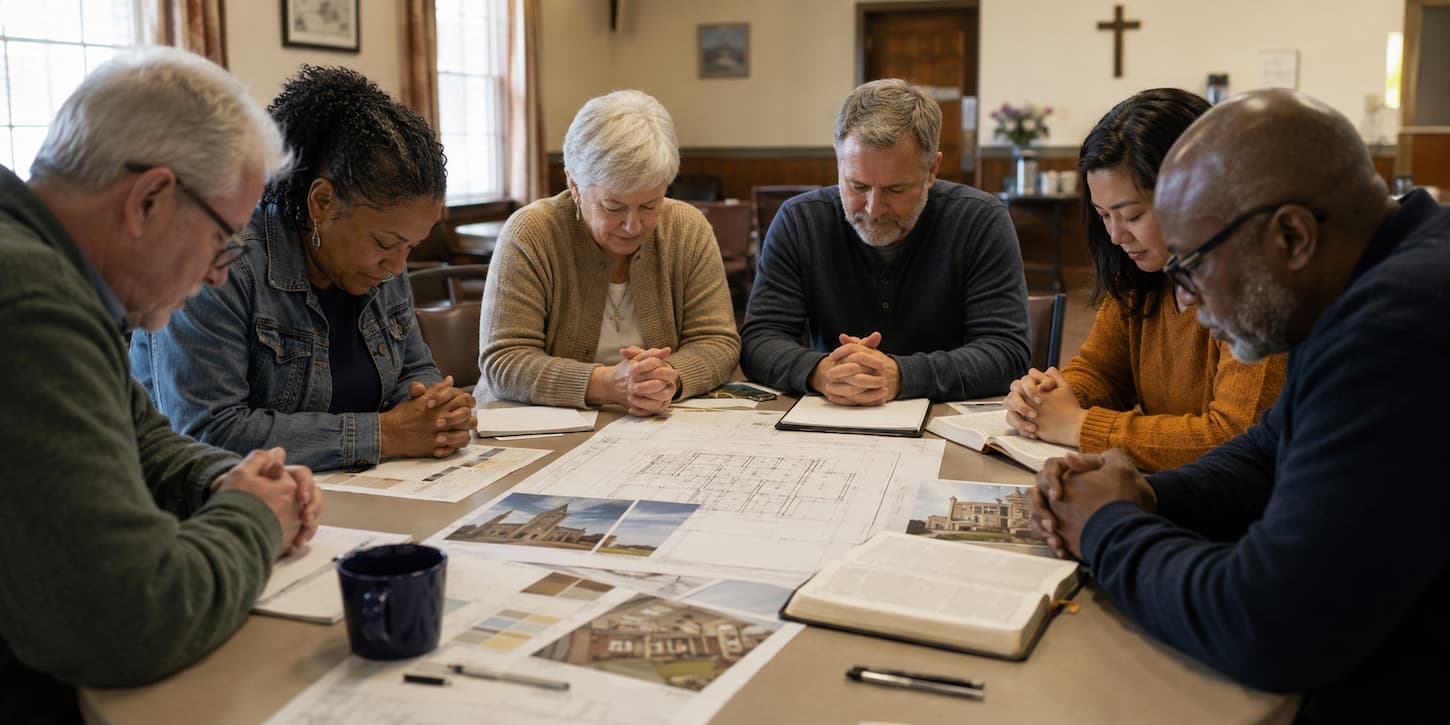



First Baptist Church Silverton runs about 100 people on a good Sunday. Their annual budget is around $300,000. They sit in the tenth least populous county in Texas, where 1,200 people live in the entire county.
They needed to remodel a fellowship hall that hosts every kid in the community once a week during the school year. The bathrooms needed work. The building was showing its age.
They hoped they might raise $400,000. That felt ambitious.
Their final pledge total came in just shy of $800,000.
That story came out of our recent webinar with Jeremy Malick, founder of Church Coach Ministries, and Pastor GJ Walton of First Baptist Church Silverton. It's part two of a two-part series. (Part one covered why 70% of your congregation isn't fully engaged and how to change that.)
Here's what they shared.
Watch the Full Webinar
Watch the complete conversation with Jeremy Malick and Pastor GJ Walton for more insights on prayer-led capital campaigns, congregational generosity, community partnerships, and funding your church’s vision.
What Does a Church Capital Campaign Consultant Do?
A church capital campaign consultant guides your congregation through the fundraising process so your pastor doesn't have to. The best ones handle vision casting, discipleship, prayer strategy, and donor engagement, which frees your pastoral staff to keep shepherding people instead of chasing money.
That last part matters more than most churches realize.
According to Jeremy, the number two reason a pastor leaves a church is running a capital campaign himself.
Think about why. Your pastor didn't go to seminary to become a fundraiser. But the board hands him the campaign because he's the one who talks to everybody. So he spends a year doing a job he never trained for, and the way his congregation sees him quietly changes.
Pastor GJ walked into a breakout session at a state convention with zero interest in any of this.
"I had no interest in being a part of a capital campaign as a pastor," he said. "But I went into one of those meetings, and my mind began to change."
Why This Campaign Started With Prayer Instead of a Goal
Most capital campaigns start with a number. This one didn't.
Church Coach Ministries builds campaigns around an eight-week discipleship journey designed to give your congregation four things:
1. Time to pray. Not a passing encouragement to pray about it, but focused, scheduled, corporate prayer.
2. Time to process. Space for people to hear from God about their own lives and respond in obedience.
3. Room to ask questions. Jeremy makes a point here most campaigns miss entirely. Unasked questions become blockades to obedience. If people are confused, they stall, and nobody ever finds out why.
4. A chance to commit to the vision. Not to a building. As Jeremy puts it, nobody is buying a bathroom. Nobody is buying a playground. They're committing to what God has called your church to do.
Silverton entered their pledge drive with no goal at all. Just a fellowship hall that needed help and a congregation that had spent weeks praying and fasting together.
Why Your Feasibility Study Number Might Be Too Low
Most feasibility studies will tell a church it can raise 1.5 to 2 times its annual budget.
Jeremy has watched churches raise four, six, and eight times their annual budget. Silverton pledged more than two and a half times theirs.
His argument is simple. You can't list every household in your church, assign each one a number, and call that total your ceiling. That math assumes all the money is already sitting in the room.
Then he told us about Todd.
It was pledge Sunday, and a card came back that read, "When you need drywall, call me. Todd."
Jeremy called him. Todd came to the church, looked at the project, and determined it needed $80,000 worth of drywall. Jeremy braced for a small discount.
Instead Todd asked when the job needed to be finished. Three weeks, Jeremy told him. Todd offered to bring his entire crew the following weekend and install all of it. No charge for labor. No charge for materials.
Todd had never attended that church, and he's never been back. He'd been driving to Home Depot that morning, saw the church sign, and felt like he was supposed to turn in. Someone handed him a pledge card in the lobby.
You can't put Todd in a feasibility study. He wasn't there yet.
From 13 Giving Units to 56
Here's the number every church leader should sit with.
In most churches, about 15% of the congregation funds about 80% of the budget.
Jeremy worked with a church of 90 people in North Carolina that had 13 giving units. Thirteen households carrying an entire congregation. By the end of their three-month prayer journey, they had 56.
That's not 13 people giving more. That's 43 households who had never really given deciding to participate.
Pastor GJ watched the same thing happen in Silverton.
"Folks who may not have given regularly, may have given occasionally, are giving regularly," he said. "That's not just about us as a church saying, oh great, we've got lots more money. That's about individuals really growing in their relationship with the Lord."
Now think about the practical side of that. Forty-three new giving households means 43 people who need a way to give that isn't the offering plate they've been walking past for years.
If Sunday cash is your only option, you'll lose a meaningful share of that momentum within six months. This is exactly where recurring giving turns a one-time campaign moment into a lasting culture of generosity.
Raising Funds Outside Your Church Walls
Church Coach Ministries also runs what Jeremy calls an external campaign, with roughly 15 different funding streams. Alumni outreach. Intentional requests, meaning asking local businesses for materials and services instead of cash.
One church had a tenant improvement project budgeted at $500,000. So much material was donated that they spent $84,000 in actual cash.
Jeremy's line: just because you raised the money doesn't mean you have to spend it.
Then there are the community events. Here's his favorite.
A church of about 90 people was running a campaign to pay off debt, which is the least exciting kind of campaign there is. Jeremy noticed the church had a skate park out front with a few broken business sponsor signs in it. Local businesses had been chipping in over the years to fix ramps.
So they pulled the list of every business that had ever sponsored that skate park and invited them all to dinner at the church. Jeremy told the congregation nobody from the church could attend. They could serve, but the seats belonged to the community.
Three hundred people showed up. Local artists painted live. The paintings were auctioned.
They paid off the church's entire mortgage that night, entirely with money raised outside the church walls.
Three months later, that church was running over 350 people.
The Biggest Mistake Small and Rural Churches Make
Ask a rural pastor how he'd fund a project and he can usually name the ten or fifteen families he'd call first. In a farming community, those families are the backbone of the whole town, not just the church.
Both men flagged this as the trap.
"It really takes away from the opportunity for everyone to see their place," Pastor GJ said, "because every place in this is important."
Someone offered early on to cover a specific need outright. He told them to wait until the end and give what the Lord put on their heart, because taking the shortcut would have robbed someone else of the chance to participate.
Jeremy's version is broader: don't try to do the whole thing yourself. When churches run a campaign alone and then bring Church Coach Ministries in afterward, they typically raise about 40% more the second time around.
And during a Church Coach Ministries campaign, the pastor has exactly one job. Cast vision. He never asks anyone for money.
One elder in his eighties, who'd been through six campaigns as staff, as a pastor, as eldership, and as a layperson, called Jeremy afterward to say he'd never experienced anything so refreshing. It never once felt like they were asking for money.
That church raised four times its annual budget.
What to Have Ready Before Pledge Sunday
Church Coach Ministries handles the prayer journey, the discipleship, and the vision. What nobody warns a small church about is what happens the Monday after pledge Sunday.
Someone has to track every pledge. Match gifts against commitments for the next two or three years. Reconcile checks dropped in the plate against gifts given online. Know at a glance what's been pledged, what's come in, and what's still outstanding.
In most churches, that job lands on a volunteer treasurer and a spreadsheet, and it stays there for three years.
Tithely Pledge Campaigns was built for exactly this moment. Here's what it handles for you:
A branded campaign page. Your members can read the vision, watch your campaign video, make a pledge, and watch the total climb, all in one place.
Automatic pledge schedules. Donors enter a total and pick a frequency, weekly, every two weeks, monthly, or the 1st and 15th. Tithely generates the giving schedule for them.
Cash and check tracking. Paper gifts get entered through Admin Batch Giving and count toward the same campaign total as online gifts. If your congregation still gives by check, nobody gets left out of your reporting.
Automatic allocation. Gifts given through any other Tithely tool are detected and applied to the campaign, so nothing gets missed or counted twice.
Real-time reporting. Your dashboard shows campaign progress and donor detail whenever you need it.
Not sure a pledge campaign is right for your project? Start with what a pledge campaign is and how it works. And if you're still deciding whether a capital campaign makes sense at all, it's worth reading five reasons you shouldn't start one first.
Common Questions About Church Capital Campaigns
How do we know if our church is ready?
Jeremy's answer is that waiting to feel ready is usually what stops churches. The process tends to produce the spiritual and financial alignment leaders are waiting for. As Pastor GJ put it, "I don't know that we would have ever begun a campaign like this if we waited until we felt like we were financially ready."
Should our pastor lead the capital campaign?
Jeremy's answer is no, with one exception. Your pastor casts vision. That's the whole assignment. The asking, organizing, and follow-up belong somewhere else.
Do we need a feasibility study first?
Church Coach Ministries doesn't build campaigns around one. Silverton entered their pledge drive with no goal and finished at nearly two and a half times what the congregation initially thought was ambitious.
How do we tell real momentum from short-term excitement?
By whether you dealt with hearts or deadlines. Excitement around a project fades in about three months. Lasting change comes from walking each person through the process individually, which is why nobody gets to skip it.
What's the biggest mistake a small church makes?
Going straight to the ten families who can write the checks. It works, it's fast, and it costs you everyone else.
Fund Your Vision With Confidence
If your church is facing a project you can't obviously afford, Church Coach Ministries offers a full campaign, roughly eight months for the internal prayer journey plus another twelve for the external campaign, along with mini documentary films that tell your church's story. They also offer a 21 Day Prayer and Fasting Campaign, a three-week video-based option for churches that need to raise a smaller amount quickly.
Reach Jeremy Malick at jeremy@churchcoachministries.org, or watch campaign films at churchcoachministries.org.
And when your congregation is ready to make their commitments, Tithely Pledge Campaigns handles the pledges, the tracking, and the follow-through, so your team can stay focused on the vision instead of the spreadsheet.
As Jeremy told us: "God doesn't give you a vision that you can do. He only gives you a vision that only He can do."
Sign Up for Product Updates
Laura is a writer and ministry leader with experience in church communications, administration, worship ministry, and nonprofit support. She is passionate about helping people grow in their faith through biblical truth, practical encouragement, and honest conversations about the messy middle of everyday life.
When she's not writing, she's spending time with her family and hoping for the swift return of side parts and high-waisted skinny jeans.
First Baptist Church Silverton runs about 100 people on a good Sunday. Their annual budget is around $300,000. They sit in the tenth least populous county in Texas, where 1,200 people live in the entire county.
They needed to remodel a fellowship hall that hosts every kid in the community once a week during the school year. The bathrooms needed work. The building was showing its age.
They hoped they might raise $400,000. That felt ambitious.
Their final pledge total came in just shy of $800,000.
That story came out of our recent webinar with Jeremy Malick, founder of Church Coach Ministries, and Pastor GJ Walton of First Baptist Church Silverton. It's part two of a two-part series. (Part one covered why 70% of your congregation isn't fully engaged and how to change that.)
Here's what they shared.
Watch the Full Webinar
Watch the complete conversation with Jeremy Malick and Pastor GJ Walton for more insights on prayer-led capital campaigns, congregational generosity, community partnerships, and funding your church’s vision.
What Does a Church Capital Campaign Consultant Do?
A church capital campaign consultant guides your congregation through the fundraising process so your pastor doesn't have to. The best ones handle vision casting, discipleship, prayer strategy, and donor engagement, which frees your pastoral staff to keep shepherding people instead of chasing money.
That last part matters more than most churches realize.
According to Jeremy, the number two reason a pastor leaves a church is running a capital campaign himself.
Think about why. Your pastor didn't go to seminary to become a fundraiser. But the board hands him the campaign because he's the one who talks to everybody. So he spends a year doing a job he never trained for, and the way his congregation sees him quietly changes.
Pastor GJ walked into a breakout session at a state convention with zero interest in any of this.
"I had no interest in being a part of a capital campaign as a pastor," he said. "But I went into one of those meetings, and my mind began to change."
Why This Campaign Started With Prayer Instead of a Goal
Most capital campaigns start with a number. This one didn't.
Church Coach Ministries builds campaigns around an eight-week discipleship journey designed to give your congregation four things:
1. Time to pray. Not a passing encouragement to pray about it, but focused, scheduled, corporate prayer.
2. Time to process. Space for people to hear from God about their own lives and respond in obedience.
3. Room to ask questions. Jeremy makes a point here most campaigns miss entirely. Unasked questions become blockades to obedience. If people are confused, they stall, and nobody ever finds out why.
4. A chance to commit to the vision. Not to a building. As Jeremy puts it, nobody is buying a bathroom. Nobody is buying a playground. They're committing to what God has called your church to do.
Silverton entered their pledge drive with no goal at all. Just a fellowship hall that needed help and a congregation that had spent weeks praying and fasting together.
Why Your Feasibility Study Number Might Be Too Low
Most feasibility studies will tell a church it can raise 1.5 to 2 times its annual budget.
Jeremy has watched churches raise four, six, and eight times their annual budget. Silverton pledged more than two and a half times theirs.
His argument is simple. You can't list every household in your church, assign each one a number, and call that total your ceiling. That math assumes all the money is already sitting in the room.
Then he told us about Todd.
It was pledge Sunday, and a card came back that read, "When you need drywall, call me. Todd."
Jeremy called him. Todd came to the church, looked at the project, and determined it needed $80,000 worth of drywall. Jeremy braced for a small discount.
Instead Todd asked when the job needed to be finished. Three weeks, Jeremy told him. Todd offered to bring his entire crew the following weekend and install all of it. No charge for labor. No charge for materials.
Todd had never attended that church, and he's never been back. He'd been driving to Home Depot that morning, saw the church sign, and felt like he was supposed to turn in. Someone handed him a pledge card in the lobby.
You can't put Todd in a feasibility study. He wasn't there yet.
From 13 Giving Units to 56
Here's the number every church leader should sit with.
In most churches, about 15% of the congregation funds about 80% of the budget.
Jeremy worked with a church of 90 people in North Carolina that had 13 giving units. Thirteen households carrying an entire congregation. By the end of their three-month prayer journey, they had 56.
That's not 13 people giving more. That's 43 households who had never really given deciding to participate.
Pastor GJ watched the same thing happen in Silverton.
"Folks who may not have given regularly, may have given occasionally, are giving regularly," he said. "That's not just about us as a church saying, oh great, we've got lots more money. That's about individuals really growing in their relationship with the Lord."
Now think about the practical side of that. Forty-three new giving households means 43 people who need a way to give that isn't the offering plate they've been walking past for years.
If Sunday cash is your only option, you'll lose a meaningful share of that momentum within six months. This is exactly where recurring giving turns a one-time campaign moment into a lasting culture of generosity.
Raising Funds Outside Your Church Walls
Church Coach Ministries also runs what Jeremy calls an external campaign, with roughly 15 different funding streams. Alumni outreach. Intentional requests, meaning asking local businesses for materials and services instead of cash.
One church had a tenant improvement project budgeted at $500,000. So much material was donated that they spent $84,000 in actual cash.
Jeremy's line: just because you raised the money doesn't mean you have to spend it.
Then there are the community events. Here's his favorite.
A church of about 90 people was running a campaign to pay off debt, which is the least exciting kind of campaign there is. Jeremy noticed the church had a skate park out front with a few broken business sponsor signs in it. Local businesses had been chipping in over the years to fix ramps.
So they pulled the list of every business that had ever sponsored that skate park and invited them all to dinner at the church. Jeremy told the congregation nobody from the church could attend. They could serve, but the seats belonged to the community.
Three hundred people showed up. Local artists painted live. The paintings were auctioned.
They paid off the church's entire mortgage that night, entirely with money raised outside the church walls.
Three months later, that church was running over 350 people.
The Biggest Mistake Small and Rural Churches Make
Ask a rural pastor how he'd fund a project and he can usually name the ten or fifteen families he'd call first. In a farming community, those families are the backbone of the whole town, not just the church.
Both men flagged this as the trap.
"It really takes away from the opportunity for everyone to see their place," Pastor GJ said, "because every place in this is important."
Someone offered early on to cover a specific need outright. He told them to wait until the end and give what the Lord put on their heart, because taking the shortcut would have robbed someone else of the chance to participate.
Jeremy's version is broader: don't try to do the whole thing yourself. When churches run a campaign alone and then bring Church Coach Ministries in afterward, they typically raise about 40% more the second time around.
And during a Church Coach Ministries campaign, the pastor has exactly one job. Cast vision. He never asks anyone for money.
One elder in his eighties, who'd been through six campaigns as staff, as a pastor, as eldership, and as a layperson, called Jeremy afterward to say he'd never experienced anything so refreshing. It never once felt like they were asking for money.
That church raised four times its annual budget.
What to Have Ready Before Pledge Sunday
Church Coach Ministries handles the prayer journey, the discipleship, and the vision. What nobody warns a small church about is what happens the Monday after pledge Sunday.
Someone has to track every pledge. Match gifts against commitments for the next two or three years. Reconcile checks dropped in the plate against gifts given online. Know at a glance what's been pledged, what's come in, and what's still outstanding.
In most churches, that job lands on a volunteer treasurer and a spreadsheet, and it stays there for three years.
Tithely Pledge Campaigns was built for exactly this moment. Here's what it handles for you:
A branded campaign page. Your members can read the vision, watch your campaign video, make a pledge, and watch the total climb, all in one place.
Automatic pledge schedules. Donors enter a total and pick a frequency, weekly, every two weeks, monthly, or the 1st and 15th. Tithely generates the giving schedule for them.
Cash and check tracking. Paper gifts get entered through Admin Batch Giving and count toward the same campaign total as online gifts. If your congregation still gives by check, nobody gets left out of your reporting.
Automatic allocation. Gifts given through any other Tithely tool are detected and applied to the campaign, so nothing gets missed or counted twice.
Real-time reporting. Your dashboard shows campaign progress and donor detail whenever you need it.
Not sure a pledge campaign is right for your project? Start with what a pledge campaign is and how it works. And if you're still deciding whether a capital campaign makes sense at all, it's worth reading five reasons you shouldn't start one first.
Common Questions About Church Capital Campaigns
How do we know if our church is ready?
Jeremy's answer is that waiting to feel ready is usually what stops churches. The process tends to produce the spiritual and financial alignment leaders are waiting for. As Pastor GJ put it, "I don't know that we would have ever begun a campaign like this if we waited until we felt like we were financially ready."
Should our pastor lead the capital campaign?
Jeremy's answer is no, with one exception. Your pastor casts vision. That's the whole assignment. The asking, organizing, and follow-up belong somewhere else.
Do we need a feasibility study first?
Church Coach Ministries doesn't build campaigns around one. Silverton entered their pledge drive with no goal and finished at nearly two and a half times what the congregation initially thought was ambitious.
How do we tell real momentum from short-term excitement?
By whether you dealt with hearts or deadlines. Excitement around a project fades in about three months. Lasting change comes from walking each person through the process individually, which is why nobody gets to skip it.
What's the biggest mistake a small church makes?
Going straight to the ten families who can write the checks. It works, it's fast, and it costs you everyone else.
Fund Your Vision With Confidence
If your church is facing a project you can't obviously afford, Church Coach Ministries offers a full campaign, roughly eight months for the internal prayer journey plus another twelve for the external campaign, along with mini documentary films that tell your church's story. They also offer a 21 Day Prayer and Fasting Campaign, a three-week video-based option for churches that need to raise a smaller amount quickly.
Reach Jeremy Malick at jeremy@churchcoachministries.org, or watch campaign films at churchcoachministries.org.
And when your congregation is ready to make their commitments, Tithely Pledge Campaigns handles the pledges, the tracking, and the follow-through, so your team can stay focused on the vision instead of the spreadsheet.
As Jeremy told us: "God doesn't give you a vision that you can do. He only gives you a vision that only He can do."
podcast transcript
Laura is a writer and ministry leader with experience in church communications, administration, worship ministry, and nonprofit support. She is passionate about helping people grow in their faith through biblical truth, practical encouragement, and honest conversations about the messy middle of everyday life.
When she's not writing, she's spending time with her family and hoping for the swift return of side parts and high-waisted skinny jeans.
First Baptist Church Silverton runs about 100 people on a good Sunday. Their annual budget is around $300,000. They sit in the tenth least populous county in Texas, where 1,200 people live in the entire county.
They needed to remodel a fellowship hall that hosts every kid in the community once a week during the school year. The bathrooms needed work. The building was showing its age.
They hoped they might raise $400,000. That felt ambitious.
Their final pledge total came in just shy of $800,000.
That story came out of our recent webinar with Jeremy Malick, founder of Church Coach Ministries, and Pastor GJ Walton of First Baptist Church Silverton. It's part two of a two-part series. (Part one covered why 70% of your congregation isn't fully engaged and how to change that.)
Here's what they shared.
Watch the Full Webinar
Watch the complete conversation with Jeremy Malick and Pastor GJ Walton for more insights on prayer-led capital campaigns, congregational generosity, community partnerships, and funding your church’s vision.
What Does a Church Capital Campaign Consultant Do?
A church capital campaign consultant guides your congregation through the fundraising process so your pastor doesn't have to. The best ones handle vision casting, discipleship, prayer strategy, and donor engagement, which frees your pastoral staff to keep shepherding people instead of chasing money.
That last part matters more than most churches realize.
According to Jeremy, the number two reason a pastor leaves a church is running a capital campaign himself.
Think about why. Your pastor didn't go to seminary to become a fundraiser. But the board hands him the campaign because he's the one who talks to everybody. So he spends a year doing a job he never trained for, and the way his congregation sees him quietly changes.
Pastor GJ walked into a breakout session at a state convention with zero interest in any of this.
"I had no interest in being a part of a capital campaign as a pastor," he said. "But I went into one of those meetings, and my mind began to change."
Why This Campaign Started With Prayer Instead of a Goal
Most capital campaigns start with a number. This one didn't.
Church Coach Ministries builds campaigns around an eight-week discipleship journey designed to give your congregation four things:
1. Time to pray. Not a passing encouragement to pray about it, but focused, scheduled, corporate prayer.
2. Time to process. Space for people to hear from God about their own lives and respond in obedience.
3. Room to ask questions. Jeremy makes a point here most campaigns miss entirely. Unasked questions become blockades to obedience. If people are confused, they stall, and nobody ever finds out why.
4. A chance to commit to the vision. Not to a building. As Jeremy puts it, nobody is buying a bathroom. Nobody is buying a playground. They're committing to what God has called your church to do.
Silverton entered their pledge drive with no goal at all. Just a fellowship hall that needed help and a congregation that had spent weeks praying and fasting together.
Why Your Feasibility Study Number Might Be Too Low
Most feasibility studies will tell a church it can raise 1.5 to 2 times its annual budget.
Jeremy has watched churches raise four, six, and eight times their annual budget. Silverton pledged more than two and a half times theirs.
His argument is simple. You can't list every household in your church, assign each one a number, and call that total your ceiling. That math assumes all the money is already sitting in the room.
Then he told us about Todd.
It was pledge Sunday, and a card came back that read, "When you need drywall, call me. Todd."
Jeremy called him. Todd came to the church, looked at the project, and determined it needed $80,000 worth of drywall. Jeremy braced for a small discount.
Instead Todd asked when the job needed to be finished. Three weeks, Jeremy told him. Todd offered to bring his entire crew the following weekend and install all of it. No charge for labor. No charge for materials.
Todd had never attended that church, and he's never been back. He'd been driving to Home Depot that morning, saw the church sign, and felt like he was supposed to turn in. Someone handed him a pledge card in the lobby.
You can't put Todd in a feasibility study. He wasn't there yet.
From 13 Giving Units to 56
Here's the number every church leader should sit with.
In most churches, about 15% of the congregation funds about 80% of the budget.
Jeremy worked with a church of 90 people in North Carolina that had 13 giving units. Thirteen households carrying an entire congregation. By the end of their three-month prayer journey, they had 56.
That's not 13 people giving more. That's 43 households who had never really given deciding to participate.
Pastor GJ watched the same thing happen in Silverton.
"Folks who may not have given regularly, may have given occasionally, are giving regularly," he said. "That's not just about us as a church saying, oh great, we've got lots more money. That's about individuals really growing in their relationship with the Lord."
Now think about the practical side of that. Forty-three new giving households means 43 people who need a way to give that isn't the offering plate they've been walking past for years.
If Sunday cash is your only option, you'll lose a meaningful share of that momentum within six months. This is exactly where recurring giving turns a one-time campaign moment into a lasting culture of generosity.
Raising Funds Outside Your Church Walls
Church Coach Ministries also runs what Jeremy calls an external campaign, with roughly 15 different funding streams. Alumni outreach. Intentional requests, meaning asking local businesses for materials and services instead of cash.
One church had a tenant improvement project budgeted at $500,000. So much material was donated that they spent $84,000 in actual cash.
Jeremy's line: just because you raised the money doesn't mean you have to spend it.
Then there are the community events. Here's his favorite.
A church of about 90 people was running a campaign to pay off debt, which is the least exciting kind of campaign there is. Jeremy noticed the church had a skate park out front with a few broken business sponsor signs in it. Local businesses had been chipping in over the years to fix ramps.
So they pulled the list of every business that had ever sponsored that skate park and invited them all to dinner at the church. Jeremy told the congregation nobody from the church could attend. They could serve, but the seats belonged to the community.
Three hundred people showed up. Local artists painted live. The paintings were auctioned.
They paid off the church's entire mortgage that night, entirely with money raised outside the church walls.
Three months later, that church was running over 350 people.
The Biggest Mistake Small and Rural Churches Make
Ask a rural pastor how he'd fund a project and he can usually name the ten or fifteen families he'd call first. In a farming community, those families are the backbone of the whole town, not just the church.
Both men flagged this as the trap.
"It really takes away from the opportunity for everyone to see their place," Pastor GJ said, "because every place in this is important."
Someone offered early on to cover a specific need outright. He told them to wait until the end and give what the Lord put on their heart, because taking the shortcut would have robbed someone else of the chance to participate.
Jeremy's version is broader: don't try to do the whole thing yourself. When churches run a campaign alone and then bring Church Coach Ministries in afterward, they typically raise about 40% more the second time around.
And during a Church Coach Ministries campaign, the pastor has exactly one job. Cast vision. He never asks anyone for money.
One elder in his eighties, who'd been through six campaigns as staff, as a pastor, as eldership, and as a layperson, called Jeremy afterward to say he'd never experienced anything so refreshing. It never once felt like they were asking for money.
That church raised four times its annual budget.
What to Have Ready Before Pledge Sunday
Church Coach Ministries handles the prayer journey, the discipleship, and the vision. What nobody warns a small church about is what happens the Monday after pledge Sunday.
Someone has to track every pledge. Match gifts against commitments for the next two or three years. Reconcile checks dropped in the plate against gifts given online. Know at a glance what's been pledged, what's come in, and what's still outstanding.
In most churches, that job lands on a volunteer treasurer and a spreadsheet, and it stays there for three years.
Tithely Pledge Campaigns was built for exactly this moment. Here's what it handles for you:
A branded campaign page. Your members can read the vision, watch your campaign video, make a pledge, and watch the total climb, all in one place.
Automatic pledge schedules. Donors enter a total and pick a frequency, weekly, every two weeks, monthly, or the 1st and 15th. Tithely generates the giving schedule for them.
Cash and check tracking. Paper gifts get entered through Admin Batch Giving and count toward the same campaign total as online gifts. If your congregation still gives by check, nobody gets left out of your reporting.
Automatic allocation. Gifts given through any other Tithely tool are detected and applied to the campaign, so nothing gets missed or counted twice.
Real-time reporting. Your dashboard shows campaign progress and donor detail whenever you need it.
Not sure a pledge campaign is right for your project? Start with what a pledge campaign is and how it works. And if you're still deciding whether a capital campaign makes sense at all, it's worth reading five reasons you shouldn't start one first.
Common Questions About Church Capital Campaigns
How do we know if our church is ready?
Jeremy's answer is that waiting to feel ready is usually what stops churches. The process tends to produce the spiritual and financial alignment leaders are waiting for. As Pastor GJ put it, "I don't know that we would have ever begun a campaign like this if we waited until we felt like we were financially ready."
Should our pastor lead the capital campaign?
Jeremy's answer is no, with one exception. Your pastor casts vision. That's the whole assignment. The asking, organizing, and follow-up belong somewhere else.
Do we need a feasibility study first?
Church Coach Ministries doesn't build campaigns around one. Silverton entered their pledge drive with no goal and finished at nearly two and a half times what the congregation initially thought was ambitious.
How do we tell real momentum from short-term excitement?
By whether you dealt with hearts or deadlines. Excitement around a project fades in about three months. Lasting change comes from walking each person through the process individually, which is why nobody gets to skip it.
What's the biggest mistake a small church makes?
Going straight to the ten families who can write the checks. It works, it's fast, and it costs you everyone else.
Fund Your Vision With Confidence
If your church is facing a project you can't obviously afford, Church Coach Ministries offers a full campaign, roughly eight months for the internal prayer journey plus another twelve for the external campaign, along with mini documentary films that tell your church's story. They also offer a 21 Day Prayer and Fasting Campaign, a three-week video-based option for churches that need to raise a smaller amount quickly.
Reach Jeremy Malick at jeremy@churchcoachministries.org, or watch campaign films at churchcoachministries.org.
And when your congregation is ready to make their commitments, Tithely Pledge Campaigns handles the pledges, the tracking, and the follow-through, so your team can stay focused on the vision instead of the spreadsheet.
As Jeremy told us: "God doesn't give you a vision that you can do. He only gives you a vision that only He can do."
VIDEO transcript
First Baptist Church Silverton runs about 100 people on a good Sunday. Their annual budget is around $300,000. They sit in the tenth least populous county in Texas, where 1,200 people live in the entire county.
They needed to remodel a fellowship hall that hosts every kid in the community once a week during the school year. The bathrooms needed work. The building was showing its age.
They hoped they might raise $400,000. That felt ambitious.
Their final pledge total came in just shy of $800,000.
That story came out of our recent webinar with Jeremy Malick, founder of Church Coach Ministries, and Pastor GJ Walton of First Baptist Church Silverton. It's part two of a two-part series. (Part one covered why 70% of your congregation isn't fully engaged and how to change that.)
Here's what they shared.
Watch the Full Webinar
Watch the complete conversation with Jeremy Malick and Pastor GJ Walton for more insights on prayer-led capital campaigns, congregational generosity, community partnerships, and funding your church’s vision.
What Does a Church Capital Campaign Consultant Do?
A church capital campaign consultant guides your congregation through the fundraising process so your pastor doesn't have to. The best ones handle vision casting, discipleship, prayer strategy, and donor engagement, which frees your pastoral staff to keep shepherding people instead of chasing money.
That last part matters more than most churches realize.
According to Jeremy, the number two reason a pastor leaves a church is running a capital campaign himself.
Think about why. Your pastor didn't go to seminary to become a fundraiser. But the board hands him the campaign because he's the one who talks to everybody. So he spends a year doing a job he never trained for, and the way his congregation sees him quietly changes.
Pastor GJ walked into a breakout session at a state convention with zero interest in any of this.
"I had no interest in being a part of a capital campaign as a pastor," he said. "But I went into one of those meetings, and my mind began to change."
Why This Campaign Started With Prayer Instead of a Goal
Most capital campaigns start with a number. This one didn't.
Church Coach Ministries builds campaigns around an eight-week discipleship journey designed to give your congregation four things:
1. Time to pray. Not a passing encouragement to pray about it, but focused, scheduled, corporate prayer.
2. Time to process. Space for people to hear from God about their own lives and respond in obedience.
3. Room to ask questions. Jeremy makes a point here most campaigns miss entirely. Unasked questions become blockades to obedience. If people are confused, they stall, and nobody ever finds out why.
4. A chance to commit to the vision. Not to a building. As Jeremy puts it, nobody is buying a bathroom. Nobody is buying a playground. They're committing to what God has called your church to do.
Silverton entered their pledge drive with no goal at all. Just a fellowship hall that needed help and a congregation that had spent weeks praying and fasting together.
Why Your Feasibility Study Number Might Be Too Low
Most feasibility studies will tell a church it can raise 1.5 to 2 times its annual budget.
Jeremy has watched churches raise four, six, and eight times their annual budget. Silverton pledged more than two and a half times theirs.
His argument is simple. You can't list every household in your church, assign each one a number, and call that total your ceiling. That math assumes all the money is already sitting in the room.
Then he told us about Todd.
It was pledge Sunday, and a card came back that read, "When you need drywall, call me. Todd."
Jeremy called him. Todd came to the church, looked at the project, and determined it needed $80,000 worth of drywall. Jeremy braced for a small discount.
Instead Todd asked when the job needed to be finished. Three weeks, Jeremy told him. Todd offered to bring his entire crew the following weekend and install all of it. No charge for labor. No charge for materials.
Todd had never attended that church, and he's never been back. He'd been driving to Home Depot that morning, saw the church sign, and felt like he was supposed to turn in. Someone handed him a pledge card in the lobby.
You can't put Todd in a feasibility study. He wasn't there yet.
From 13 Giving Units to 56
Here's the number every church leader should sit with.
In most churches, about 15% of the congregation funds about 80% of the budget.
Jeremy worked with a church of 90 people in North Carolina that had 13 giving units. Thirteen households carrying an entire congregation. By the end of their three-month prayer journey, they had 56.
That's not 13 people giving more. That's 43 households who had never really given deciding to participate.
Pastor GJ watched the same thing happen in Silverton.
"Folks who may not have given regularly, may have given occasionally, are giving regularly," he said. "That's not just about us as a church saying, oh great, we've got lots more money. That's about individuals really growing in their relationship with the Lord."
Now think about the practical side of that. Forty-three new giving households means 43 people who need a way to give that isn't the offering plate they've been walking past for years.
If Sunday cash is your only option, you'll lose a meaningful share of that momentum within six months. This is exactly where recurring giving turns a one-time campaign moment into a lasting culture of generosity.
Raising Funds Outside Your Church Walls
Church Coach Ministries also runs what Jeremy calls an external campaign, with roughly 15 different funding streams. Alumni outreach. Intentional requests, meaning asking local businesses for materials and services instead of cash.
One church had a tenant improvement project budgeted at $500,000. So much material was donated that they spent $84,000 in actual cash.
Jeremy's line: just because you raised the money doesn't mean you have to spend it.
Then there are the community events. Here's his favorite.
A church of about 90 people was running a campaign to pay off debt, which is the least exciting kind of campaign there is. Jeremy noticed the church had a skate park out front with a few broken business sponsor signs in it. Local businesses had been chipping in over the years to fix ramps.
So they pulled the list of every business that had ever sponsored that skate park and invited them all to dinner at the church. Jeremy told the congregation nobody from the church could attend. They could serve, but the seats belonged to the community.
Three hundred people showed up. Local artists painted live. The paintings were auctioned.
They paid off the church's entire mortgage that night, entirely with money raised outside the church walls.
Three months later, that church was running over 350 people.
The Biggest Mistake Small and Rural Churches Make
Ask a rural pastor how he'd fund a project and he can usually name the ten or fifteen families he'd call first. In a farming community, those families are the backbone of the whole town, not just the church.
Both men flagged this as the trap.
"It really takes away from the opportunity for everyone to see their place," Pastor GJ said, "because every place in this is important."
Someone offered early on to cover a specific need outright. He told them to wait until the end and give what the Lord put on their heart, because taking the shortcut would have robbed someone else of the chance to participate.
Jeremy's version is broader: don't try to do the whole thing yourself. When churches run a campaign alone and then bring Church Coach Ministries in afterward, they typically raise about 40% more the second time around.
And during a Church Coach Ministries campaign, the pastor has exactly one job. Cast vision. He never asks anyone for money.
One elder in his eighties, who'd been through six campaigns as staff, as a pastor, as eldership, and as a layperson, called Jeremy afterward to say he'd never experienced anything so refreshing. It never once felt like they were asking for money.
That church raised four times its annual budget.
What to Have Ready Before Pledge Sunday
Church Coach Ministries handles the prayer journey, the discipleship, and the vision. What nobody warns a small church about is what happens the Monday after pledge Sunday.
Someone has to track every pledge. Match gifts against commitments for the next two or three years. Reconcile checks dropped in the plate against gifts given online. Know at a glance what's been pledged, what's come in, and what's still outstanding.
In most churches, that job lands on a volunteer treasurer and a spreadsheet, and it stays there for three years.
Tithely Pledge Campaigns was built for exactly this moment. Here's what it handles for you:
A branded campaign page. Your members can read the vision, watch your campaign video, make a pledge, and watch the total climb, all in one place.
Automatic pledge schedules. Donors enter a total and pick a frequency, weekly, every two weeks, monthly, or the 1st and 15th. Tithely generates the giving schedule for them.
Cash and check tracking. Paper gifts get entered through Admin Batch Giving and count toward the same campaign total as online gifts. If your congregation still gives by check, nobody gets left out of your reporting.
Automatic allocation. Gifts given through any other Tithely tool are detected and applied to the campaign, so nothing gets missed or counted twice.
Real-time reporting. Your dashboard shows campaign progress and donor detail whenever you need it.
Not sure a pledge campaign is right for your project? Start with what a pledge campaign is and how it works. And if you're still deciding whether a capital campaign makes sense at all, it's worth reading five reasons you shouldn't start one first.
Common Questions About Church Capital Campaigns
How do we know if our church is ready?
Jeremy's answer is that waiting to feel ready is usually what stops churches. The process tends to produce the spiritual and financial alignment leaders are waiting for. As Pastor GJ put it, "I don't know that we would have ever begun a campaign like this if we waited until we felt like we were financially ready."
Should our pastor lead the capital campaign?
Jeremy's answer is no, with one exception. Your pastor casts vision. That's the whole assignment. The asking, organizing, and follow-up belong somewhere else.
Do we need a feasibility study first?
Church Coach Ministries doesn't build campaigns around one. Silverton entered their pledge drive with no goal and finished at nearly two and a half times what the congregation initially thought was ambitious.
How do we tell real momentum from short-term excitement?
By whether you dealt with hearts or deadlines. Excitement around a project fades in about three months. Lasting change comes from walking each person through the process individually, which is why nobody gets to skip it.
What's the biggest mistake a small church makes?
Going straight to the ten families who can write the checks. It works, it's fast, and it costs you everyone else.
Fund Your Vision With Confidence
If your church is facing a project you can't obviously afford, Church Coach Ministries offers a full campaign, roughly eight months for the internal prayer journey plus another twelve for the external campaign, along with mini documentary films that tell your church's story. They also offer a 21 Day Prayer and Fasting Campaign, a three-week video-based option for churches that need to raise a smaller amount quickly.
Reach Jeremy Malick at jeremy@churchcoachministries.org, or watch campaign films at churchcoachministries.org.
And when your congregation is ready to make their commitments, Tithely Pledge Campaigns handles the pledges, the tracking, and the follow-through, so your team can stay focused on the vision instead of the spreadsheet.
As Jeremy told us: "God doesn't give you a vision that you can do. He only gives you a vision that only He can do."
Sign Up for Product Updates
Laura is a writer and ministry leader with experience in church communications, administration, worship ministry, and nonprofit support. She is passionate about helping people grow in their faith through biblical truth, practical encouragement, and honest conversations about the messy middle of everyday life.
When she's not writing, she's spending time with her family and hoping for the swift return of side parts and high-waisted skinny jeans.

You Might Also Like
More Resources

From increasing giving, managing your congregation, and engaging your church, our collection of resources will keep you up-to-date on the latest church and ministry trends.
Free Resources