What Connections Pastors Get Wrong (And How to Fix It)
Discover six common Connections Pastor mistakes and learn how to build scalable guest follow-up systems that improve retention and church growth.




Hiring a Connections Pastor is one of the smartest moves a growing church can make. It's a clear signal that leadership takes first impressions, follow-up, and belonging seriously, all things that show up again and again in any solid church growth strategy.
But here's the tension: just hiring the role doesn't solve the problem.
In many churches, the Connections Pastor unintentionally becomes a bottleneck instead of a bridge. Guests still slip through the cracks. Growth still stalls. The title changes, but the underlying system doesn't.
Here are the most common mistakes churches make with this role and how to fix each one, so the position actually does what it was hired to do: fuel growth instead of just managing it.
1. Owning Connections Instead of Building Systems
A Connections Pastor should not be the connections strategy. They should build the systems that make connection scalable.
When everything depends on one person:
- Follow-up becomes inconsistent
- Guests slip through the cracks
- Growth stalls the moment that leader gets overwhelmed
Fix: Build repeatable systems, not personal dependencies:
- Automated first-time guest follow-up
- Clear next steps (not vague invitations)
- Volunteer-driven touchpoints
If your Connections Pastor has to personally touch every guest, your system is broken. This is really a programs-versus-systems problem. A single great leader can run a program, but only a system survives growth. We dig into that distinction in Church Growth: Programs vs. Systems.
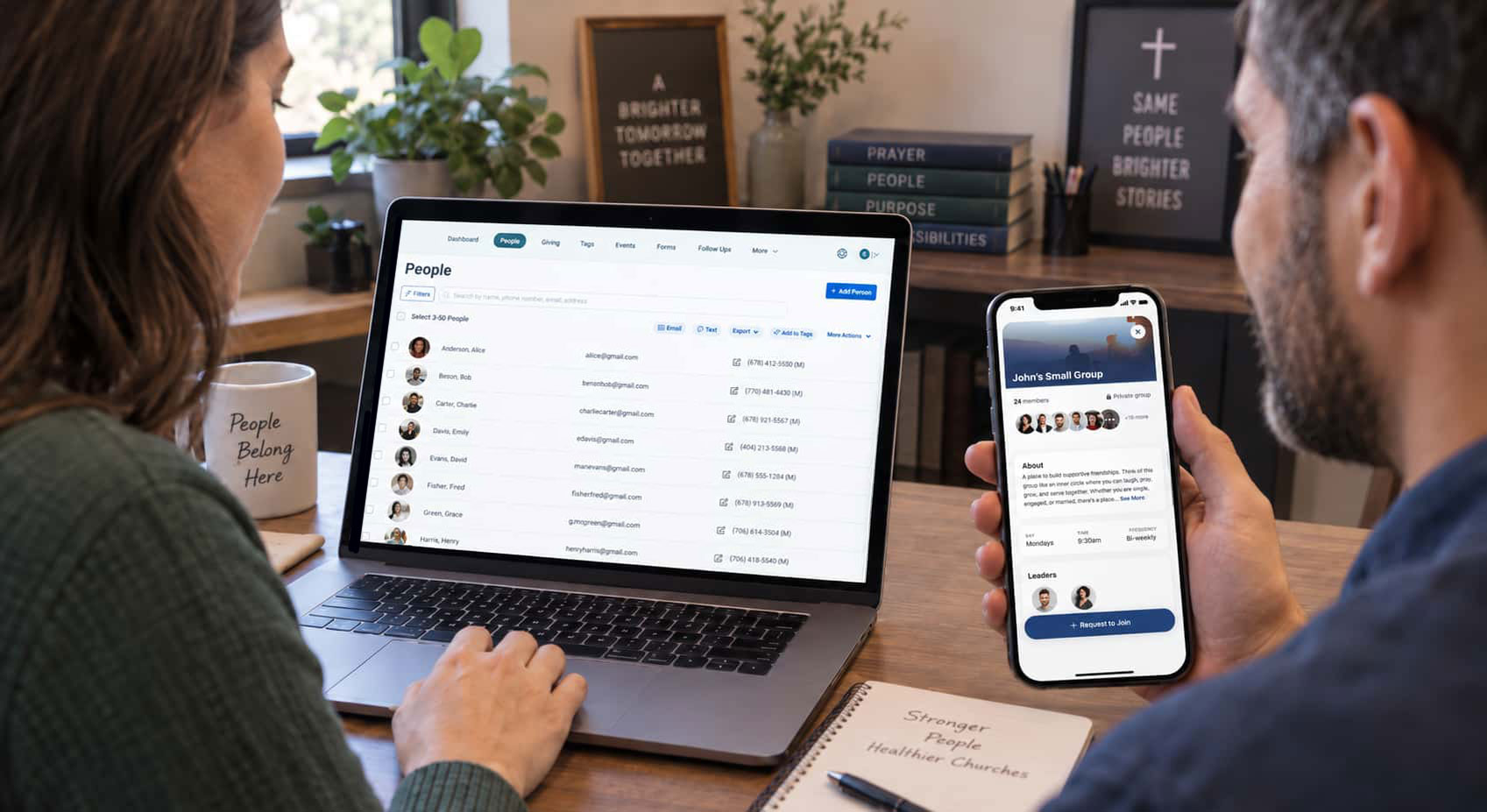
See it in action: Tithely's Church Management System handles this system for you — capturing guest info from a digital connect card and triggering automated follow-up the moment someone submits it, so no visitor depends on one person remembering to reach out.
2. Confusing Friendliness with Connection
A warm greeting is great. But it's not enough.
Many churches think: "People felt welcomed, so we're doing great." But guests aren't asking whether people were nice. They're asking whether they actually connected with someone.
Fix: Design intentional connection moments:
- A clear "Next Steps" area
- Guided conversations (not just handshakes)
- Easy pathways into groups or teams
Friendliness makes a good first impression. Connection makes people come back — and "people coming back" is the whole point of the role.
3. Focusing on Sunday Instead of the Week
If your connections strategy only exists on Sunday, you're missing the real opportunity. Most decisions to return happen after people leave, not during the service.
Fix: Build a 7-day follow-up rhythm:
- Day 1: Thank-you text or email
- Day 2–3: Personal touch (call or message)
- Day 5–7: Clear next step invitation
Sunday creates the spark. Follow-up turns it into a relationship.
4. Creating Too Many Options (Instead of One Clear Next Step)
Many churches overwhelm guests with choices: join a group, attend a class, volunteer, download the app, come to an event. It's too much, too soon. Confused people don't connect.
Fix: Give one simple next step:
- "Come to this lunch"
- "Fill out this card"
- "Join this short class"
Clarity beats variety every time. The churches that grow aren't the ones with the most options — they're the ones with the clearest single ask.
5. Measuring Activity Instead of Outcomes
It's easy to track cards collected, emails sent, and events hosted. But those don't equal connection.
The real question is: Are people coming back? Are they getting involved? Are they being discipled?
Fix: Track what actually matters:
- Second-time visitor rate
- Group participation
- Volunteer engagement
- Retention over 90 days
If people aren't moving forward, your system isn't working, no matter how busy it feels.
6. Hiring Too Late
Many churches wait until they're overwhelmed to hire a Connections Pastor. By then, guests have already slipped through the cracks, systems are reactive instead of proactive, and momentum has slowed.
Fix: Hire before the breaking point, or assign someone to build systems now. Not sure if you're actually behind on staffing or just feeling the strain of a busy season? Our guide to church staffing ratios breaks down benchmarks by attendance size, so the decision isn't a guess.
And timing is only half the battle. A rushed process can undo the benefit of hiring at the right moment. Before you post the job, check it against these common church staff hiring mistakes.
You don't hire a Connections Pastor because you're big. You hire one so you can grow.
Over to You
A great Connections Pastor doesn't just help people feel welcome, they build the systems that ensure people are seen, known, and moved toward real discipleship. Get the systems right, and the role does exactly what it was hired to do: turn a growing crowd into a growing church.
For the fuller framework this role fits into, see Tithely's complete church growth strategy guide. And if you want the deeper research behind it, our whitepaper on sustainable church growth is free to download.
Related reading:
- Church Growth Strategy: The Complete Guide
- Church Growth: Programs vs. Systems
- Church Staffing Ratios: How Many Staff Should Your Church Have?
- Common Church Staff Hiring Mistakes to Avoid
Sign Up for Product Updates

Chris Dunagan is a marketing strategist focused on church tech and digital engagement. He helps churches grow through SEO, email campaigns, and tools like Tithely and Breeze ChMS, with an emphasis on online giving, content strategy, and digital outreach.
Hiring a Connections Pastor is one of the smartest moves a growing church can make. It's a clear signal that leadership takes first impressions, follow-up, and belonging seriously, all things that show up again and again in any solid church growth strategy.
But here's the tension: just hiring the role doesn't solve the problem.
In many churches, the Connections Pastor unintentionally becomes a bottleneck instead of a bridge. Guests still slip through the cracks. Growth still stalls. The title changes, but the underlying system doesn't.
Here are the most common mistakes churches make with this role and how to fix each one, so the position actually does what it was hired to do: fuel growth instead of just managing it.
1. Owning Connections Instead of Building Systems
A Connections Pastor should not be the connections strategy. They should build the systems that make connection scalable.
When everything depends on one person:
- Follow-up becomes inconsistent
- Guests slip through the cracks
- Growth stalls the moment that leader gets overwhelmed
Fix: Build repeatable systems, not personal dependencies:
- Automated first-time guest follow-up
- Clear next steps (not vague invitations)
- Volunteer-driven touchpoints
If your Connections Pastor has to personally touch every guest, your system is broken. This is really a programs-versus-systems problem. A single great leader can run a program, but only a system survives growth. We dig into that distinction in Church Growth: Programs vs. Systems.
See it in action: Tithely's Church Management System handles this system for you — capturing guest info from a digital connect card and triggering automated follow-up the moment someone submits it, so no visitor depends on one person remembering to reach out.
2. Confusing Friendliness with Connection
A warm greeting is great. But it's not enough.
Many churches think: "People felt welcomed, so we're doing great." But guests aren't asking whether people were nice. They're asking whether they actually connected with someone.
Fix: Design intentional connection moments:
- A clear "Next Steps" area
- Guided conversations (not just handshakes)
- Easy pathways into groups or teams
Friendliness makes a good first impression. Connection makes people come back — and "people coming back" is the whole point of the role.
3. Focusing on Sunday Instead of the Week
If your connections strategy only exists on Sunday, you're missing the real opportunity. Most decisions to return happen after people leave, not during the service.
Fix: Build a 7-day follow-up rhythm:
- Day 1: Thank-you text or email
- Day 2–3: Personal touch (call or message)
- Day 5–7: Clear next step invitation
Sunday creates the spark. Follow-up turns it into a relationship.
4. Creating Too Many Options (Instead of One Clear Next Step)
Many churches overwhelm guests with choices: join a group, attend a class, volunteer, download the app, come to an event. It's too much, too soon. Confused people don't connect.
Fix: Give one simple next step:
- "Come to this lunch"
- "Fill out this card"
- "Join this short class"
Clarity beats variety every time. The churches that grow aren't the ones with the most options — they're the ones with the clearest single ask.
5. Measuring Activity Instead of Outcomes
It's easy to track cards collected, emails sent, and events hosted. But those don't equal connection.
The real question is: Are people coming back? Are they getting involved? Are they being discipled?
Fix: Track what actually matters:
- Second-time visitor rate
- Group participation
- Volunteer engagement
- Retention over 90 days
If people aren't moving forward, your system isn't working, no matter how busy it feels.
6. Hiring Too Late
Many churches wait until they're overwhelmed to hire a Connections Pastor. By then, guests have already slipped through the cracks, systems are reactive instead of proactive, and momentum has slowed.
Fix: Hire before the breaking point, or assign someone to build systems now. Not sure if you're actually behind on staffing or just feeling the strain of a busy season? Our guide to church staffing ratios breaks down benchmarks by attendance size, so the decision isn't a guess.
And timing is only half the battle. A rushed process can undo the benefit of hiring at the right moment. Before you post the job, check it against these common church staff hiring mistakes.
You don't hire a Connections Pastor because you're big. You hire one so you can grow.
Over to You
A great Connections Pastor doesn't just help people feel welcome, they build the systems that ensure people are seen, known, and moved toward real discipleship. Get the systems right, and the role does exactly what it was hired to do: turn a growing crowd into a growing church.
For the fuller framework this role fits into, see Tithely's complete church growth strategy guide. And if you want the deeper research behind it, our whitepaper on sustainable church growth is free to download.
Related reading:
- Church Growth Strategy: The Complete Guide
- Church Growth: Programs vs. Systems
- Church Staffing Ratios: How Many Staff Should Your Church Have?
- Common Church Staff Hiring Mistakes to Avoid
podcast transcript
Chris Dunagan is a marketing strategist focused on church tech and digital engagement. He helps churches grow through SEO, email campaigns, and tools like Tithely and Breeze ChMS, with an emphasis on online giving, content strategy, and digital outreach.
Hiring a Connections Pastor is one of the smartest moves a growing church can make. It's a clear signal that leadership takes first impressions, follow-up, and belonging seriously, all things that show up again and again in any solid church growth strategy.
But here's the tension: just hiring the role doesn't solve the problem.
In many churches, the Connections Pastor unintentionally becomes a bottleneck instead of a bridge. Guests still slip through the cracks. Growth still stalls. The title changes, but the underlying system doesn't.
Here are the most common mistakes churches make with this role and how to fix each one, so the position actually does what it was hired to do: fuel growth instead of just managing it.
1. Owning Connections Instead of Building Systems
A Connections Pastor should not be the connections strategy. They should build the systems that make connection scalable.
When everything depends on one person:
- Follow-up becomes inconsistent
- Guests slip through the cracks
- Growth stalls the moment that leader gets overwhelmed
Fix: Build repeatable systems, not personal dependencies:
- Automated first-time guest follow-up
- Clear next steps (not vague invitations)
- Volunteer-driven touchpoints
If your Connections Pastor has to personally touch every guest, your system is broken. This is really a programs-versus-systems problem. A single great leader can run a program, but only a system survives growth. We dig into that distinction in Church Growth: Programs vs. Systems.
See it in action: Tithely's Church Management System handles this system for you — capturing guest info from a digital connect card and triggering automated follow-up the moment someone submits it, so no visitor depends on one person remembering to reach out.
2. Confusing Friendliness with Connection
A warm greeting is great. But it's not enough.
Many churches think: "People felt welcomed, so we're doing great." But guests aren't asking whether people were nice. They're asking whether they actually connected with someone.
Fix: Design intentional connection moments:
- A clear "Next Steps" area
- Guided conversations (not just handshakes)
- Easy pathways into groups or teams
Friendliness makes a good first impression. Connection makes people come back — and "people coming back" is the whole point of the role.
3. Focusing on Sunday Instead of the Week
If your connections strategy only exists on Sunday, you're missing the real opportunity. Most decisions to return happen after people leave, not during the service.
Fix: Build a 7-day follow-up rhythm:
- Day 1: Thank-you text or email
- Day 2–3: Personal touch (call or message)
- Day 5–7: Clear next step invitation
Sunday creates the spark. Follow-up turns it into a relationship.
4. Creating Too Many Options (Instead of One Clear Next Step)
Many churches overwhelm guests with choices: join a group, attend a class, volunteer, download the app, come to an event. It's too much, too soon. Confused people don't connect.
Fix: Give one simple next step:
- "Come to this lunch"
- "Fill out this card"
- "Join this short class"
Clarity beats variety every time. The churches that grow aren't the ones with the most options — they're the ones with the clearest single ask.
5. Measuring Activity Instead of Outcomes
It's easy to track cards collected, emails sent, and events hosted. But those don't equal connection.
The real question is: Are people coming back? Are they getting involved? Are they being discipled?
Fix: Track what actually matters:
- Second-time visitor rate
- Group participation
- Volunteer engagement
- Retention over 90 days
If people aren't moving forward, your system isn't working, no matter how busy it feels.
6. Hiring Too Late
Many churches wait until they're overwhelmed to hire a Connections Pastor. By then, guests have already slipped through the cracks, systems are reactive instead of proactive, and momentum has slowed.
Fix: Hire before the breaking point, or assign someone to build systems now. Not sure if you're actually behind on staffing or just feeling the strain of a busy season? Our guide to church staffing ratios breaks down benchmarks by attendance size, so the decision isn't a guess.
And timing is only half the battle. A rushed process can undo the benefit of hiring at the right moment. Before you post the job, check it against these common church staff hiring mistakes.
You don't hire a Connections Pastor because you're big. You hire one so you can grow.
Over to You
A great Connections Pastor doesn't just help people feel welcome, they build the systems that ensure people are seen, known, and moved toward real discipleship. Get the systems right, and the role does exactly what it was hired to do: turn a growing crowd into a growing church.
For the fuller framework this role fits into, see Tithely's complete church growth strategy guide. And if you want the deeper research behind it, our whitepaper on sustainable church growth is free to download.
Related reading:
- Church Growth Strategy: The Complete Guide
- Church Growth: Programs vs. Systems
- Church Staffing Ratios: How Many Staff Should Your Church Have?
- Common Church Staff Hiring Mistakes to Avoid
VIDEO transcript
Hiring a Connections Pastor is one of the smartest moves a growing church can make. It's a clear signal that leadership takes first impressions, follow-up, and belonging seriously, all things that show up again and again in any solid church growth strategy.
But here's the tension: just hiring the role doesn't solve the problem.
In many churches, the Connections Pastor unintentionally becomes a bottleneck instead of a bridge. Guests still slip through the cracks. Growth still stalls. The title changes, but the underlying system doesn't.
Here are the most common mistakes churches make with this role and how to fix each one, so the position actually does what it was hired to do: fuel growth instead of just managing it.
1. Owning Connections Instead of Building Systems
A Connections Pastor should not be the connections strategy. They should build the systems that make connection scalable.
When everything depends on one person:
- Follow-up becomes inconsistent
- Guests slip through the cracks
- Growth stalls the moment that leader gets overwhelmed
Fix: Build repeatable systems, not personal dependencies:
- Automated first-time guest follow-up
- Clear next steps (not vague invitations)
- Volunteer-driven touchpoints
If your Connections Pastor has to personally touch every guest, your system is broken. This is really a programs-versus-systems problem. A single great leader can run a program, but only a system survives growth. We dig into that distinction in Church Growth: Programs vs. Systems.
See it in action: Tithely's Church Management System handles this system for you — capturing guest info from a digital connect card and triggering automated follow-up the moment someone submits it, so no visitor depends on one person remembering to reach out.
2. Confusing Friendliness with Connection
A warm greeting is great. But it's not enough.
Many churches think: "People felt welcomed, so we're doing great." But guests aren't asking whether people were nice. They're asking whether they actually connected with someone.
Fix: Design intentional connection moments:
- A clear "Next Steps" area
- Guided conversations (not just handshakes)
- Easy pathways into groups or teams
Friendliness makes a good first impression. Connection makes people come back — and "people coming back" is the whole point of the role.
3. Focusing on Sunday Instead of the Week
If your connections strategy only exists on Sunday, you're missing the real opportunity. Most decisions to return happen after people leave, not during the service.
Fix: Build a 7-day follow-up rhythm:
- Day 1: Thank-you text or email
- Day 2–3: Personal touch (call or message)
- Day 5–7: Clear next step invitation
Sunday creates the spark. Follow-up turns it into a relationship.
4. Creating Too Many Options (Instead of One Clear Next Step)
Many churches overwhelm guests with choices: join a group, attend a class, volunteer, download the app, come to an event. It's too much, too soon. Confused people don't connect.
Fix: Give one simple next step:
- "Come to this lunch"
- "Fill out this card"
- "Join this short class"
Clarity beats variety every time. The churches that grow aren't the ones with the most options — they're the ones with the clearest single ask.
5. Measuring Activity Instead of Outcomes
It's easy to track cards collected, emails sent, and events hosted. But those don't equal connection.
The real question is: Are people coming back? Are they getting involved? Are they being discipled?
Fix: Track what actually matters:
- Second-time visitor rate
- Group participation
- Volunteer engagement
- Retention over 90 days
If people aren't moving forward, your system isn't working, no matter how busy it feels.
6. Hiring Too Late
Many churches wait until they're overwhelmed to hire a Connections Pastor. By then, guests have already slipped through the cracks, systems are reactive instead of proactive, and momentum has slowed.
Fix: Hire before the breaking point, or assign someone to build systems now. Not sure if you're actually behind on staffing or just feeling the strain of a busy season? Our guide to church staffing ratios breaks down benchmarks by attendance size, so the decision isn't a guess.
And timing is only half the battle. A rushed process can undo the benefit of hiring at the right moment. Before you post the job, check it against these common church staff hiring mistakes.
You don't hire a Connections Pastor because you're big. You hire one so you can grow.
Over to You
A great Connections Pastor doesn't just help people feel welcome, they build the systems that ensure people are seen, known, and moved toward real discipleship. Get the systems right, and the role does exactly what it was hired to do: turn a growing crowd into a growing church.
For the fuller framework this role fits into, see Tithely's complete church growth strategy guide. And if you want the deeper research behind it, our whitepaper on sustainable church growth is free to download.
Related reading:
- Church Growth Strategy: The Complete Guide
- Church Growth: Programs vs. Systems
- Church Staffing Ratios: How Many Staff Should Your Church Have?
- Common Church Staff Hiring Mistakes to Avoid
Sign Up for Product Updates
Chris Dunagan is a marketing strategist focused on church tech and digital engagement. He helps churches grow through SEO, email campaigns, and tools like Tithely and Breeze ChMS, with an emphasis on online giving, content strategy, and digital outreach.

You Might Also Like
More Resources

From increasing giving, managing your congregation, and engaging your church, our collection of resources will keep you up-to-date on the latest church and ministry trends.
Free Resources