How Software Churches Use Helps Pastors Care for People More Effectively
Pastoral ministry has always been about people. Yet many pastors find themselves buried under spreadsheets, scattered lists, and administrative tasks that quietly consume the week. The right software churches use today can bring clarity back to ministry and help leaders see their congregation more clearly.
.jpg)



Ministry Often Gets Buried Under Administration
A pastor once described the moment he realized something had shifted.
A family that had attended faithfully for years quietly stopped coming. Several weeks passed before anyone noticed. By the time the pastor reached out, the family had already found another church closer to home.
The pastor admitted something difficult.
It was not a lack of care. It was a lack of visibility.
The church had attendance records in one spreadsheet, small group lists in another system, and volunteer schedules scattered across email threads. No one had a clear view of how people were actually engaging in the life of the church.
This situation is far more common than many leaders realize. The challenge is rarely the heart of the pastor. The challenge is the systems surrounding the ministry.
The Administrative Weight Many Churches Carry
Many churches rely on a patchwork of tools that were never designed to work together.
Staff members often find themselves managing:
- attendance spreadsheets
- separate giving platforms
- disconnected volunteer schedules
- email lists for different ministries
- paper visitor cards that must be entered manually
Each task seems small on its own. Together they create a steady stream of administrative work that quietly drains energy from pastoral care.
Without good systems in place, leaders often struggle to see simple patterns in their congregation. They may not realize when someone has missed several weeks. Volunteer fatigue can build without anyone noticing. Giving trends that might signal a change in engagement remain hidden.
This is where software churches use to manage their ministry can make a meaningful difference.
Platforms like Tithely Church Management bring key information into one place so leaders can understand how their church community is actually engaging.
Seeing the Congregation More Clearly
When church data is centralized, something important begins to happen. Leaders gain visibility.
Instead of jumping between systems, pastors can quickly see patterns such as:
- families who have not attended recently
- volunteers serving in multiple ministries
- new visitors who may need follow-up
- engagement trends across the church
This type of insight strengthens pastoral awareness. A pastor may notice a couple who has missed several Sundays and reach out with a phone call or visit. What might have gone unnoticed becomes an opportunity for care.
Technology does not replace shepherding. It simply helps pastors see the flock more clearly.
Practical Ways Churches Use Software to Support Ministry
Church software becomes most valuable when it removes friction from everyday ministry work.
Clear Member Profiles
Church leaders can view contact information, attendance history, and ministry involvement in one place. This helps pastors understand where people are connected and where they may need support.
Smarter Follow-Up
Visitor information flows directly into the system, making it easier for staff and volunteers to follow up with new guests and welcome them into the community.
Volunteer Coordination
Ministry leaders can track where volunteers are serving and identify areas where additional help may be needed.
Insight for Leadership Decisions
Attendance trends and engagement data give church leaders a clearer understanding of how ministries are functioning across the church.
Churches exploring modern solutions often begin by reviewing available tools and capabilities through the Tithely pricing page, which outlines different options designed to support churches of varying sizes.
Technology That Supports the Heart of Ministry
Church leadership has always required wisdom, discernment, and compassion. Those qualities remain at the center of pastoral care.
Administrative systems simply create the structure that allows ministry to flourish.
When the software churches rely on is well organized and integrated, leaders spend less time chasing information and more time walking with people through the realities of life.
That shift matters.
It allows pastors to notice the family that needs encouragement, the volunteer who is quietly carrying too much responsibility, or the new visitor who may be searching for a place to belong.
Clarity leads to care. Good systems make that clarity possible.
Over to You
If your church is juggling spreadsheets, scattered lists, and disconnected tools, it may be time to explore a more unified approach.
Modern software churches use today can simplify administration and give pastors a clearer picture of their congregation. With the right systems in place, your team can spend less time managing information and more time caring for the people God has entrusted to your church.
Sign Up for Product Updates

Tithely provides the tools you need to engage with your church online, stay connected, increase generosity, and simplify the lives of your staff.
With tools like text and email messaging, custom church apps and websites, church management software, digital giving, and so much more… it’s no wonder why over 53,000 churches in 50 countries trust Tithely to help run their church.
Ministry Often Gets Buried Under Administration
A pastor once described the moment he realized something had shifted.
A family that had attended faithfully for years quietly stopped coming. Several weeks passed before anyone noticed. By the time the pastor reached out, the family had already found another church closer to home.
The pastor admitted something difficult.
It was not a lack of care. It was a lack of visibility.
The church had attendance records in one spreadsheet, small group lists in another system, and volunteer schedules scattered across email threads. No one had a clear view of how people were actually engaging in the life of the church.
This situation is far more common than many leaders realize. The challenge is rarely the heart of the pastor. The challenge is the systems surrounding the ministry.
The Administrative Weight Many Churches Carry
Many churches rely on a patchwork of tools that were never designed to work together.
Staff members often find themselves managing:
- attendance spreadsheets
- separate giving platforms
- disconnected volunteer schedules
- email lists for different ministries
- paper visitor cards that must be entered manually
Each task seems small on its own. Together they create a steady stream of administrative work that quietly drains energy from pastoral care.
Without good systems in place, leaders often struggle to see simple patterns in their congregation. They may not realize when someone has missed several weeks. Volunteer fatigue can build without anyone noticing. Giving trends that might signal a change in engagement remain hidden.
This is where software churches use to manage their ministry can make a meaningful difference.
Platforms like Tithely Church Management bring key information into one place so leaders can understand how their church community is actually engaging.
Seeing the Congregation More Clearly
When church data is centralized, something important begins to happen. Leaders gain visibility.
Instead of jumping between systems, pastors can quickly see patterns such as:
- families who have not attended recently
- volunteers serving in multiple ministries
- new visitors who may need follow-up
- engagement trends across the church
This type of insight strengthens pastoral awareness. A pastor may notice a couple who has missed several Sundays and reach out with a phone call or visit. What might have gone unnoticed becomes an opportunity for care.
Technology does not replace shepherding. It simply helps pastors see the flock more clearly.
Practical Ways Churches Use Software to Support Ministry
Church software becomes most valuable when it removes friction from everyday ministry work.
Clear Member Profiles
Church leaders can view contact information, attendance history, and ministry involvement in one place. This helps pastors understand where people are connected and where they may need support.
Smarter Follow-Up
Visitor information flows directly into the system, making it easier for staff and volunteers to follow up with new guests and welcome them into the community.
Volunteer Coordination
Ministry leaders can track where volunteers are serving and identify areas where additional help may be needed.
Insight for Leadership Decisions
Attendance trends and engagement data give church leaders a clearer understanding of how ministries are functioning across the church.
Churches exploring modern solutions often begin by reviewing available tools and capabilities through the Tithely pricing page, which outlines different options designed to support churches of varying sizes.
Technology That Supports the Heart of Ministry
Church leadership has always required wisdom, discernment, and compassion. Those qualities remain at the center of pastoral care.
Administrative systems simply create the structure that allows ministry to flourish.
When the software churches rely on is well organized and integrated, leaders spend less time chasing information and more time walking with people through the realities of life.
That shift matters.
It allows pastors to notice the family that needs encouragement, the volunteer who is quietly carrying too much responsibility, or the new visitor who may be searching for a place to belong.
Clarity leads to care. Good systems make that clarity possible.
Over to You
If your church is juggling spreadsheets, scattered lists, and disconnected tools, it may be time to explore a more unified approach.
Modern software churches use today can simplify administration and give pastors a clearer picture of their congregation. With the right systems in place, your team can spend less time managing information and more time caring for the people God has entrusted to your church.
podcast transcript
Tithely provides the tools you need to engage with your church online, stay connected, increase generosity, and simplify the lives of your staff.
With tools like text and email messaging, custom church apps and websites, church management software, digital giving, and so much more… it’s no wonder why over 53,000 churches in 50 countries trust Tithely to help run their church.
Ministry Often Gets Buried Under Administration
A pastor once described the moment he realized something had shifted.
A family that had attended faithfully for years quietly stopped coming. Several weeks passed before anyone noticed. By the time the pastor reached out, the family had already found another church closer to home.
The pastor admitted something difficult.
It was not a lack of care. It was a lack of visibility.
The church had attendance records in one spreadsheet, small group lists in another system, and volunteer schedules scattered across email threads. No one had a clear view of how people were actually engaging in the life of the church.
This situation is far more common than many leaders realize. The challenge is rarely the heart of the pastor. The challenge is the systems surrounding the ministry.
The Administrative Weight Many Churches Carry
Many churches rely on a patchwork of tools that were never designed to work together.
Staff members often find themselves managing:
- attendance spreadsheets
- separate giving platforms
- disconnected volunteer schedules
- email lists for different ministries
- paper visitor cards that must be entered manually
Each task seems small on its own. Together they create a steady stream of administrative work that quietly drains energy from pastoral care.
Without good systems in place, leaders often struggle to see simple patterns in their congregation. They may not realize when someone has missed several weeks. Volunteer fatigue can build without anyone noticing. Giving trends that might signal a change in engagement remain hidden.
This is where software churches use to manage their ministry can make a meaningful difference.
Platforms like Tithely Church Management bring key information into one place so leaders can understand how their church community is actually engaging.
Seeing the Congregation More Clearly
When church data is centralized, something important begins to happen. Leaders gain visibility.
Instead of jumping between systems, pastors can quickly see patterns such as:
- families who have not attended recently
- volunteers serving in multiple ministries
- new visitors who may need follow-up
- engagement trends across the church
This type of insight strengthens pastoral awareness. A pastor may notice a couple who has missed several Sundays and reach out with a phone call or visit. What might have gone unnoticed becomes an opportunity for care.
Technology does not replace shepherding. It simply helps pastors see the flock more clearly.
Practical Ways Churches Use Software to Support Ministry
Church software becomes most valuable when it removes friction from everyday ministry work.
Clear Member Profiles
Church leaders can view contact information, attendance history, and ministry involvement in one place. This helps pastors understand where people are connected and where they may need support.
Smarter Follow-Up
Visitor information flows directly into the system, making it easier for staff and volunteers to follow up with new guests and welcome them into the community.
Volunteer Coordination
Ministry leaders can track where volunteers are serving and identify areas where additional help may be needed.
Insight for Leadership Decisions
Attendance trends and engagement data give church leaders a clearer understanding of how ministries are functioning across the church.
Churches exploring modern solutions often begin by reviewing available tools and capabilities through the Tithely pricing page, which outlines different options designed to support churches of varying sizes.
Technology That Supports the Heart of Ministry
Church leadership has always required wisdom, discernment, and compassion. Those qualities remain at the center of pastoral care.
Administrative systems simply create the structure that allows ministry to flourish.
When the software churches rely on is well organized and integrated, leaders spend less time chasing information and more time walking with people through the realities of life.
That shift matters.
It allows pastors to notice the family that needs encouragement, the volunteer who is quietly carrying too much responsibility, or the new visitor who may be searching for a place to belong.
Clarity leads to care. Good systems make that clarity possible.
Over to You
If your church is juggling spreadsheets, scattered lists, and disconnected tools, it may be time to explore a more unified approach.
Modern software churches use today can simplify administration and give pastors a clearer picture of their congregation. With the right systems in place, your team can spend less time managing information and more time caring for the people God has entrusted to your church.
VIDEO transcript
Ministry Often Gets Buried Under Administration
A pastor once described the moment he realized something had shifted.
A family that had attended faithfully for years quietly stopped coming. Several weeks passed before anyone noticed. By the time the pastor reached out, the family had already found another church closer to home.
The pastor admitted something difficult.
It was not a lack of care. It was a lack of visibility.
The church had attendance records in one spreadsheet, small group lists in another system, and volunteer schedules scattered across email threads. No one had a clear view of how people were actually engaging in the life of the church.
This situation is far more common than many leaders realize. The challenge is rarely the heart of the pastor. The challenge is the systems surrounding the ministry.
The Administrative Weight Many Churches Carry
Many churches rely on a patchwork of tools that were never designed to work together.
Staff members often find themselves managing:
- attendance spreadsheets
- separate giving platforms
- disconnected volunteer schedules
- email lists for different ministries
- paper visitor cards that must be entered manually
Each task seems small on its own. Together they create a steady stream of administrative work that quietly drains energy from pastoral care.
Without good systems in place, leaders often struggle to see simple patterns in their congregation. They may not realize when someone has missed several weeks. Volunteer fatigue can build without anyone noticing. Giving trends that might signal a change in engagement remain hidden.
This is where software churches use to manage their ministry can make a meaningful difference.
Platforms like Tithely Church Management bring key information into one place so leaders can understand how their church community is actually engaging.
Seeing the Congregation More Clearly
When church data is centralized, something important begins to happen. Leaders gain visibility.
Instead of jumping between systems, pastors can quickly see patterns such as:
- families who have not attended recently
- volunteers serving in multiple ministries
- new visitors who may need follow-up
- engagement trends across the church
This type of insight strengthens pastoral awareness. A pastor may notice a couple who has missed several Sundays and reach out with a phone call or visit. What might have gone unnoticed becomes an opportunity for care.
Technology does not replace shepherding. It simply helps pastors see the flock more clearly.
Practical Ways Churches Use Software to Support Ministry
Church software becomes most valuable when it removes friction from everyday ministry work.
Clear Member Profiles
Church leaders can view contact information, attendance history, and ministry involvement in one place. This helps pastors understand where people are connected and where they may need support.
Smarter Follow-Up
Visitor information flows directly into the system, making it easier for staff and volunteers to follow up with new guests and welcome them into the community.
Volunteer Coordination
Ministry leaders can track where volunteers are serving and identify areas where additional help may be needed.
Insight for Leadership Decisions
Attendance trends and engagement data give church leaders a clearer understanding of how ministries are functioning across the church.
Churches exploring modern solutions often begin by reviewing available tools and capabilities through the Tithely pricing page, which outlines different options designed to support churches of varying sizes.
Technology That Supports the Heart of Ministry
Church leadership has always required wisdom, discernment, and compassion. Those qualities remain at the center of pastoral care.
Administrative systems simply create the structure that allows ministry to flourish.
When the software churches rely on is well organized and integrated, leaders spend less time chasing information and more time walking with people through the realities of life.
That shift matters.
It allows pastors to notice the family that needs encouragement, the volunteer who is quietly carrying too much responsibility, or the new visitor who may be searching for a place to belong.
Clarity leads to care. Good systems make that clarity possible.
Over to You
If your church is juggling spreadsheets, scattered lists, and disconnected tools, it may be time to explore a more unified approach.
Modern software churches use today can simplify administration and give pastors a clearer picture of their congregation. With the right systems in place, your team can spend less time managing information and more time caring for the people God has entrusted to your church.
Sign Up for Product Updates
Tithely provides the tools you need to engage with your church online, stay connected, increase generosity, and simplify the lives of your staff.
With tools like text and email messaging, custom church apps and websites, church management software, digital giving, and so much more… it’s no wonder why over 53,000 churches in 50 countries trust Tithely to help run their church.

You Might Also Like
More Resources

From increasing giving, managing your congregation, and engaging your church, our collection of resources will keep you up-to-date on the latest church and ministry trends.
Free Resources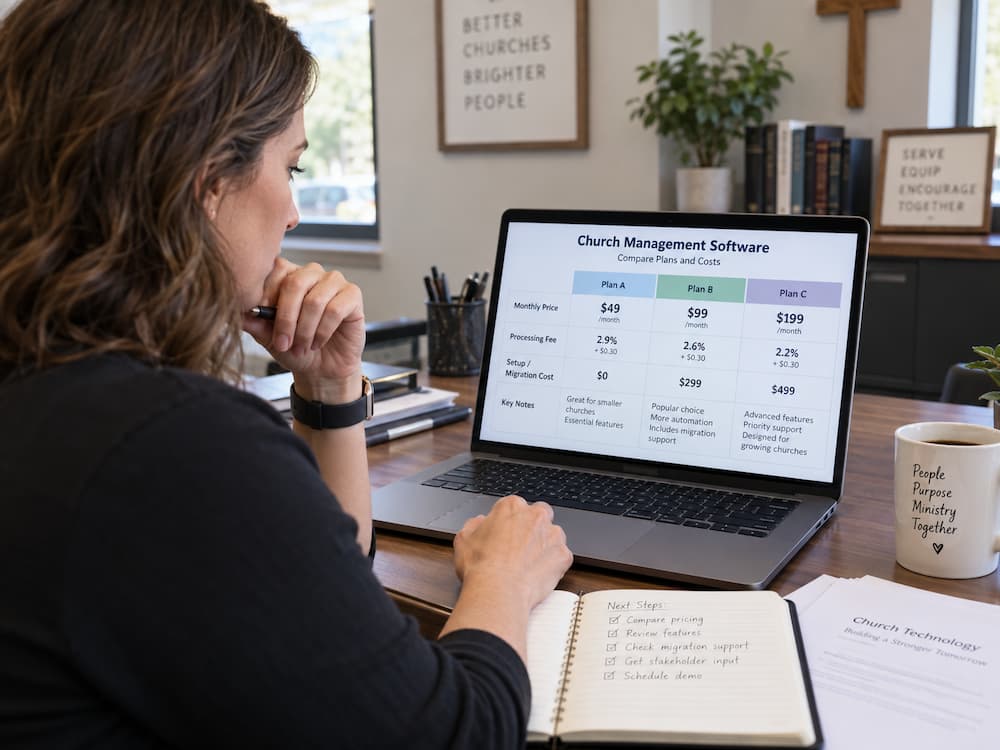



.jpg)

.jpg)
.jpg)
.jpg)



.jpg)